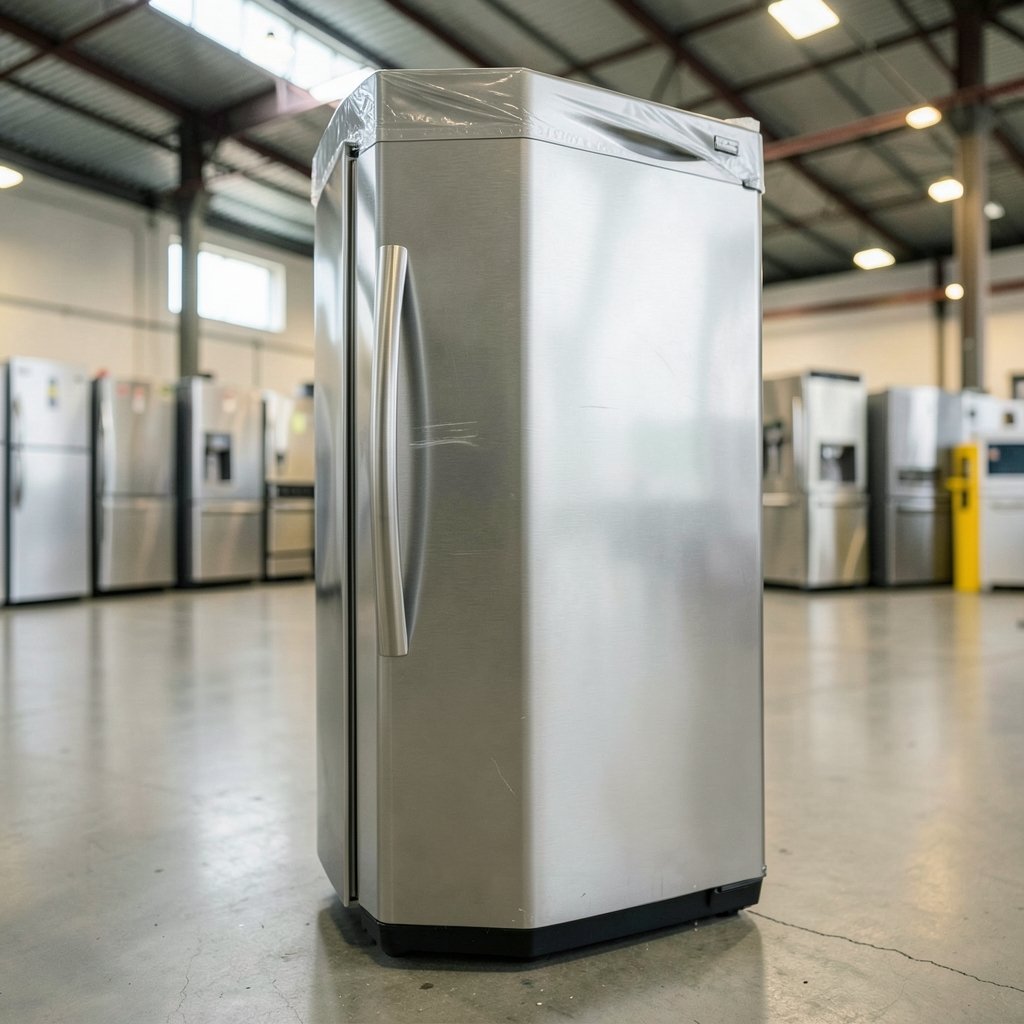
What if the refrigerator you need is sitting in a warehouse two miles away, marked down 40% because of a dent on the side nobody will ever see? That is the promise behind every “fridge outlet store near me” search. The trouble is that the phrase “outlet” gets thrown around loosely in American retail. Some outlets sell genuine manufacturer overstock. Others are just clearance floors with a fancy sign. Knowing the difference can save you hundreds of dollars, or cost you plenty if you get it wrong.
This guide walks through how outlet refrigerator shopping actually works, what to inspect before you pay, how delivery fees quietly change the math, and the mistakes shoppers make most often. It leans on practical experience and consumer-protection basics rather than hype.
What “Outlet” Really Means for Refrigerators
There is no federal rule defining what an outlet store is. The term is used loosely for manufacturer outlets, discount retailers, and clearance or liquidation sellers. That means a store can call itself an outlet without meeting any standard at all.
In practice, refrigerator inventory at outlets usually falls into a few buckets:
| Inventory type | Why it’s discounted | Typical risk |
|---|---|---|
| Scratch-and-dent | Cosmetic damage from shipping or handling | Dents, but full function |
| Floor models | Displayed and handled in-store | Missing accessories, worn seals |
| Overstock | Excess inventory, discontinued colors | Limited color or model choice |
| Returns | Bought and brought back | Unknown history, possible issues |
| Closeout | Model year ending | Parts and matching pieces harder to find |
Each category carries a different level of risk. A scratch-and-dent unit with a working compressor and an intact warranty is often the best value in the building. A return with no paperwork is a gamble.
How to Find Outlet Stores That Actually Sell Fridges

Search engines return a mix of true outlets, big-box clearance aisles, and liquidation warehouses. A few search habits cut through the noise fast.
First, search by the type of inventory rather than the word “outlet” alone. Terms like “appliance liquidation,” “scratch and dent appliances,” and “refrigerator closeout” surface different results. Second, check whether the store lists refrigerator model numbers on its site. A real appliance outlet publishes inventory; a vague storefront with stock photos usually does not. Third, call ahead and ask two questions: do you have refrigerators in stock today, and is the manufacturer warranty still valid on them? The answer to the second question tells you more than any sign in the window.
Local shopping habits matter too. The same research approach that helps you find a good deal on grocery outlets with upcoming store closures applies here: verify what is actually in stock before making the trip. And if you enjoy hunting for marked-down goods in person, the same instincts that guide a search for the best thrift stores near me will serve you well at an appliance outlet, where patience and a tape measure beat impulse.
The Sticker Price Is Not the Price
Outlet refrigerators often come with fees that a standard retailer bundles in. Delivery, haul-away of the old unit, installation of the water line, and door removal for tight hallways can each add cost. A $900 fridge with $150 delivery and $40 haul-away is a $1,090 fridge.
Before comparing two stores, ask for an out-the-door quote that includes:
- Delivery to your address and whether stairs cost extra
- Haul-away of the old refrigerator
- Installation and water-line hookup, if the model has an ice maker
- Tax
- Any restocking fee if you return it
Write the total on your phone. Shoppers routinely drive 30 minutes to save $60 on a sticker price and lose it all on delivery.
What to Inspect Before You Pay
A refrigerator is a sealed system with electronics, and most failures are invisible from three feet away. Bring a flashlight and a phone charger, and run through this checklist in the store.
Check the model number and age
Find the model and serial plate, usually inside the fresh-food compartment or behind the kick plate. The serial number often encodes the manufacture date. Ask the salesperson to confirm it. A “new” outlet fridge that was built four years ago has been sitting somewhere, and its warranty clock may have already started.
Look for the energy label
Most new refrigerators sold in the U.S. must carry an EnergyGuide label showing estimated yearly energy use and cost. The label comes from the FTC’s Energy Labeling Rule, which lives in the federal regulations. If a unit is sold as new and has no energy label, ask why. A missing label on a new unit is a yellow flag.
Confirm ENERGY STAR status by model number
ENERGY STAR certification marks refrigerators that meet efficiency criteria set by the EPA and DOE. Outlet and clearance units may or may not be certified, and the badge on the floor model does not always match the unit in the box. Look up the exact model number rather than trusting the display card. Over a decade, the difference between an efficient fridge and a power-hungry one can run into the hundreds of dollars.
Test everything that moves or lights up
Open and close both doors. Listen for the seal. Check that drawers slide, shelves are present, and interior lights work. If the store will not let you plug it in, that is information too.
Ask about the warranty in writing
The Magnuson-Moss Warranty Act, passed in 1975, sets rules for written warranties on consumer products, including how terms must be disclosed. Ask for the warranty document before you pay, not after. Key questions: Is it the full manufacturer warranty or a store warranty? Does “as-is” appear anywhere on the receipt? Was the unit ever registered to a previous owner?
Scratch-and-Dent, Open-Box, and As-Is: What You’re Actually Buying
These three labels sound similar and are not.
A scratch-and-dent unit is typically new merchandise with cosmetic damage. The manufacturer warranty usually still applies, though some brands require the retailer to disclose the damage. This is often the sweet spot for value.
An open-box unit was sold and returned, or used as a display. It may be functionally perfect, but its history is murkier. Ask whether it was ever installed in a home.
An as-is unit comes with no warranty from the seller. Under the Uniform Commercial Code, implied warranties can be disclaimed if the seller does it clearly, and state rules vary. That does not make as-is units bad buys, but it shifts all the risk to you. Price it accordingly.
Delivery, Disposal, and the Old Fridge
Old refrigerators cannot just go to the curb in many places. Refrigerant recovery is required when disposing of appliances containing regulated refrigerants under EPA rules, and many municipalities ban curbside pickup of fridges entirely. Outlet stores often offer haul-away for a fee, which is convenient but worth pricing separately against a local utility rebate program. Some power companies pay you to recycle an old working fridge, which can offset part of the new purchase.
If you plan to move the fridge yourself, measure twice. A standard French-door refrigerator may not fit through a 30-inch doorway with the doors on, and outlet stores rarely include door removal in the base price.
Common Mistakes Outlet Shoppers Make
A few patterns show up again and again.
Buying the first dented unit they see. Outlet inventory turns over, but not that fast. Visit two or three stores before deciding.
Skipping the measurements. Width, height, depth, and the swing of the doors all matter. So does the path from the truck to the kitchen.
Assuming the warranty transfers. Some manufacturer warranties cover the appliance regardless of who bought it first; others do not. Confirm in writing.
Ignoring the energy cost. A cheap fridge that runs inefficiently for 12 years is not cheap.
Forgetting the water line. If the model has an ice maker or water dispenser, installation may cost extra, and a missing line can delay delivery day.
Shoppers who comparison-shop carefully across categories tend to develop good habits. The same discipline that helps someone evaluate takeout food options when they want good food fast — checking the details before committing — works at an appliance outlet, where the fine print matters more than the sign.
When an Outlet Is the Wrong Choice
Outlets are not always the answer. Skip them if you need a specific model to match existing cabinetry, if you want full white-glove delivery and installation, or if you are shopping for a built-in refrigerator where installation errors are expensive. In those cases, a standard retailer with a clear return window is worth the premium.
Outlets shine when you are flexible on brand and finish, when a cosmetic dent does not bother you, and when you can inspect the unit in person before paying.
Conclusion
Finding a fridge outlet store near you is the easy part. The real work is asking the right questions once you are standing in front of the unit: what is the model number, when was it built, is the warranty intact, and what does the out-the-door price actually include? Shoppers who check the energy label, confirm warranty terms in writing, and compare total costs rather than sticker prices tend to walk away with genuinely good deals. Those who skip those steps often pay full price for a discounted fridge. Take a tape measure, bring a flashlight, and treat every “as-is” tag as a signal to slow down rather than speed up.
Frequently Asked Questions
Are outlet store refrigerators covered by a manufacturer warranty?
Often, but not always. Scratch-and-dent and overstock units frequently retain the full manufacturer warranty, while as-is and some open-box units may not. The only reliable answer comes from the written warranty document, so ask for it before paying and confirm whether the unit was previously registered.
How can I tell if a refrigerator at an outlet is actually new?
Check the model and serial plate for a manufacture date, look for the EnergyGuide label required on most new refrigerators, and inspect the interior for scratches, missing shelves, or worn door seals. A unit sold as new without an energy label deserves a direct question to the salesperson.
Is a scratch-and-dent refrigerator a good deal?
It can be the best value in the store. The damage is usually cosmetic, the appliance functions normally, and the manufacturer warranty often still applies. The key is confirming the warranty in writing and making sure the dent is somewhere that will not bother you for the next decade.
What fees should I expect beyond the sticker price?
Delivery, haul-away of your old refrigerator, installation, water-line hookup, and sales tax are commonly charged separately at outlet stores. Some also charge restocking fees on returns. Ask for a full out-the-door quote and compare that number across stores rather than the advertised price.
Do I need to worry about the energy costs of an outlet fridge?
Yes. Most new refrigerators carry an EnergyGuide label showing estimated yearly energy use and cost, and models certified through ENERGY STAR meet efficiency criteria set by the EPA and DOE. Verify the certification by the exact model number, because a badge on the floor model does not guarantee the unit in the box matches.
Can I return a refrigerator bought at an outlet?
Return policies vary widely and are often stricter than at standard retailers. Some outlets allow returns within a short window with a restocking fee, while as-is units are typically final sale. Get the policy in writing before you pay, and ask specifically what happens if the compressor fails in the first month.