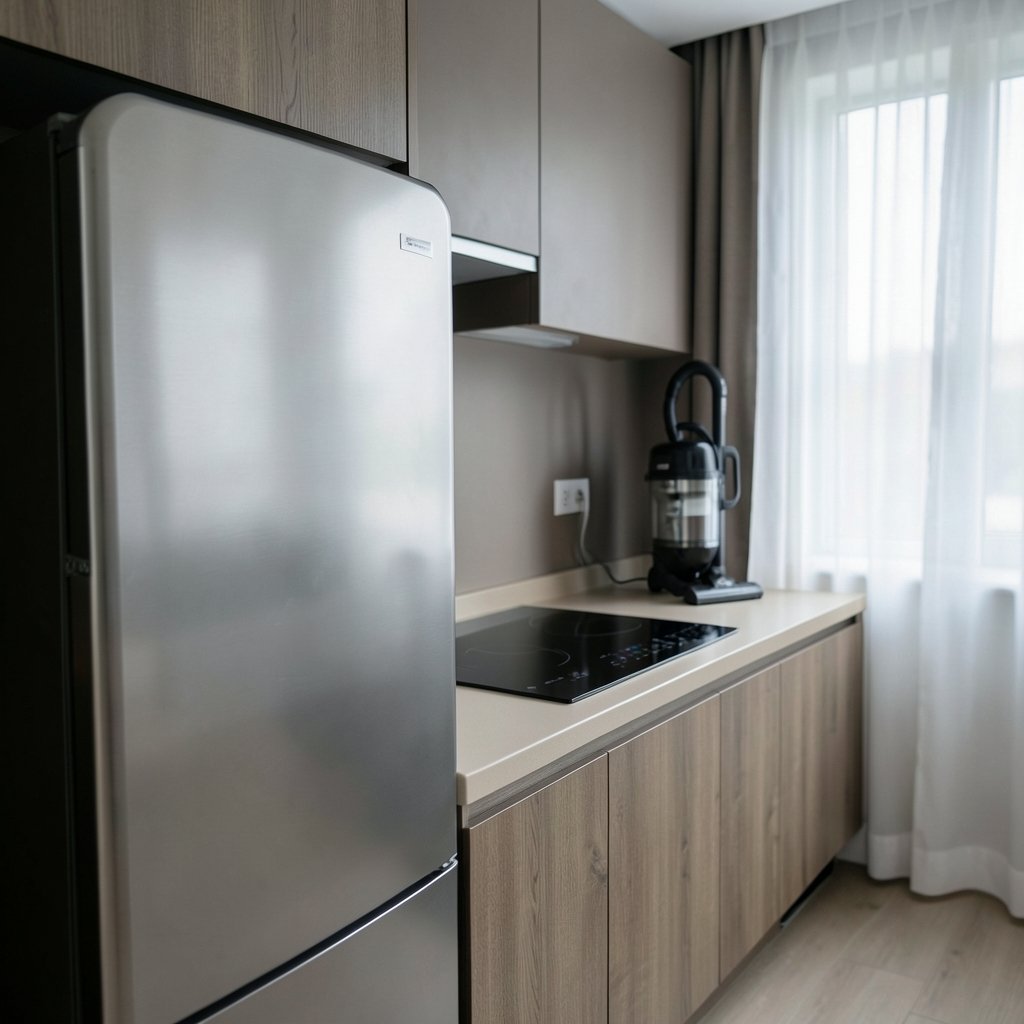
Quick Answer: What are the best home appliances?
There is no single “best” appliance, because the right pick depends on the category, your home, and how you actually use the machine. The best home appliances are the ones that score well on four things at once: low running costs, strong reliability, easy repair, and a good fit for your space and habits. (Best espresso machine for home)
A refrigerator is judged on energy use, capacity, and temperature stability, while a vacuum is judged on suction and filtration, and a range on cooking performance and safety. Comparing a washer to a toaster tells you nothing useful, so any list that crowns one machine the overall winner deserves a raised eyebrow.
Before buying, compare energy ratings, local electricity prices, repair history, spare-parts availability, warranty terms, noise levels, and physical dimensions.
Why “Best” Depends on the Category and the Label

Walk into any appliance showroom and you will see the same word plastered on every box: best. Best suction. Best capacity. Best in class. It is marketing, and it is everywhere.
The honest answer is that “best” is category-specific. A refrigerator earns its keep through energy efficiency, usable capacity, and steady temperatures. A vacuum lives or dies on suction and filtration. A range is judged on cooking performance and safety. There is no single cross-category ranking, and shoppers should treat any listicle that claims one with healthy skepticism.
What you can do is compare within a category using real, checkable criteria. In the US, the yellow EnergyGuide label must show estimated yearly energy use or cost for most major appliances, including refrigerators, freezers, dishwashers, washers, water heaters, room air conditioners, furnaces, boilers, and pool heaters. That label is a starting point, not a finish line, but it turns a vague “efficient” claim into a number you can compare.
Then there is ENERGY STAR, which is a government-backed label run jointly by the US EPA and the Department of Energy, not a retailer badge. Qualifying criteria are set per product category and revised periodically, so a model that qualified five years ago may not qualify today.
The Criteria That Actually Separate Good Appliances From Great Ones
Running costs beat sticker price
An appliance is a multi-year purchase. A cheaper machine that guzzles electricity can cost more over a decade than a pricier efficient model. The trick is converting the label’s kilowatt-hours into your local money. Average residential electricity prices vary widely by state and month, so the same refrigerator can cost twice as much to run in one region as another. Check your own rate before you trust any “annual cost” figure printed on a tag.
Efficiency standards are set by regulation
In the US, the Department of Energy’s Appliance and Equipment Standards Program covers more than 60 product categories and sets the test procedures manufacturers must follow. That matters because “efficient” claims are only comparable within the same test standard. A dishwasher’s energy and water numbers mean nothing if you compare them to a machine tested under different rules.
Reliability data is thinner than you think
Here is where buyers get led astray. The best public US source for reliability is the annual subscriber surveys published by Consumer Reports, and those are survey-based, not audited repair records. Academic and government repair-rate datasets are scarce. Treat any “most reliable brand” claim as opinion backed by surveys, not gospel.
Repairability is now a formal criterion
In Europe, ecodesign rules for washing machines, dishwashers, and refrigerators require spare parts availability for a set number of years and repair information for professional repairers. France’s repairability index scores products too. In the US, there is no equivalent score, so buyers have to ask directly: can I get a replacement pump in five years, and who fixes it?
Safety recalls are a real purchase factor
Before you buy any model, check the Consumer Product Safety Commission’s recall database by product. A great price on a recalled machine is not a great deal.
A Category-by-Category View
| Category | What “best” really means | Watch out for |
|---|---|---|
| Refrigerators | Low yearly energy use, stable temperatures, usable capacity | Oversized units that waste space and power |
| Washing machines | Water and energy per load, spin efficiency, spare-parts support | Cycles that only perform well on one setting |
| Dishwashers | Energy and water per cycle, drying performance, noise | “Quick” cycles that use more resources |
| Ranges and ovens | Cooking performance, safety features, ventilation needs | Poor hood pairing in small kitchens |
| Vacuum cleaners | Suction, filtration, repairability, bag or bin costs | Sealed systems you cannot service |
| Small kitchen appliances | Build quality, warranty, real-world repeatability | Features you will use twice |
That table is deliberately blunt, because the honest version of this advice is blunt. The best refrigerator for a family of five is not the best refrigerator for a studio apartment, and the best vacuum for a home with pets is not the best vacuum for bare floors.
Where Smart Features Fit In
Smart appliances are the newest variable in the “best” equation, and they split buyers cleanly. A connected oven that preheats from your phone is genuinely handy. A refrigerator with a tablet bolted to the door is mostly a conversation piece.
The practical question is ecosystem fit. If your home already runs on one platform, adding appliances that speak a different language creates friction. Buyers weighing a purchase should look at how the platform handles compatibility, privacy, and cost before committing, since a smart appliance is a decade-long relationship with a software company. The same logic applies to speakers and hubs that tie the kitchen together, and it is worth comparing how the major platforms treat your data and your wallet before you build a connected home around one of them. (Best smart speakers for home automation)
There is also a durability angle. More electronics means more parts that can fail, and repair networks for smart appliances are still maturing. A dumb machine with a good mechanical track record often outlasts a clever one.
Common Mistakes Buyers Make
The first mistake is shopping by brand reputation alone. Brands change ownership, factories, and quality control, and a name that earned loyalty in 2010 may not deserve it now.
The second is ignoring the installation cost. A new range may need a different electrical circuit. A washer may not fit the alcove. A refrigerator may not clear the doorway. Measure twice, and measure the delivery path too.
The third is buying the biggest capacity available. Bigger machines cost more to run and often run part-full, which wastes energy. Match capacity to household size.
The fourth is skipping the recall check. It takes two minutes and it has saved plenty of people from a bad surprise.
The fifth is forgetting the accessories. Filters, bags, descalers, and replacement parts add up, and some models lock you into expensive consumables.
Practical Tips That Actually Work
Read the EnergyGuide label first and the marketing copy second. Compare within a category only. Ask the retailer for the model’s repair history and spare-parts timeline in writing if you can. Check whether the warranty covers labor or parts only. Listen to the machine running if the store allows it, because noise is the complaint buyers mention most after the fact.
For smaller everyday purchases, the same discipline pays off. A good espresso machine for the home is judged on build quality, consistent temperature, and how easy it is to descale, not on how many buttons it has. A smart speaker is judged on how well it hears you and how it handles your data, not on its speaker grille design. Even sleep and comfort purchases follow the pattern: people searching for how to stop snoring at night with home remedies quickly learn that the gadget matters less than the habit.
Budgeting matters too. Appliance purchases often collide with bigger home projects, and homeowners weighing a renovation alongside a replacement should understand the difference between a home equity loan and a line of credit before signing anything. If a kitchen remodel is on the table, vetting home addition contractors properly will save more money than any appliance discount ever will.
How to Build a Shortlist Without Getting Lost
Start with the category you actually need. Write down three must-haves and one dealbreaker. Then filter by energy rating, check the recall database, confirm dimensions, and read the warranty. Only then should you compare prices.
A simple scoring sheet works better than gut feel:
- Energy use or yearly cost from the label
- Local electricity rate applied to that number
- Reliability signal from survey data or repair records
- Spare-parts availability and repair access
- Warranty terms, including labor
- Noise rating
- Physical fit and installation requirements
- Recall status
Score each on a simple scale, and the winner usually emerges fast. The machine that tops the list is rarely the one with the flashiest features. It is the one that quietly does its job for fifteen years without drama.
Conclusion
The best home appliances are not a fixed list. They are the machines that fit your home, your habits, and your budget while keeping running costs and repair risk low. Compare within categories, trust labels over slogans, check recalls, and ask hard questions about spare parts. Do that, and the “best” appliance becomes obvious, because it is the one you stop thinking about after the day it arrives.
The Bottom Line for Budget-Conscious Buyers
Price tags rarely tell the whole story, and the smartest shoppers treat an appliance purchase as a total-cost-of-ownership calculation. Add the sticker price, the estimated annual energy cost from the label, a reasonable allowance for filters or consumables, and the likely cost of one repair over the machine’s life. That number is the honest comparison point. A mid-priced model with strong efficiency and available parts frequently beats both the bargain-bin option and the premium flagship.
Timing matters as much as research. Retailers discount heavily around holiday weekends and at the end of model years, when floor stock must move before new inventory arrives. Buying last year’s model is often the single easiest way to save without sacrificing performance, provided you have already confirmed it meets your efficiency and size requirements. Manufacturer rebates and utility-run incentive programs can stack on top of sale prices, and many utilities publish rebate lists for qualifying efficient models. Check those before you negotiate.
Delivery and haul-away deserve a line in your budget too. Removing an old refrigerator or range often carries a fee, and some retailers waive it during promotions. Confirm whether installation includes the small parts—hoses, cords, vent kits—or whether those are billed separately at the door, which is where surprise charges tend to appear.
Finally, keep your paperwork. Registration cards, warranty terms, and the model and serial numbers stored in one place make future repairs and recall checks far easier. When a part fails in year six, the difference between a quick fix and a frustrating dead end is often whether you can produce the exact model number and proof of purchase. Good appliances reward a little forethought, and the buyers who plan for running costs, parts availability, and installation realities are the ones who end up satisfied long after the delivery truck pulls away.
Rebates and tax incentives can shift the math further. Several states and utilities offer point-of-sale discounts on efficient models, and federal programs have periodically expanded credits for qualifying appliances. These change often, so verify current terms rather than relying on last year’s advice. One last habit pays dividends: keep a simple maintenance calendar. Cleaning refrigerator coils, descaling a washer, and replacing filters on schedule cost little and extend service life noticeably. None of this is glamorous, but it is exactly what separates a machine that lasts from one that merely arrives. Choose deliberately, maintain consistently, and let the appliance fade into the background where it belongs.