What if the most powerful vacuum in your closet is the one with a cord, not the one with the touchscreen and the app? That old idea keeps proving itself. Cordless machines are convenient, but when a home has wall-to-wall carpet, a shedding dog, and three levels of stairs, many people go back to a corded model. It never runs out of charge halfway through the living room.
The trick is that “best” depends on the floor under your feet. A vacuum that wins on plush carpet can smear dust on hardwood. A budget upright can outclean a premium canister on pet hair and still be a nightmare on stairs. This guide walks through how corded vacuums actually work, where they beat cordless models, and the mistakes that make people buy the wrong one. It also covers the practical details most buying guides skip: air watts, HEPA claims, bagged versus bagless, and how to test a machine before the return window closes.
Why corded vacuums still win on raw, constant suction
A corded vacuum pulls power straight from the wall. That means full suction from the first minute to the last, with no fade as a battery drains. Cordless vacuums trade runtime and consistent power for portability. Neither design is wrong, but the trade-off is real, and it shows up fastest on deep carpet and long cleaning sessions.
Corded models also avoid battery degradation. A lithium pack loses capacity over a few years of heavy use. A corded motor keeps working until the motor or the hose gives out. For anyone vacuuming a whole house weekly, that math matters more than a docking station.
There is one more factor: heat and airflow. Corded motors can be built larger and run longer without the thermal limits that come with battery packs. That usually means stronger airflow at the nozzle, which is what actually lifts grit out of carpet pile.
The corded vacuum types and who each one suits
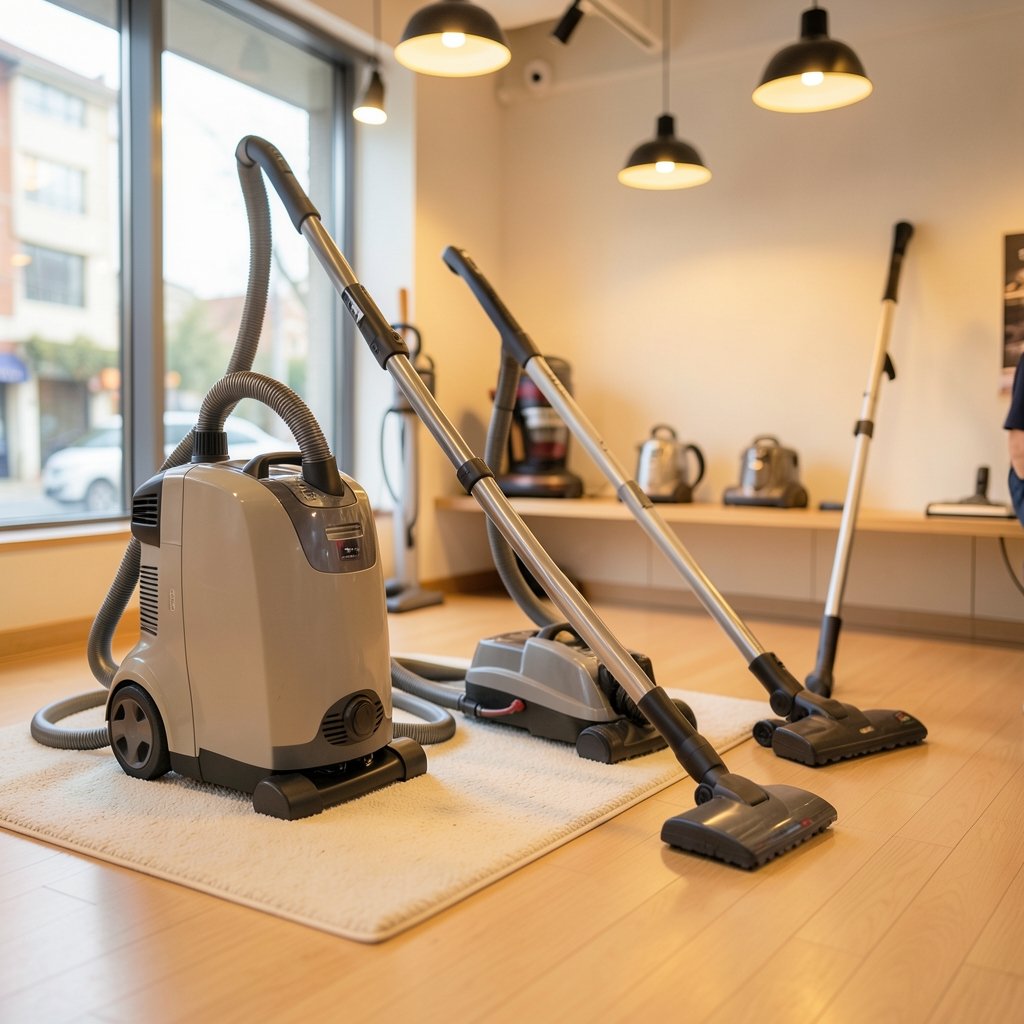
Buying guides often lump everything together. These are the real categories, and each one fits a different home.
| Type | Best for | Watch out for |
|---|---|---|
| Upright | Wall-to-wall carpet, pet hair, large open rooms | Heavy on stairs, bulky under low furniture |
| Canister | Hard floors, stairs, cars, homes with mixed flooring | Dragging the body around corners, hose tangles |
| Stick (corded) | Small apartments, quick daily passes | Small bins, weaker deep-carpet performance |
| Wet/dry | Renovation dust, spills, garages | Not a substitute for a fine-filter indoor vacuum |
An upright puts the motor and bin over the cleaning head, so weight presses the brush into carpet. That is why uprights often feel stronger on rugs. A canister separates the weight from the head, so the wand reaches under beds and up stair treads with far less effort. If a home is mostly hard floor with a few rugs, a canister with a good floor tool is usually the smarter pick. If it is mostly carpet, an upright tends to win.
Corded sticks sit in an awkward middle. They are light and cheap, but the bin is small and the suction is modest. They work for crumbs in a kitchen, not for a full carpeted house. If that is the goal, a cordless stick may actually make more sense, which is why the best vacuum mop combo options are worth comparing side by side before committing to a corded stick.
Suction numbers: what air watts and “Pa” really tell you
Marketing loves big numbers. Air watts, pascals, and “suction power” figures get printed in bold, but they are not measured the same way across brands. Air watts is a derived figure: airflow multiplied by pressure. A machine can post a high number on a test bench and still underperform in a real room because the nozzle, brush, and seal decide how much of that power reaches the carpet.
The relevant standards family for vacuum test methods is IEC 60312, which defines how airflow and pressure are measured. Even so, consumer packaging rarely states which method was used. That makes cross-brand comparisons shaky.
A practical rule: ignore the biggest number on the box and look at the cleaning head. A well-sealed nozzle with a stiff brush roll lifts more grit at lower power than a loose head at high power. This is also why the same vacuum can feel brilliant on one carpet and weak on another.
The EU power cap story, briefly
Europe once limited vacuum motor power to 1600 W, then to 900 W, under a 2013 energy-label regulation. That regulation was annulled by the General Court in November 2017 on procedural grounds, and the rules were later withdrawn. The legal status of the 900 W cap after that point is contested, so treat any “EU-banned powerful vacuums” claim with suspicion. What matters for buyers is cleaning performance on the floor, not the wattage printed on the label.
Filtration, dust re-emission, and the HEPA question
HEPA is one of the most abused words in vacuum marketing. In Europe, EN 1822 defines HEPA efficiency classes, with H13 and H14 capturing at least 99.95% and 99.995% of particles at the most penetrating particle size. In the US, IEST-RP-CC001 covers similar ground. Consumer vacuum “HEPA” claims are not always tested to either standard.
For allergy sufferers, the filter matters less than the seals. A perfect filter behind a leaky bin gasket just moves dust around the room. Look for a machine with a gasketed bin, a sealed motor housing, and a filter that is easy to remove without dumping a cloud of dust.
Bagged versus bagless is the same conversation. Bagged systems seal dust on disposal, which is gentler on airways. Bagless machines require emptying and filter cleaning, and that process can release fine dust back into the air. Neither is a health guarantee, but bagged designs are easier to live with if dust sensitivity is a concern.
Dust re-emission is also why lab results and living-room results diverge. Independent testers measure capture on standardized carpet under controlled airflow. A home has pet hair, tracked-in grit, and furniture legs. If a vacuum’s brush stalls on thick pile, no filter rating will save the pass.
Matching the vacuum to your floors, not the showroom
This is where most buying mistakes happen. A machine demoed on short office carpet can feel unstoppable, then bog down on a deep frieze rug. Before buying, think about the actual surfaces.
- Deep pile carpet: prioritize an upright with adjustable height and a strong brush roll. Check that the brush can be turned off for delicate rugs.
- Hardwood and tile: prioritize a canister with a soft floor tool and good edge cleaning. A spinning brush can scatter debris and scratch finishes.
- Mixed flooring: a canister with two tools, or an upright with a brush shutoff, covers both without a second machine.
- Stairs and cars: hose reach and tool storage matter more than motor size.
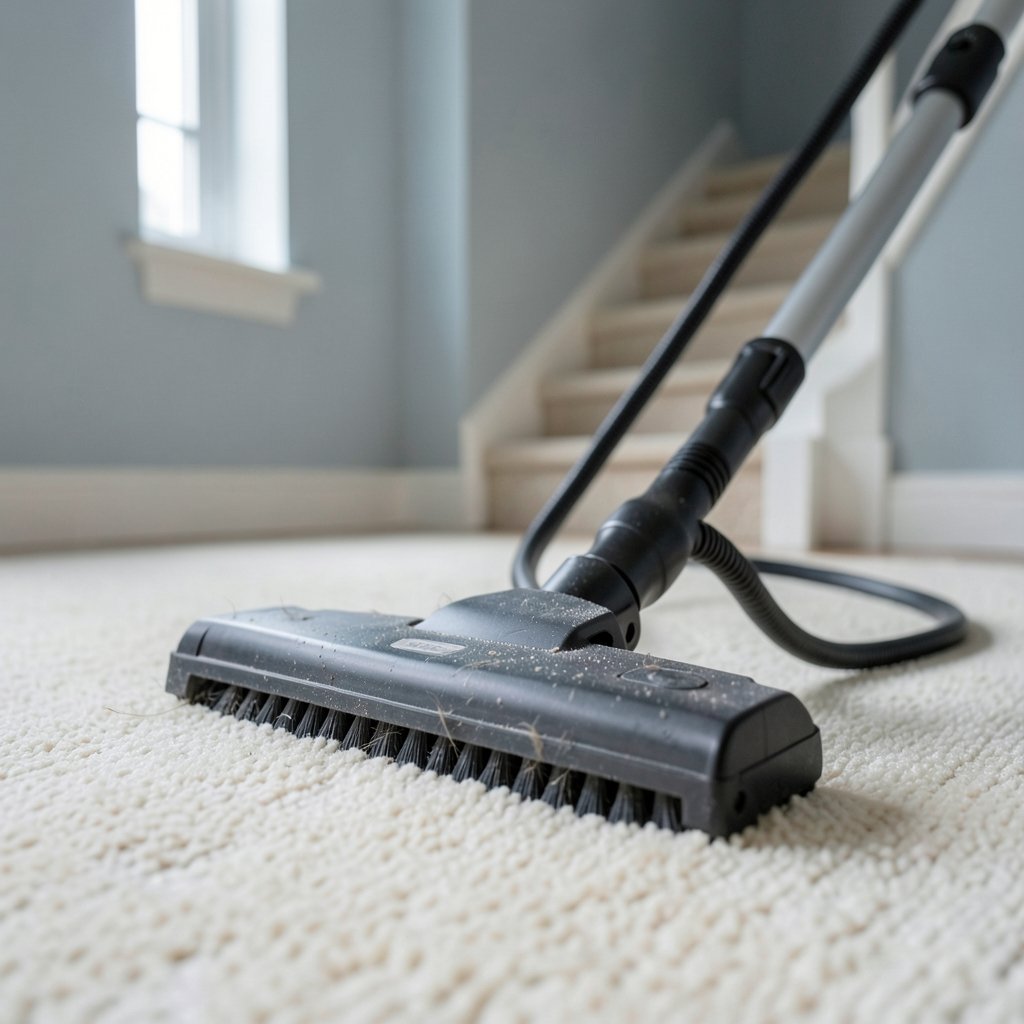
For carpet-heavy homes, it helps to compare how different machines handle pile height and embedded grit, which is the focus of this guide to the best vacuum for carpet. The short version: brush design and nozzle seal beat raw wattage every time.
Pet hair adds another layer. Long hair wraps around brush rolls and clogs turbines. Machines with removable brush rolls and tangle-resistant designs save hours of cutting hair off with scissors, a problem covered in detail in this look at robot vacuum long human hair actually works and the same principles apply to full-size corded brushes.
Weight, reach, and the details that decide daily use
A vacuum you dread hauling out gets used less. That is the quiet failure of many powerful corded machines. Weight distribution matters more than total weight. An upright that balances over the head feels lighter than a canister you drag by the hose.
Cord length is the other unsung spec. A 30-foot cord reaches most of a floor without replugging. A short cord means constant outlet hunting, which is exactly the friction that pushes people toward cordless. Check the cord length before you fall in love with the suction.
Hose reach matters for stairs and ceilings. A short hose forces you to carry the whole body up the steps. A long hose lets the canister sit at the bottom while you clean the top tread. Tool storage matters too: onboard tools that rattle loose get lost, and lost crevice tools mean dusty corners.
Common mistakes buyers make
- Buying on wattage alone. Cleaning performance depends on the head, seal, and airflow at the nozzle, not the motor rating.
- Skipping the brush-roll test. On a showroom carpet, run the vacuum over a pinch of rice or sand. If it leaves grit behind on one pass, it will do the same at home.
- Ignoring bin size. A tiny bin means stopping mid-room to empty it. Larger bins suit big homes.
- Assuming HEPA means sealed. Ask whether the whole system is sealed, not just the filter.
- Forgetting the stairs. If the home has stairs, test the hose reach and the carry weight before buying.
- Overlooking maintenance. Washable filters and removable brush rolls cut long-term cost and hassle.
Bagged or bagless, and the running-cost math
Bagless machines avoid bag purchases, but they need filter cleaning and eventually filter replacement. Bagged machines need a steady supply of bags, but emptying is cleaner and filters last longer. Over five years, the costs often land close. The real difference is effort.
If dust sensitivity is high, bagged wins on disposal. If the vacuum runs daily and bags are annoying to source, bagless wins on convenience. Either way, check that filters are genuinely washable and that replacement parts are easy to find. A great vacuum with unavailable filters becomes landfill fodder.
Corded versus robot: they solve different problems
Robots handle maintenance cleaning: daily crumbs, pet hair tumbleweeds, under-bed dust. They do not replace deep carpet extraction. A corded vacuum still does the weekly deep pass that resets a room. Many households end up with both, and that is not overkill. It is matching the tool to the job.
Robot navigation has improved a lot, and the differences between lidar and camera systems explain why some robots miss corners, as covered in this comparison of robot vacuum lidar vs camera navigation key differences pick. But no robot matches a corded upright on a thick rug. If deep cleaning is the goal, the cord stays.
How to test a corded vacuum before the return window closes
The showroom is a lie. Real rooms have thresholds, rug edges, and pet hair. Use the return window to run a proper trial.
- Vacuum one carpeted room on a single pass and check the bin. A good machine pulls visible grit and hair from carpet that looked clean.
- Run the edge tool along baseboards. Gaps mean weak edge suction.
- Clean a set of stairs. If your arm aches or the body keeps tipping, the machine is wrong for the home.
- Empty the bin or change the bag. If dust puffs out, filtration is compromised.
- Check the cord reach on the farthest room. Replugging twice per room gets old fast.
- Listen for brush stall on thick pile. A brush that stops on a rug is a design flaw, not a user error.
If a wheel or brush jams during the trial, do not panic. Many issues are simple fixes, and this guide to what to do when a robot vacuum wheel stuck error it happens fix it fast covers the same jam-and-clear logic that applies to corded brush rolls. The point is to test before the window shuts, not after.
Maintenance habits that keep suction strong
Corded vacuums lose performance slowly, so owners rarely notice. The fixes are simple.
- Empty the bin at half full, not when it is packed.
- Wash or replace filters on schedule. A clogged filter strangles airflow.
- Cut hair off the brush roll monthly.
- Check the hose for blockages after vacuuming anything crumbly.
- Store the cord loosely, not wrapped tight around hooks, which can crack insulation.
These habits keep a mid-range vacuum outperforming a neglected premium one. Maintenance is the cheapest upgrade available.
Conclusion
The best corded vacuum is not the one with the biggest number on the box. It is the one whose cleaning head matches the floors, whose weight and cord reach fit the home, and whose filtration and bin design suit the people living there. Corded machines still win on constant suction, long sessions, and deep carpet work. They lose on portability, which is why so many homes pair one with a cordless stick or a robot.
Start with the floor type, then the cleaning head, then the ergonomics. Test the machine in a real room before the return window closes, and keep the brush roll and filters clean. Do that, and a corded vacuum will outclean and outlast most of the gadgets that try to replace it.
Frequently Asked Questions
Is a corded vacuum stronger than a cordless one?
Usually, yes, on sustained suction. A corded vacuum draws continuous mains power, so it does not fade as a battery drains. That advantage shows most on deep carpet and long cleaning sessions. Cordless models win on portability and quick cleanups.
How many air watts do I need in a corded vacuum?
There is no universal target. Air watts is a derived measure of airflow times pressure, and brands do not test it the same way, so figures are not directly comparable. Focus on the cleaning head, brush design, and nozzle seal instead of chasing a number.
Is HEPA filtration worth paying extra for?
It can help, but only if the whole system is sealed. A HEPA filter behind a leaky bin gasket still releases dust. European EN 1822 classes H13 and H14 define high efficiency, and consumer “HEPA” claims are not always tested to that standard. Ask about sealed systems, not just the filter label.
Bagged or bagless: which is better for allergies?
Bagged systems generally seal dust on disposal, which is gentler on airways. Bagless machines need emptying and filter cleaning, and that can release fine dust. Neither guarantees clean air, but bagged designs are easier to live with if dust sensitivity is a concern.
What is the biggest mistake when buying a corded vacuum?
Buying on wattage or showroom suction alone. A machine demoed on short carpet can bog down on deep pile at home. Test it on your own floors during the return window, check cord reach and stair handling, and confirm filters and bags are easy to source.
Do corded vacuums still make sense if I own a robot vacuum?
Yes. Robots handle daily maintenance cleaning, but they do not replace deep carpet extraction. A corded vacuum does the weekly deep pass that resets a room. Many households use both because they solve different problems.