
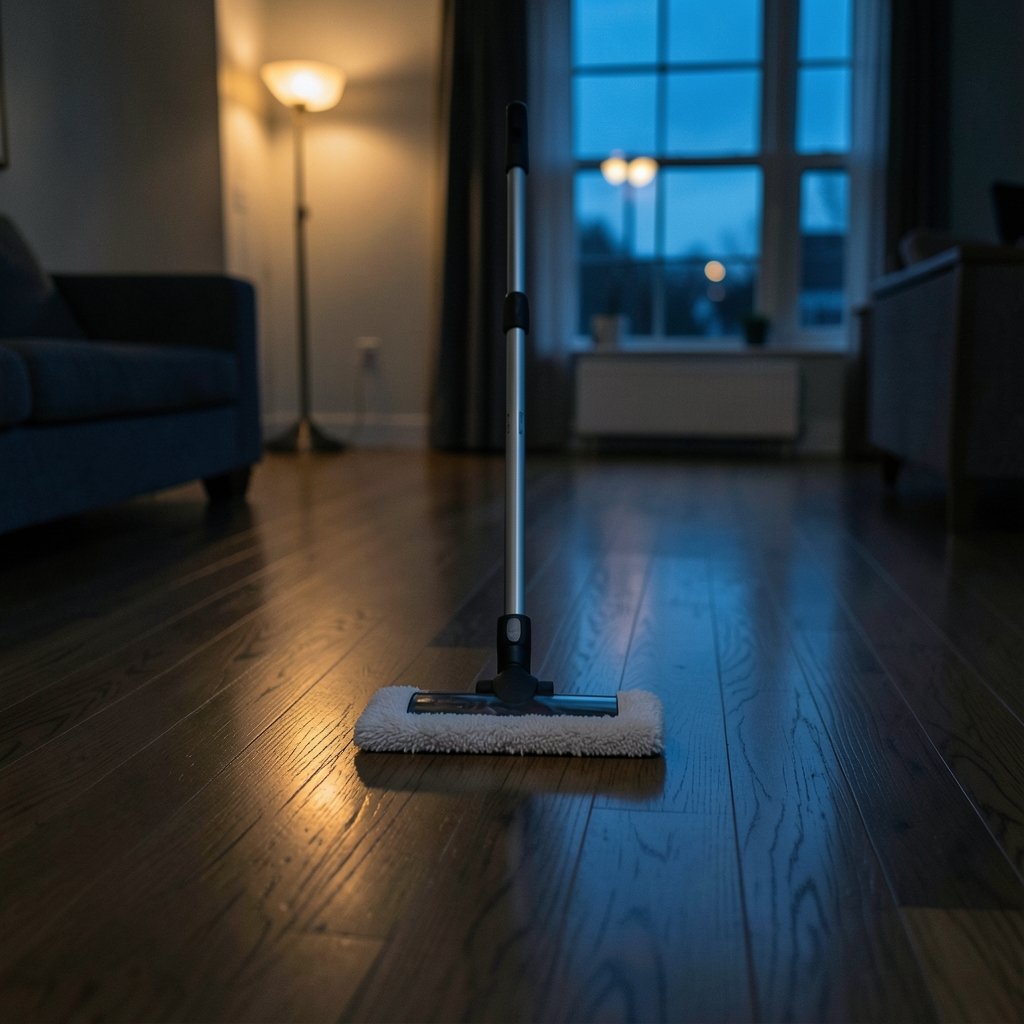
What good is a vacuum that leaves a trail of fine scratches across a floor you spent thousands on? Hardwood is unforgiving. Unlike carpet, it shows every grit particle dragged across its surface, every scuff from a stiff bristle, every dull patch where an abrasive head has been run too often. So the question of which stick vacuum belongs on hardwood is not really about suction. It is about what touches the floor, how the machine handles dust, and whether the thing is light enough that you will actually pull it out twice a day.
This guide walks through the features that matter, the specs that mislead, and the practical habits that separate a floor that still gleams after ten years from one that needs refinishing at five.
Why Hardwood Punishes the Wrong Vacuum
Carpet hides sins. It traps grit down in the pile, and a stiff brushroll can beat on it all day without visible damage. Hardwood has no such forgiveness. Fine sand, pet litter dust, and bits of road grit sit on the surface, and any rotating brush that contacts the floor can drag them along like sandpaper.
There is a second issue that gets less attention. Hard floors do not hold dust the way carpet does. Fine particles and allergens settle on the surface and get kicked back into the air the moment something disturbs them, whether that is a footstep, a pet, or a vacuum with leaky seals. That means filtration and airflow design matter more on bare floors than raw suction numbers do. A vacuum that picks up visible crumbs but blows fine dust out the back is doing half the job.
Finally, there is the finish itself. A modern polyurethane coating is tough and tolerates a soft powered roller. An oiled, waxed, or hand-scraped floor is a different animal: it needs gentler treatment, and some owners should skip powered heads entirely. Knowing which floor you have is step one, before any shopping happens.
The Head Is the Whole Ballgame
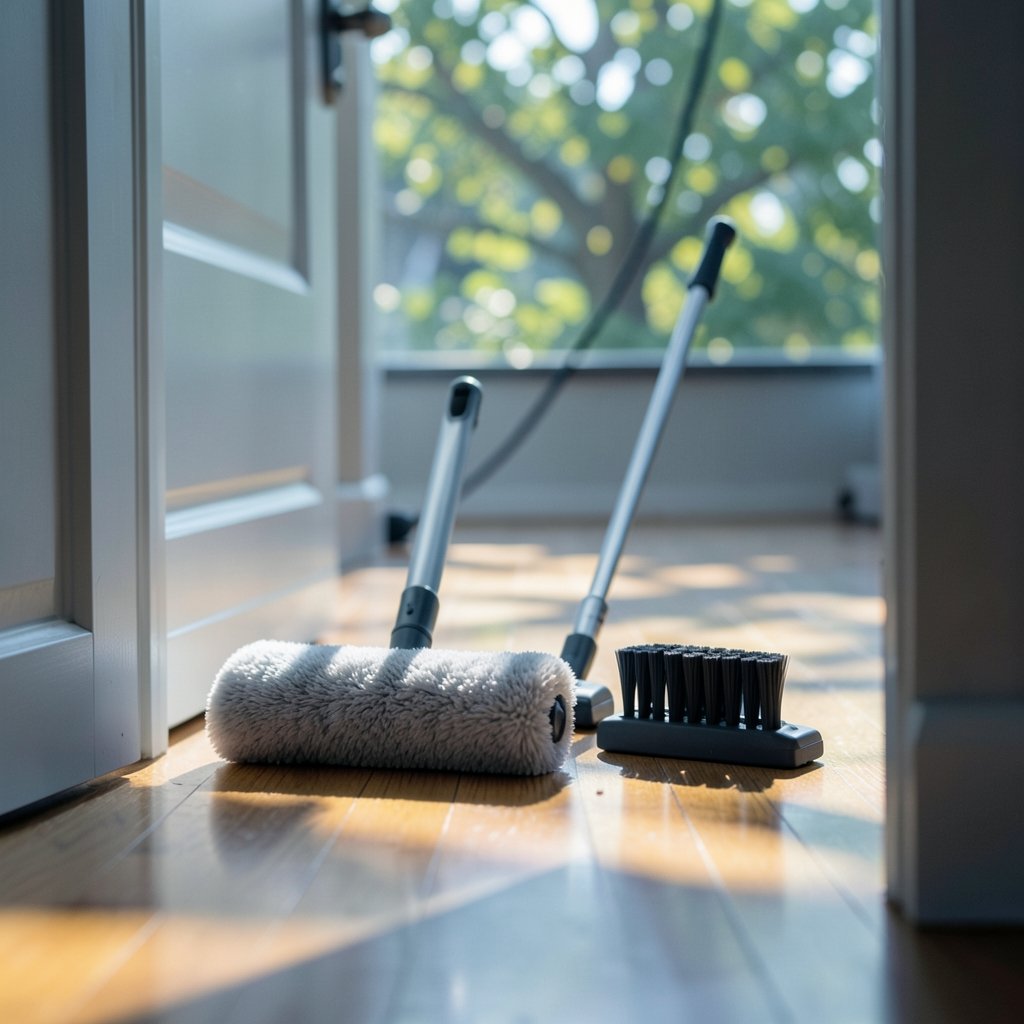
If you take one thing from this article, take this: the floor head decides whether a stick vacuum is safe for hardwood. Everything else is secondary.
Soft rollers versus stiff bristles
Most cordless stick vacuums ship with two heads. One is a motorized soft roller, usually a plush microfiber or fluffy cylinder designed for hard floors. The other is a bristled brushroll meant for carpet. The soft roller is the one you want on finished wood. It sweeps and lifts without aggressive contact. The bristle head can scratch, especially on glossy finishes, and it is the wrong tool for the job.
A surprising number of people never swap the heads. They assemble the vacuum with the carpet brush already attached, run it over oak for a year, and wonder why the finish looks tired. Check which head is mounted before the first pass.
Bare-floor nozzles: the safest option
For delicate, oiled, or waxed floors, a simple suction-only bare-floor tool is the most conservative choice. No brushroll, no rotation, no abrasion. It relies on airflow to pull debris up. It cleans slower and struggles with anything stuck on, but it will never scratch.
The trade-off is real. Powered soft rollers do a better job on textured or grooved boards, where dust settles into the grain and suction alone leaves it behind. If your floor is sealed polyurethane with visible texture, a soft powered roller is the better cleaner. If it is oiled or antique, reach for the passive nozzle.
The edge problem
Baseboards are where stick vacuums embarrass themselves. Many leave a two-centimeter strip of dust along every wall because the head housing is wider than the suction path. Look for a machine with a dedicated crevice or edge tool, or one whose head reaches flush to the housing. It sounds trivial until you are crouching with a handheld every second week to clean the perimeter.
Spec Sheet Traps That Fool Almost Everyone
Manufacturers are not lying, exactly. They are quoting numbers measured under conditions you will never reproduce. Here is how to read the box without being taken in.
| Spec | What the label implies | What it usually means |
|---|---|---|
| Run time | “Up to 60 minutes” | Lowest power, no powered head attached; high mode often runs 5 to 15 minutes |
| Suction (Pa or air watts) | Higher is better | Not standardized across brands, so cross-brand comparison is unreliable |
| Battery voltage | More volts, more power | Watt-hours matter more; Wh = V × Ah |
| HEPA filtration | Allergen-safe | Only meaningful if a standard and test report are stated |
| Weight | Lighter is easier | Balance and center of gravity matter as much as the number |
Run time is a marketing number
Every cordless vacuum quotes its longest possible run time, and that figure almost always comes from eco mode with the motorized floor head disconnected. Switch to high power with the soft roller spinning and the same machine may last ten minutes. That is not a defect. It is physics. Plan around the realistic figure, not the headline one.
Watt-hours beat volts
A 25.2-volt pack rated at 250 watt-hours holds more usable energy than a 29.6-volt pack rated at 200 watt-hours. Watt-hours equal volts multiplied by amp-hours, so the voltage number alone tells you almost nothing. If a listing hides the watt-hour rating, that is a signal in itself.
Suction numbers are not comparable
There is no enforced cross-brand standard for the pascal or air-watt figures printed on vacuum boxes, so a 200-air-watt claim from one brand may not mean the same thing as an identical claim from another. Treat these numbers as within-brand comparisons only, and lean on hands-on reviews and return policies instead.
HEPA means something specific
True HEPA filtration captures at least 99.97 percent of particles at 0.3 micrometers, the size most likely to slip through a filter. “HEPA-type,” “HEPA-like,” and “HEPA-style” are unregulated phrases with no defined performance. If allergies drive your purchase, look for a stated standard and an actual test report, not a badge.
Matching the Vacuum to Your Floor Finish
The right answer changes depending on what is on top of the wood. Use this as a starting filter before you look at any specific machine.
| Floor finish | Recommended head | Avoid | Notes |
|---|---|---|---|
| Polyurethane, factory-sealed | Soft powered roller | Stiff bristle brushroll | Most forgiving; tolerates regular powered cleaning |
| Site-finished poly | Soft powered roller, lower power | Aggressive brushroll on high | Let finish cure fully before first vacuum |
| Oiled or waxed | Suction-only bare-floor tool | Any powered brushroll | Re-oil on schedule; grit is the enemy |
| Hand-scraped or distressed | Soft roller on low, or suction-only | Stiff bristles, hard plastic edges | Texture traps dust; slow passes work better |
| Antique or shellac | Suction-only | Everything powered | Treat like furniture, not flooring |
One practical tip that costs nothing: vacuum often and gently rather than rarely and aggressively. Fine grit is what dulls a finish, and removing it before it gets walked into the grain does more for longevity than any single feature.
Weight, Balance, and the Honest Test of Usability
Stick vacuums generally land between 2.5 and 4 kilograms, or roughly 5.5 to 9 pounds. That range sounds narrow until you hold one at arm’s length for fifteen minutes.
Where the motor and battery sit changes everything. A top-heavy machine puts strain on the wrist and forearm. A unit with the mass low and close to the floor feels lighter than its spec sheet suggests. The only reliable test is to hold the vacuum in the store the way you would at home, arm extended, and notice your wrist after two minutes.
Two more practical points. First, check whether the battery pack is user-replaceable and what a replacement costs, because batteries are consumables and a sealed pack can turn a working vacuum into e-waste. Second, check the warranty length. One to two years on the unit is typical, and some brands cover the motor longer.
If you are also weighing a robot for daily upkeep between deep cleans, it is worth reading about the best robot vacuum mop combos that actually clean floors before committing budget in one direction.
Common Mistakes That Damage Hardwood
These come up again and again, and each one is avoidable.
- Leaving the carpet brushroll attached. The single most common cause of swirl marks on sealed wood. Swap to the soft roller or bare-floor tool and leave it there.
- Running full power on a delicate finish. High mode spins the roller faster and pulls harder. On oiled or waxed floors, low power with more passes is gentler and cleans just as well.
- Vacuuming before sweeping loose grit. A quick dry sweep or a pass with a microfiber pad removes the abrasive particles before the vacuum can drag them.
- Ignoring the filter. A clogged filter cuts airflow, which reduces pickup and pushes fine dust out through the seals. Wash or replace on schedule.
- Skipping the edges. Baseboard strips collect grit that gets kicked across the room. Use the crevice tool every time, not once a month.
- Storing the vacuum with a full bin. Debris sits, odors develop, and the next start blows dust back out.
Anyone dealing with shedding pets or long hair has an extra concern, since hair wraps around brushrolls and reduces cleaning contact. There is a useful breakdown of what works for robot vacuum long human hair if that is the household reality.
Where Stick Vacuums Fall Short on Hardwood
Honesty matters here. A stick vacuum is a convenience tool, not a deep-clean machine. It excels at daily touch-ups, crumbs, pet hair, and the constant light dusting that hardwood demands. It is poor at extracting grit from deep grooves, and its small bin fills fast on a big open floor plan.
Households with mostly hard flooring and a large area often do better with a corded canister for weekly deep cleans plus a stick for daily passes. If you are also maintaining carpeted rooms, it helps to know what makes a vacuum for carpet genuinely effective, since the two floor types pull requirements in opposite directions.
Navigation and sensor technology also affect how much effort a machine demands. Cameras and lidar change how a vacuum maps a room, and the trade-offs are worth understanding if you plan to add a robot later; this comparison of robot vacuum lidar vs camera navigation covers the practical differences.
How to Test a Stick Vacuum Before You Commit
Buy from a retailer with a real return window, then run this sequence in the first week.
- Vacuum a two-meter stretch of hardwood on the lowest power setting with the soft roller and inspect the finish in raking light.
- Run the same stretch on high power and compare for new marks.
- Time the run on high with the powered head attached. Ignore the box claim.
- Vacuum along a baseboard and check how much dust remains in the corner.
- Empty the bin and note how much fine dust came up versus visible debris.
- Hold the machine at arm’s length for two full minutes and assess wrist fatigue.
If any step fails, return it. A vacuum that scratches, clogs, or tires your arm will end up in a closet, and a closet vacuum cleans nothing.
Conclusion
The best stick vacuum for hardwood floors is not the one with the biggest suction number or the longest quoted run time. It is the one with a soft roller or bare-floor tool that never scratches, sealed filtration that keeps fine dust out of the air, a battery rated in honest watt-hours, and a weight and balance that make daily use effortless. Match the head to your finish, read the spec sheet with suspicion, and test the machine in your own home while you still can return it. Do that, and your floor will still look finished a decade from now.
Frequently Asked Questions
Can I use a regular stick vacuum on hardwood floors?
Yes, but only with the right head attached. Most stick vacuums include a soft roller or bare-floor nozzle designed for hard surfaces. The bristled carpet brushroll is the part that causes scratches, so swap it before the first pass and leave it off.
Do I need a special vacuum for oiled or waxed hardwood?
Oiled and waxed finishes are softer and more vulnerable than polyurethane, so a suction-only bare-floor tool is the safer choice. Skip powered brushrolls entirely, vacuum on the lowest setting, and keep up with the manufacturer’s re-oiling schedule to maintain the protective layer.
Is HEPA filtration necessary for hardwood floors?
It helps if anyone in the home has allergies. Hard floors do not trap fine dust the way carpet does, so particles resuspend easily. True HEPA captures at least 99.97 percent of particles at 0.3 micrometers, but only trust a stated standard and test report, since “HEPA-type” is unregulated marketing language.
How long does a cordless stick vacuum really run?
Usually far less than the box claims. Quoted figures like 60 minutes typically come from the lowest power setting with no powered head attached. On high power with a motorized roller spinning, expect somewhere between 5 and 15 minutes. Buy a spare battery if run time matters.
Can a stick vacuum scratch hardwood floors?
It can, and the usual culprit is a stiff bristle brushroll dragging grit across the finish. Soft rollers and suction-only heads are safe when used correctly. Vacuuming up loose sand before a pass, and avoiding high power on delicate finishes, removes most of the risk.
Should I choose a stick vacuum or a canister for hardwood?
It depends on the job. Stick vacuums win for daily touch-ups, light dust, and pet hair because they are quick to grab. Corded canisters win for weekly deep cleans on large floors, thanks to stronger sustained suction and bigger bins. Many hardwood homes benefit from owning both.



