
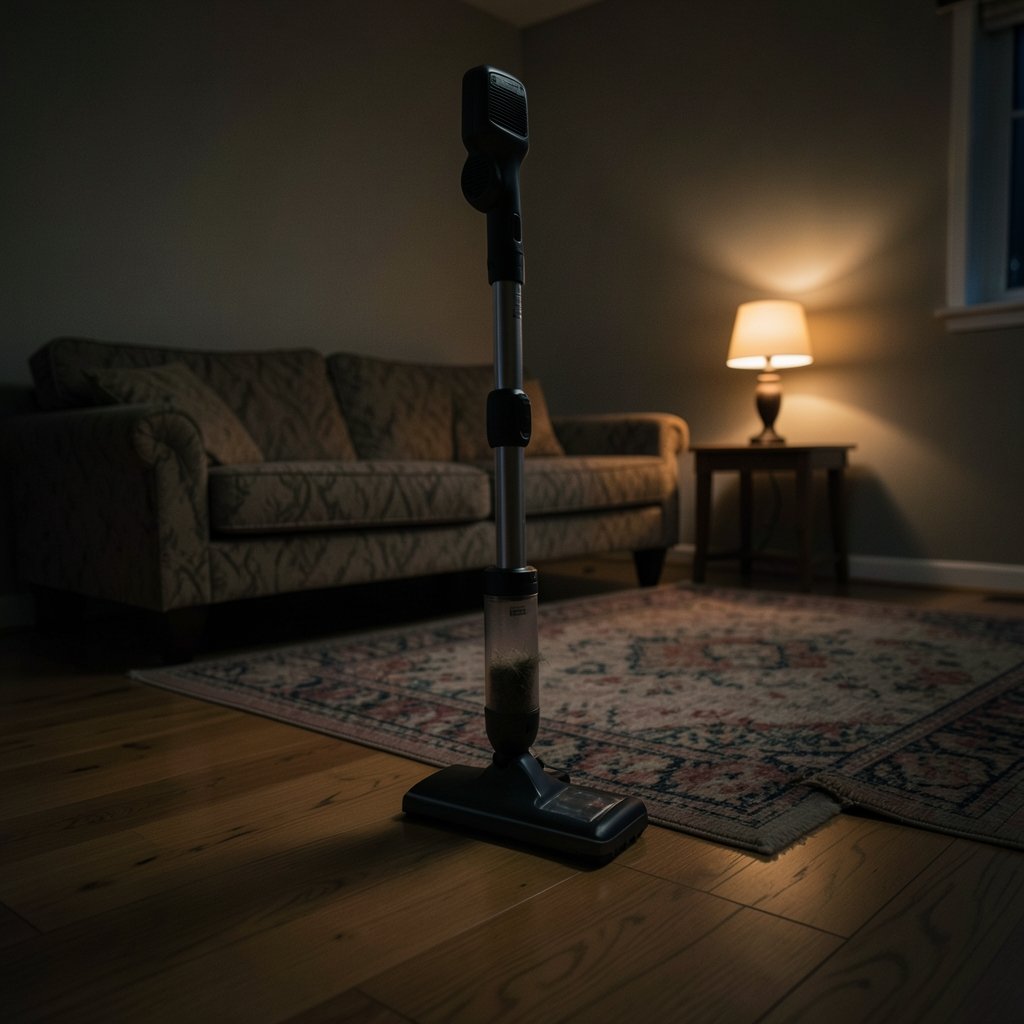
What if the biggest problem with your next vacuum isn’t suction at all, but the battery, the bin size, and the way you actually clean your floors? That’s the trap most cordless stick vacuum shoppers fall into. The spec sheet shouts about air watts and “HEPA” badges, while the real-world experience hinges on quieter details. This guide cuts through the marketing and focuses on what changes your daily routine: runtime, weight, filtration honesty, and how the tool handles the messy stuff, from pet hair to black carpet.
What Makes a Cordless Stick Vacuum Different
A cordless stick vacuum is a battery-powered upright with the motor, dust bin, and battery packed into a slim wand-and-handle assembly. Most weigh between 1.5 and 3.5 kg. The form factor was popularized by Dyson’s DC35 in 2010 and refined by the V8 in 2016 and later models. The appeal is obvious: grab it, clean a room, hang it back on the wall. No cord to trip over, no outlet hunt.
But that convenience comes with trade-offs baked into the design. The battery and motor share space with the bin, so capacity shrinks. Power is limited by what a battery pack can deliver. And the whole machine has to stay light enough to lift overhead for cobwebs and stairs. Understanding those compromises is the difference between a vacuum you love and one that sits in a closet.
Battery Chemistry and Runtime: The Real Story
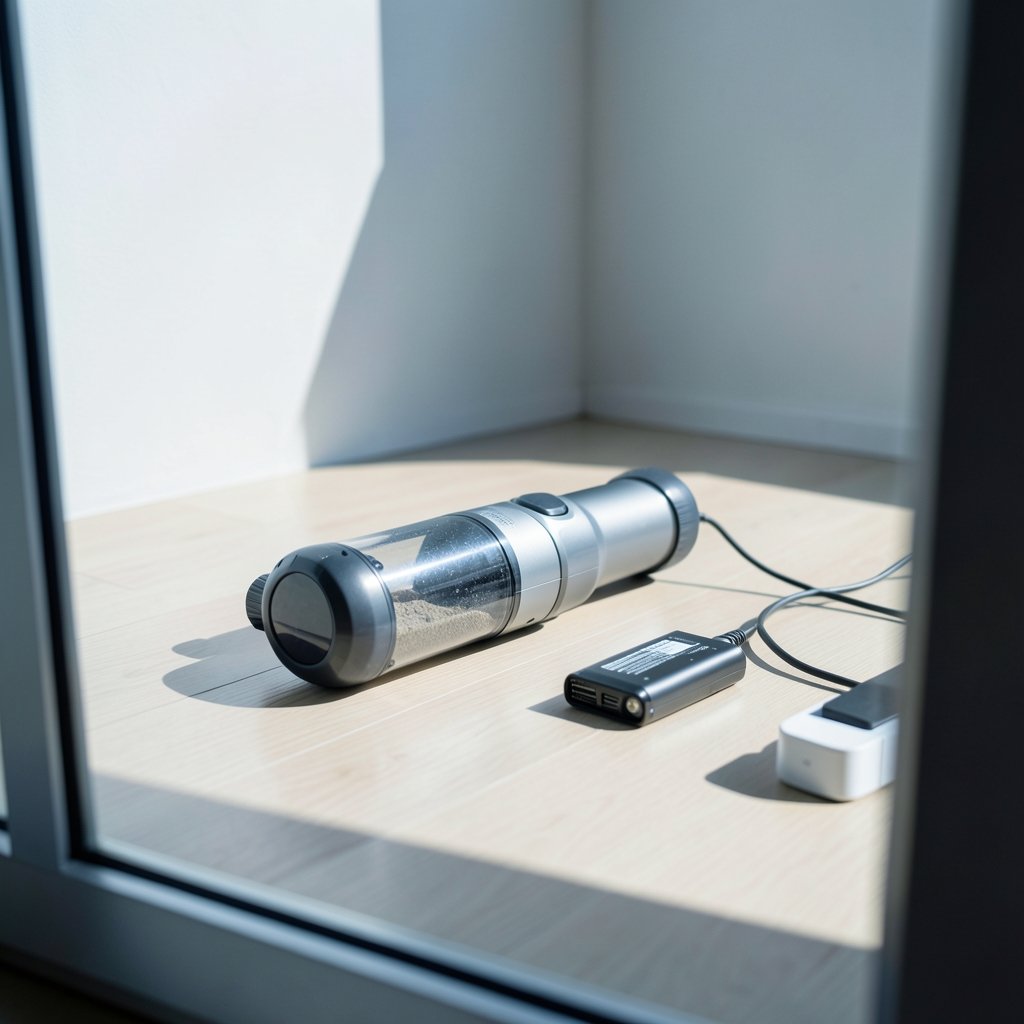
Most current cordless stick vacuums use lithium-ion cells, commonly in 18650 or 21700 format. Nominal pack voltages run roughly 18 to 25 volts, marketed as “20V” or “21.6V,” though some systems push to 36 or 40 volts. Higher voltage doesn’t automatically mean better cleaning, but it often supports stronger suction on maximum power.
Runtime is where the marketing gets slippery. Typical figures land at 20 to 60 minutes on eco mode and just 5 to 15 minutes on maximum power. That’s a huge spread, and it matters. A vacuum that runs 50 minutes on low but only six minutes on high is really a six-minute deep-clean machine with a long touch-up mode. Think about how you clean. If you do quick daily passes, eco runtime is your number. If you tackle a whole house once a week, maximum-power runtime is the one that counts.
Replaceable Batteries and the EU Rules
Here’s a detail buyers overlook until year three, when the battery fades. Under Regulation (EU) 2023/1542, which entered into force on 17 August 2023 and replaced Directive 2006/66/EC, portable batteries in appliances are generally meant to be removable and replaceable by end users. There are derogations, including for devices designed to operate in wet environments and cases where a qualified professional is required. The regulation also introduces staggered requirements on carbon footprint, recycled content, and labeling.
Why does this matter outside Europe? Because manufacturers sell globally, and design decisions tend to travel. A vacuum with a user-swappable battery pack is a longer-lived purchase. Check before you buy whether the battery is a standard removable pack or sealed inside the housing. If it’s sealed, plan for the whole unit’s lifespan to match the battery’s.
Suction, Air Watts, and Why Numbers Don’t Compare
Manufacturers love to quote suction in pascals or air watts. The problem: test methods differ across brands, so the figures are rarely comparable. A 150-air-watt claim from one company and a 200-air-watt claim from another don’t tell you which cleans better on your hallway runner. Treat these numbers with caution and look for independent testing or hands-on reviews instead.
What actually predicts cleaning performance is the combination of airflow, brush bar design, and sealing against the floor. A well-sealed floor head with a decent motor beats a high-suction motor leaking air around a poorly designed head. This is also why the same vacuum can feel great on hard floors and mediocre on thick carpet. If carpet is your main surface, it’s worth reading up on what makes a vacuum genuinely effective on carpet rather than trusting a spec sheet. (Robot vacuum cliff sensors fail black carpet works)
Filtration: What “HEPA” Really Means
HEPA filtration is defined by EN 1822 in Europe and IEST-RP-CC001 in the US. HEPA typically means removing at least 99.95 percent (EN) or 99.97 percent (US) of particles around 0.3 micrometers. Many stick vacuums claim “HEPA filtration,” but whether the whole appliance meets the standard is often unclear. A HEPA-grade filter media inside a housing with leaky seals doesn’t deliver HEPA performance at the exhaust.
For allergy sufferers, this is worth pressing on. Look for machines with fully sealed systems and multi-stage filtration, and remember that filters need cleaning and eventual replacement. A clogged filter cuts suction and can push fine dust back into the room. Washable filters are convenient but need proper drying time, usually 24 hours, before reinstalling.
Weight, Balance, and the Overhead Test
Weight specs tell only part of the story. Balance matters more. A 2.5 kg vacuum with the battery near the handle feels lighter in hand than a 2 kg model with a top-heavy motor. When shopping, imagine holding the machine at arm’s length above your head. That’s the cobweb and ceiling-corner test, and it’s where poorly balanced sticks betray you.
Also consider the wrist torque when the brush bar spins on thick carpet. Strong brush rolls can make a light vacuum pull forward hard. Variable speed or a carpet-specific mode helps, and so does a swivel head that lets you steer rather than fight.
Dust Bin Capacity: The Small-Bin Problem
Typical cordless stick bins hold 0.3 to 0.8 liters, versus 1.5 to 3 liters for corded uprights. That’s a real limitation. On a first deep clean of a carpeted home, you may empty the bin two or three times in a single room. Pet owners feel this most.
The fix isn’t necessarily a bigger bin, which adds weight. It’s a bin design that empties cleanly. Look for a wide mouth and a mechanism that drops debris straight into the trash without you reaching in. Some bins trap hair around the cyclone, requiring a manual pull. That’s a small annoyance that becomes a big one over years of use.
Hard Floors, Carpet, and Pet Hair
Cordless sticks shine on hard floors and low-pile carpet. On thick pile, airflow drops as the head sinks in, and runtime on high power becomes the limiting factor. For homes with a mix of surfaces, a model with an adjustable floor head and a soft roller for hard floors covers more ground.
Pet hair and long human hair are the classic clog culprits. Hair wraps around brush bars and stalls them. Models with anti-tangle combs or rubber fins handle this far better than bristle brushes. If long hair is a household reality, it’s worth checking how a vacuum performs on long human hair before committing, because a tangled brush bar turns a five-minute job into a twenty-minute one.
Noise, Debris, and the Sensors You Didn’t Know About
Cordless stick vacuums commonly run at 70 to 85 dB(A), measured per IEC 60704 test methods. That’s loud enough to interrupt a conversation and startle pets. Eco modes help, and some models offer a genuinely quiet low setting.
One overlooked issue: cliff sensors and dark floors. Many robot vacuums struggle with black carpet because infrared sensors read it as a drop-off. Stick vacuums don’t have this problem, but if you also run a robot, it helps to know why cliff sensors fail on black carpet and how to work around it. Similarly, if you use a robot mop, the cleaning fluid you choose affects results; some cleaning fluids for robot vacuums work better than the default. (Robot vacuum cleaning solution alternatives that actually)
Cordless Stick vs. Robot vs. Corded: A Quick Comparison
| Factor | Cordless stick | Robot vacuum | Corded upright |
|---|---|---|---|
| Runtime | 20–60 min eco, 5–15 min max | 60–180 min | Unlimited |
| Bin capacity | 0.3–0.8 L | 0.3–0.6 L | 1.5–3 L |
| Weight | 1.5–3.5 kg | 3–5 kg | 5–8 kg |
| Best for | Quick daily cleans, stairs, cars | Hands-off maintenance | Deep cleans, large homes |
| Weakness | Battery life, small bin | Misses edges, sensors fail on dark floors | Cord, heavy |
Many households end up with two tools: a cordless stick for fast touch-ups and a robot or corded machine for deep work. If you’re weighing a combo unit, it helps to know which robot vacuum mop combos actually clean floors rather than just smear water around. And if you’re comparing a vacuum mop combo against a plain stick, the decision usually comes down to whether you want mopping built in or done separately.
Practical Tips and Common Mistakes
Mistake one: buying on suction alone. The floor head and seal matter as much as the motor. Test the head on your actual flooring if you can.
Mistake two: ignoring the battery replacement path. A sealed battery means a disposable vacuum. Check for a removable pack.
Mistake three: skipping filter maintenance. Wash filters on schedule, dry them fully, and replace them when performance drops. A dirty filter mimics a dying motor.
Mistake four: overfilling the bin. Debris backs up into the cyclone and chokes airflow. Empty at the fill line, not when it’s packed.
Mistake five: storing on the charger in a hot garage. Heat degrades lithium-ion cells. A cool, dry wall mount extends battery life.
Tip: Use eco mode for daily passes and save max power for weekly deep cleans. You’ll get months more from each charge cycle.
Conclusion
The best cordless stick vacuum isn’t the one with the biggest suction number or the loudest HEPA badge. It’s the one whose runtime matches your cleaning rhythm, whose battery you can replace, whose bin empties without a fight, and whose weight you can lift overhead without cursing. Get those fundamentals right and the spec-sheet war fades into background noise. Get them wrong and you’ll own an expensive closet ornament. Start with your floors, your hair situation, and your patience for charging, then let the numbers follow.
Frequently Asked Questions
How long does a cordless stick vacuum battery last?
Most run 20 to 60 minutes on eco mode and only 5 to 15 minutes on maximum power. Runtime depends heavily on the mode, floor type, and motor load. Expect the battery pack itself to hold a useful charge for roughly two to four years of regular use before capacity noticeably fades.
Is a cordless stick vacuum good for carpet?
It works well on low-pile carpet and area rugs. On thick pile, airflow drops as the head sinks in, and maximum-power runtime becomes the limiting factor. For wall-to-wall plush carpet, a corded machine or a stick with a strong carpet-specific head and decent max-power runtime is the safer pick.
What does HEPA mean on a stick vacuum?
HEPA filtration is defined by EN 1822 in Europe and IEST-RP-CC001 in the US, typically meaning at least 99.95 or 99.97 percent removal of particles around 0.3 micrometers. Many stick vacuums claim HEPA, but whether the whole appliance meets the standard is often unclear. Look for a fully sealed system, rather than only a HEPA-grade filter.
Can I replace the battery in a cordless stick vacuum?
Often yes, but it depends on the model. Under EU Regulation 2023/1542, portable batteries in appliances are generally meant to be removable and replaceable by end users, with some derogations. Check the spec before buying. A user-swappable pack significantly extends the machine’s useful life.
Why does my stick vacuum lose suction?
The usual culprits are a clogged or damp filter, a full bin, or hair wrapped around the brush bar. Wash and fully dry filters on schedule, empty the bin at the fill line, and cut tangled hair off the brush roll. If suction stays weak after all three, check the wand and floor head for blockages.
Are cordless stick vacuums loud?
Most operate at 70 to 85 dB(A), measured per IEC 60704 test methods. That’s comparable to a normal conversation pushed up to a raised voice. Eco modes are quieter, and some models include a genuinely low setting that’s easier on pets and early-morning neighbors.



