
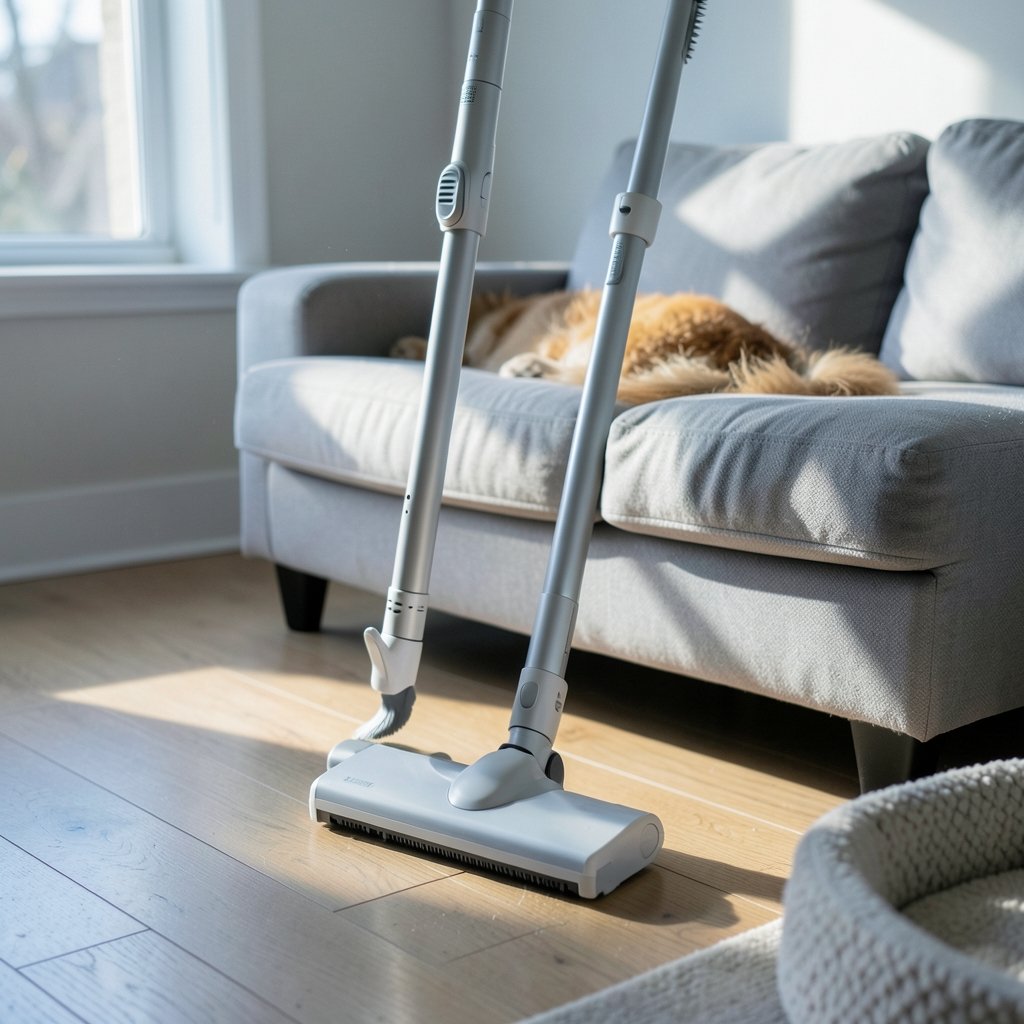
What is the fastest way to get a couch full of golden retriever fur back to normal before guests arrive? For most pet owners, the answer is a cordless vacuum grabbed from the closet, not a heavy upright dragged out of the basement. That convenience is exactly why cordless models have become the default cleaning tool in pet households. But not every cordless vacuum handles fur well, and the marketing labels rarely tell you which ones do.
This guide breaks down what matters when you shop for a cordless vacuum for pet hair: airflow, brush design, filtration, battery reality, and the maintenance habits that keep a vacuum working past year one. It also covers where cordless models fall short, because they do.
Why pet hair is harder than regular dust
Pet hair is not one substance. It is a mix of coarse fur, fine undercoat, skin flakes, and the proteins that ride on those flakes. Those proteins are the actual allergens, and they are sticky. They settle into upholstery, carpet fibers, and bedding rather than sitting on top where a light pass can lift them.
That has two practical consequences. First, a vacuum needs real suction and agitation to pull embedded fur out of fabric, rather than only enough power to skim the surface. Second, whatever the vacuum stirs up has to be captured, or the machine simply redistributes allergens around the room. A vacuum that picks up visible fur but leaks fine dust out of its seams has solved half the problem.
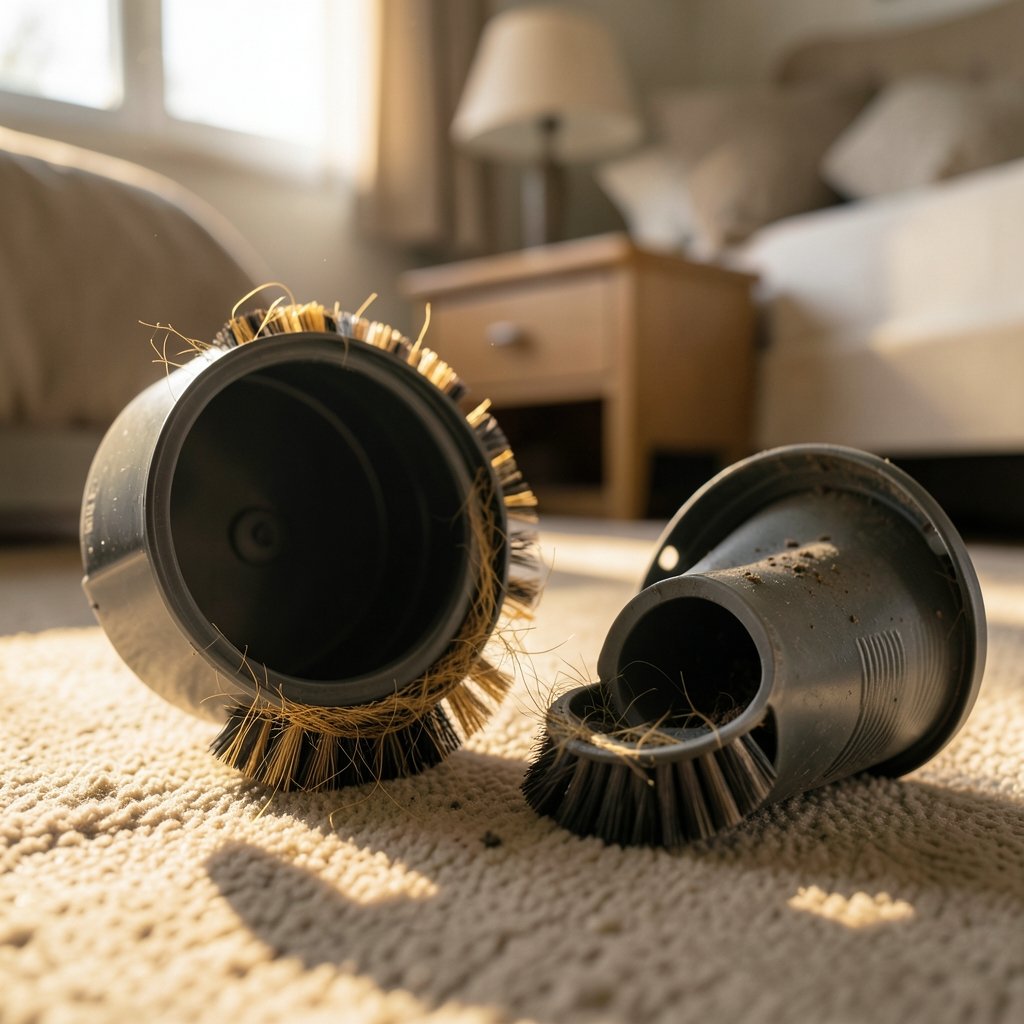
Long hair adds a second failure mode. Hair wraps around rotating brush rolls, builds up, and slowly kills agitation. Anyone who has cut a matted clump of hair off a brush bar knows the drill. If your household has both pets and people with long hair, look for anti-tangle designs and check the robot vacuum long human hair actually works breakdown for how different tangle-resistant designs perform in practice.
The features that actually matter for pet hair
Sealed filtration beats a HEPA sticker
A HEPA filter is defined by capture efficiency: at least 99.97% of particles at 0.3 micrometers, the size most likely to slip through. That number is meaningful, but only if air actually passes through the filter. If the bin seal is loose or the filter housing doesn’t sit flush, air takes the easy path and fine dander goes back into the room.
In practice, this is the single most overlooked spec. Shoppers compare filter labels and ignore gaskets. A quick check at the store or on unboxing: run the vacuum with an empty bin over a dark surface, or look for visible dust trails around the bin and exhaust. A well-sealed system leaves no plume.
Brush roll design decides how much fur comes out of carpet
On carpet, a motorized brush roll is non-negotiable. Soft rollers and suction-only heads work well on hard floors but glide over carpet without disturbing embedded fur. The trade-off is maintenance: bristle brushes grab hair, and hair wraps.
Look for a brush with a comb, fin, or counter-rotating element designed to shed hair, and check whether the brush roll pops out without tools. A brush you can remove and clean in thirty seconds gets cleaned. A brush that requires a screwdriver does not.
Soft rollers for hard floors, brushes for carpet
Pet hair on tile and hardwood behaves differently. It clumps, drifts, and static-clings to baseboards. A soft roller picks it up cleanly without scattering it, and it does not scratch finishes. Many cordless vacuums ship with one head and sell the other separately, so factor that into the price. If your home is mostly hard floor with a couple of rugs, a soft roller plus a small motorized head covers nearly everything.
Weight and balance for daily use
Pet owners vacuum more often than anyone else, often twice a day during shedding season. A vacuum that feels fine for a five-minute test can feel miserable after the tenth trip around the kitchen. Two things matter more than the spec sheet weight: where the weight sits (a top-heavy stick tires your wrist) and whether the handle lets you choke up for overhead work like stairs and couch backs.
Cordless versus corded for pet households
| Factor | Cordless | Corded |
|---|---|---|
| Convenience | Grab and go, no cord wrangling | Requires outlet access |
| Runtime | Limited by battery, often 10–40 minutes | Unlimited |
| Suction consistency | Drops as battery drains | Constant |
| Deep carpet cleaning | Good on low-pile, weaker on deep pile | Generally stronger |
| Weight | Lighter, easier on stairs | Heavier |
| Best use | Daily touch-ups, hard floors, upholstery | Weekly deep cleans, heavy shedding |
The honest answer for most pet homes is not either/or. A cordless vacuum handles the daily fur drift on hard floors and furniture. A corded vacuum or a best vacuum mop combo still earns its space for weekly deep cleaning on carpet. If you are weighing whether a combo unit can replace both, the guide to best robot vacuum mop combos actually cleans floor covers where those machines genuinely deliver and where they don’t.
Battery and runtime: read the fine print
Manufacturers quote runtime at the lowest power setting, with a fresh battery, often without a motorized head attached. Real-world runtime in max mode is frequently a third of the headline number or less. That is not a scandal, it is just how the numbers are reported, but it means the quoted figure is a ceiling, not an expectation.
Three habits make battery life manageable:
- Buy a model with a removable battery, and consider a spare if you have a large home.
- Use auto or eco mode for daily passes and save boost mode for spot work.
- Store the vacuum on the charger so it starts full, and avoid leaving it at zero for long stretches, which shortens battery life.
Also check the replacement battery price before you buy. Batteries are consumables. A vacuum with an affordable, readily available battery can outlast one with a sealed, expensive pack.
Filtration, allergens, and what vacuuming can and cannot do
Vacuuming removes allergen reservoirs, but it is one part of environmental control, not a cure. Allergy guidance generally emphasizes reducing soft surfaces, washing bedding, and filtration alongside cleaning. A vacuum with sealed HEPA filtration helps by not adding to the airborne load, but no cordless vacuum will eliminate pet allergens from a home with a resident cat or dog.
That framing matters for expectations. A good cordless vacuum makes the floor visibly clean and reduces the reservoir of fur and dander. It will not stop a sensitive person from reacting. If allergies are the main driver, pair vacuuming with HEPA air filtration and washable covers on the furniture pets use most.
Mistakes people make with cordless pet vacuums
Never cleaning the filter. Pet hair loads filters fast. A clogged filter cuts suction long before the battery dies, and people blame the battery. Rinse or replace per the manual, and let filters dry completely before reinstalling.
Letting the bin overfill. Cordless bins are small. On a shedding day, a full bin chokes airflow. Empty after every use during heavy shedding.
Ignoring the brush roll. Hair wrap is gradual, so the decline in performance is invisible until the brush stops turning. Check it weekly.
Skipping the pre-filter. Many models have a washable foam pre-filter ahead of the HEPA filter. It catches the bulk of the fur and extends the HEPA filter’s life. It is also the part people forget.
Buying for the label, not the seal. A HEPA-grade filter in a leaky housing underperforms a well-sealed system with a good filter. Check gaskets and bin fit.
Where cordless vacuums struggle
Deep-pile carpet is the weak spot. Cordless vacuums move less air than corded uprights, and deep pile holds fur below the surface. If most of your home is plush carpet and you have a heavy-shedding dog, a cordless vacuum will be a supplement, not a replacement.
Runtime is the second limit. Large homes with multiple shedding pets often need two batteries or a mid-clean recharge. Neither is a dealbreaker, but plan for it.
Finally, cordless vacuums are not great at edges and corners unless they ship with a crevice tool that actually fits. Pet fur collects along baseboards, so check the accessory kit.
Matching the vacuum to your pet and your floors
A short-haired cat that sheds fine fur everywhere needs strong filtration and a soft roller more than raw power. A double-coated dog blowing coat twice a year needs a motorized brush, a large bin, and a spare battery. A household with long-haired humans and pets needs anti-tangle engineering above almost everything else.
Floor type narrows it further. Mostly hard floor: prioritize a soft roller and light weight. Mostly carpet: prioritize a motorized head and sealed filtration. Mixed: check that both heads are included or affordable.
For a broader comparison across formats, including uprights and canisters, the roundup of best vacuums for pet hair covers the categories side by side. And if you are troubleshooting a machine that has started behaving oddly, the fix for a robot vacuum wheel stuck error it happens fix it fast walks through the same hair-wrap problems that plague cordless brush rolls.
Practical buying checklist
Before buying, confirm these in the spec sheet or by asking:
- Removable, replaceable battery, with a listed replacement price.
- Sealed filtration with a washable pre-filter and a HEPA-grade final filter.
- Motorized brush roll plus a soft roller or hard-floor head included.
- Tool-free brush roll removal for hair cleanup.
- Bin capacity and empty mechanism that works one-handed.
- Weight under about 8 pounds if you will carry it upstairs.
- Runtime quoted in max mode, rather than only eco mode.
Conclusion
A cordless vacuum for pet hair earns its place through convenience and frequency, not raw power. The models that work best in pet homes share a few traits: sealed filtration so dander stays captured, a brush roll designed to shed hair, a battery you can replace, and a weight you can carry up the stairs without dread. Get those right and the daily fur battle becomes a two-minute habit instead of a weekend project. Get them wrong and you will be cutting hair off a brush bar at midnight, wondering where the suction went.
Frequently asked questions
Is a cordless vacuum strong enough for pet hair?
For hard floors, upholstery, stairs, and low-pile carpet, yes. For deep-pile carpet with heavy shedding, a cordless vacuum works best as a supplement to a corded machine, because cordless models generally move less air and lose suction as the battery drains.
What filtration should I look for?
Look for a sealed system with a HEPA-grade filter and a washable pre-filter. HEPA filters capture at least 99.97% of particles at 0.3 micrometers, but the seal around the filter and bin matters just as much, since leaks let fine dander back into the room.
How often should I clean the filter and brush roll?
Check the brush roll weekly during shedding season and cut away wrapped hair. Clean or rinse the pre-filter every two to four weeks, and the HEPA filter per the manual, usually every few months. Always let filters dry fully before reinstalling.
Why does my cordless vacuum lose suction so quickly?
Usually a clogged filter or an overfilled bin, not a failing battery. Pet hair loads filters fast and small bins fill quickly. Empty the bin after every use and clean filters on schedule before assuming the battery is the problem.
Can a cordless vacuum help with pet allergies?
It helps by removing fur and dander reservoirs from floors and furniture, especially with sealed filtration. It will not eliminate allergens on its own. Allergy control typically also involves reducing soft surfaces, washing bedding, and using air filtration.
Should I buy a spare battery?
If your home is large or you have multiple shedding pets, yes. Runtime figures are quoted at the lowest power setting, so real-world max-mode runtime is much shorter. A spare battery, or a model with a fast-charging removable pack, keeps a full clean from stalling halfway.



