
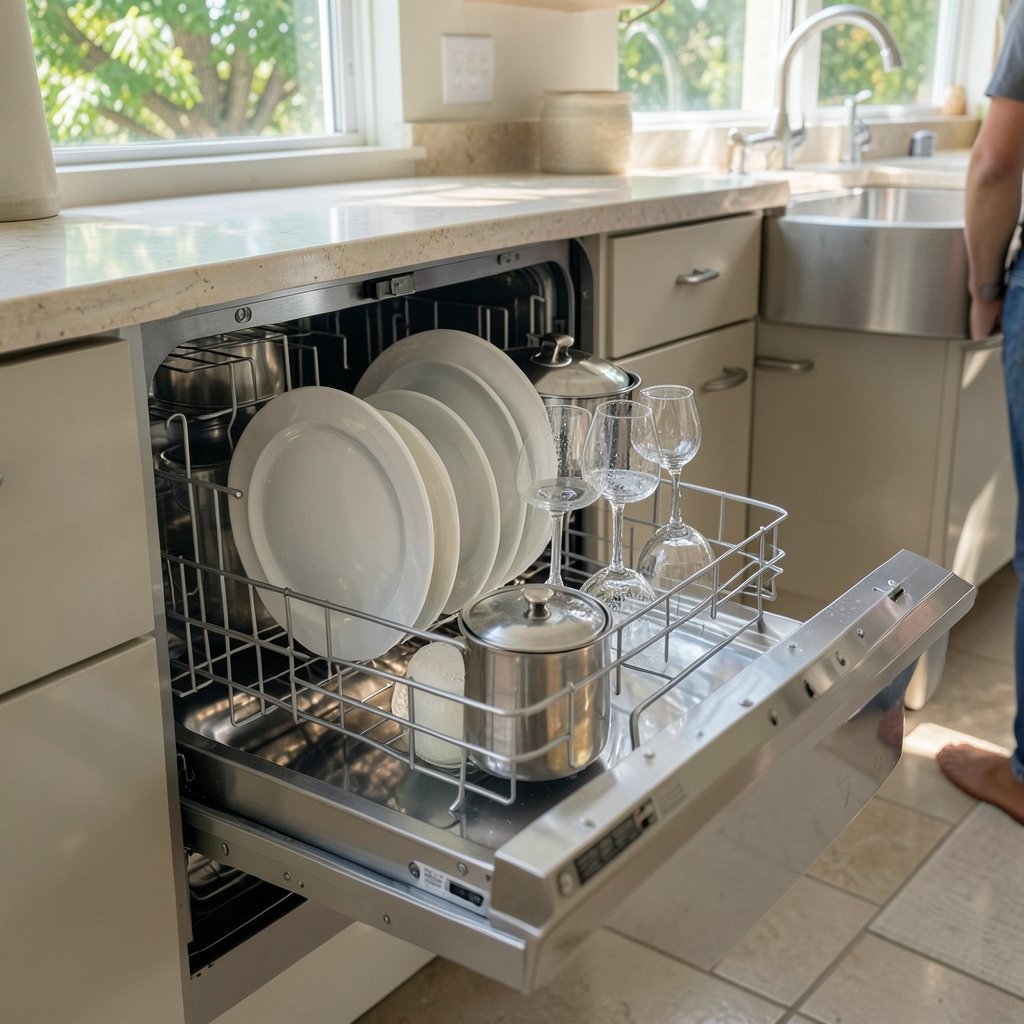
What actually separates a great dishwasher from an expensive one that disappoints? Walk through any appliance showroom and the answer seems obvious: the shiniest door, the fanciest display, the highest price tag. Then you get the machine home, run your first load of greasy pans, and discover that price and performance don’t always travel together.
That gap between marketing and reality is where most buying mistakes happen. A dishwasher is a ten-year purchase that runs hundreds of cycles a year, so the small stuff — noise, rack layout, drying method, water use — matters far more than the badge on the front. This guide breaks down what genuinely separates the best dishwashers from the rest, which features earn their keep, and where shoppers routinely waste money.
What Makes a Dishwasher Worth Buying
The best dishwashers get three things right: they clean consistently, they stay quiet enough to live with, and they don’t cost a fortune to run. Everything else is preference.
Cleaning performance comes down to water pressure, filter design, and spray arm coverage more than raw power. A well-engineered mid-range machine with a good filter will outperform a poorly designed premium model on baked-on food every time. Look for models with a removable, washable filter rather than a hard-food disposer — filters are quieter, and rinsing one out once a month takes about a minute.
Noise is measured in decibels, and the difference between 44 dB and 50 dB is noticeable in an open-plan kitchen. Anything under 45 dB is genuinely quiet; under 40 dB is library-quiet and usually costs more. If your kitchen is far from the living room, you can save money here without regret.
Running costs depend on energy and water use per cycle. Modern machines use far less water than hand washing — typically a few gallons per cycle versus many times that at the sink — so efficiency upgrades usually pay back faster than people expect. The same logic applies across appliances: it’s why shoppers comparing electric pressure washers for real household work look at flow rates and duty cycles rather than peak wattage alone. Specs on paper only matter when they translate into everyday use.
The Features That Actually Matter
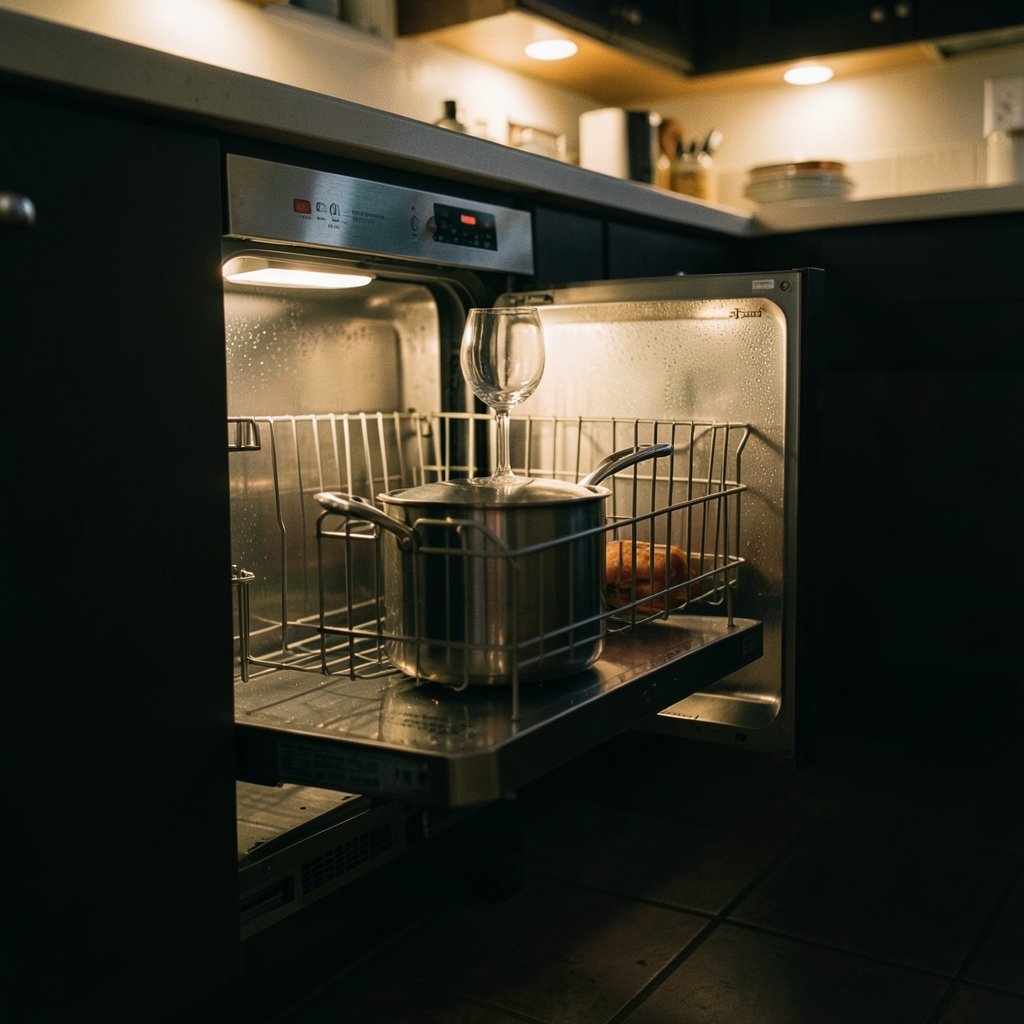
Showroom floors are designed to sell features you’ll rarely touch. Here’s the honest breakdown.
| Feature | Worth paying for? | Why |
|---|---|---|
| Adjustable upper rack | Yes | Fits tall pots and stemware without Tetris |
| Third rack (cutlery tray) | Usually | Frees up the main basket, but eats height |
| Stainless steel tub | Yes | Retains heat, dries better, lasts longer |
| Soil sensor | Yes | Adjusts cycle length and water use automatically |
| Heated dry | Situational | Effective but uses more energy |
| Wi-Fi app control | Rarely | Novelty for most households |
| Bottle jets / specialty sprayers | Rarely | Useful only if you wash bottles constantly |
| Steam / sanitize cycles | Sometimes | Helpful for baby gear and allergy households |
Two features deserve special attention. Adjustable racks are the single most underrated upgrade — being able to drop the upper basket two inches means one load handles stockpots and wine glasses together. And drying method matters more than most buyers realize: condensation drying works well with stainless tubs and rinse aid, while heated drying is faster but costs more to run.
Capacity, Racks, and Real-World Loading
Manufacturers quote place settings, but place settings lie. A “12-place” machine with awkward tine spacing holds less than a flexible 10-place model. Before buying, check three things:
- Tine spacing — wide, adjustable tines handle pots; tight fixed tines only handle plates.
- Upper rack height — measure your tallest glasses and confirm they clear the ceiling.
- Cutlery arrangement — a basket is more flexible; a tray is tidier but limits where things go.
Families with kids usually do better with a basket and a roomy lower rack. Couples who run smaller loads often prefer a third rack and a half-load setting. Neither choice is wrong — it just has to match how you actually load.
Installation and Fit: The Step People Skip
The most common dishwasher regret isn’t performance. It’s fit. Standard machines are 24 inches wide in the US and 60 cm in Europe, but height and depth vary, and cabinet openings are rarely perfectly square.
Measure the opening in three places — top, middle, and bottom — and take the smallest number. Then confirm the machine’s height range with its leveling legs fully retracted. Also check the door swing: a machine that opens into a walkway is a daily annoyance. Finally, confirm the electrical, water, and drain connections are within reach, and budget for a new supply line and drain hose if the old ones are brittle.
If you’re renovating, install the dishwasher before the countertop goes down. It sounds obvious; it’s still the most common sequencing error in kitchen remodels.
Noise, Efficiency, and What the Labels Mean
Energy labels reward efficiency, but they don’t tell the whole story. A machine can be efficient because it uses less hot water — or because it runs longer at lower temperatures. Both are fine; they just behave differently.
Efficiency in practice: eco cycles typically run two to three hours and use the least energy and water. Quick cycles use more of both. If you run a fast cycle every night, you’re not getting the efficiency the label promised. Match your habits to the cycle you’ll actually use.
Noise in practice: decibel ratings are logarithmic, so a 10 dB drop sounds roughly half as loud. That’s why stepping from a 50 dB budget model to a 42 dB mid-range unit feels like a bigger upgrade than the numbers suggest.
Durability in practice: stainless tubs and metal filter assemblies outlast plastic ones. If you want a machine that survives a decade of daily use, that’s where the money goes. The same principle shows up in laundry rooms — people chasing commercial-grade durability in a Speed Queen washer are paying for metal internals and simple mechanics, not extra buttons. Dishwashers reward the same instinct.
Budget Tiers: What You Get at Each Price
Dishwasher pricing clusters into three bands, and the differences are fairly consistent across brands.
| Tier | Typical range | What you get | What you give up |
|---|---|---|---|
| Budget | Entry level | Basic racks, plastic tub, 50+ dB, fewer cycles | Rack flexibility, quiet operation, drying quality |
| Mid-range | Moderate | Stainless tub, adjustable racks, 44–48 dB, soil sensor | Third rack on some models, premium drying |
| Premium | High | 38–44 dB, third rack, advanced drying, flexible zones | Diminishing returns on cleaning performance |
The sweet spot for most households is mid-range. Budget machines clean fine but feel flimsy after a few years, and premium machines mostly buy silence and convenience rather than noticeably cleaner dishes. If quiet matters — open-plan kitchen, night owl schedule — premium is justified. If not, mid-range is where value lives.
Common Buying Mistakes to Avoid
First-hand shopping experience and repair-forum patterns point to the same recurring errors:
- Buying on decibel rating alone. A quiet machine that loads badly is still a bad machine.
- Ignoring the filter. Models with self-cleaning filters still need occasional attention; check how accessible the filter is before buying.
- Skipping the manual. Cycle names are marketing. Read what each cycle actually does, especially the “normal” setting you’ll use daily.
- Assuming more spray arms means better cleaning. Coverage and pressure matter more than arm count.
- Forgetting rinse aid. Most condensation-drying machines need it. Skipping it is the number one cause of “my dishwasher doesn’t dry” complaints.
- Overloading from day one. Water needs to reach every surface. A loosely loaded rack cleans better than a packed one, every time.
One more: don’t judge a new machine on its first week. Modern detergents and low-water cycles take a few loads to settle in, and most “it doesn’t clean” complaints trace back to detergent dose or loading, not the machine.
Maintenance Habits That Extend Lifespan
A dishwasher that’s cared for will outlast one that isn’t by years. The routine is short:
- Rinse the filter monthly under warm water.
- Run a hot cycle with a dishwasher cleaner every few months to clear grease and mineral scale.
- Wipe the door gasket weekly — food debris there causes leaks and odors.
- Check the spray arm holes for blockages; a single clogged jet creates a dead zone.
- Use the right detergent form for your water hardness, and don’t skip rinse aid.
None of this takes more than a few minutes a month, and it prevents most of the failures that send dishwashers to an early grave.
Matching the Machine to Your Household
The “top” dishwasher is the one that fits your life. A few profiles:
- Busy families: prioritize capacity, a flexible lower rack, and a sanitize cycle. Noise matters less than throughput.
- Couples and singles: a third rack and half-load option reduce waste on small loads.
- Open-plan homes: pay for quiet. Under 44 dB is the target.
- Renters or short-term owners: mid-range with a stainless tub balances cost and resale appeal.
- Hard-water areas: prioritize a good filter and plan on rinse aid plus regular descaling.
Care habits extend beyond the kitchen, too. The same logic that keeps a dishwasher running — read the care label, use the right cycle, don’t overdo detergent — applies to everything you wash. Knowing what each clothing care symbol actually means prevents the laundry equivalent of a ruined load, and it’s worth a glance before you tackle anything delicate, from a wool sweater you don’t want to shrink to a hat you’d rather not wreck. Good appliances and good habits reinforce each other.
Conclusion
The best dishwashers aren’t the loudest on the showroom floor or the ones with the longest feature list. They’re the machines that clean reliably, fit your cabinet opening, run quietly enough for your home, and hold up under years of daily use. Focus on the stainless tub, the adjustable racks, the filter design, and the noise rating — then ignore the Wi-Fi and the app. Spend where it changes your daily experience, save where it doesn’t, and measure your cabinet before you fall in love with a model. Do that, and the machine you choose will still feel like a good decision a decade from now.
Frequently Asked Questions
How much should I spend on a dishwasher?
Most households get the best value in the mid-range band, where stainless tubs, adjustable racks, and quieter operation appear without premium pricing. Budget models clean adequately but tend to feel worn after a few years, while premium models mainly buy silence and convenience rather than better cleaning. Set your budget around noise sensitivity and rack flexibility first.
Is a quieter dishwasher worth the extra money?
It depends on where your kitchen sits relative to living spaces. Under 45 dB is genuinely quiet, and under 40 dB is near-silent but costs noticeably more. In an open-plan home or a kitchen next to a bedroom, the upgrade is worth it. In a closed-off kitchen, you can save the money and never miss it.
Do expensive dishwashers clean better than cheap ones?
Not necessarily. Cleaning performance depends mostly on water pressure, filter design, and spray coverage. Many mid-range machines match premium models on cleaning and differ mainly in noise, drying method, and rack flexibility. Pay for the features you’ll notice daily, not the ones on the spec sheet.
How long should a dishwasher last?
With monthly filter cleaning and occasional descaling, most machines last around a decade. Stainless steel tubs and metal filter assemblies tend to outlast plastic components. Skipping rinse aid, overloading, and ignoring the gasket are the habits that shorten lifespan most.
What is the most important feature when choosing a dishwasher?
Adjustable racks. Being able to lower the upper basket lets one load handle tall pots and delicate glassware together, which matters more day to day than any smart feature. After that, prioritize a stainless tub and a noise rating that suits your home.
Can I install a dishwasher myself?
Many homeowners can handle a like-for-like swap if the electrical, water, and drain connections already exist and the opening is a standard size. Measure the opening at its smallest point, confirm the door swing, and replace brittle supply and drain lines. New circuits or relocated plumbing are jobs for a qualified installer.



