What if the hardest part of pruning isn’t the cutting at all, but figuring out which battery-powered shear won’t leave you with sore hands, a dead battery, and a branch that’s only half cut?
That’s the real beginner problem. Electric pruning shears promise to take the squeeze out of trimming hedges, shrubs, and small fruit trees. But the market is confusing. Cutting capacities are measured under ideal conditions, runtime claims aren’t comparable between brands, and a tool that feels light in a store can feel like a brick after twenty minutes of one-handed work. This guide walks through the decisions that matter, the specs that mislead, and the practical habits that separate a smooth first season from a frustrating one.
What Electric Pruning Shears Actually Are
Battery-powered pruning shears come in two broad drive types, and the difference shapes almost everything else.
Direct electric shears use a motor to drive the blade more or less directly. They tend to be lighter and cheaper, and they suit soft green growth, deadheading, and lighter shaping work.
Electric-hydraulic shears (sometimes called electro-hydraulic) use a motor to drive a hydraulic pump, which then moves the blade. That extra stage produces more cutting force, which helps with tougher or denser wood. The trade-off is weight and price: these units are generally heavier, often around 1 to 1.5 kg for the tool body alone, before you add the battery.
For a beginner working on garden shrubs rather than orchard rows, a lighter direct-drive shear is usually the more comfortable starting point. The exception is anyone with a lot of established, thicker growth to get through, where the extra force pays for itself in fewer stalled cuts.
Battery Platform Is the Decision You’ll Live With Longest
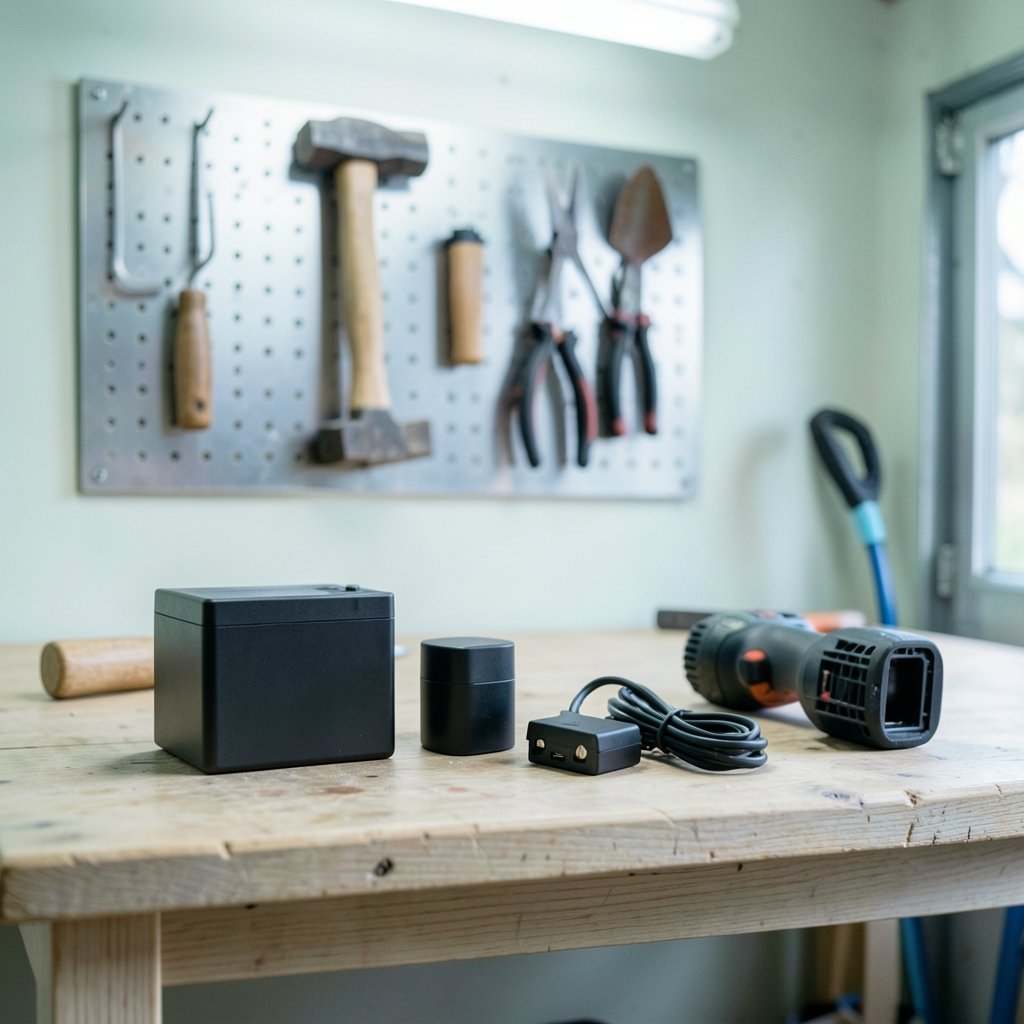
Here’s the advice that saves the most money: before comparing blades and grips, look at what batteries you already own.
Most consumer cordless garden tools run on a small number of lithium-ion platforms, commonly in the 18 V or 20 V max classes. If you already have a compatible battery and charger from a hedge trimmer or leaf blower, buying a bare tool in the same platform cuts cost and clutter. If you’re starting from zero, the platform choice matters more than any single spec, because every future garden tool purchase will be tied to it.
Lithium-ion chemistry explains why the numbers on the label don’t tell the whole story. Voltage and capacity ratings describe different things, and a bigger number isn’t automatically more useful in the hand. Cold weather also reduces lithium-ion capacity, which is why a shear that runs fine in September can feel weak in a frosty December cleanup. A spare battery is the standard remedy, and for most home gardeners one spare is enough.
Cutting Capacity: Read the Claim, Then Discount It
Manufacturers usually state cutting capacity as a maximum branch diameter. Beginner-oriented shears commonly land somewhere around 25 to 30 mm, roughly 1 to 1.2 inches, for soft green wood. Capacity for hard or dry wood is lower.
Two cautions matter here. First, these ratings are manufacturer claims, and they’re typically measured on fresh softwood, which is the best-case scenario. Second, there’s no independent standard comparison across brands that a buyer can rely on, so a “30 mm” from one maker and a “30 mm” from another may not mean the same thing in practice.
The practical approach is to buy slightly more capacity than your thickest realistic cut, then never test the limit on a regular basis. A shear worked at 60 percent of its rated maximum will last longer, cut cleaner, and stall less than one pushed to the edge on every branch. If a cut stalls, don’t force it. Take a smaller bite, or use a lopper for the thick stuff and save the powered shear for everything else.
Weight, Balance, and Why Your Wrist Cares
Beginners tend to shop for power. They should shop for fatigue.
Pruning is repetitive one-handed work, often with the arm extended and the wrist bent. That combination is exactly where strain builds up. A tool that’s 200 grams heavier than another doesn’t sound like much until you’ve held it at chest height for half an hour.
A few things worth checking before buying:
- Balance in the hand. A well-balanced shear feels planted; a nose-heavy one pulls at the wrist.
- Grip size. Smaller hands do better with slimmer handles, and grip comfort matters more than grip padding.
- Trigger feel. A trigger that needs a firm press all day is a slow route to hand fatigue.
- Battery position. A battery mounted toward the back can counterbalance the blade, but it also adds total weight.
If you’re comparing tools across categories, the same ergonomic logic applies to other beginner gear, whether that’s weighing options in a ukulele buying guide for beginners or picking a controller that won’t wreck your wrists. The principle is identical: comfort beats headline specs.
Safety Basics Beginners Shouldn’t Skip
Electric shears are typically bypass type, meaning two curved blades pass each other to make a clean cut on live growth. That’s the right design for garden work, but it also means the blade can close unexpectedly if the trigger is bumped.
The non-negotiables:
- Keep the non-cutting hand well clear of the blade path, every single cut.
- Never reach into the blade area to clear a jam while the battery is connected.
- Avoid cutting above shoulder height, where control drops and the blade is near your face.
- Disconnect the battery before changing blades, cleaning, or storing.
- Wear eye protection. It’s standard practice for powered cutting tools, and a stray twig at eye level is a genuinely bad day.
Hearing protection is usually unnecessary for electric shears, which are far quieter than gas tools, but check the tool’s stated noise level if you’re sensitive or working near others. Gloves reduce hand fatigue and protect against thorns, which is a small comfort upgrade with a real payoff.
Runtime Claims and How to Interpret Them
Runtime is usually quoted in hours of “typical” use, and that phrase is doing a lot of work. Branch hardness, branch diameter, ambient temperature, and how often you trigger the blade all change the number dramatically. Methodology is rarely disclosed, so two brands quoting “4 hours” may be measuring completely different things.
The practical translation for a home gardener: assume you’ll get less than the box says, plan for a spare battery, and charge overnight before a big session. If your pruning jobs run longer than a single battery, buy the second battery at the same time as the tool rather than after the first frustrating afternoon.
Maintenance That Takes Ten Minutes
Powered shears aren’t high-maintenance, but neglect shows up fast.
- Clean the blades after each session, especially with sap-heavy growth.
- Oil lightly to keep the cutting action smooth and reduce corrosion.
- Sharpen or replace blades according to the manual, not according to how the cut feels.
- Store batteries at moderate temperature and partial charge for long storage rather than fully drained or fully topped up.
A clean, sharp blade also draws less power, which quietly extends runtime. Beginners often blame the battery for weak cutting when the real culprit is a gummed-up blade.
Comparing the Main Beginner Options
| Factor | Direct electric shears | Electric-hydraulic shears |
|---|---|---|
| Weight | Lighter | Heavier, often 1 to 1.5 kg body only |
| Cutting force | Moderate | Higher |
| Best for | Shrubs, soft growth, shaping | Denser or tougher wood |
| Price position | Usually cheapest powered option | Higher |
| Beginner fit | Strong for most home gardens | Better for heavy ongoing work |
One caveat on price: very cheap units often pair lower cutting capacity with shorter warranties. There’s no reliable way to quote current prices here, so treat the segment rather than the sticker as your guide, and check the warranty terms before buying.
Where Electric Shears Fit in a Wider Toolkit
It helps to think of powered shears as one tool in a set rather than a replacement for all of them. Loppers handle the thick cuts, hand pruners handle the fiddly ones close to the plant, and the electric shear handles the volume in between. Buying a powered shear and expecting it to do everything is a common beginner mistake that ends with a strained motor and a mangled branch.
The same “pick the right tool for the actual job” logic shows up everywhere in beginner tech purchases. Choosing a web application firewall for beginners means understanding what it blocks before buying, rather than comparing feature lists. Picking video editing software that actually works for beginners means matching the tool to your real projects. And comparing Trello alternatives as a beginner means knowing how you’ll actually use a board before committing. Garden tools reward the same discipline.
Mistakes That Cost Beginners the Most
A few patterns come up again and again.
Buying for the maximum cut instead of the typical cut. Most home gardeners cut thin growth 90 percent of the time. Buy for that, and let the loppers handle the rest.
Skipping the platform check. A cheap bare tool in a platform you don’t own batteries for is not cheap.
Testing the rated capacity on day one. Pushing a new shear to its stated limit on hard, dry wood is how motors and blades get damaged early.
Ignoring fatigue. If your hand aches after fifteen minutes, the tool is wrong for you, no matter what the spec sheet says.
Forgetting the blade. A dull or sticky blade mimics a weak battery and tempts you to buy a battery you didn’t need.
Conclusion
The best electric pruning shears for a beginner aren’t the ones with the biggest cutting-capacity number or the longest runtime claim. They’re the ones that fit your hand, run on a battery platform you’ll actually build around, and carry enough capacity to handle your thickest realistic cut without being pushed to the limit every time.
Start with your existing batteries. Weigh the tool in your hand, not on paper alone. Buy a spare battery, keep the blade clean, and let loppers do the heavy work. Do that, and the shear becomes what it should be: a tool that makes pruning faster and easier, rather than a new source of frustration.
Frequently Asked Questions
Are electric pruning shears worth it for a beginner?
For most home gardeners with shrubs, hedges, and small trees, yes. They remove the hand squeeze that makes manual pruning tiring, which means more consistent cutting and less fatigue. The value drops if you only prune a couple of small plants a year, where a good pair of manual bypass pruners is simpler and cheaper.
How thick a branch can beginner electric shears cut?
Beginner-oriented models commonly claim around 25 to 30 mm, roughly 1 to 1.2 inches, on soft green wood, with lower capacity on hard or dry wood. Treat those figures as best-case manufacturer claims and plan your regular cuts well below the maximum.
Do I need a spare battery?
For anything beyond short sessions, yes. Runtime claims vary in how they’re measured and drop in cold weather, so a second battery removes the risk of stopping halfway through a job. Buying it at the same time as the tool is usually the least painful way to do it.
Are electric shears safe for someone who’s never used one?
They’re safe with basic discipline: keep the non-cutting hand clear, never reach into the blade path with the battery connected, avoid cutting above shoulder height, and wear eye protection. The main risk is an unexpected blade closure if the trigger is bumped, so treat the blade as live whenever the battery is in.
Direct electric or electric-hydraulic for a first purchase?
Direct electric shears are lighter and usually cheaper, which suits most home gardens and softer growth. Electric-hydraulic shears offer more cutting force but weigh more, often 1 to 1.5 kg for the body alone, so they make more sense for denser wood or heavier ongoing work.
How often should the blades be maintained?
Clean them after each session, oil them lightly, and sharpen or replace them as the manual specifies rather than waiting for cuts to feel difficult. A clean, sharp blade cuts better and draws less power, which quietly extends battery runtime.