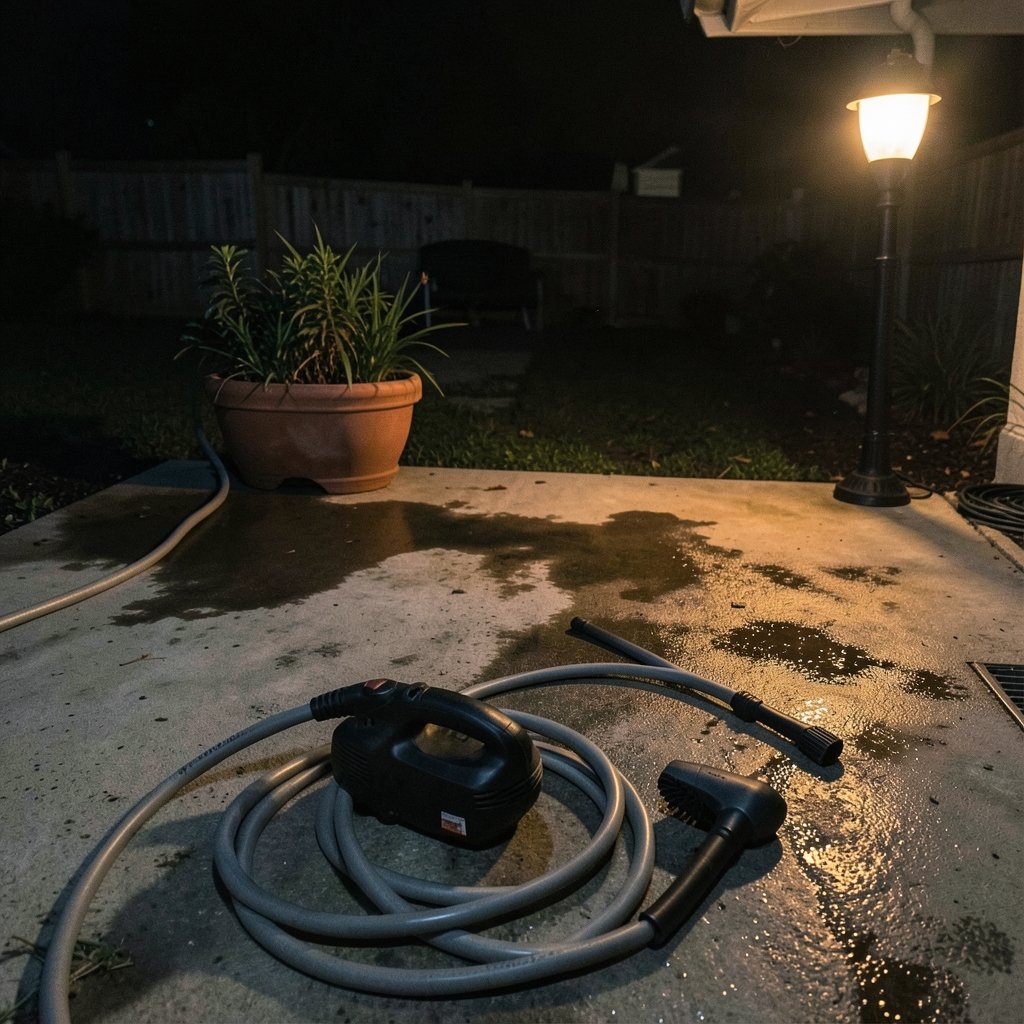
What if the number on the box is not the number that cleans your driveway? That is the first surprise most shoppers hit when comparing pressure washers. Two machines can both advertise 3,000 PSI, yet one strips grime in a single pass while the other smears it around. The difference lives in the details that spec sheets bury: flow rate, nozzle design, and where the pressure was actually measured.
This comparison walks through what separates electric and gas units, how to read ratings honestly, and which features matter for real household jobs. No hype, no brand cheerleading, just the engineering that decides whether a washer earns its storage space.
What pressure and flow actually mean together
Pressure (PSI or bar) is the force of the water stream. Flow (GPM or L/min) is how much water arrives per minute. Neither number tells the full story alone. Multiply them and you get cleaning units, a rough industry shorthand for cleaning power that most packaging ignores.
Here is why the pairing matters. A narrow, high-pressure stream blasts caked mud off a patio joint but takes forever to rinse a whole deck. A wider, higher-flow spray rinses fast but may not cut through oil stains. The best machine for a job depends on which combination the job rewards.
There is a measurement trap too. PSI ratings are often taken at the pump, not at the nozzle. Working pressure at the tip is lower than the headline figure. When two brands measure at different points, their advertised numbers are not directly comparable. A 3,000 PSI machine measured at the pump might deliver closer to 2,400 PSI at the nozzle. That gap explains plenty of “why is this weaker than my neighbor’s” conversations.
Electric versus gas: the honest trade-offs

Electric consumer units typically run roughly 1,300 to 3,000 PSI. Gas units typically reach 2,500 to 4,000+ PSI with noticeably higher flow. Those ranges shift year to year, so check current spec sheets rather than trusting a remembered figure.
| Factor | Electric | Gas |
|---|---|---|
| Typical pressure | 1,300–3,000 PSI | 2,500–4,000+ PSI |
| Typical flow | 1.2–1.6 GPM | 2.5–4 GPM |
| Noise | Quiet enough for most neighborhoods | Substantially louder; local ordinances may apply |
| Maintenance | Minimal; plug in and go | Engine oil, fuel, storage prep |
| Best fit | Decks, cars, siding, patios | Large driveways, heavy buildup, long sessions |
The water difference deserves attention. An electric unit at 1.4 GPM uses about 84 gallons an hour. A gas unit at 3 GPM uses roughly 180 gallons in the same time. For a reader weighing outdoor water use, that is a real gap, and it is one reason surface cleaners and technique matter as much as raw output.
Noise is the other practical divider. Gas machines are loud, and many residential areas restrict their use at certain hours. If a reader plans to clean on a Sunday morning, an electric unit avoids the entire argument. For a deeper look at matching an electric machine to ordinary household chores, this guide on how to choose the best electric pressure washers for real household work covers the practical side well.
Where the ratings mislead buyers
Three habits cause most buying regret.
Chasing PSI alone. A high-pressure, low-flow machine feels impressive on concrete but struggles to rinse soap off a car before it dries. Flow does the rinsing; pressure does the cutting.
Ignoring the nozzle. Nozzle design and standoff distance change cleaning results as much as the pump does. The same machine with a 15-degree tip and a 40-degree tip behaves like two different tools. Most kits include a color-coded set; learn what each one does before aiming at anything delicate.
Skipping the surface cleaner. A rotary surface cleaner attachment often cleans flat surfaces faster, more evenly, and with less streaking than a wand. It is one of the most underrated upgrades in consumer pressure washing, and it barely appears in spec-sheet comparisons. Anyone cleaning a driveway or large patio should factor one in.
A fourth mistake is subtler: assuming detergent injection works the same everywhere. Most consumer units siphon detergent at low pressure, which means soap goes on gently and rinses off at full force. Some setups need a separate downstream injector to do this properly. If a reader plans to clean siding or vehicles regularly, check how detergent is delivered before buying.
Matching the machine to the job
Different surfaces reward different setups. A quick reference helps.
| Job | Priority | Sensible setup |
|---|---|---|
| Car washing | Gentle pressure, good flow, detergent | Electric, 40-degree tip, low-pressure soap mode |
| Wood deck | Controlled pressure to avoid gouging | Electric, wide tip, steady distance |
| Concrete driveway | Cutting power plus even coverage | Gas or strong electric, surface cleaner |
| Vinyl siding | Moderate pressure, detergent | Electric, 25-degree tip, work top to bottom |
| Fence and patio furniture | Light duty | Compact electric unit |
The pattern is clear. Most household jobs favor control over brute force, which is why electric units dominate consumer sales. Gas earns its place when the work is big, dirty, and frequent.
Features worth paying for, and ones to skip
Some features genuinely change the experience.
A steel or braided hose outlasts the stiff plastic hose on budget units, which kinks and fights back. Quick-connect fittings save minutes on every nozzle change. Onboard nozzle storage sounds trivial until the tips go missing. A total stop system, which shuts off the pump when the trigger releases, reduces wear and noise during pauses.
Features that rarely justify a premium include oversized wheels on small units, decorative covers, and turbo nozzles sold as magic. A turbo nozzle is useful on concrete and dangerous on anything softer, so treat it as a specialized tool rather than an upgrade.
For readers who also tinker with mechanical hobbies, the same principle of matching tool settings to material applies elsewhere. Calibration guides like this one on 3D printer pressure advance calibration to tune corners and seams follow the same logic: small adjustments beat raw power every time.
Safety and standards that shape the category
Consumer pressure washers are built to safety standards rather than performance standards. In the United States, electric units fall under UL 1776; in Europe, EN 60335-2-79 covers high-pressure cleaners. These standards address electrical safety, pressure containment, and labeling, not how well a machine cleans. Meeting them does not guarantee strong cleaning output, and strong cleaning output does not guarantee good build quality.
The safety basics matter more than most buyers expect. A high-pressure jet can cause serious soft-tissue injury, so the wand should never point at people, pets, or the user’s own feet. Eye protection is sensible when rinsing overhead surfaces. Following the manufacturer’s manual is not boilerplate; it is where the real operating limits live.
Water use is worth a thought too. Outdoor water use adds up quickly, and a machine that finishes a job in half the time at half the flow saves more than the sticker price suggests. Readers comparing appliances generally benefit from checking efficiency claims against real-world usage patterns, a habit that pays off in plenty of categories, from helpdesk tools in this Zendesk AI versus Freshdesk Freddy comparison to everyday consumer tech.
Practical tips that outperform a bigger machine
Experience from the field points to technique over hardware.
Pre-treat, then rinse. Loosening grime with detergent and a short dwell time cuts the pressure needed. Many disappointing results come from skipping the soak.
Work in sections. Cleaning a whole driveway in one pass leaves stripes. Overlapping passes, top to bottom, produce an even finish.
Keep a consistent distance. Moving the wand closer is the fastest way to etch wood or strip paint. Distance control matters more than PSI.
Mind the angle. Aiming down and away from seams pushes water where it should not go, especially near siding and windows.
Drain and store properly. Leftover water in the pump during a freeze cracks housings. A few minutes of winter prep prevents a spring replacement.
Test on a hidden spot. Every new surface deserves a small trial patch before the full assault.
These habits explain a common observation: a careful user with a mid-range electric unit often gets better results than an impatient user with a gas monster. The tool sets the ceiling; technique decides how close you get to it.
How the comparison shakes out
For most households, an electric unit in the 1,800 to 2,400 PSI range with decent flow, a proper nozzle set, and a surface cleaner attachment covers the majority of jobs. It is quiet, low-maintenance, and gentle enough for cars and decks when used with the right tip. Buyers with long driveways, heavy moss, or frequent large-scale cleaning should look at gas, accepting the noise, fuel, and upkeep in exchange for speed and flow.
The comparison ultimately comes down to honesty about the work. Count the jobs, estimate the hours, check the local noise rules, and read past the headline PSI to the flow and nozzle setup. A pressure washer is a tool for a specific list of chores, and the right one is the machine that finishes that list without drama. Readers weighing other purchases with similar trade-offs, whether a loan comparison app that actually works or a subscription plan, will recognize the pattern: the flashy number rarely decides satisfaction. The fit does.
FAQ
What PSI do I need for a driveway?
Most concrete driveways clean well at 2,500 to 3,000 PSI with a surface cleaner attachment. Lighter electric units around 2,000 PSI can handle routine dirt with slower passes and pre-treatment, but heavy staining may need more pressure or a gas machine.
Is gas always better than electric?
No. Gas wins on raw pressure, flow, and endurance for large jobs. Electric wins on noise, maintenance, and control for cars, decks, and siding. The better choice depends on the size and type of the work, not on which category sounds tougher.
Why does my pressure washer feel weaker than its rating?
Ratings are often measured at the pump rather than the nozzle, so working pressure is lower than advertised. A worn nozzle, a kinked hose, or an air lock can also cut performance. Check the tip, the hose, and the water supply before blaming the machine.
Can a pressure washer damage wood or paint?
Yes. High pressure held close to a surface can gouge wood, strip paint, and force water behind siding. Use a wide-angle tip, keep a steady distance, and test on a hidden area first. Lower pressure with detergent usually cleans wood more safely.
How much water does a pressure washer use?
Electric units commonly use about 1.2 to 1.6 gallons per minute, and gas units roughly 2.5 to 4 gallons per minute. Over an hour that adds up fast, so a machine that finishes the job quickly can use less total water than a slow one.
Do I need a surface cleaner attachment?
For flat surfaces like driveways and patios, yes, it is usually worth it. A rotary surface cleaner cleans faster and more evenly than a wand and reduces streaking. It is one of the few accessories that reliably improves results rather than just adding cost.
The final piece of advice is to buy from a seller with a clear return policy and real warranty support. Pumps and seals fail, and a machine backed by accessible parts and service outlasts a cheaper unit with no path to repair. Check whether nozzles, o-rings, and hoses are standard sizes before committing. A pressure washer is a long-term purchase, and the difference between a frustrating one and a dependable one often comes down to support after the sale rather than the number on the box. Choose for the work you actually do, and the rest follows.