Quick Answer: Are expensive pressure washers worth it?
It depends. For most homeowners who clean a driveway, deck, or siding a few times a year, a mid-range electric unit around 1,300 to 2,000 PSI delivers nearly all the cleaning power of a premium machine at a fraction of the price.
Premium and professional models earn their cost through durable triplex pumps, brass fittings, longer warranties, and higher flow rates, which matter most for frequent, heavy, or commercial work. Gas units sit in a different class entirely: louder, pricier, and built for remote or relentless jobs.
Before buying, compare pressure and flow (GPM), pump type, build materials, warranty length, accessory bundle, noise level, and total ownership costs like detergent, nozzles, and repairs.
The Real Question Behind the Price Tag
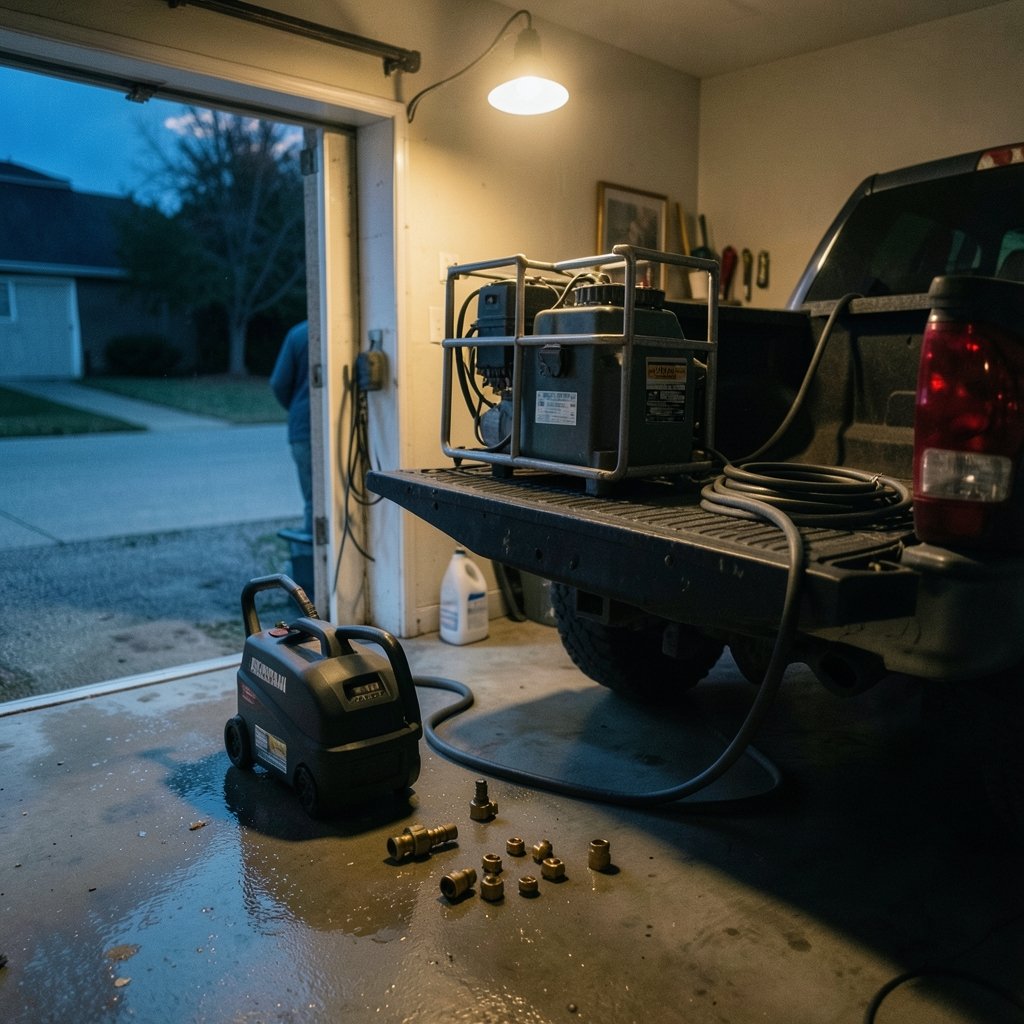
Ever watched someone wrestle a shiny, expensive pressure washer out of a truck, blast a driveway in ten minutes, and wonder whether the machine or the person did the work? That moment captures the whole debate. Pressure washers look simple: a motor, a pump, a hose, a wand. Yet prices swing from under a hundred dollars to several thousand, and the gap is not marketing fluff. It reflects real differences in pumps, fittings, flow rates, and how long the thing survives in a garage.
The honest answer is that “worth it” is not a property of the machine. It is a property of the match between the machine and the job. A professional unit bought for a twice-a-year patio rinse is overkill. A budget unit bought for weekly fleet cleaning is a false economy. This guide walks through where the money actually goes, what the specs mean, and how to decide which side of the line you fall on.
What Actually Drives the Price Up
Pressure and Flow: The Numbers That Matter
PSI (pounds per square inch) gets all the attention, but GPM (gallons per minute) does half the work. Cleaning power is often expressed in cleaning units, a rough industry shorthand calculated as PSI multiplied by GPM. A machine with modest pressure and strong flow can outperform a high-pressure unit with a trickle of water, because flow is what carries dirt away.
Consumer electric models typically run roughly 1,300 to 2,000 PSI. Prosumer and professional electric units, along with gas models, climb well above that. Each step up costs money, but the practical jump from a 1,600 PSI unit to a 2,000 PSI unit is far less dramatic than the jump from a garden hose to either one.
Pump Type: The Hidden Longevity Factor
This is where budget and premium machines part ways most sharply. Axial cam pumps are common in inexpensive units. They are compact and cheap, and they generally have shorter lives, especially if run hard or stored through freezing winters. Triplex (plunger) pumps cost more and last longer, which is why they appear in pricier machines. If you plan to use a washer regularly for years, the pump type matters more than a few hundred PSI.
Build Quality and Accessories
Brass versus plastic fittings, hose length and flexibility, nozzle sets, and warranty length separate budget from premium units. A three-to-five-year warranty on a premium machine is not generosity; it is a manufacturer’s bet on its own components. Budget units often carry one to two years. That difference tells you something about expected life before you ever pull the trigger.
| Feature | Budget Unit | Mid-Range Unit | Premium/Pro Unit |
|---|---|---|---|
| Typical pressure | 1,300–1,600 PSI | 1,600–2,000 PSI | 2,000+ PSI |
| Pump type | Axial cam | Axial cam or entry triplex | Triplex (plunger) |
| Fittings | Plastic | Mixed plastic/brass | Brass |
| Warranty | 1–2 years | 2–3 years | 3–5+ years |
| Best for | Light, occasional jobs | Most homeowners | Frequent or heavy use |
Electric vs. Gas: A Price and Use-Case Split
Electric units are cheaper, quieter, and better suited to light residential jobs near an outlet. Gas units cost more, are louder, and suit heavy or remote work where no cord reaches. For most suburban driveways and decks, electric wins on convenience alone. If you are weighing electric options for ordinary household tasks, a breakdown of how to choose the best electric pressure washers for real household work is a sensible starting point before you compare premium models.
When an Expensive Pressure Washer Is Worth It
Premium machines pay off in specific situations. If any of these describe you, the higher price is likely justified:
- You clean regularly, not once a season, whether that is a large property, multiple vehicles, or rental units you maintain.
- You tackle heavy jobs like stripping paint, prepping a deck for staining, or cleaning years of grime from concrete.
- You value durability and hate replacing tools, so a triplex pump and brass fittings appeal to you.
- You want a long warranty and accessible parts rather than a disposable unit.
- You run a small business where downtime costs more than the machine.
In these cases, the premium is not indulgence. It is insurance against replacing a cheap unit every other year.
When It Is Not Worth It
Consumer-advice bodies commonly conclude that most homeowners do not need pro-grade pressure. For occasional driveway, deck, and siding cleaning, mid-range electric units are often judged sufficient. If your washer lives in the garage and comes out three times a year, a premium machine mostly buys you a heavier box to store.
There is a useful parallel in other purchases where the premium tier only pays off with heavy use. The same logic that governs whether Xbox Game Pass is worth its 2025 price applies here: the value depends entirely on how much you actually use it, not on how good the product is. A great machine used twice a year is a worse deal than a good machine used weekly. (Outsourcing data analytics consulting worth it small)
The Total Cost of Ownership Nobody Mentions
Sticker price is only the first bill. Detergent, replacement nozzles, hoses, and repairs add up over the life of the machine. High-pressure units also demand more care: pump oil changes on some models, winterizing to prevent freeze damage, and careful storage of hoses that crack when left in the sun.
Budget machines often fail at the pump or the fittings, and those repairs can approach the price of a new unit, which is why people replace rather than fix them. Premium machines with serviceable parts can be repaired economically. Over a decade, that difference can flip the math entirely. It is the same principle behind other “cheap versus quality” debates, like which coins actually hold value and why: the headline number rarely tells the full story once you account for what lasts.
Practical Tips and Common Mistakes
Match the nozzle to the surface. The 0-degree nozzle concentrates pressure into a pencil-thin stream that can etch concrete and strip paint in seconds. Use wider angles for most jobs and keep the wand moving.
Test on a hidden patch first. Concrete, wood, and siding all respond differently. A quick test on an inconspicuous area prevents an expensive mistake.
Respect the duty cycle. Budget electric units are not built for hour-long continuous runs. Give them breaks, and they will last longer.
Winterize before the first freeze. Trapped water expands and cracks pumps. This single oversight kills more pressure washers than any other cause.
Do not buy pressure you cannot control. A 4,000 PSI gas unit in inexperienced hands damages surfaces and, according to injury data collected through emergency departments, injures users. Higher pressure is not automatically better; it is more demanding.
Read the warranty before you buy, not after. Warranty length is a practical proxy for expected life, and the terms reveal what the maker expects to fail.
Budget for accessories. A surface cleaner attachment transforms driveway work and costs far less than upgrading the machine itself. Sometimes the cheapest upgrade is the right one.
How to Decide in Ten Minutes
- List every job you will realistically do in the next two years.
- Estimate how many hours per year the machine will run.
- Check the PSI and GPM of the units you are considering, and compare cleaning units rather than pressure alone.
- Identify the pump type. If it is axial cam, accept a shorter lifespan.
- Compare warranty length and parts availability.
- Add up detergent, nozzles, and likely repairs over five years.
- If the total for a mid-range unit plus accessories covers your jobs, buy it and skip the premium tier.
Most people who run this exercise discover they belong in the mid-range. A minority discover the opposite, and for them the expensive machine is the cheaper choice over time.
Conclusion
Expensive pressure washers are worth it when the work is frequent, heavy, or commercial, and when durability, repairability, and warranty coverage matter more than the sticker price. For occasional residential cleaning, a mid-range electric unit around 1,300 to 2,000 PSI handles driveways, decks, and siding well, and the premium mostly buys peace of mind you may not need. The smart move is not to chase the highest number on the box. It is to match pump type, flow, build quality, and warranty to the jobs you will actually do, then spend the savings on the accessories that make those jobs easier.
FAQ
Do I really need more than 2,000 PSI for home use?
For most home jobs, no. Driveways, decks, patios, and siding are typically cleaned effectively in the 1,300 to 2,000 PSI range, especially when flow is decent. Higher pressure becomes useful for stripping paint, heavy concrete grime, or professional work, but it also raises the risk of surface damage and injury.
Is a gas pressure washer better than electric?
Not inherently. Gas units offer more power and freedom from cords, which suits heavy or remote work. Electric units are cheaper, quieter, and easier to maintain, which suits most residential tasks. The right choice depends on job size and location, not on which type sounds tougher.
How long should an expensive pressure washer last?
Premium units with triplex pumps and brass fittings commonly outlast budget models by several years, and their warranties of three to five years reflect that expectation. Actual lifespan depends heavily on maintenance, especially winterizing and avoiding long continuous runs beyond the duty cycle.
What is the most common reason pressure washers fail?
Freeze damage and pump wear are the usual culprits. Water left in the pump over winter expands and cracks components, and budget axial cam pumps wear out faster under heavy use. Storing the unit properly and respecting its duty cycle prevents most premature failures.
Are surface cleaner attachments worth buying?
Often yes. A surface cleaner attachment cleans flat concrete faster and more evenly than a wand, and it costs far less than moving up to a premium machine. For anyone with a large driveway or patio, it is frequently the best money spent in the whole setup.
Can a high-pressure washer damage my property?
Yes. High-PSI units can etch concrete, strip paint, gouge wood, and break window seals, and the stream can injure skin. Keep the wand moving, start with a wide nozzle, test on a hidden area, and never point the spray at people or pets.
A Final Word on Brand and Support
One factor the spec sheet cannot capture is dealer support. Premium brands often maintain service networks, stock replacement parts, and honor warranties without argument, while budget brands may route you to a call center. Before buying, check whether local repair is available and whether consumables like nozzles and hoses are easy to source. A well-supported mid-range machine can outperform a neglected premium one. Buy from a seller with a clear return policy, register the warranty promptly, and keep the receipt. That paperwork is what turns a promise into coverage when something fails.