What if the biggest difference between two handheld steam cleaners isn’t the brand on the box, but the numbers the box refuses to explain? Walk down any small-appliance aisle and you’ll see the same promises: “kills 99.9% of germs,” “pressurized to 4 bar,” “ready in 30 seconds.” Those claims look comparable. They usually aren’t. This comparison breaks down how handheld steam cleaners actually differ, which specs are trustworthy, which are marketing noise, and how to match a unit to the messes you really have. (Steamos vs bazzite vs windows 2026 handheld os compatibility)
What a Handheld Steam Cleaner Actually Is
A handheld steam cleaner is a small, portable appliance that boils water in a reservoir and releases low-moisture steam, often called dry steam, through a nozzle or brush attachment. It cleans hard surfaces, grout, upholstery, and tight spots where a bucket and rag can’t reach.
It is not a steam mop. Steam mops are floor units with a wide head and a cord long enough to cross a kitchen. It is not a carpet extractor either, which injects water and pulls it back out. A handheld steamer sits in its own category: small tank, short hose, precision nozzle, and a run time measured in minutes rather than rooms.
That distinction matters for comparison shopping. A lot of spec-sheet confusion comes from shoppers comparing a handheld unit against a floor mop’s numbers, then wondering why the handheld “only” runs for ten minutes. It was never built to run longer.
Why Steam Cleaner Specs Are Hard to Compare
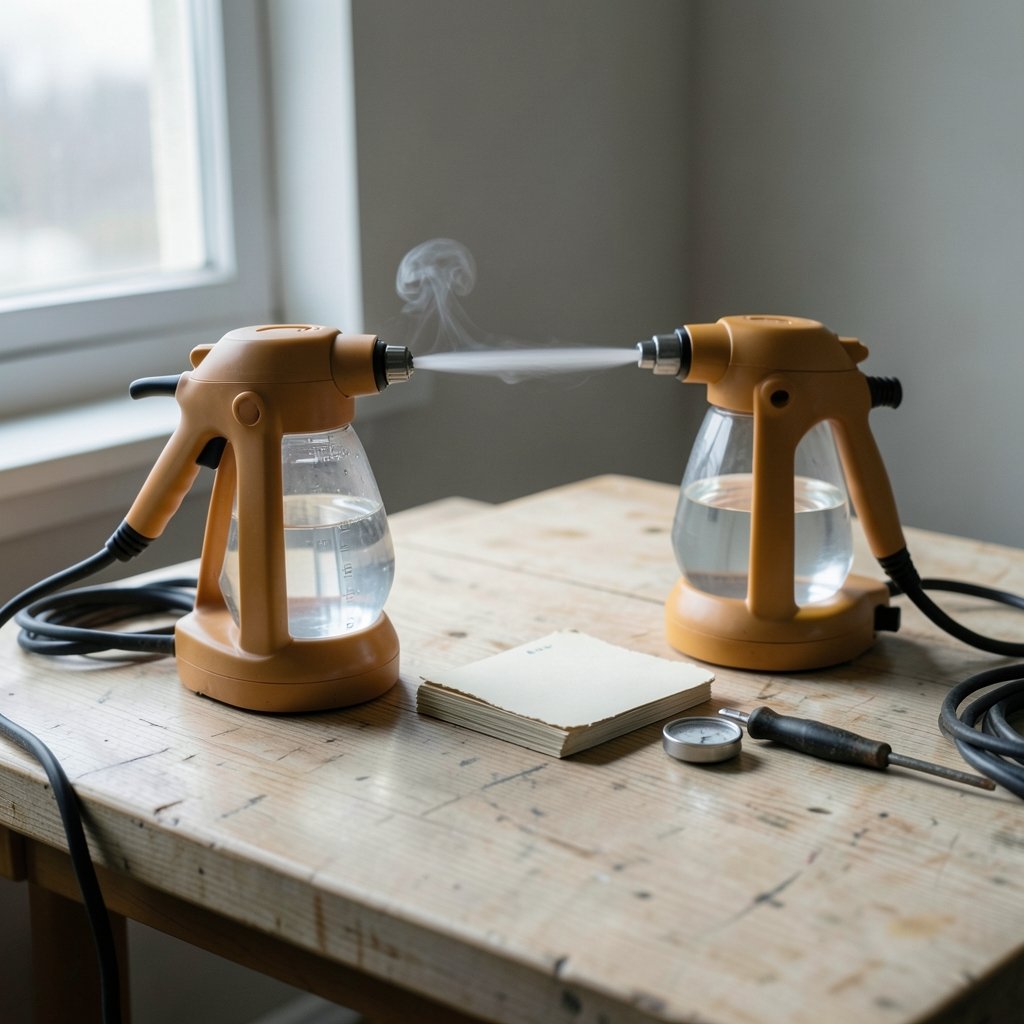
Here’s the uncomfortable truth about this category: there is no widely adopted standardized performance test for handheld steam cleaners, comparable to the energy-label testing that exists for vacuums. That gap has real consequences.
Steam pressure in bar and nozzle temperature in degrees are often measured under different conditions by different manufacturers. One brand quotes peak pressure at the boiler; another quotes it at the nozzle after losses. One measures temperature at the element; another measures it an inch from the tip. The numbers land on the same shelf, but they describe different things.
Practical rule: treat every spec-sheet comparison as manufacturer-reported, not lab-verified. A unit claiming 4 bar isn’t automatically stronger than one claiming 3.5 bar. What you can compare honestly is design: tank size, tank type, cord length, attachment set, safety certifications, and warranty terms. Those are facts you can check.
The Comparison Table That Actually Helps
Forget the pressure wars for a minute. This table compares the design decisions that change daily ownership.
| Feature | What to Look For | Why It Matters |
|---|---|---|
| Tank capacity | Roughly 200–400 ml class | Bigger tanks mean longer sessions but heavier hands |
| Tank type | Removable vs. fixed | Removable tanks refill and descale far more easily |
| Heat-up time | Short, but verify | Long waits kill the “quick touch-up” use case |
| Run time | Under 15 minutes typical | Plan for refill breaks mid-task |
| Cord length | Longer than you think | Most units are corded; reach limits where you clean |
| Attachments | Detail nozzle, brushes, squeegee, cloth | The tool set decides what surfaces you can safely touch |
| Safety mark | UL or ETL (North America), CE (Europe) | Third-party testing vs. self-declaration |
| Descaling | Manual process on most units | Scale clogs elements and nozzles; maintenance is a real cost |
That last row deserves emphasis. Manufacturer manuals for steam appliances almost universally require periodic descaling or the use of distilled water, because mineral scale clogs heating elements and nozzles. In hard-water areas, a fixed tank turns descaling into a chore. A removable tank turns it into a five-minute soak. If you live somewhere with chalky tap water, weight that difference heavily.
Safety Certifications: Reading the Marks Correctly
Certification claims are where comparison shopping gets sloppy, so here’s the honest version.
In North America, a UL or ETL mark indicates third-party testing. UL 499, the standard for electric heating appliances, is the standard commonly cited for household steam appliances, though it’s worth confirming with the certification body that it’s the specific standard applied to any given model rather than assuming.
In Europe, CE marking is a self-declaration of conformity, not third-party certification. Steam cleaners sold there fall under the Low Voltage Directive 2014/35/EU, in force since 20 April 2016, and typically the EN 60335 household-appliance safety series. The exact applicable part for steam cleaners is best confirmed with a notified body rather than guessed from a listing.
The takeaway isn’t that CE is meaningless. It’s that “certified” means different things in different markets, and a listing that treats them as interchangeable is telling you something about its rigor.
The “Kills 99.9% of Germs” Problem
This is the claim most likely to sell a steamer, and the one most likely to mislead.
Steam can be used for cleaning, and green cleaning approaches reduce exposure to harsh chemicals. But steam cleaners are generally not registered as disinfectants, because pesticidal claims require registration under FIFRA in the US. A listing that promises to kill nearly all germs is making a claim the product category typically hasn’t been cleared to make.
So how should a shopper read it? Treat germ-kill language as marketing until proven otherwise, and judge the steamer on what it demonstrably does: lifting grease, loosening grout soil, refreshing upholstery, and reaching crevices. If disinfection matters for a specific situation, that’s a question for public-health guidance, not a product box.
Surfaces You Should Not Steam
Every comparison should include a “don’t” list, because steam damage is permanent.
- Unsealed wood: moisture raises grain and warps boards.
- Some laminates: heat and moisture can lift edges; check the flooring maker’s guidance first.
- Electronics: steam and circuitry don’t mix, even briefly.
- Sealed stone with sensitive finishes: test a hidden corner before committing.
Manufacturer care labels and flooring-industry guidance are the primary sources here, and they outrank any influencer demo. The common mistake is testing on a visible spot. Test in a closet corner or behind furniture instead.
Matching the Machine to the Job
Different households need genuinely different machines, and the comparison shifts depending on which one you are.
The kitchen and bathroom fighter needs a detail nozzle, a stiff brush, and enough run time to finish a hob and a shower screen in one go. Tank size matters more than peak pressure here.
The upholstery refresher needs a cloth attachment and controlled moisture. Over-wetting fabric is the classic error, so a unit with a trigger-controlled steam release beats one that only has an on/off switch.
The grout specialist wants sustained output and a narrow jet. This is the one use case where pressure claims start to matter, though the honest comparison is still between designs, not spec sheets.
If your cleaning habits overlap with gaming handhelds and desk setups, the same “fit over specs” logic applies elsewhere. The thinking behind Ayn Thor vs Steam Deck: choosing the right handheld for daily play mirrors it: match the tool to your actual routine, not the loudest numbers.
Common Mistakes Buyers Make
A few errors show up again and again in this category.
Buying on pressure alone. A high bar rating with a tiny tank means constant refills. The pressure never gets a chance to matter.
Ignoring water quality. Tap water in hard-water areas scales up elements fast. Distilled water or diligent descaling extends life noticeably.
Skipping the attachment inventory. The nozzle and brush set determines which surfaces you can safely treat. A bargain unit with two attachments often costs more once you buy the missing pieces.
Assuming cordless freedom. Most handheld steamers are corded because boiling water draws serious power. Check cord length against where your outlets actually are.
Over-wetting upholstery. Short, controlled passes with a cloth attachment beat long soaking blasts every time.
Never descaling. The manual says to do it. Do it. A clogged nozzle turns a working appliance into a paperweight.
The same discipline applies across device categories. Whether you’re weighing a Steam Deck vs ROG Ally X for the kind of play you actually do or a steamer’s tank against your cleaning routine, the pattern holds: real-world fit beats headline numbers.
Maintenance and Longevity: The Hidden Comparison Axis
Two steamers with identical tanks can have wildly different lifespans, and the difference is usually maintenance design.
A removable tank wins on descaling, full stop. You can soak it, inspect it, and see the scale come off. Fixed tanks force you to run descaling solution through the whole unit and hope. In hard-water regions, that single design choice can add years of service.
Nozzle design matters too. Pinch-off or quick-release nozzles are easier to clear when scale flakes block the jet. Threaded nozzles seized by mineral deposits are a common frustration.
Then there’s storage. Handheld units come with brushes and squeegees that vanish into drawers. A unit with a storage bag or molded attachment dock keeps the kit together, which sounds trivial until you’ve hunted for a missing detail brush mid-clean.
Finally, check the warranty terms against the descaling instructions. Some warranties require documented maintenance. Skipping the manual’s descaling schedule can void coverage, which turns a minor chore into a real financial risk.
How to Test a Steamer in the First Week
You can’t run a lab test at home, but you can run a useful one.
- Time the heat-up from cold, with a full tank.
- Time the actual run time on a continuous low setting.
- Test the detail nozzle on grout and a hob ring.
- Test the cloth attachment on a hidden patch of upholstery.
- Check for spitting or water droplets at the nozzle, a sign of overheating or overfilling.
- Note how easy the refill is with hot water still in the tank.
If a unit fails steps three or four, return it within the window. Most failures show up in week one, not month six.
Conclusion
The handheld steam cleaner market rewards careful reading over fast scrolling. Pressure numbers are manufacturer-reported and measured inconsistently. Germ-kill claims usually outrun what the category is cleared to promise. What genuinely separates one unit from another is design: tank capacity and type, heat-up and run time, attachment set, cord reach, safety marks, and how honestly the manual treats descaling.
Match those to your real messes, test the machine in its first week, and keep the tank descaled. Do that, and the steamer you pick will earn its shelf space for years rather than months.
What size tank do I need in a handheld steam cleaner?
Most handheld units hold roughly 200–400 ml, which typically translates to under 15 minutes of run time. A larger tank means fewer refills but more weight in your hand. For kitchen and bathroom touch-ups, a mid-size tank with a removable design is the practical sweet spot.
Are handheld steam cleaners actually disinfecting surfaces?
Be skeptical of “kills 99.9% of germs” claims. Steam cleaners are generally not registered as disinfectants, because pesticidal claims require registration under FIFRA in the US. Judge a steamer on cleaning performance, and treat germ-kill language as marketing until proven otherwise.
Is CE marking the same as UL certification?
No. In North America, a UL or ETL mark indicates third-party testing. In Europe, CE marking is a self-declaration of conformity, not third-party certification. Steam cleaners sold in the EU fall under the Low Voltage Directive 2014/35/EU and typically the EN 60335 household-appliance safety series.
Can I use tap water in a steam cleaner?
You can, but hard water scales up heating elements and nozzles fast. Manufacturer manuals almost universally require periodic descaling or the use of distilled water. If your tap water is chalky, use distilled water or descale on schedule, and prefer a removable tank that’s easy to soak.
Which surfaces should never be steamed?
Avoid unsealed wood, some laminates, electronics, and sensitive stone finishes. Steam can raise wood grain, lift laminate edges, and damage circuitry. Always check the manufacturer’s care label or flooring guidance first, and test any new surface in a hidden corner before committing.
Why don’t steam cleaner pressure ratings compare cleanly across brands?
Because there’s no widely adopted standardized performance test for handheld steam cleaners. Brands measure pressure and temperature under different conditions, at different points on the machine. Compare design facts instead: tank size and type, run time, attachments, cord length, and safety certifications.