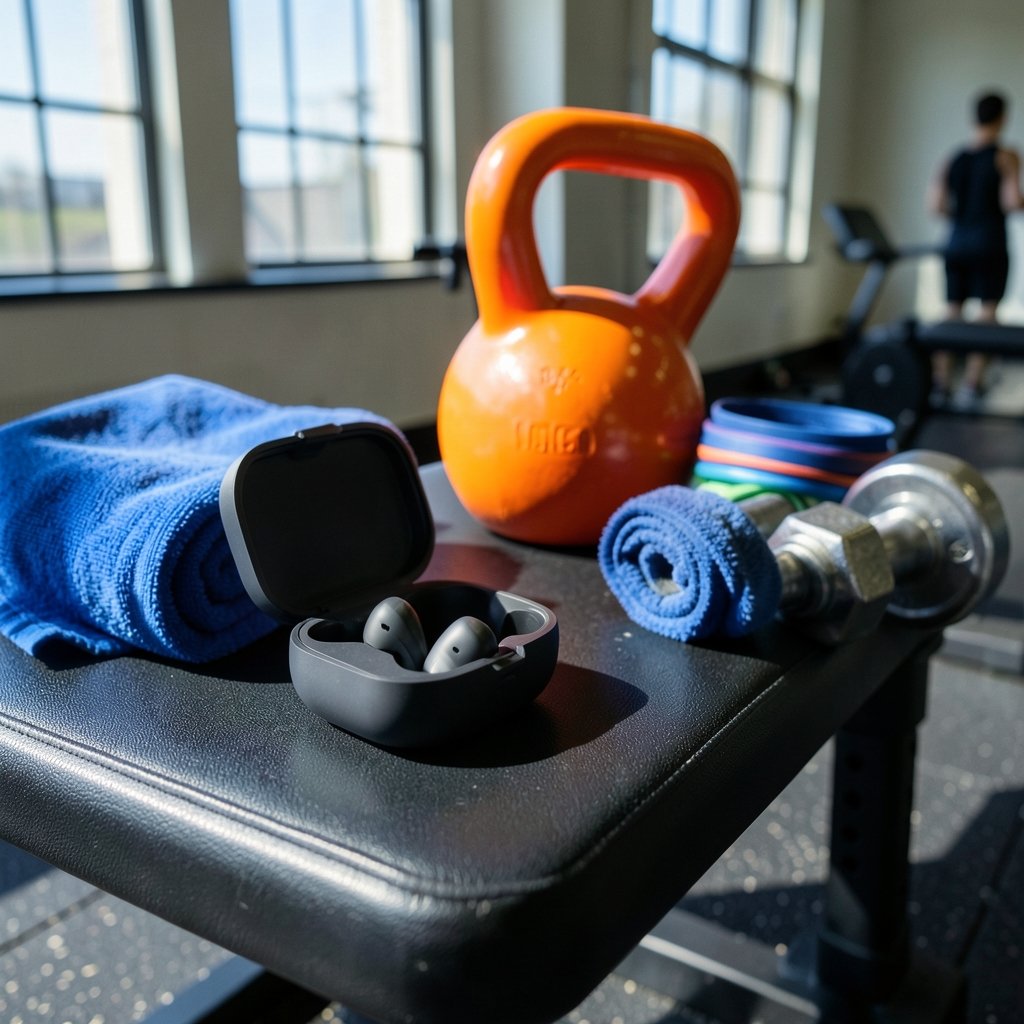
What good is a pair of earbuds if it pops out halfway through a burpee set? That question is the whole game in 2027. Sweat, sprints, and a bench press that presses one ear into the pad will expose every weakness in a design. The good news: the current crop of sport earbuds has split into clear families, and each one solves the staying-in problem differently.
Below is a shortlist of specific models, sorted by what they do best. Prices appear only where a retailer listing states them, so treat every figure as a snapshot rather than a promise.
The Shortlist at a Glance
| Pick | Fit style | Water rating | Battery per charge | Price where listed | Best for |
|---|---|---|---|---|---|
| Shokz OpenFit 2 | Open-ear hook | IP55 | 11 hours | $179.00 | Most people, all-round training |
| Soundcore Sport X20 | In-ear with hook | Not listed | 12 hours (48 with case) | Not listed | Lifting, HIIT, spin class |
| Beats Powerbeats Pro 2 | In-ear with hook | IPX4 | 10 hours (45 with case) | $249.00 | iPhone users who want features |
| Apple AirPods Pro 3 | In-ear | IP57 | Not listed | Not listed | Noise cancelling plus heart rate |
| Shokz OpenRun Pro 2 | Bone conduction | Not listed | 12 hours | Not listed | Road runners and cyclists |
| JLab GO Sport+ | In-ear with hook | Not listed | Not listed | $33.98 | Tight budgets |
| Soundcore V30i | Open-ear hook | IPX5 | 12 hours | Under $50 | Long sessions on a budget |
Shokz OpenFit 2: The Open-Ear Pick for Most People
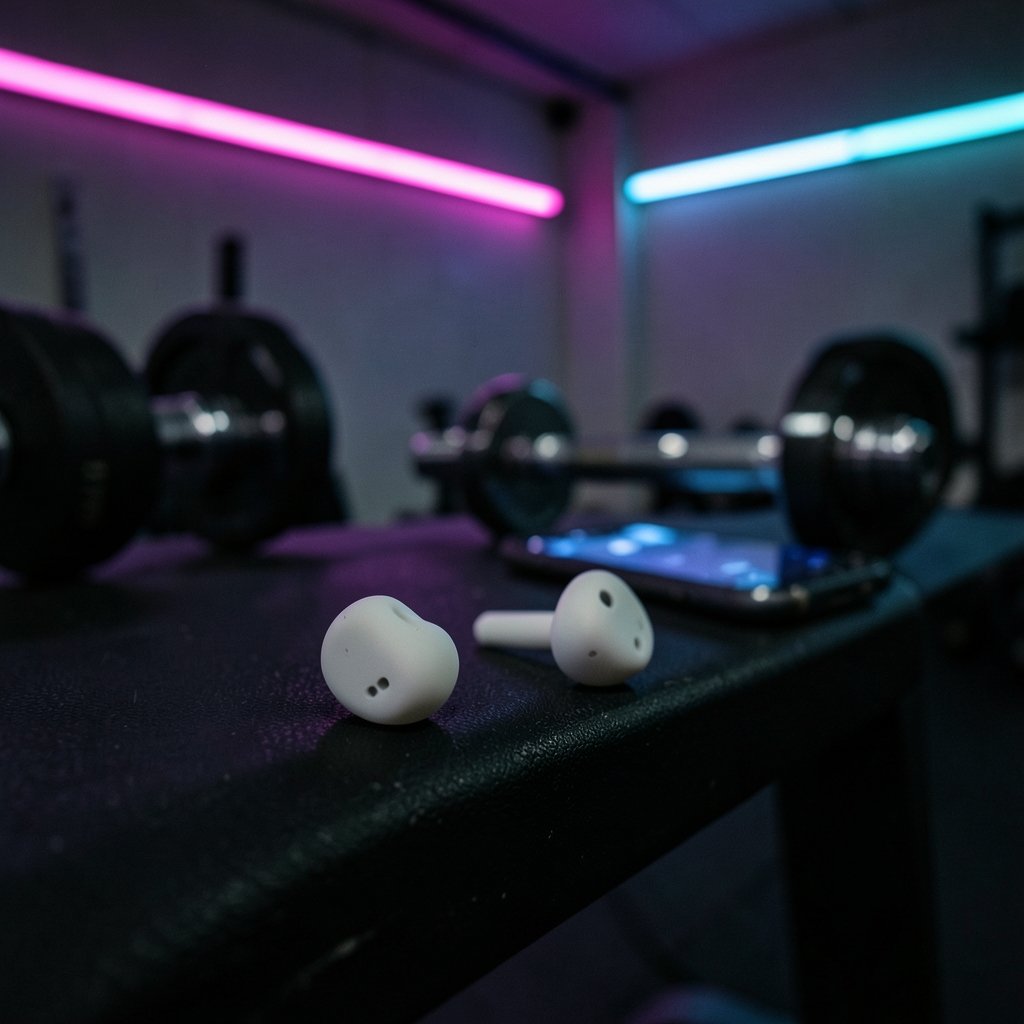
If someone wants one recommendation without a lecture, this is it. The OpenFit 2 uses an open-ear hook that sits outside the canal, so you hear your music and the gym around you at the same time. It runs 11 hours per charge, carries an IP55 rating on the buds, and pairs a physical button with touch controls. Shokz’s DualBoost dual-driver setup handles the sound.
The hook fit is the reference point other open-ear models get measured against, which tells you something about how well it stays put. The limitation is the design itself: open-ear means no isolation, so a loud free-weight floor will bleed into your podcast. Listed at $179.00.
Soundcore Sport X20: Built for the Weight Room
Lifting, HIIT, and spin classes are where ear-hook earbuds earn their keep, and the Sport X20 is the model Soundcore points to first for gym work. The hooks rotate 30 degrees and extend 4 mm, which is the kind of adjustment that matters if your ears sit between sizes. It adds active noise cancellation to block out gym playlists, and the battery runs 12 hours per charge, 48 with the case.
The catch is that Soundcore’s own listing does not state an IP water rating for this model, so if you sweat heavily or train outdoors in rain, ask before you buy. For indoor iron work, the ANC and the adjustable hooks are the draw.
Beats Powerbeats Pro 2: The iPhone Powerhouse
Nickel-titanium hooks, ANC, heart-rate sensors, and Apple’s H2 chip: the Powerbeats Pro 2 packs the longest feature list in this group. Battery life is 10 hours per charge, 45 with the case, and the ear-hook design is about as stable as in-ear gets during sprints. Listed at $249.00.
Here is the honest limitation. The rating is IPX4, which covers splashes but not a soaked session or a rinse under the tap. It is a fit-and-features pick, not a sweat-rating pick. If you want the Apple ecosystem to just work, this is the one. If you sweat buckets, look at the AirPods below.
Apple AirPods Pro 3: Best Noise Cancelling in a Sport-Ready Bud
The AirPods Pro 3 carry IP57 on both the buds and the case, which is a serious jump in durability for anyone who has killed a pair with sweat. Add a heart-rate sensor, five tip sizes for a proper seal, and what reviewers describe as the best noise cancelling you can get in an earbud you can actually train in.
The trade-off is retention. There is no ear hook and no wingtip, so the seal depends on tip friction alone. Several users report the buds loosening during sweaty runs or explosive lateral movement. Great for the treadmill and the gym floor, less certain for burpees.
Shokz OpenRun Pro 2: The Road Runner’s Choice
Canal-occluding earbuds have a safety problem outdoors: you cannot hear traffic. The OpenRun Pro 2 solves it with bone conduction transducers for highs and mids plus an air-conduction driver for bass, so your ear canals stay open. Road runners, cyclists, and anyone training near cars get full awareness of approaching vehicles, bike bells, and shouted warnings.
The frame uses a Ni-Ti alloy memory wire that holds its shape across thousands of flex cycles, and battery life reaches 12 hours with a one-hour full charge, which outlasts most true-wireless buds in continuous playback. The limitation is bass: bone conduction will never thump like a sealed bud. Buy it for safety, not for club sound.
JLab GO Sport+: The Cheapest Hook Worth Naming
At $33.98, the GO Sport+ is the budget answer for anyone who wants a hooked in-ear without thinking hard about it. It has an in-ear design with an ear hook, and it is the cheapest hooked earbud that reviewers would hand to anyone. For a first pair, a backup pair, or a teenager’s gym bag, that is a fair deal.
What you give up is everything the premium picks add: no ANC, no heart-rate sensing, and no listed battery figure in the sources reviewed. It is a fit-first purchase at a fit-first price.
Soundcore V30i: Long Battery on a Small Budget
The V30i delivers 12 hours per charge from a sub-$50 open-ear hook, with 14.2 mm drivers and four mics. That battery number is the headline: it beats several pricier buds on a single charge.
The trade is IPX5 rather than IP55, and there is no multipoint, so it is the battery pick rather than the all-rounder. If you want the cuff or clip style without a big bill, the JLab Flex Open Earbuds are the other budget name worth a look, with IP55, multipoint, and 21-plus hours total.
What the Spec Sheet Won’t Tell You
The number on the box is not the whole story. A higher IP rating does not guarantee survival, because the internal sealing matters more than the external figure. One teardown of a failed pair found the circuit board coated with a hydrophobic nano-coating that never appeared on the spec sheet, and those buds showed zero performance degradation while others cut out from humidity. The real differentiator is a multi-barrier defense.
Heart-rate sensors have a similar gap between claim and reality. In a 45-minute threshold run in 85-degree heat, one reviewer compared the Jabra Elite 8 Active’s in-ear sensor against a Polar H10 chest strap. For the first 20 minutes the data stayed within 3 to 5 BPM, then the sensor began losing contact and picking up motion artifact. Optical sensors need steady skin contact, and sweat breaks that contact.
Fit is the third hidden variable. German testing coverage puts it plainly: normal in-ears are not built for sport, and sweat, movement, and impact push them to their limits. Ear hooks sit over and around the ear for maximum hold even during sprints. Fins and wings are the compromise. Plain silicone tips rely on friction alone.
How to Choose Without Overthinking It
Work through these in order. The first two questions eliminate most of the list.
- Decide whether you need to hear traffic. If you run or ride on roads, go open-ear or bone conduction. The OpenRun Pro 2 and OpenFit 2 exist for this.
- Match the fit to your workout. Lifting and HIIT want hooks. Treadmill and desk-adjacent cardio can live with tips and wings.
- Check the IP rating against your sweat level. IPX4 is splash only. IP55 and IP57 handle real sweat and rain.
- Read the per-bud battery figure, not the total. A 96-hour headline can hide 8 hours per bud on a single charge, with the rest coming from case recharges.
- Set a budget and stop. The $33.98 JLab and the $249 Powerbeats both stay in your ears. The difference is features, not fit.
One more practical tip: buy from a seller with a real return window and test the fit on day one with the workout you actually do. A bud that survives a walk but fails a sprint is not your bud.
If you are also sorting out the software side of your training setup, the same shortlist logic applies to the tools you run alongside your gear, from agentic AI chatbots in 2027 that handle scheduling to low-cost SEO tools that cover real work if you write about fitness on the side. For readers comparing AI assistants the way they compare earbuds, this breakdown of the best AI chatbots under the hood in 2027 follows a similar pick-by-use-case approach.
Conclusion
The best workout earbuds in 2027 are not the ones with the longest feature list. They are the ones that match your training. Open-ear hooks like the Shokz OpenFit 2 cover most people, the Soundcore Sport X20 owns the weight room, the Powerbeats Pro 2 reward iPhone owners, and the AirPods Pro 3 win on noise cancelling and water protection. Road runners should not compromise: bone conduction is the safe choice. And if the budget is tight, the JLab GO Sport+ proves that staying in your ears does not require a premium price. Pick by fit and environment first, specs second, and you will land on a pair you keep.
Frequently Asked Questions
Are open-ear earbuds good for the gym?
Yes, for most gym work. Open-ear hooks like the OpenFit 2 stay put during lifting and cardio, and they let you hear a training partner or a gym announcement. The trade is no noise isolation, so a loud weight room will compete with your audio.
What IP rating do I need for sweaty workouts?
IPX4 covers splashes only, which is fine for light gym sessions but risky for soaked training. IP55 and IP57 handle heavy sweat and rain. Remember that internal sealing matters as much as the number, so a high rating is a guide, not a guarantee.
Do workout earbuds with heart-rate sensors match a chest strap?
Close, but not perfectly. In one heat test, an in-ear optical sensor stayed within 3 to 5 BPM of a chest strap for the first 20 minutes, then lost contact and picked up motion artifact. Treat wrist and ear sensors as training guides, not lab instruments.
Why do my earbuds keep falling out during burpees?
Retention depends on the fit system. Plain silicone tips rely on friction and loosen as you sweat. Ear hooks sit over and around the ear for maximum hold, and fins or wings are the middle ground. If burpees are in your program, buy hooks.
Is bone conduction better for running outdoors?
For road safety, yes. Bone conduction keeps your ear canals open, so you hear cars, bike bells, and warnings without pausing your music. The cost is bass response, which will never match a sealed in-ear design.
How much should I spend on workout earbuds?
There is no single answer, but the range is wide: from $33.98 for the JLab GO Sport+ to $249.00 for the Powerbeats Pro 2. Fit and water protection matter more than price. A cheap hooked pair that stays in beats an expensive pair that does not.