What happens to your house when the grid drops for three days straight? For most homeowners, the answer is a scramble: extension cords, melting freezers, a dark basement, and a phone battery hovering at four percent. A backup generator fixes that, but the market is crowded with models that look identical on paper and behave very differently in a storm. This roundup cuts through the noise with specific, named options for 2027, each matched to a real household need. Prices below are only listed where a published source states them, and they move around, so confirm on the product page before you buy.
Comparison Table: Best Home Backup Generator Options for 2027
| Model | Type | Best For | Standout Strength | Watch Out For | Price (if published) |
|---|---|---|---|---|---|
| EcoFlow Delta Pro Ultra X + Smart Home Panel 3 | Battery power station | Whole-home peace of mind | Up to 184.3 kWh storage, 36 kW continuous output with extra batteries | Needs a big upfront investment | Not stated |
| Champion tri-fuel inverter (dual/tri-fuel line) | Portable inverter | Budget-conscious essentials backup | Widest dual-fuel lineup, lowest inverter prices | Smaller units won’t run HVAC | Inverter units under $1,000 |
| Westinghouse WGen9500DF | Portable dual fuel | Big house with a 50-amp transfer switch | 10,500 running / 13,000 surge watts on gas | No built-in CO shutoff confirmed in manual | Not stated |
| DuroMax 13kW line | Portable dual fuel | Value buyers wanting copper windings | Copper windings and CO shutoff for less than older EH pricing | Not CARB certified on listed models | Not stated |
| Generac GP9500E | Portable tri-fuel | First-time buyers on a budget | Quality tri-fuel performance around $1,100 | Very heavy, few extra features | Around $1,100 |
| Honda EU2200i | Small inverter | Fridge, lights, and quiet | The best small inverter made | Wrong tool for whole-house backup | $1,199 |
EcoFlow Delta Pro Ultra X: The Battery-First Pick for Whole-Home Peace of Mind
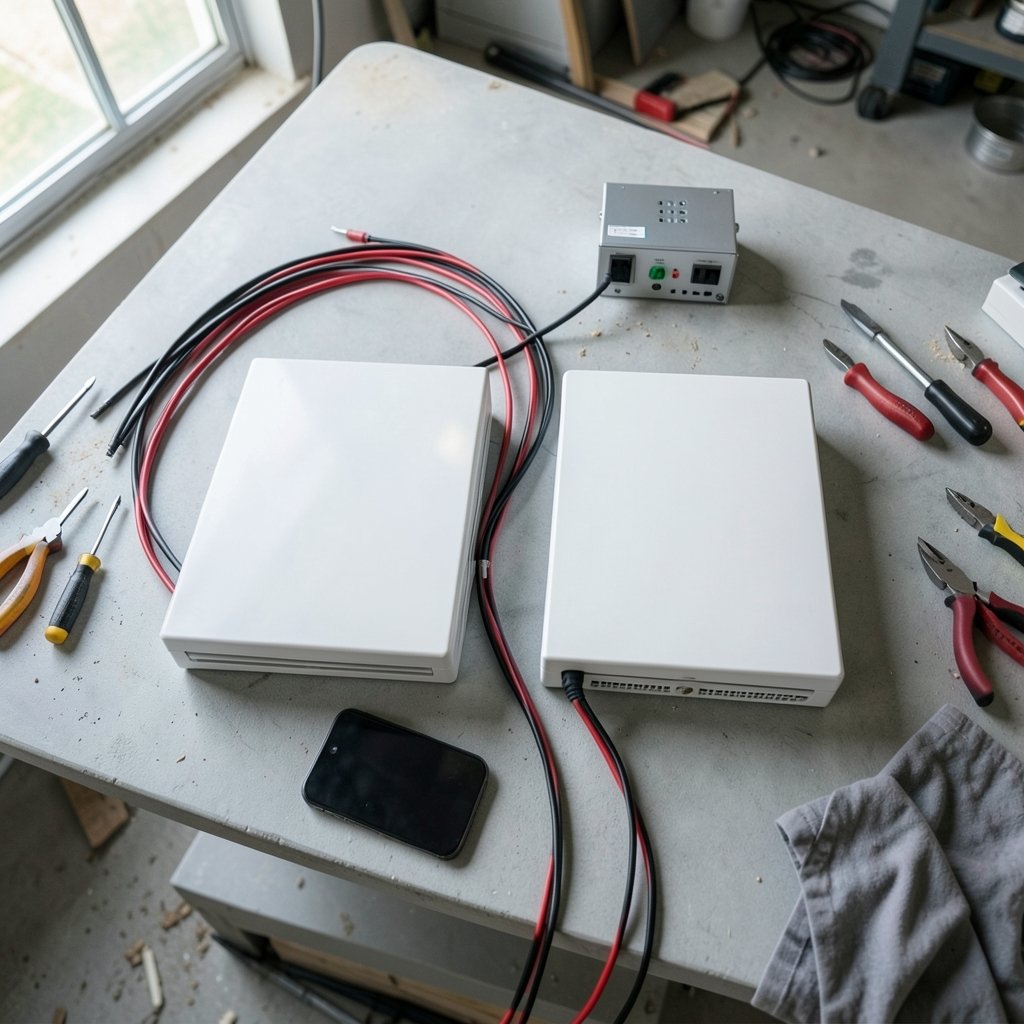
If the goal is a house that barely notices an outage, this is the system to beat. Plug a Delta Pro Ultra X into each port of the Smart Home Panel 3, add extra batteries, and the setup scales to a whopping 184.3 kilowatt-hours of storage and 36 kilowatts of continuous output. That is not a generator you wheel onto the patio. It is a permanent power layer behind your electrical panel.
The experience is what sells it. Reviewers who lived through two outages with the system described a switch to backup power in about 20 milliseconds in Emergency Power Supply mode, fast enough that the lights never flickered and the internet never dropped. The companion app shows usage down to the circuit, lets you choose which circuits get backup power, and sends a notification when the grid goes down.
The limitation is honest: this is a premium system with a premium install, and the cost climbs with every battery you add. It suits homeowners who want quiet, fuel-free backup and are willing to pay for it. Anyone hunting for a $900 weekend machine should look further down this list.
Champion: The Value Play With the Widest Dual-Fuel Lineup
Champion keeps winning the budget argument. Across the portable market, it offers the widest dual-fuel lineup and the most affordable inverter models, which makes it the default recommendation for households that want to run a fridge, a furnace fan, lights, and the router without spending four figures. For a typical home backup budget of $500 to $1,000, Champion takes the inverter category.
The catch is sizing. A small Champion inverter will keep essentials alive, but it will not carry a well pump, a sump pump, and central air at the same time. Buyers routinely make the mistake of adding up their appliances’ running watts and ignoring starting surge, the brief spike a motor draws when it kicks on. A fridge might run at a few hundred watts but surge far higher for a second. Add up both numbers before you pick a wattage.
Champion also earns points for accessibility: conventional pull-start and electric-start options, straightforward controls, and parts that are easy to find. It is the sensible first generator for most people.
Westinghouse WGen9500DF: Maximum Portable Watts for a 50-Amp Panel
Westinghouse delivers the most watts per dollar in the 7,500 to 12,000-watt class and leads on features like remote start. The WGen9500DF shows why. It produces 10,500 running and 13,000 surge watts on gas, or 9,975 and 12,350 on propane, from a 500cc engine and an 8.3-gallon tank. Expect roughly eight hours on gas and six on propane at half load, under 74 dB, with a 14-50R outlet, an L14-30R, a 120V 30A outlet, and GFCI protection. It weighs about 246 pounds and carries a three-year warranty.
This is the model for a bigger house wired to a 50-amp transfer switch, where you want the most a portable unit can give. One real limitation deserves attention: the owner’s manual checked for this model does not describe a CO shutdown sensor, even though DuroMax’s spec page lists one for a related unit, so plan on a battery-powered carbon monoxide alarm inside either way. Some owners have reported starting trouble, so do a full test run the day it arrives, not the night the storm hits.
DuroMax 13kW Line: Copper Windings and CO Shutoff Without the Premium
DuroMax’s 13kW family is the value pick in its class: copper windings and a carbon monoxide shutoff for less than the older EH series typically costs. Copper windings matter over the long haul because they handle heat and load better than aluminum, and a CO shutoff is the single most important safety feature on any fuel-burning generator.
The trade-offs are real. DuroMax lists at least one model in this range as not CARB certified, which matters if you live in California or another state that follows those rules. Check the certification status on the exact model number before ordering. These units are also heavy and loud compared with inverter models, so they suit a homeowner with a permanent outdoor spot and a transfer switch, not someone planning to haul one to a campsite.
If you are also outfitting a workspace where you will manage orders or listings during an outage, it is worth pairing your power plan with a reliable chair setup; a long night of manual work is easier with proper support, and a guide to the best ergonomic chairs for a home office that actually saves your back covers the essentials.
Generac GP9500E: The Budget Tri-Fuel That Performs
Generac owns the strongest brand recognition and dealer network in this space, with reliable engines at a price premium. The GP9500E is the exception to that premium: it is hard to find a quality tri-fuel generator for around $1,100, and this one performs well if you do not mind losing some bells and whistles.
What it does well is simple. The control panel is about as straightforward as can be, and it is a cinch to get up and running. The outlet covers feel sturdier than many rivals at this price, and wheels plus handles make short moves manageable. What it does not do is travel far: like most machines capable of backing up a house, it is exceedingly heavy. Buyers who expect to carry it up stairs or load it into a truck alone will be disappointed. For a homeowner who wants a dependable tri-fuel unit parked beside the house and connected to a transfer switch, the value is hard to argue with.
Honda EU2200i: The Small Inverter That Does One Job Perfectly
The Honda EU2200i is the best small inverter generator made, and the wrong tool for whole-house backup. Buy it for a fridge, a few lights, and quiet. At $1,199, it costs more than some 9,000-watt portables, and that price buys refinement: legendary reliability, low noise, and fuel efficiency that lets a small tank stretch through a long evening.
The limitation is capacity, full stop. A 2,200-watt inverter will not run a well pump, an electric water heater, or central air. It is the right answer for apartment dwellers, campers, and homeowners who want a quiet bridge for essentials while a larger unit handles the heavy loads. Pairing a small inverter with a battery station is a genuinely smart combo, and if you are building out that kind of setup, this roundup of the best home generators is a useful next stop.
How to Choose a Home Backup Generator in 2027
Start with what you want to power, not with wattage. There are three common tiers. Essentials-only means the fridge and freezer, lights, outlets, internet, the furnace fan, and a microwave. High-demand loads add a well pump, a sump pump, extra refrigerators, shop tools, or partial HVAC. Whole-home backup covers most or all of what you normally use.
Then check three numbers for every appliance on your list. Continuous load is normal draw, and essential circuits in a small home might pull 800 to 1,000 watts while a medium or large home can range from 1,500 to 3,000 watts. Starting surge is the spike when a motor starts. Voltage requirements matter too, since most appliances run on 120V but big loads need 240V.
Common mistakes worth avoiding:
- Buying on peak wattage alone. Surge ratings last seconds; running watts are what you live on.
- Skipping the transfer switch. Backfeeding a panel through an outlet is dangerous and illegal in most places.
- Forgetting fuel storage. Propane and natural gas do not go stale; gasoline does.
- Ignoring noise and placement. Never run a generator in a garage or near a window.
- Skipping the CO alarm. Every fuel-burning unit needs one inside the home.
Connecting a generator to your home’s gas line is not a DIY project and requires professional installation, so budget for that. If you are also producing content or running a small shop from home during outages, tools like the best AI generators for print-on-demand sellers can keep work moving on battery power alone.
Conclusion
The best home backup generator for 2027 depends on one question: how much of your house do you want to keep running? For whole-home, fuel-free peace of mind, the EcoFlow Delta Pro Ultra X with the Smart Home Panel 3 is the standout, at a price that reflects it. For a big house with a 50-amp transfer switch, the Westinghouse WGen9500DF delivers the most portable power for the money. Budget buyers should start with Champion’s inverter line or the Generac GP9500E, and anyone who just needs a fridge and a few lights should buy the Honda EU2200i and stop shopping. Size it right, install it safely, and test it before the storm, not during it.
Frequently Asked Questions
What size generator do I need to back up my house?
Essentials-only setups in a small home often need 800 to 1,000 watts of continuous load, while medium and large homes can range from 1,500 to 3,000 watts. Add starting surge for anything with a motor, and step up to a 9,000-watt class portable or larger if you want a well pump, sump pump, or partial HVAC running at the same time.
Is a battery power station better than a gas generator?
They solve different problems. A battery system like the Delta Pro Ultra X runs silently, needs no fuel, and can switch over in about 20 milliseconds, but it costs more upfront and scales with each battery you add. A gas, propane, or tri-fuel generator costs less per watt but needs fuel, maintenance, and safe outdoor placement.
Can I run a generator without a transfer switch?
You can run extension cords from a portable generator to individual appliances, which is safe if done carefully. What you should not do is backfeed your electrical panel through an outlet. A proper transfer switch or inlet box, installed by a professional, is the safe route for powering household circuits.
How long will a portable generator run on one tank?
It depends on load and fuel. The Westinghouse WGen9500DF, for example, runs about eight hours on gas and six hours on propane at 50 percent load from its 8.3-gallon tank. Smaller inverter units sip fuel and can stretch much longer on a gallon.
Do I need a carbon monoxide alarm with a generator?
Yes. Any fuel-burning generator produces carbon monoxide, and it should never run in a garage, basement, or near a window. Install a battery-powered CO alarm inside the home regardless of whether your unit has a built-in shutoff, since documentation does not always confirm the feature.
Which brand is most reliable for home backup?
Brand reputation varies by category. Generac carries the strongest dealer network and brand recognition, Champion offers the best value and widest dual-fuel lineup, and Westinghouse leads on watts per dollar in the 7,500 to 12,000-watt class. Honda dominates small inverters, and EcoFlow leads battery-based whole-home systems. Match the brand to the job rather than picking one winner.