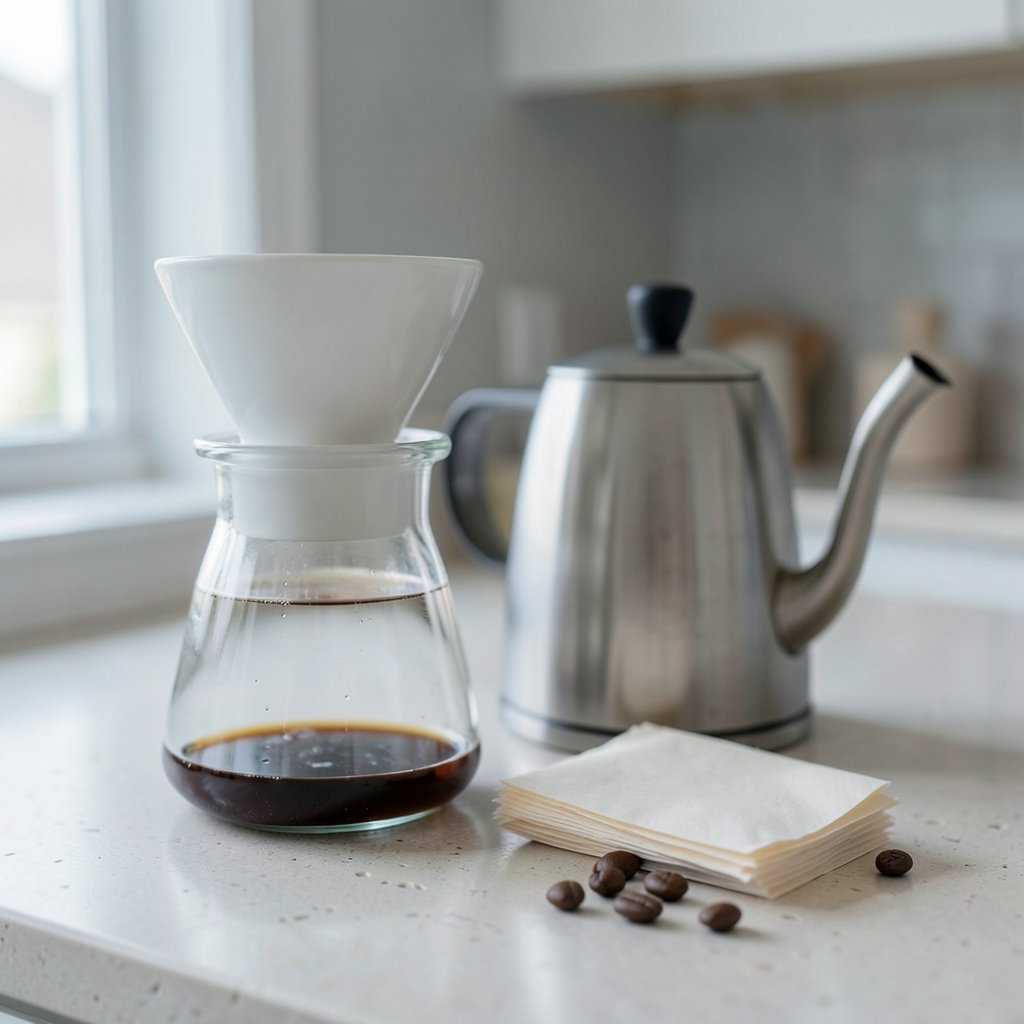
What if the best cup of coffee in your kitchen costs less than a nice dinner out, and the machine that makes it never asks you to learn a single technique? That is the strange, wonderful reality of the pour over market right now. You can spend $23 on a plastic cone that baristas swear by, or nearly $300 on a machine that mimics a skilled hand pour. Both live comfortably under the $300 ceiling.
This roundup covers seven specific brewers, from bare-bones manual cones to automatic machines. Each entry tells you who it suits, what it does well, where it stumbles, and what it costs when a source states a price. Prices shift, so treat every figure as a starting point and confirm on the product page before buying.
The Shortlist at a Glance
| Brewer | Type | Best For | Stated Price | Watch Out For |
|---|---|---|---|---|
| Hario V60 02 | Manual cone | One-cup drinkers learning technique | ~$25 | Needs a gooseneck kettle and scale |
| CHEMEX 6-Cup Classic | Manual, glass carafe | Brewing 3–6 cups at once | ~$45 | Proprietary thick filters |
| Bee House Ceramic Dripper | Manual cone | Forgiving, gift-friendly brewing | Not stated | Slower drawdown than a V60 |
| Kalita Wave 185 | Flat-bottom dripper | Two people, uneven pouring | Not stated | Wave-specific filters |
| Clever Dripper | Immersion cone | Beginners who want zero technique | Not stated | Less clarity than a true pour over |
| OXO Brew Pour-Over | Semi-automatic | Hands-off single cups | Not stated | Fewer manual controls |
| Breville Precision Brewer | Automatic, SCA-certified | Replacing manual brewing entirely | ~$200–$300 | Pricey for a drip machine |
Hario V60 02: The Default Choice for a Reason
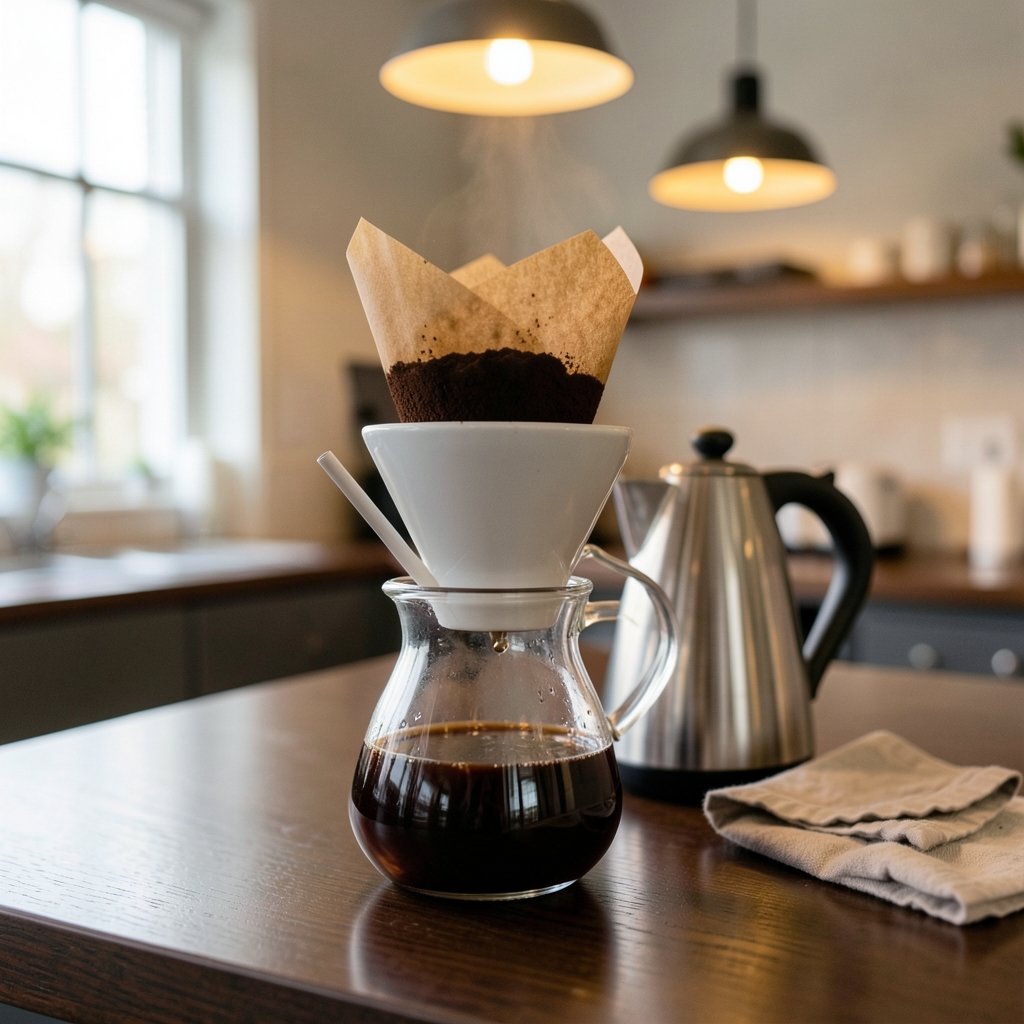
If there is a worldwide standard for specialty pour over, this is it. The V60’s 60-degree cone and single large hole are the shape most coffee people learn on, and baristas keep naming it as a favorite. Three baristas interviewed about their go-to pour over gear picked the same two winners: the Hario V60 and the Chemex.
Who it suits: a single drinker who wants one excellent cup and does not mind paying attention for three minutes.
What it does well: it is cheap, widely available, and teaches you things no machine can. Grind size, water temperature, and pour speed all show up instantly in the cup. A roughly $25 dripper, a roughly $45 kettle, filters, and a scale land under $80 all in, and the cup quality beats most cafes.
The limitation: it punishes sloppy pouring. A V60 with an uneven pour channels and drains fast, giving you a thin, sour cup. Budget for a gooseneck kettle, because a mug-and-teapot setup will fight you.
If your current setup already frustrates you, the fixes for a coffee maker that overflows its filter basket often apply to pour over too: grind too fine, filter seated wrong, or simply pouring too fast.
CHEMEX 6-Cup Classic: The Batch Brewer That Looks Like Art
The CHEMEX is in the Museum of Modern Art’s collection, which is a strange thing to say about a coffee maker and also completely true. It is a borosilicate glass carafe and dripper in one piece, and the six-cup version holds 30 fluid ounces.
Who it suits: couples, small households, and anyone brewing for guests. It is also the pick for people who want the large-batch convenience of a drip machine without plastic in the brewing path.
What it does well: the thick proprietary paper filters produce a remarkably clean, sediment-free cup. Serious Eats named the six-cup glass-handle version the best non-toxic pour over, praising its durable borosilicate build and the clean taste from those filters. It is also genuinely beautiful on a counter.
The limitation: those thick filters are the recurring cost people forget. They are not cheap and not universal, so you are locked into CHEMEX’s supply. The glass also wants hand washing and careful handling.
One quirk worth knowing: CHEMEX defines a cup as five fluid ounces, so “six cups” is 30 ounces, not six mugs. Check ounces, never the word cup.
Bee House Ceramic Dripper: The Quiet Forgiver
The Bee House, made by Zero Japan, is a glazed ceramic cone with two small holes instead of one big one. That design slows the drawdown and quietly forgives a sloppy pour, which makes it one of the friendliest cones for someone still building technique.
Who it suits: gift buyers and anyone who wants a ceramic brewer that looks handmade rather than industrial.
What it does well: it uses cheap supermarket #2 filters rather than a proprietary shape, which is a small, real kindness to whoever restocks the pantry. The ceramic holds heat well, and the two-hole design buys you a few seconds of grace when your pour wobbles.
The limitation: it is slower than a V60, and some drinkers find the cup slightly less bright. It also needs preheating, since cold ceramic pulls heat from the slurry.
Kalita Wave 185: Flat Bottom, Steady Results
The Wave’s flat bed and three small drain holes even out a sloppy pour. Its shape is far more forgiving than a cone, so beginners get a good cup without perfect technique.
Who it suits: two-person households and anyone who brews while distracted.
What it does well: the flat bed extracts evenly, which means fewer sour or bitter surprises. The 185 size suits two people well.
The limitation: you must buy Wave 185 filters, and they cost more than generic cones. The flat bed also rewards a slightly finer grind than a V60, so expect a small learning curve on your grinder settings.
Clever Dripper: Immersion Brewing With a Valve
This is a pour over cone with a valve in the bottom, so the coffee steeps like a French press and then drains through a paper filter. It is the most forgiving brewer in this group: pour, wait four minutes, set it on a mug. No pouring technique to learn.
Who it suits: beginners, early risers who cannot operate a kettle before caffeine, and anyone who wants filter clarity without fuss.
What it does well: it removes the variable that ruins most home pour overs, which is pour speed. The result is consistent and clean.
The limitation: the cup has less of the sparkling clarity a well-executed V60 delivers. If you want to develop your palate and troubleshoot extraction actively, this brewer hides too much from you.
OXO Brew Pour-Over: Technique, Minus the Skill
The OXO Brew takes the skill out of pour over with a clever water tank that meters the pour for you. It handles the timing so you handle nothing.
Who it suits: someone who wants one good cup with minimal attention but is not ready to spend automatic-machine money.
What it does well: it automates the part beginners get wrong. Water delivery is steady, so extraction is even.
The limitation: you give up control. If you want to experiment with pulse pours or bloom timing, this machine has opinions of its own. It also takes up more counter space than a cone.
If you are weighing automatic options more broadly, the same trade-off shows up in other categories, and a Keurig-style machine solves speed rather than cup quality. Different jobs, different tools.
Breville Precision Brewer: The $300 Ceiling, Nearly Touched
This is the value anchor at the top of the automatic tier. It is SCA-certified, has a Gold Cup preset, and offers dual basket options for cone and flat-bottom filters. Stated pricing across sources runs from about $200 to about $300, which puts it right at the edge of this budget.
Who it suits: someone who wants specialty-level extraction without daily manual brewing and is willing to pay to remove that friction permanently.
What it does well: it copies what a skilled barista does, heating water to the right temperature, wetting grounds evenly, letting them bloom, and pouring at a steady rate, all with one button. Results taste cleaner and brighter than many basic drip machines.
The limitation: it is a lot of money for a drip machine, and it cannot teach you what a manual dripper teaches. It is worth it for a specific person, not for everyone.
How to Choose Without Overthinking It
Buy the brewer that matches your mornings, not the one that wins arguments online. A few practical filters:
- Count your cups. One drinker? V60 or Clever. Two? Kalita Wave 185 or V60 02. A group? CHEMEX 6-Cup.
- Decide how much technique you want. If the answer is none, buy the Clever Dripper or an automatic. If the answer is some, buy a cone.
- Budget for the accessories. A gooseneck kettle and a scale matter more than the dripper itself. A great cone with a sloppy pour makes worse coffee than a cheap cone with good technique.
- Factor in filters. Proprietary filters, whether CHEMEX thick papers or Wave 185, are a permanent subscription. Generic #2 filters are not.
- Check materials. Borosilicate glass, stainless steel, and ceramic keep plastic out of the brewing path, which is the whole point of buying a pour over for many people.
One more practical note: water quality quietly wrecks more brews than gear choice. If your tap runs hard, a brewer that survives mineral buildup matters, and the habits in this guide to coffee makers and hard water apply whether you brew by hand or by machine. The same goes for leaks and wear: knowing the common causes of a coffee maker leaking from the bottom saves you from replacing a brewer that only needed a gasket.
Conclusion
Under $300, the pour over market splits cleanly. Below $50, you buy a cone or a carafe and supply your own skill. Around $200 to $300, you buy a machine that supplies the skill for you. The Hario V60 remains the cheapest path to a genuinely great cup, the CHEMEX remains the best-looking way to brew for a table, and the Breville Precision Brewer remains the honest answer for anyone who wants the result without the ritual.
Pick based on how many cups you make and how much attention you will actually give them at 6 a.m. That answer, more than any spec sheet, decides which brewer earns its counter space.
What is the best pour over coffee maker under $300 overall?
For most people, the Hario V60 02 at roughly $25 is the best overall value, because it costs the least and teaches the most. If you want automation instead, the Breville Precision Brewer at about $200 to $300 is the strongest machine in this budget, since it is SCA-certified and has a Gold Cup preset.
Is an automatic pour over machine worth it over a manual dripper?
It is worth it for one specific person: someone who wants specialty-level extraction without brewing manually every day and will pay $300 to $600 to remove that friction permanently. A manual dripper teaches extraction in a way no machine can, so buy the machine only if you value consistency over learning.
How much do I need to spend beyond the brewer itself?
Plan for a gooseneck kettle, paper filters, and a scale. A roughly $25 dripper, a roughly $45 kettle, filters, and a scale come in under $80 all in. That accessory total matters more to cup quality than upgrading the dripper.
Which pour over brewer is most forgiving for beginners?
The Clever Dripper is the most forgiving, because it steeps like a French press and then drains through a filter, so there is no pouring technique to learn. The Kalita Wave 185 and the Bee House ceramic cone are the next most forgiving, since both even out an uneven pour.
Does the CHEMEX really make six cups?
Not in mug terms. CHEMEX defines a cup as five fluid ounces, so the 6-Cup Classic holds 30 fluid ounces. Always check the ounce or milliliter capacity rather than trusting the word cup on the box.
Do I need special filters for each brewer?
Often, yes. The CHEMEX uses thick proprietary papers, the Kalita Wave 185 needs Wave 185 filters, and the Hario V60 02 needs conical 02 filters. The Bee House is the exception, using cheap supermarket #2 filters, which keeps long-term costs down.