What if the loudest thing in your kitchen at 6 a.m. was the kettle clicking off? Pour over brewing is already close to silent by design. No pump, no grinder motor running for a minute straight, no gurgling reservoir. Just water, grounds, and gravity. But not every pour over setup is equally peaceful, and some “quiet” brewers still rattle, drip loudly, or demand so much fussing that the calm disappears.
This roundup covers the specific pour over brewers worth considering for a quiet household in 2027, from a bare-bones cone to a hands-off water-tank model. Each pick gets a clear owner: who it suits, what it does well, and where it falls short. Prices appear only where a source states them, so check official product pages before buying.
Comparison at a Glance
| Brewer | Best for | Noise profile | Standout strength | Main limitation |
|---|---|---|---|---|
| Kalita Wave | Beginners wanting repeatable cups | Silent | Forgiving flat bed, three exit holes | Filters cost more, less common in stores |
| Hario V60 | Tinkerers chasing clarity | Silent | Full control over flow | Punishes sloppy pouring |
| Chemex Classic 6-Cup | Serving a small crowd | Silent | Exceptionally clean cup | Breakable, pricey bonded filters |
| OXO Brew Pour Over with Water Tank | Hands-off brewing | Near-silent | Auto-regulating water tank | Less control over the pour |
| Bodum Pour Over 34oz | No-paper-filter brewers | Silent | Reusable stainless mesh filter | Oils and sediment in the cup |
| Fellow Stagg [X] | Gear lovers wanting heat retention | Silent | Double-wall insulated steel | Premium price, heavier |
| Melitta single-cup cone | One-cup, tight-budget setups | Silent | Smallest footprint | One cup at a time |
Kalita Wave: The Quiet Beginner’s Best Friend
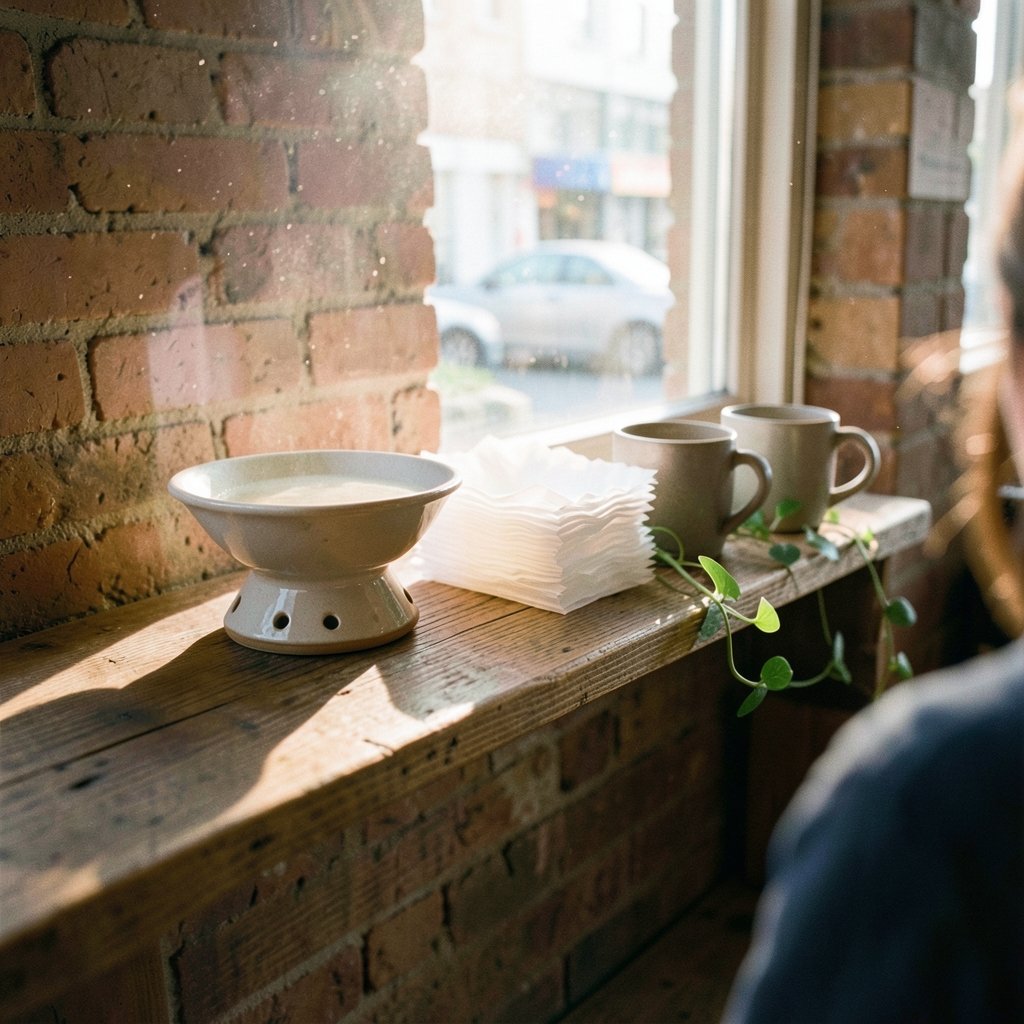
The Kalita Wave has been the home brewer’s quiet best friend for over a decade, and it earns that reputation with design rather than marketing. The flat bottom spreads the coffee bed evenly, and three small exit holes cap the flow rate. You physically cannot pour too fast. That means a sleepy, half-awake pour still lands somewhere close to a good cup.
It also vents the filter bed properly, so brews do not stall or clog, and it stays forgiving across a wide range of grind settings. The cup is balanced: enough body for a drip-coffee drinker, enough clarity to show off good beans. For a household where one person brews before everyone else is awake, that reliability matters more than drama.
The limitation is practical. Wave filters cost more than standard cones and are not always stocked at supermarkets, so buy them in batches. And it still wants a gooseneck kettle for best results, which is an extra purchase. If you are building a quiet setup from scratch, pair it with a kettle you already own before spending on anything else. Anyone weighing a full manual setup against a machine can also look at the best pour over coffee maker options for context.
Hario V60: Silent, But It Wants Your Attention
The V60 is the opposite of forgiving, and that is exactly why some brewers love it. The cone shape and large single opening give you total control over flow. Pour slowly and evenly and you get a bright, clear cup that shows off a light roast. Pour carelessly and the water races through, leaving you with something thin and sour.
On the quiet front, it is flawless. Nothing about a ceramic cone and a paper filter makes noise. The trade-off is mental noise: the V60 rewards attention, so it is a poor fit for someone who wants to shuffle around the kitchen half-awake. It suits the brewer who treats the morning pour as a five-minute ritual rather than a chore.
Chemex Classic 6-Cup: The Clean-Cup Showpiece
The Chemex is the one guests notice. The hourglass borosilicate carafe with its wood collar and leather tie brews and serves in one vessel, so there is no separate carafe to wash. Its exceptionally thick bonded filters strip out oils and sediment, producing the cleanest, lightest-bodied cup on this list. It is also, by a wide margin, the quietest way to make coffee for four people at once.
The honest downsides: the glass is breakable, the 6-cup size takes up real counter and cupboard space, and the bonded filters cost more than standard ones and are not interchangeable. If your household is rough on glassware, think twice. If you want a centerpiece that happens to brew beautifully, this is it. The glass body is dishwasher safe, and cleaning is as simple as removing the filter and rinsing.
OXO Brew Pour Over with Water Tank: The Easiest Quiet Pour Over
Here is the pick for anyone who likes the idea of pour over but not the standing and pouring. The OXO Brew Pour Over uses an auto-regulating water tank that meters the flow for you. Fill it once, walk away, and come back to a clean cup. It is the most beginner-forgiving route to pour over flavor, and because there is no pump, it stays near-silent.
The catch is control. You give up the ability to adjust pour speed mid-brew, which is the whole point of manual brewing for some people. It is also a larger footprint than a bare cone. Treat it as a bridge between drip convenience and pour over quality. If you are also comparing automatic machines, the best keurig coffee maker roundup covers the pod side of that decision.
Bodum Pour Over 34oz: No Paper Filters, No Fuss
The Bodum Pour Over skips paper entirely. A permanent stainless steel mesh filter lets aromatic oils and fine particles through, which extracts a richer, heavier cup than paper-filtered brewing. That means no running cost for filters and nothing to run out of on a Sunday morning. The borosilicate glass is heat-resistant and built to last, and the whole thing is quiet by nature.
The limitation is the cup itself. Mesh lets sediment through, so if you dislike grit at the bottom of your mug, this is not your brewer. It also brews a fuller-bodied cup that some light-roast drinkers find muddy. For dark-roast fans who want zero consumables, it is a strong, simple choice.
Fellow Stagg [X]: Premium Quiet With Serious Heat Retention
The Stagg [X] is the gear-lover’s pick. Its double-wall vacuum-insulated steel body holds brewing heat better than glass or ceramic, which matters more than most people realize: a cold dripper drops your water temperature and flattens the cup. The suspended design and ratio markings make it feel polished, and it looks good enough to leave on the counter.
It is heavier than glass or ceramic, and it costs more than a basic cone. You are paying for build quality and temperature stability, not for features that change the brewing process. For someone who has already upgraded their grinder and kettle, this is the natural next step. For a first pour over, it is overkill.
Melitta Single-Cup Cone: The Smallest Quiet Option
The Melitta filter coffee maker, a simple single-cup brewer, is the most compact option here. It sits on top of a mug, holds a paper filter, and asks nothing of you but hot water and a steady hand. It is ideal for a solo coffee routine, a small apartment, or a desk setup where space is tight.
The obvious limit: one cup at a time. Brewing for two means brewing twice. It also offers the least control of the manual options, though that simplicity is part of its appeal. Filter selection matters here, since this style of brewer is designed around specific cone filters.
How to Choose a Quiet Pour Over Setup
Start with noise sources, not brewers. Almost every pour over device is silent. The noise in a pour over routine comes from three places: an electric kettle that rumbles as it heats, a blade grinder that screams, and a kettle that whistles. Fix those and the brewer choice becomes about taste and convenience.
Then work through these questions in order:
- How many cups per session? One cup points to a Melitta cone or V60. Two to four points to a Kalita Wave or Chemex. A crowd points to the Chemex.
- Do you want to pour, or walk away? Manual cones reward attention. The OXO water tank removes the pouring step.
- Paper or mesh? Paper gives a cleaner cup and easier cleanup. Mesh gives more body and no ongoing filter cost.
- How much counter space do you have? Cones store in a drawer. Carafes and water-tank models do not.
- What is your grinder situation? A burr grinder set to medium, roughly 700 microns or a touch coarser than table salt, does more for cup quality than any brewer upgrade.
One practical tip that saves quiet mornings: preheat the dripper and rinse the paper filter with hot water before brewing. It removes paper taste, warms the ceramic or glass so your first pour does not lose heat, and it takes ten seconds. Another: if your kettle has a temperature hold setting, use it. You avoid a second full boil and the noise that comes with it.
Also check your water. If your tap runs hard, scale builds up in kettles and brewers and quietly degrades every cup. The guide to how coffee maker hard water actually survives brews well explains what to watch for. And if you ever switch to a drip machine and find water pooling where it should not, the fix for when a coffee maker overflows filter basket it happens fix it covers the usual causes.
The Verdict
For most quiet households, the Kalita Wave is the safest pick: silent, forgiving, and consistent enough that a half-asleep pour still tastes good. The Chemex wins if you regularly brew for several people and want the cleanest cup. The OXO water tank is the answer for anyone who wants pour over flavor without standing over the dripper. The Bodum suits dark-roast drinkers who refuse to buy filters, and the Fellow Stagg [X] rewards people who have already invested in the rest of their gear.
Whichever you choose, the quiet comes from the routine around the brewer, not the brewer itself. A burr grinder, a temperature-controlled kettle, and a consistent ratio will do more for your mornings than any single piece of glass or steel.
Frequently Asked Questions
Are pour over coffee makers actually quiet?
Yes. Manual pour over brewers have no motor, pump, or heating element, so the brewing itself makes essentially no sound. Any noise in a pour over routine comes from the kettle heating or a blade grinder, not the brewer. That makes pour over one of the quietest brewing methods available, and a sensible choice for apartments, shared houses, and early risers.
Which quiet pour over coffee maker is best for beginners?
The Kalita Wave is the most beginner-friendly option. Its flat bottom and three small exit holes cap the flow rate, so an uneven pour still produces a balanced cup, and it stays forgiving across a range of grind settings. The Melitta single-cup cone is a close second for anyone brewing just one cup.
Do I need a gooseneck kettle for pour over?
For most manual cones, yes. A gooseneck gives you control over flow rate, which directly affects extraction. That said, the OXO Brew Pour Over with Water Tank meters the flow for you, so it removes the need for precise pouring. If you want the simplest quiet setup, that is the route to take.
Is a paper filter or a metal mesh filter better for quiet mornings?
Paper filters produce a cleaner, lighter cup with no sediment and make cleanup a matter of lifting out the filter and tossing it. Metal mesh filters, like the one on the Bodum Pour Over, let oils through for a richer cup and eliminate ongoing filter costs, but they leave fine particles in the mug. Neither is louder than the other.
How many cups should I brew at once?
Match capacity to your household. A single-cup cone suits one person. A Kalita Wave or Hario V60 handles one or two cups comfortably. The Chemex Classic 6-Cup brews about 30 ounces, roughly six 5-ounce cups, which suits a small crowd or a household that drinks several mugs before leaving the house.
What grind size works best for pour over?
Medium, roughly 700 microns, or a touch coarser than table salt, is a reliable starting point. Water around 200°F, about 30 seconds off a full boil at sea level, pairs well with that grind. Adjust finer if the cup tastes weak and sour, coarser if it tastes bitter or the brew stalls.