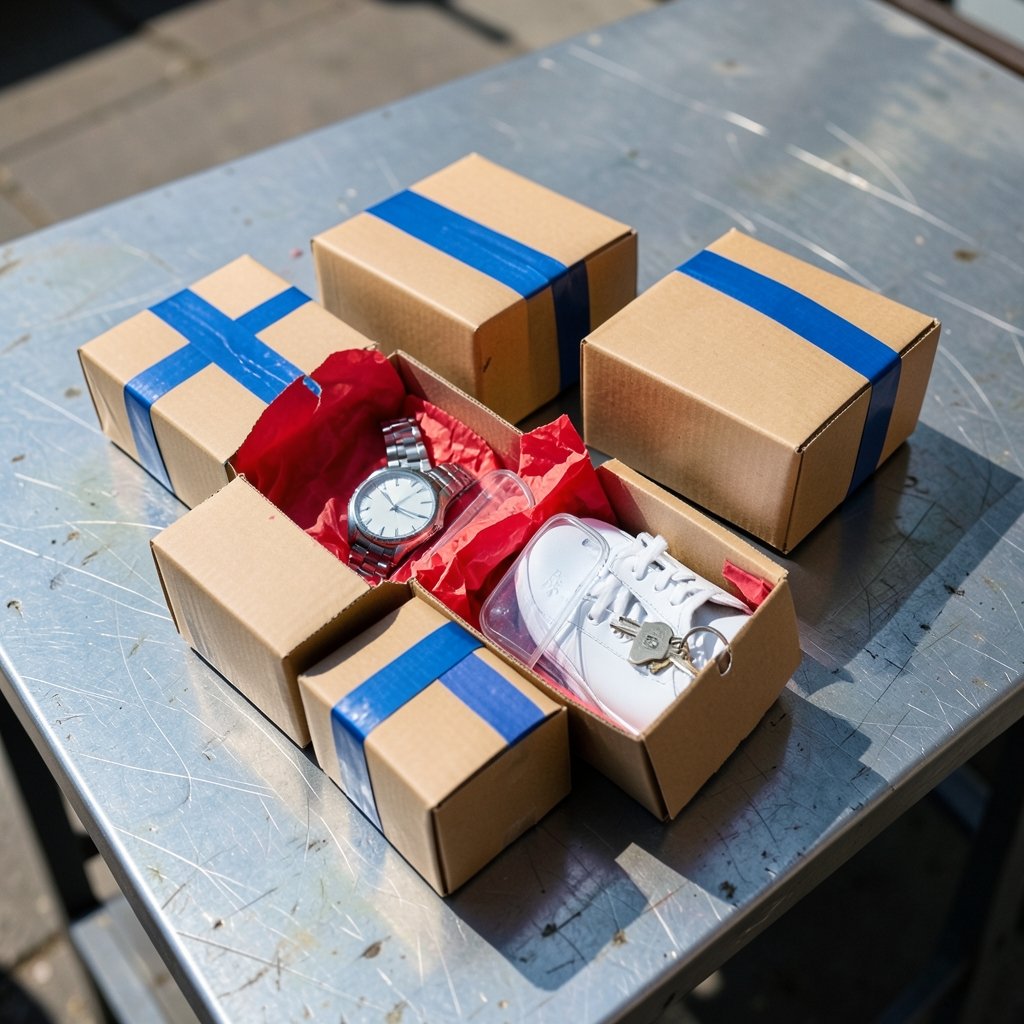
What if you could pay $30 and open a box that might hold a $300 watch, a pair of sneakers, or nothing but a phone case and a keychain? That gamble is exactly why mystery box sites keep pulling in curious shoppers. Some platforms publish the odds, verify every roll, and let you trade a bad pull for credit. Others bury the fine print and ship you the retail equivalent of a shrug. The difference between the two is rarely obvious from the homepage.
This roundup covers six named options that come up again and again in mystery box discussions, with an honest look at who each one suits, where it falls short, and what it costs when a source actually states a price. The shortlist below leans on what shoppers and reviewers report, not on marketing copy.
The Shortlist at a Glance
| Site | Best For | Type | Notable Limitation | Stated Price |
|---|---|---|---|---|
| HypeDrop | Fairness verification and crypto payouts | Digital unboxing | No published RTP or expected value | Not stated in sources |
| Packz | Fast cash-out to Venmo | Digital unboxing | No published buyback rate | Not stated in sources |
| JemLit | Wide budget range and visible odds | Digital unboxing | Gems cannot convert to real money | €5 to €700 per box |
| Boxy.gg | High-end electronics chases | Digital unboxing | Pricier entry point | €28 to €380 per box |
| Lootie | Cheap boxes and responsive support | Digital unboxing | Not detailed in sources | Not stated in sources |
| Rillabox | Low-cost trial runs | Digital unboxing | Not detailed in sources | From €9 per box |
One thing jumps out immediately: most of the recognizable names in this space are digital unboxing platforms, not physical subscription boxes. You buy a box, reveal the item on screen, then choose to ship it or convert it to credit. That model dominates the category, and it shapes almost every warning below.
HypeDrop: The Transparency Standard

HypeDrop suits people who care more about provable fairness than about getting a specific item. It runs one of the better documented fairness setups in the category. Each roll is derived from a hashed server seed, your client seed, and a counter. The fairness page ships a verification script you can run yourself, and every box shows per-item odds.
That combination matters more than it sounds. When a platform lets you check the math, a bad pull feels like bad luck instead of a scam. HypeDrop also converts pulls to crypto at 98% of listed value, which gives disappointed buyers an exit that isn’t a total loss.
The limitation is real, though. HypeDrop does not publish an RTP or expected value figure. That is the one gap in an otherwise strong transparency record, and it means you still cannot calculate whether a given box is priced fairly over many rolls. If you want the numbers to work out on paper before you spend, you are doing that math yourself.
Packz: Speed Over Paperwork
Packz suits buyers who want dollars fast. It is the only one of the two major digital platforms that can put money in your Venmo within the hour, according to a direct comparison of the two services. For someone who unboxes, pulls something they don’t want, and wants cash rather than store credit, that speed is the whole appeal.
The trade-off is documentation. Packz publishes no buyback rate, which means you find out what your pull is worth only when you try to sell it back. That is a meaningfully worse deal for anyone who plans to cash out regularly rather than keep the items.
The practical takeaway: if you value instant cash, Packz works. If you want to know the terms before you commit, HypeDrop’s published fairness paperwork wins that comparison clearly. Neither platform is a bargain hunter’s paradise, and neither should be treated as an investment.
JemLit: The Widest Budget Range
JemLit suits shoppers who want to start small. Boxes range from about €5 to €700, and the higher tiers can include recognizable brands like Apple and Samsung, with luxury items such as Rolex watches or professional monitors appearing in the priciest categories.
Two features stand out. First, JemLit displays the probability of winning individual items, which is more than many competitors offer. Second, it ships winnings anywhere in the world, though the buyer pays shipping.
The limitation is the currency. JemLit runs on a virtual currency called Gems, and Gems cannot be converted into real money. You can climb levels and open free boxes over time, but you cannot cash out. Rare prizes may also take many attempts to hit, which is what the displayed odds tell you if you read them carefully. Treat Gems as arcade tokens, not savings.
Boxy.gg: Built for Electronics Chasers
Boxy.gg suits people hunting high-end gadgets. Boxes run from €28 to €380, and the top tiers can surface premium devices like an iPhone 16 Pro Max or a MacBook Pro. The platform also supports cryptocurrency payments.
The limitation is the price of entry. At €28 minimum, Boxy.gg is not a casual experiment. You are paying real money for a chance at hardware, and the odds on the biggest prizes are correspondingly long. Before buying, check whether the item pool is published and whether shipping is included, because a “win” that costs extra to ship changes the math.
If electronics are your thing and you have a firm budget, Boxy.gg is a reasonable place to spend it. If you are hoping to replace a broken laptop on the cheap, buy the laptop.
Lootie: Cheap Boxes, Friendly Support
Lootie suits budget-conscious first-timers. It is known for inexpensive boxes and responsive customer support, which matters in a category where unresolved shipping issues are a common complaint.
The limitation is visibility. Sources describe Lootie in broad strokes without detailing its item pools, odds, or payout terms. That is not a red flag on its own, but it does mean you should read the site’s own terms before your first purchase rather than relying on a roundup. Cheap boxes with unclear contents are exactly where new buyers get burned.
A sensible approach: start with the smallest box available, confirm the shipping cost and timeline, and only scale up once you have seen how the platform handles a real order.
Rillabox: The Low-Cost Trial Run
Rillabox suits people who want to test the whole digital unboxing experience for under €10. Boxes start at €9, which makes it the cheapest named option here and a low-risk way to learn how these platforms actually feel.
The limitation is the same as Lootie’s: sources confirm the price floor but say little about odds, item pools, or buyback. At €9, the expected value of any single box is obviously modest. Use Rillabox to learn the mechanics, not to chase a jackpot.
The Amazon Mystery Box Question
Amazon shows up in nearly every mystery box conversation, but it is not a mystery box site in the way the others are. Amazon is a marketplace, and third-party sellers list “mystery boxes” there with wildly varying quality. Some resellers offer sealed Amazon boxes and reseller-specific clothing, graphic tee, shoe, and purse boxes with decent margins for people flipping inventory.
The catch is that Amazon’s buyer protection covers you against undelivered or misdescribed goods, not against disappointing contents. A box accurately described as “assorted returns” is not a scam just because the contents are underwhelming. If you go this route, the Amazon mystery box guide on what you actually get walks through the realistic outcomes. For resellers specifically, the breakdown of designer mystery box deals buyers actually get is worth reading before you commit capital.
Physical Boxes Still Exist
Digital platforms dominate the search results, but physical boxes have not disappeared. Bend The Trend, a liquidation boutique with a brick-and-mortar store in Nebraska, sells a $50 Liquidation Mystery Box online. Each box contains new or like-new merchandise that may include clothing, accessories, home goods, health and beauty products, and small electronics. The boxes are packed with more original retail value than the $50 price, which makes them appealing to bargain hunters and to beginning resellers who aren’t ready to buy a full pallet.
That model is fundamentally different from digital unboxing. You get real goods with real resale potential, and the value proposition rests on liquidation sourcing rather than on odds and buybacks. If your goal is stuff rather than thrills, physical liquidation boxes are the better fit. The perfume mystery box breakdown of blind-buy bundles shows how the same logic plays out in a single category, and the jewelry mystery box watch guide covers what to expect when the contents are small and high-value.
How to Choose Without Getting Burned
Work through these steps in order before spending money on any platform.
- Check whether the site publishes per-item odds. If it doesn’t, assume the house edge is whatever the house wants it to be.
- Look for a verifiable fairness mechanism, such as a hashed server seed and a script you can run yourself.
- Find the buyback or trade-in rate. A 98% crypto conversion is very different from no published rate at all.
- Confirm whether shipping is included. A €9 box with €15 shipping is a €24 box.
- Decide in advance whether you want items or cash. Platforms optimized for one are usually mediocre at the other.
- Set a hard budget per month and treat every dollar as entertainment spending, not investment.
The most common mistake is buying a mid-tier box hoping to win the top prize. The odds are published for a reason, and they are rarely kind. The second most common mistake is forgetting that virtual currency cannot always be converted back to real money. Read the withdrawal terms before your first purchase, not after your first big pull.
It also helps to know what other buyers have actually received. Community threads and personal reviews are more useful than any landing page, and the community discussion of the best mystery box to buy captures how buyers separate digital unboxing platforms from physical subscription boxes. For a firsthand account of specific boxes, the reviewer’s favorite mystery boxes board breaks down which options are fun versus valuable, and a comparison of Amazon mystery box suppliers lays out the budget tiers across platforms.
Conclusion
The best mystery box site for 2027 depends entirely on what you want out of the experience. HypeDrop wins on verifiable fairness. Packz wins on cash-out speed. JemLit offers the broadest budget range with visible odds. Boxy.gg caters to gadget chasers. Lootie and Rillabox keep the entry cost low enough to experiment. And physical liquidation boxes like Bend The Trend’s $50 option remain the smarter choice for anyone who wants real merchandise rather than a reveal animation.
What none of them offer is a reliable way to make money. Buy with a fixed budget, read the odds, know your buyback rate, and treat the whole thing as paid entertainment. Do that, and a mystery box is a fun afternoon. Skip it, and it is an expensive lesson.
Frequently Asked Questions
Are mystery box sites legit?
Some are, and some are not. The legitimate ones publish per-item odds, run verifiable fairness systems, and honor shipping and buyback terms. HypeDrop, for example, publishes a verification script you can run yourself. The warning signs are missing odds, no buyback rate, vague item pools, and prices that seem too low for the advertised prizes.
Which mystery box site has the best odds transparency?
HypeDrop has the strongest documented fairness setup among the named platforms, with hashed server seeds, client seeds, a counter, and per-item odds on every box. Its one gap is that it does not publish an RTP or expected value figure, so you still cannot calculate long-run value in advance.
Can you make money from mystery boxes?
Generally, no. These platforms are entertainment products with a house edge built in. Resellers can sometimes profit from physical liquidation boxes, where the contents have genuine resale value, but digital unboxing is closer to a lottery ticket than an investment. Set a budget you can lose without regret.
What is the difference between digital and physical mystery boxes?
Digital platforms reveal items on screen and let you ship them or convert them to credit or crypto. Physical boxes ship real merchandise directly, often sourced from liquidation or closeouts. Digital boxes are built around the thrill of the reveal. Physical boxes are built around the value of the goods.
Do mystery box sites publish their odds?
Some do, many don’t. JemLit displays the probability of winning individual items, and HypeDrop shows per-item odds on every box. Packz publishes no buyback rate, which is a different kind of transparency gap. If a site publishes neither odds nor payout terms, that tells you something.
What should I check before buying my first mystery box?
Check four things: published odds, a verifiable fairness mechanism, the buyback or trade-in rate, and whether shipping is included. Then start with the smallest box available. Rillabox starts at €9 and Lootie is known for cheap boxes, which makes either a low-risk way to learn how a platform handles a real order.