
What if the review you trusted most was simply a snapshot of a bad week?
The second-look review answers that question: a product gets scored again after months or years of real use. Sometimes the original verdict holds; often it does not. A gadget that felt clumsy on day three can become indispensable by month eight, and a device that looked good in an unboxing video can end up in a drawer. This article covers why first impressions fail, what a fair re-score looks like, and which products move most when reviewers return to them.
The Verdict Up Front
A second-look review is worth reading before you buy because the first score is the least reliable one. Early testing rewards novelty, penalizes learning curves, and misses the slow failures that only show up after the honeymoon. The pattern repeats across categories: a smart shade that keeps working exactly as promised for years but develops a startling snap sound at the start of every movement, a smartwatch that reviewers dunk on for not being a Garmin when it never claimed to compete at that level, a benchmark score that looks decisive until you learn what it cost to produce.
The practical takeaway for shoppers: treat launch reviews as a first draft and look for re-scores before committing money, especially on anything with software, batteries, or a subscription attached.
Why First Impressions Fail So Reliably
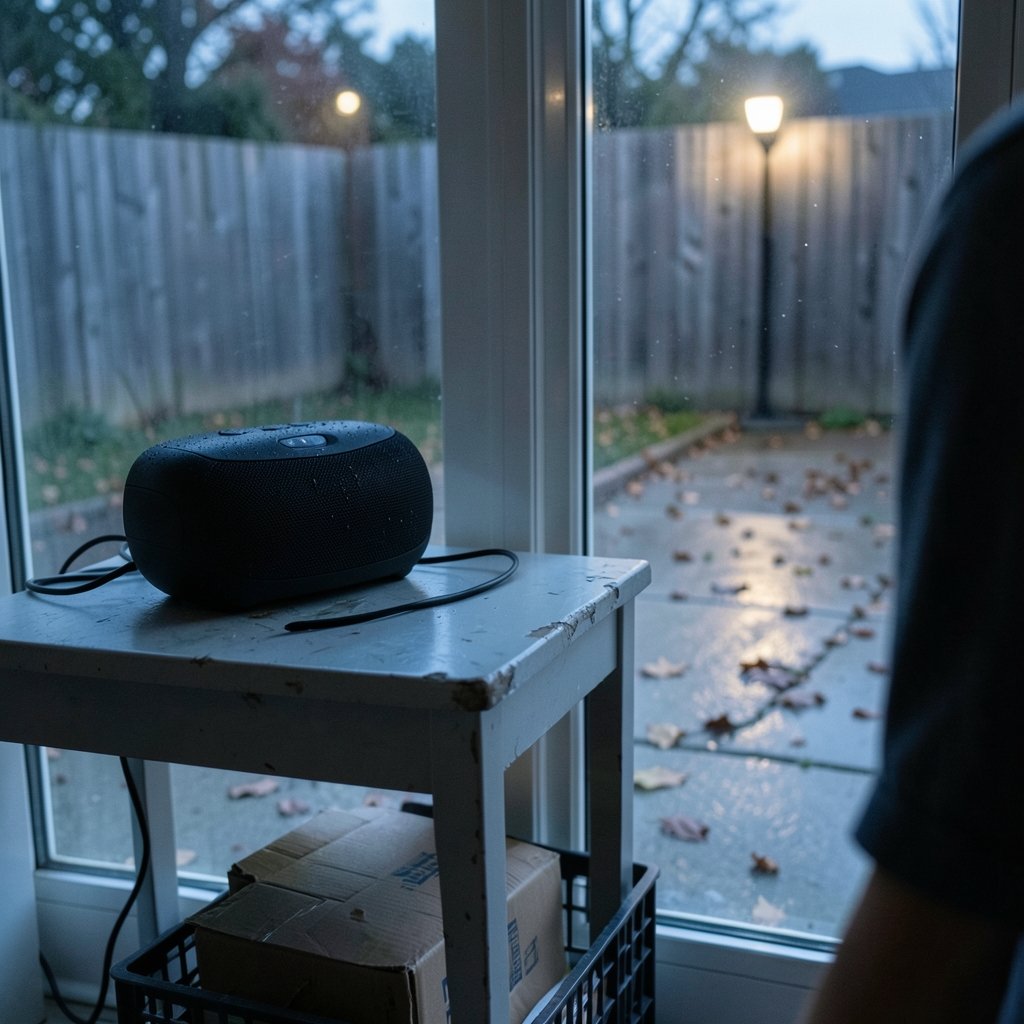
The novelty tax
New products arrive with fresh packaging, a full battery, and a reviewer who has cleared the calendar to use them. That is not normal life. In normal life, a device sits in a bag for three weeks, gets dropped once, and runs its firmware update at the worst possible moment. A first review measures what a product can do under ideal conditions. A second look measures how it fits daily use.
The learning curve gets scored as a flaw
Some products are genuinely bad. Others are just unfamiliar. A tool with an unusual interface can feel hostile for a week and obvious by week three. When a score is published on day five, the reviewer is effectively grading their own adaptation speed, not the product.
Software changes after the review ships
One revisit of a smart-home product found the app “not fully developed” at launch, and years later it still had not received an update. That is a real finding, but it cuts both ways. Sometimes the app improves dramatically and the original complaint becomes obsolete. Either way, the launch-day score describes a version of the product that no longer exists.
Reviewers measure against the wrong yardstick
A budget device reviewed next to a premium flagship will lose on every spec sheet and still be the right purchase for most people. One owner of an affordable smartwatch made exactly this point: critics compared it to top-tier brands, which was the wrong comparison entirely, because the watch never pretended to sit in that bracket. It delivered the health readings its buyer needed at a fraction of the price, and that buyer rated it five stars.
Single-signal scoring looks objective and isn’t
Automated scoring has the same problem in a harsher form. One developer built a system to judge web page design from raw HTML, then tested three of its signals against what the rendered page actually looked like. The source-based scoring was confidently wrong on all three. The lesson generalizes: any score derived from one convenient signal, whether markup, a spec sheet, or a benchmark leaderboard, can be precise and still be wrong. (Forward helix piercing placement healing time goes wrong)
What a Fair Second-Look Review Actually Checks
A credible re-score does more than restate the original opinion with a new number. It tests specific things that only time can reveal.
| What gets re-tested | Why it matters | What a bad re-review skips |
|---|---|---|
| Durability after real wear | Cracks, fraying, and loose hinges appear late | Everything, replaced by vibes |
| Software and app support | Updates, bugs, abandoned features | Assumes the app is unchanged |
| Battery degradation | Capacity fades over hundreds of cycles | Quotes launch-day battery life |
| Ongoing costs | Subscriptions, filters, replacement parts | Ignores total cost of ownership |
| Noise and behavior changes | New sounds, rattles, quirks | Never mentions them |
| Whether the owner still uses it | The truest test of value | Never asks the question |
That last row is the one reviewers skip most often. A product still in daily use two years later has passed a test no lab can run.
Three Case Studies in Getting It Wrong
The shade that kept working but started snapping
A home-technology reviewer revisited motorized shades and stood by the original assessment: they still worked exactly as they should, and the app still had not been updated in five years. But the revisit surfaced something the first review missed entirely. When the shades begin to move, there is a snap sound loud enough to startle anyone in the room. They run quietly once moving, but that initial jolt was new, or at least newly noticed.
This is the ideal second-look finding. The product did not fail. It revealed a small, real annoyance that only emerges with familiarity, and the reviewer was honest enough to add it rather than defend the original write-up. It is the same discipline that keeps a first-time buyer from regretting a purchase they rushed, whether that is a refrigerator that has to fit a tight gap on the first try or a money order that has to be filled out correctly the first time because there are no do-overs at the counter. Getting the details right up front beats fixing them later.
The benchmark that bought the wrong system
A data company built two versions of an AI retrieval system for the same public leaderboard. One scored about 83 and cost roughly seven cents per question. The other topped the board at 93.45 and cost about three dollars per question. The company’s own conclusion was blunt: it would not buy its own top-scoring system on that score alone.
That is a second look at an entire evaluation method, not merely a product. A leaderboard number compresses cost, speed, accuracy, and reliability into one figure, and the figure hides which trade-offs produced it. Buyers who re-score against their own workload, their own documents, and their own budget often land somewhere very different from the ranking.
The exam answer that is correct and still wrong
There is a useful distinction between the exam-correct answer and the analytically rigorous one. The exam-correct answer is what the test key intends. The rigorous answer is what would survive scrutiny at work, when the data is messy and someone with a stake in the result is looking for a reason to doubt it. First reviews lean exam-correct: does it match the spec, does it beat the rival, does it hit the number. Second looks lean rigorous: does it hold up when life gets untidy.
Where Second Looks Are Becoming Standard
The idea is spreading beyond consumer gadgets. In emergency medicine, researchers have studied whether enough time remains after an attending physician’s discharge decision for a brief second look at the patient, and how limited review capacity should be aimed at the cases most likely to benefit. The framing is identical to product reviewing: a first pass is fast and necessary, a second pass is slower and selective, and the value depends on spending the second pass where it changes the outcome.
That is the right mental model for shoppers too. You cannot deep-research every purchase. You can reserve the second look for the expensive, long-lived, hard-to-return items where a wrong score actually costs you something.
How to Read a Second-Look Review Without Being Fooled
- Check the gap. A re-score six weeks after launch is barely a second look. Look for at least six months, ideally a year.
- Look for the boring details. Durability, noise, app updates, and running costs are the signals that time reveals. If a revisit mentions none of them, it is probably just a rerun.
- Separate the product from the price. A device can earn a better score at a lower price and a worse one at full retail. Ask which price the reviewer is grading.
- Watch for reversed complaints. If the original review dinged an app and the revisit does not mention it, find out whether it was fixed or forgotten.
- Trust the usage test. A reviewer who still uses the product daily, or who quietly stopped, is telling you more than any score out of ten.
- Read the comments on the original. Long-term owners often correct the review in public, and their corrections are free field data.
Founders launching a product face the mirror version of this problem. The mistakes that sink a first-time startup, from pricing too low to building for a customer who does not exist, are usually visible only in hindsight, which is why experienced operators keep a running list of what they would score differently. The same habit of self-review applies to choosing the tools a small team runs on, where the cheapest option at signup is rarely the cheapest after a year of use.
When the First Score Was Right
Not every revisit overturns the verdict. Plenty of second looks conclude that the original review nailed it, with a few footnotes. That is a useful outcome too, because it tells you the launch review was trustworthy and the reviewer was paying attention.
The honest version of a re-score usually sounds like this: the core judgment stands, one new annoyance surfaced, one old complaint got fixed, and the price has shifted. Readers who want that level of nuance should be suspicious of any revisit that swings wildly from love to hate or the reverse. Real products rarely transform. Reviewers just notice more.
Conclusion
A second-look review is not a correction. It is the same product seen through more time, more use, and less excitement. The shade that still works but now snaps, the budget watch that was never meant to beat a flagship, the leaderboard-topping system that costs forty times more per question than the runner-up: each one shows how a single early score can be accurate in its details and wrong in its conclusion.
For buyers, the practical rule is simple. Read the first review to learn what a product is. Read the second look to learn what it becomes. And when a reviewer admits they scored something wrong the first time, take that as a good sign, not a bad one. It means they were still paying attention long after the unboxing was over.
FAQ
What is a second-look review?
A second-look review is a re-evaluation of a product after months or years of use, published to correct, confirm, or refine an earlier score. It focuses on what time reveals: durability, software support, battery wear, running costs, and whether the owner still uses the thing.
Why do first reviews get products wrong so often?
Early testing rewards novelty and penalizes unfamiliarity. Reviewers grade a product during a learning curve, on a full battery, with fresh software. Slow failures, app abandonment, and long-term costs have not happened yet, so the first score describes how a product might work rather than how it works over time.
How long should pass before a re-score is trustworthy?
Six months is a reasonable floor, and a year is better for anything with a battery, moving parts, or an app. A revisit six weeks after launch mostly measures the same honeymoon period with slightly older packaging.
Do second-look reviews ever confirm the original score?
Yes, and that is a valuable result. Many revisits conclude that the core judgment held, with small additions like a new noise, a fixed bug, or a price change. A revisit that flips completely from praise to condemnation, or the reverse, is usually a sign of a reviewer chasing attention rather than a product changing.
What should I look for in a re-score before buying?
Look for the boring details: durability, app updates, noise, battery degradation, and total cost over time. Check whether the reviewer still uses the product daily. And check which price the score applies to, since a device can be a great buy on sale and a poor one at full retail.
Can a high score still mean the wrong purchase?
Absolutely. A system that tops a benchmark at roughly three dollars per question is not automatically better for a buyer than one scoring lower at about seven cents. Scores compress cost, speed, and reliability into one number. Re-score against your own needs, budget, and workload before deciding.