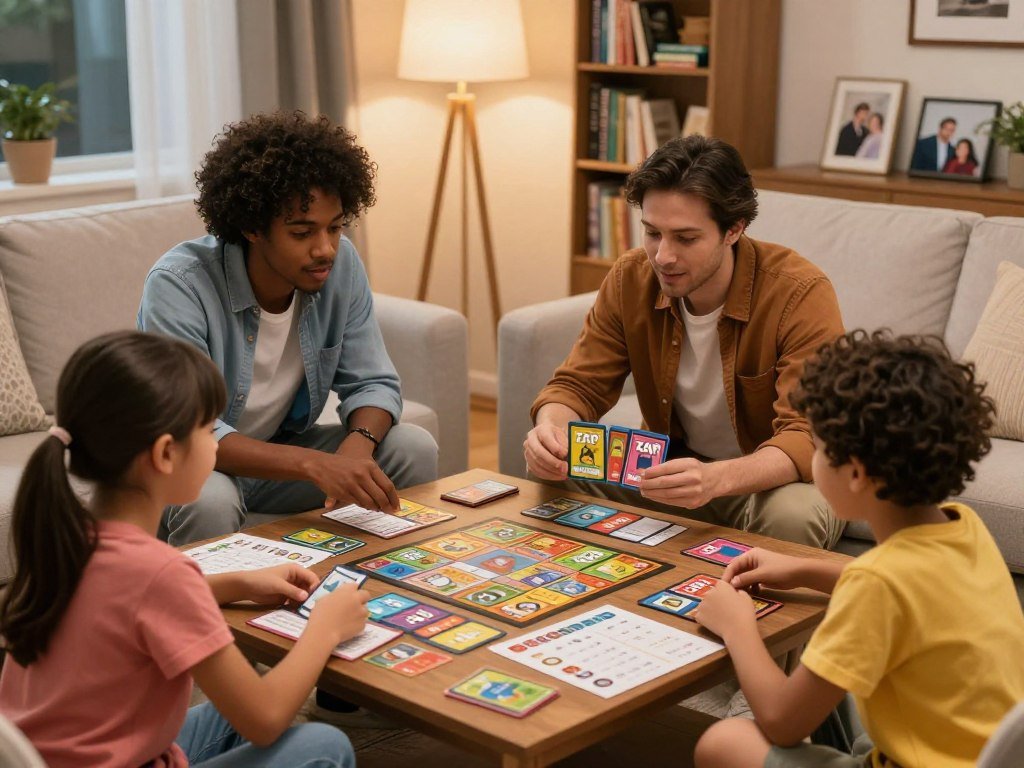
A ZAP game can be a quick family math challenge or a classroom review activity, depending on which version you choose. A ZAP card is a special card whose effect changes scores or card-play outcomes, depending on the version. That difference matters when you are picking a game for family game night.
Classroom ZAP brings teams together to answer review questions, while the boxed math game and Zip Zap use their own play styles. These are easy-to-learn games, but they do not share identical rules. For a family get-together, the best fit depends on whether your group wants questions, math scoring, or a number race.
The name ZAP covers more than one format, so the title alone does not tell you how a round works. Check the version’s player setup and central mechanic before bringing it to the table.
Key Takeaways
- Classroom ZAP uses subject-review questions and score-changing cards.
- TREND ZAP! Learning Game builds math scores with card values.
- Zip Zap is a separate number-sequencing game.
- Player ranges and game length differ by version.
- Choose the format that suits your group’s preferred activity.
Which Zap Card Game Version Fits Your Game Night?
The quickest way to choose is to match the version’s central action to the kind of play your group wants. Start with the turn itself: answering questions, adding values, or sequencing numbers. The three versions do not use the same rules or player setup.
A group that enjoys quick turns may also like these card games for game night, especially when the player count matters.
Do not treat the three names as interchangeable: each version has its own player range and central action.
| Version | Players | Main play | Card or round twist |
|---|---|---|---|
| Classroom ZAP | Multiple teams, commonly 4-6 | Answer subject-review questions | Cards can alter scores |
| TREND ZAP! Learning Game | 1-4 | Add card values toward a score | A ZAP! card removes accumulated points |
| Zip Zap | 2-6 | Play numbers in sequence | Hesitation can let another player steal the lead |
Classroom ZAP and TREND ZAP!
Classroom ZAP turns a review session into team play. One teacher typically uses 4-6 teams, though the format can use multiple teams. A correct response earns points, and special cards can change the score.
TREND ZAP! Learning Game is a math card game built around a hand of cards and values that add up. Players do not follow a matching-color-or-number rule. Instead, they build a score, and a ZAP! card can remove the points they have gathered.
How Zip Zap Plays Differently
Zip Zap is a separate number-sequencing game, not another name for TREND ZAP! Players play numbers in order, and a pause can give someone else a chance to take the lead.
That simple race suits a group seeking a brisk card game, while the other formats ask players to answer questions or track math values. Choose the action your group will enjoy repeating for several rounds.
For a fast number-sequencing race, Zip Zap is the distinct option, while the two ZAP versions suit review questions or math scoring.
How Do Classroom ZAP Questions and Scoring Work?
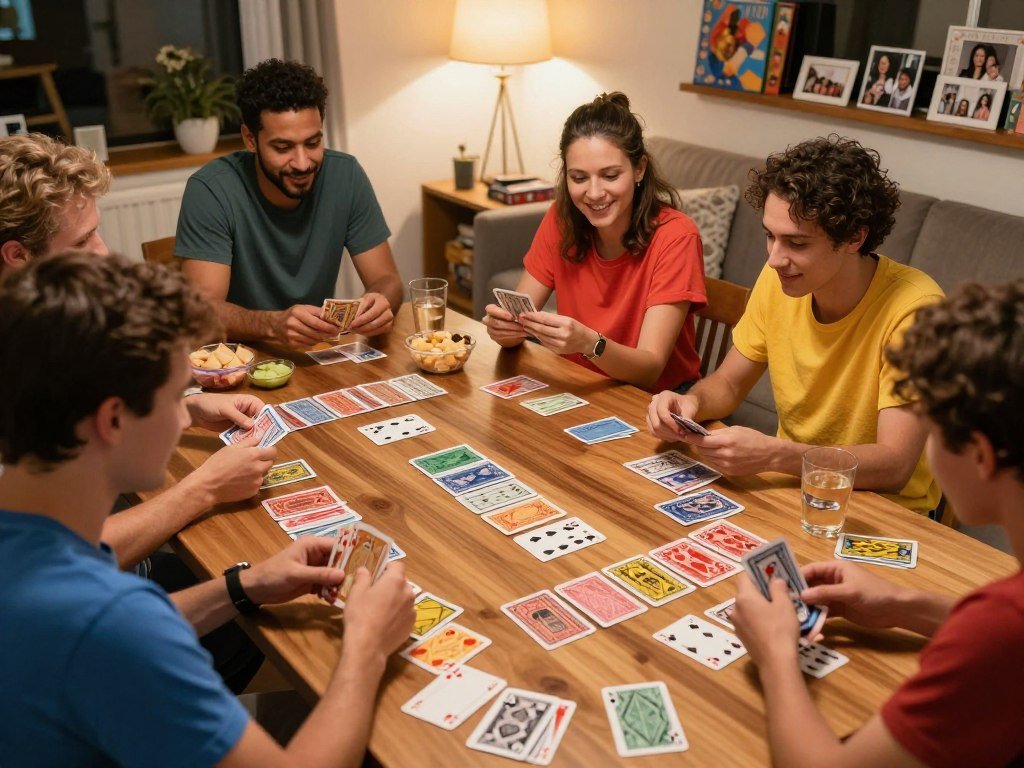
A classroom round begins with prepared review questions and teams competing to earn points. Questions come first, and teachers prepare them separately from ZAP cards. Each correct answer earns 10 points.
Questions can cover any subject, so teachers can use one topic or mix subjects. Teachers can write ZAP cards on index cards or place them in board pockets. Some cards call for actions such as jumping, push-ups, or crab-walking.
Here is the basic classroom sequence:
- Teams hear a review question and submit their answers.
- Each team with a correct answer earns 10 points.
- One correct team draws a ZAP card; if only one team answers correctly, it draws automatically.
- Apply the card, then continue until time, questions, or ZAP cards run out.
A ZAP card can add or subtract points, affect another team, or switch scores. A team that gets ZAPPED drops to 0. If every team gets ZAPPED, every team’s score becomes 0.
ZAP games with two teams of two can work as a classroom format, but 2v2 is not a separate rule set. Teachers who want more ideas for learning through play can explore educational games for kids.
The team with the highest score wins when play ends. Set a clear time limit before play so the group knows when the final score will be decided.

What Comes With TREND’s ZAP! Learning Game?
TREND ZAP! Learning Game is the math-focused option for 1 to 4 players, recommended for ages 7 and up. Its focus is math, with play built around card values rather than classroom review questions. The box includes 100 playing cards and instructions.
Its 1-to-4-player range makes it a small-group option, including solo play. The box provides two ways to play, giving your group more than one format to try at the table.
Players, Age, and Included Cards
The age recommendation starts at 7, so the game may suit a family table with school-age players. One person can play alone, or as many as four can take part. The 100 playing cards and instructions supply the materials for both ways to play.
For another kind of shared family activity, you can also compare these Nintendo Switch games for families by group size and play style.
Math Practice and Chance
The card values give players practice with addition and subtraction as they work toward a score. The game also introduces probability and chance, so each turn involves both math and uncertainty.
TREND ZAP! Learning Game is a math-focused choice, not a classroom question-and-answer format.
Those skills may fit a family that wants math practice woven into play, rather than a worksheet-style task. If you are comparing learning activities, this guide to educational games can help you weigh other options.
Before choosing it for a group, check that its age recommendation and small-player range fit the players who will be at the table.
Conclusion
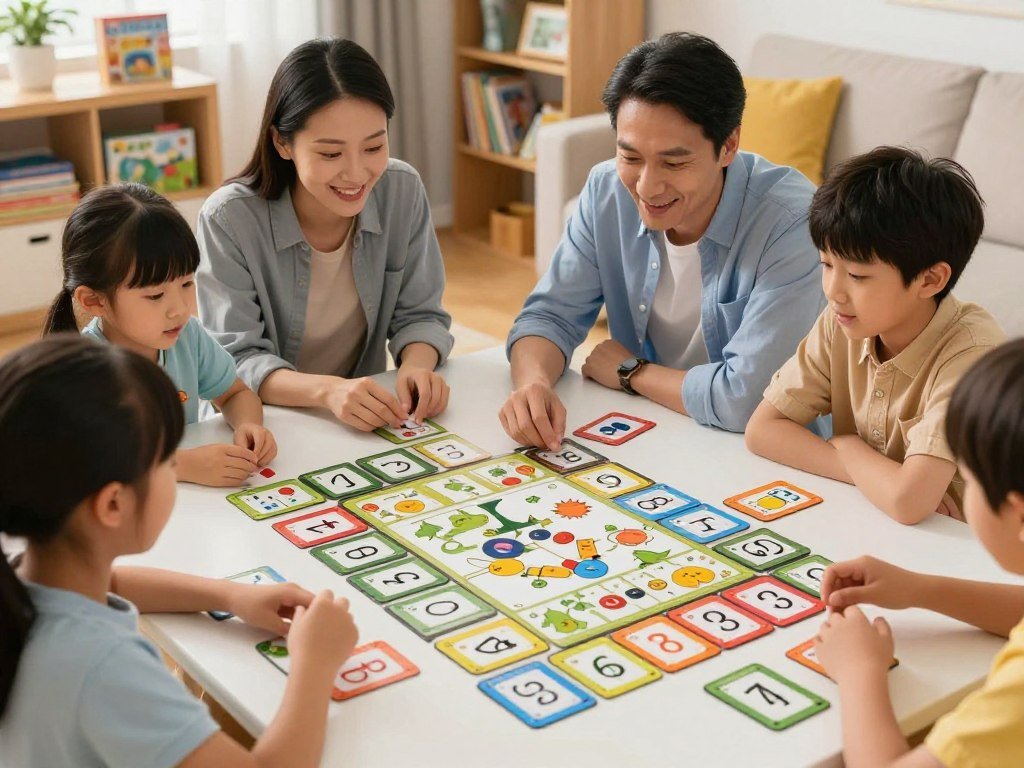
Pick the version that matches the kind of activity your group will enjoy most. Choose classroom ZAP for subject review, TREND ZAP! Learning Game for addition, subtraction, and chance, or Zip Zap for number sequencing.
Think about who will play and whether your group prefers questions, math scoring, or quick number turns. That choice can make it easier to settle on one game for a family get-together, instead of buying a box that does not suit the group.
Check the current product listing for availability and instructions, then choose a game-night date.
FAQ
Can classroom ZAP use questions from more than one subject?
Yes, classroom ZAP can use questions from any subject. A teacher can focus on one subject, such as science, or combine topics in one round. Preparing questions separately from the ZAP cards helps keep the review content clear. Teachers can also adjust the questions to match the class and lesson.
What happens if only one team gets a classroom ZAP question right?
The team earns 10 points and automatically draws a ZAP card. That extra draw happens when no other team answers correctly. The card’s effect then applies to the team or score, depending on its instruction. If more than one team answers correctly, one of those teams draws instead.
Can classroom ZAP cards include physical activities?
Yes, a classroom ZAP card can direct players to do a physical activity. Examples include jumping, doing push-ups, or crab-walking. A teacher can write these directions on index cards alongside other score or play effects. Keep the actions suited to the space and the students taking part.
Is TREND ZAP! Learning Game suitable for a solo player?
Yes, TREND ZAP! Learning Game supports one player and is recommended for ages 7 and up. Its stated player range reaches four, so it can work for solo play or a small group. The math-focused turns practice addition and subtraction, while also introducing probability and chance.
Does Zip Zap use the same rules as TREND ZAP! Learning Game?
No, Zip Zap uses number sequencing, while TREND ZAP! Learning Game builds math scores by adding card values. Zip Zap suits a race to play numbers in order. TREND ZAP! uses accumulated values and a special card that can remove those points, so the turn goals are different.



