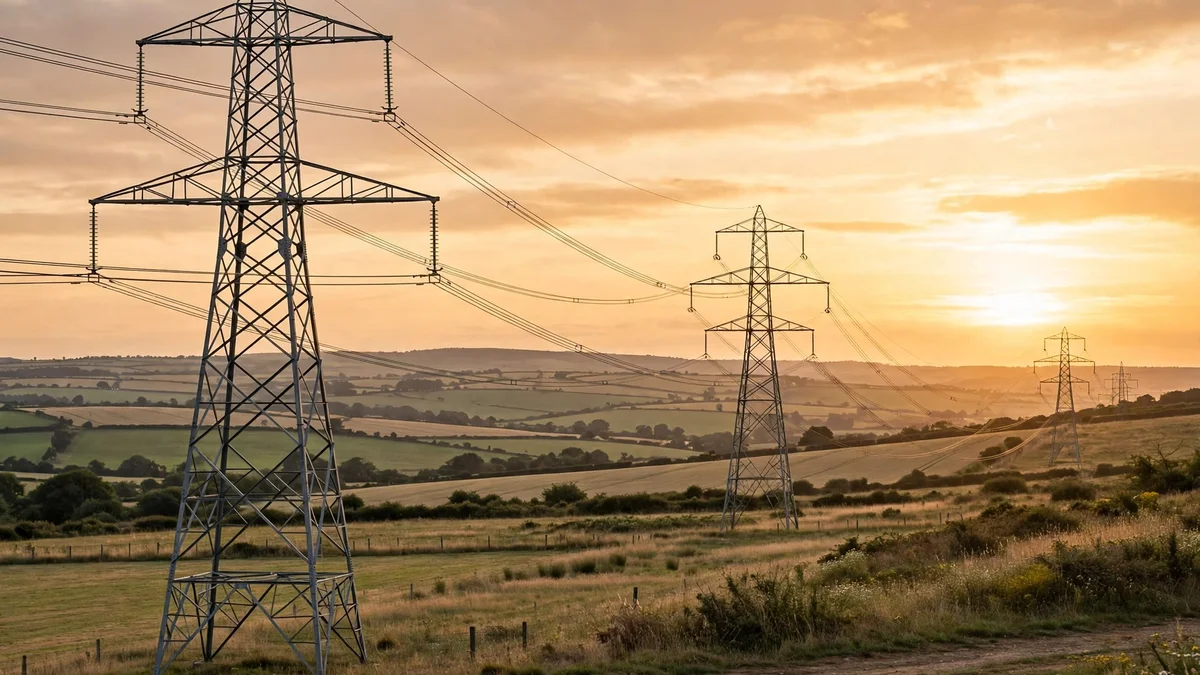
For two years, the argument about artificial intelligence has been about chips: who has enough, who can buy more, and whether graphics processor supply would decide who wins the AI race. In November 2026, that argument quietly changed. The binding constraint on the AI build-out is no longer silicon. It is electricity, and the evidence is piling up from grid operators, surveys and the hyperscalers themselves.
The clearest statement of the shift came from Microsoft chief executive Satya Nadella, speaking on the BG2 podcast in November 2025. He said the biggest issue the industry faced was not a glut of computing power but power itself, and the ability to get data-centre buildings finished fast enough, close to power. Microsoft, he said, had chips sitting in inventory that it could not plug in, because it did not have finished buildings, or warm shells, to plug them into. A year later, that admission reads like a description of the whole industry.
The numbers behind the shift are large. Global data-centre electricity use was about 415 terawatt-hours in 2024, roughly 1.5% of all electricity in the world, and the International Energy Agency projects it will more than double to around 945 terawatt-hours by 2030. The four largest hyperscalers are spending about $730 billion on capital expenditure in 2026, much of it on data centres. The money is there. The power, in many places, is not.
Key takeaways
- Power, not chips, is now the binding constraint on the AI build-out, according to Microsoft’s chief executive and November 2026 grid data.
- Global data-centre electricity use was about 415 terawatt-hours in 2024 and is projected to more than double to around 945 terawatt-hours by 2030.
- A survey of 1,300 data-centre operators found 76% saying power or grid capacity limits expansion, with an average 12-month wait for more power.
- About 8,200 power projects were waiting for grid connection in the US at the end of 2025, and only about one in five queued projects ever reaches operation.
- The four largest hyperscalers expect to spend about $730 billion on capital expenditure in 2026, with analysts expecting more in 2027.
| Measure | Figure |
|---|---|
| Global data-centre electricity, 2024 | About 415 terawatt-hours, 1.5% of world electricity |
| Projected data-centre electricity, 2030 | Around 945 terawatt-hours, under 3% of the global total |
| Operators limited by power or grid | 76% of 1,300 surveyed; average wait 12 months |
| US projects awaiting grid connection | About 8,200 projects; 2,060 gigawatts of generation and storage |
| Texas data-centre projects awaiting approval | Nearly 170 gigawatts (Latitude Media, November 2026) |
| Hyperscaler capital spending, 2026 | About $730 billion across the four largest hyperscalers |
| Microsoft capital spending, fiscal Q1 | $45.2 billion; fiscal Q2 expected above $50 billion |
The quote that named the problem
Nadella’s words were blunt. “The biggest issue we are now having is not a compute glut, but it’s power and it’s sort of the ability to get the builds done fast enough close to power,” he said. “So if you can’t do that, you may actually have a bunch of chips sitting in inventory that I can’t plug in. In fact, that is my problem today. It’s not a supply issue of chips; it’s actually the fact that I don’t have warm shells to plug into.” A warm shell is a building finished enough for tenants to move in, with power and cooling running. Without one, a rack of the most advanced chips is just expensive furniture.
That distinction changes what a delay means. When chips are scarce, chipmakers can respond in months. When power is scarce, the fix is to build generation, transmission and substations, and that takes years. The two bottlenecks look similar from the outside, but they run on different clocks, and the AI build-out is now running on the slower one.
What the grid numbers say
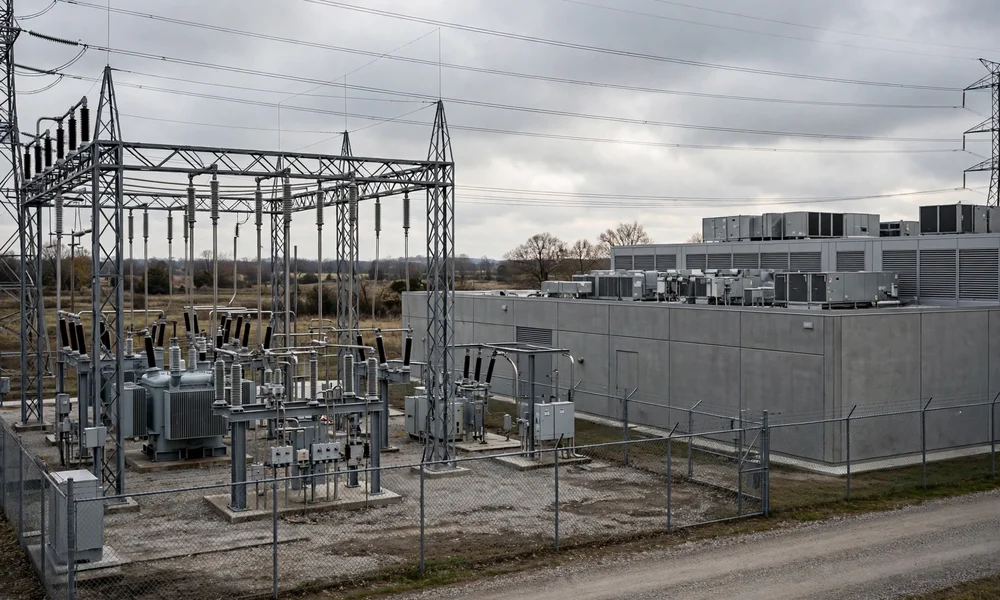
The most concrete evidence comes from the grid itself. Berkeley Lab’s Queued Up dataset, in its 2026 edition, counted about 8,200 projects seeking grid interconnection in the United States as of the end of 2025, representing roughly 2,060 gigawatts of generation and storage combined, about twice the existing US fleet. The median time from request to operation, for projects that got built in 2025, exceeded five years, and historically only about one in five queued projects ever reaches operation.
Those are national figures, but the pressure is sharpest where data centres are concentrating. Nearly 170 gigawatts of data-centre projects in Texas were still waiting for approval from the grid operator ERCOT in November 2026, according to Latitude Media. Texas became a popular place to build data centres because land and power were once cheap and plentiful; the queue suggests that advantage is being consumed faster than the grid can keep up.
Operators feel the constraint directly. A Fluke survey of 1,300 data-centre operators in six countries, published on 17 November 2026, found 76% saying power or grid capacity limits their expansion, with an average wait of 12 months for more grid power. Research firm Currence counted about 16 gigawatts of large US data-centre capacity scheduled to come online in 2026, of which only about 5 gigawatts was under construction at mid-year, and expects 30% to 50% of that pipeline to miss the year.
The spending keeps rising anyway
What makes the power bottleneck so striking is that the spending has not slowed to match it. The four largest hyperscalers, Alphabet, Amazon, Meta and Microsoft, expect to spend about $730 billion on capital expenditure in 2026, with analysts expecting about $934.5 billion in 2027. Moody’s raised its own estimate of 2026 hyperscaler spending to about $785 billion, up from $700 billion in March. The money is being committed at a pace the grid was never designed for.
Microsoft is the clearest example. Its capital expenditure, including finance leases, reached $45.2 billion in the first quarter of fiscal 2027, with roughly three-quarters directed toward short-lived assets, mainly processors and graphics chips. Cash paid for property and equipment was $39.4 billion, against $19.4 billion a year earlier. Second-quarter capital spending is expected to exceed $50 billion, and calendar-year spending is projected at about $170 billion. Cloud revenue climbed 30% to $63.9 billion in the quarter, with Azure up 48%, so the spending is attached to a real business, but also to a physical constraint that no amount of cloud revenue can shorten.
The chip side of the story has not gone away, it has simply moved. Nvidia guided fourth-quarter revenue to $130 billion, plus or minus 3%, and memory is now the tightest part of the computing stack: SK hynix said in late October that its DRAM and high-bandwidth memory output is effectively sold out through 2029. The industry is short of memory, short of power and short of time, all at once. But power is the constraint that decides whether the other two can even be used, because a chip with no electricity is a paperweight. The wider supply squeeze is the subject of our earlier look at why AI compute could get scarce and costly as demand outruns data centres.
How the industry is responding
Faced with a grid that cannot keep up, the largest builders are buying their own power. Microsoft has signed a 20-year agreement to buy electricity from the Three Mile Island Unit 1 reactor, expected to supply roughly 835 megawatts once it is running again. Other hyperscalers have struck similar deals for nuclear, gas and renewable capacity, and some are funding grid upgrades themselves: if the public grid cannot deliver power on the industry’s timetable, the industry will pay to build its own.
Efficiency is the second response. Microsoft’s Maia 300 chip, announced in October 2026, is expected to deliver 40% more tokens per megawatt than leading GPU-based systems, with multi-gigawatt deployments beginning in 2027. Getting more computing out of each megawatt is the cheapest power there is. Every hyperscaler is chasing the same arithmetic: if you cannot get more power, you have to get more work out of the power you have.
The third response is location. Data centres are being built where power is available, not where it is convenient, which is why universities and other institutions are building their own AI capacity, as California’s universities are doing with their own AI data centres. But location only helps so far: a data centre in a remote location still needs transmission lines, substations and permission, and the queue for all of those is long and growing.
There is also a greener angle to the scramble. Building new power for AI raises questions about emissions and sustainability, and the industry’s answers, from nuclear restarts to renewable deals, are part of the story now. Readers who want the background can start with what green AI means.
What to watch next
- Grid queues: watch interconnection queues and approval times in Texas, Virginia and other hubs.
- Hyperscaler capital spending: check whether spending guidance keeps rising as completions slip.
- Power deals: follow new power deals and nuclear restarts from the large cloud companies.
- Efficiency claims: compare tokens-per-megawatt figures for new chips such as Microsoft’s Maia 300.
- Operator surveys: the next operator surveys will show whether the 76% figure is rising or falling.
- Completion rates: watch how much of the 2026 data-centre pipeline comes online, and how much slips.
Frequently asked questions
What is the AI power bottleneck?
It is the shortage of electricity and grid capacity available to run new data centres. Chips and servers are being delivered, but in many places there is not enough power, or grid connection, to switch them on. Microsoft’s chief executive described it in 2025, saying the company had chips sitting in inventory that it could not plug in.
How much electricity do data centres use?
About 415 terawatt-hours in 2024, roughly 1.5% of world electricity, per the International Energy Agency, which projects it will more than double to around 945 terawatt-hours by 2030.
Why can’t the grid just add more power quickly?
New power projects wait years to connect. In the US, about 8,200 projects were seeking grid interconnection at the end of 2025, and the median time from request to operation for projects that got built exceeded five years. Only about one in five queued projects ever reaches operation.
Are hyperscalers still spending on data centres?
Yes. The four largest hyperscalers expect to spend about $730 billion on capital expenditure in 2026, with analysts expecting about $934.5 billion in 2027. Microsoft alone spent $45.2 billion in its latest quarter and expects to spend more than $50 billion in the next one.
What are companies doing about the power shortage?
They are buying power directly through long-term agreements, including nuclear restarts, funding grid upgrades, designing more efficient chips, and building data centres where power is available.
Does the power bottleneck mean the AI boom is over?
No. It means the boom is now limited by physical infrastructure rather than by chip supply or demand. The constraint slows the build-out and raises its cost, but demand for computing remains, and the timetable for new capacity is set by grid operators as much as by technology companies.
Bottom line
The AI race has a new finish line: the electricity grid. Chips are arriving, money is being spent at a historic rate, and demand for computing keeps growing. But a data centre that cannot get power is a building full of expensive equipment that does nothing, and the queues for power now stretch for years where data centres are being built fastest.
That does not end the AI build-out. It changes its shape: more power deals, more efficient chips, more building where the grid has room, and more patience from everyone waiting for capacity. The companies that solve the power problem first will have the same advantage the companies with the most chips had two years ago; the rest will be waiting for the grid to catch up.