Google Paused Data Centers on Two Continents in One Week
Google paused data centers in Belgium and Virginia in the same week, and neither halt was about money. On Thursday 26 November 2026, inspectors from Belgium’s Wallonia region walked onto Google’s site at Farciennes, and ordered about 300 workers to stop.
Three days earlier, a judge in Virginia had frozen construction at a separate Google campus in Botetourt County. Two stop orders in one week against the most profitable company on the 2026 Fortune Global 500 show the AI buildout colliding with local limits on water, power and consent.
This is not a story about whether the world needs more computing power; demand for AI capacity is still rising. It is a story about process: a permit condition in Wallonia and a meeting agenda in Virginia. Approval no longer ends permitting risk.
Key takeaways
- Wallonia inspectors halted work at Google’s Farciennes site on 26 November 2026, ordering about 300 workers off a site where a 30,000-square-metre building was nearly done.
- The Belgian dispute turns on a water-cooling permit, revoked in August 2026 over water demand and drought risk; the region says Google kept building anyway.
- On 23 November 2026, a Virginia judge voided Botetourt County’s approval of a planned $3 billion Google data center, ruling supervisors violated the state’s Freedom of Information Act.
- Europe is loosening its AI rulebook while enforcing local permits; the United States wants faster building while leaving siting fights to counties.
- Neither halt was about cost: Alphabet, fifth on the 2026 Fortune 500, earned $132 billion.
| Detail | Farciennes, Belgium | Botetourt County, Virginia |
|---|---|---|
| Date | 26 November 2026 | 23 November 2026 |
| Who stopped it | Wallonia inspectors | Judge Michael Doucette |
| Core issue | Building continued after a water permit was revoked | Approval violated open-government law |
| Scale | 30,000-square-metre building, nearly finished | Planned $3 billion campus |
| Next step | Council of State, 7 January 2027 | New public hearing in early 2027 |
What happened in a single week
The two halts landed within three days of each other, on two continents, against the same company, for entirely different reasons. Google is not short of money, engineers or demand. What it ran into, twice, was the part of the AI buildout capital cannot buy: local permission.
In Belgium, inspectors sent by Raphaël Stokis, the region’s senior planning official, visited Farciennes on Thursday 26 November and ordered about 300 workers to stop. A day later, a regional spokesperson said a report alleging a major offence was being sent to prosecutors. Google said it had halted works pending additional guidance.
In Virginia, Judge Michael Doucette ruled on Monday 23 November that Botetourt County supervisors violated Virginia’s Freedom of Information Act in June 2025, adding Google’s performance agreement to the agenda mid-meeting and approving it 5-0 without discussion. He voided the county’s actions since then and ordered a new public hearing.
The Belgian halt: water, a revoked permit and a river
The Farciennes dispute is, at its core, about cooling. Google won a permit in 2024 for three air-cooled data centers at the site, a 50-hectare former mining area. The project runs through Google’s subsidiary Crystal Computing, part of a €5 billion commitment to Belgian cloud and AI infrastructure.
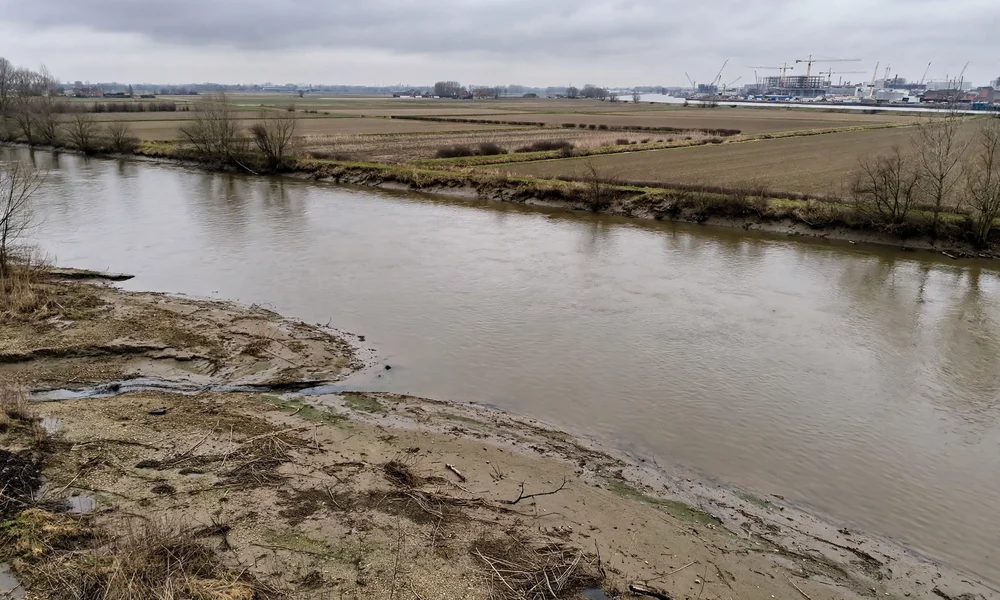
Google later applied to merge two buildings into one larger one, cooled with water from the River Sambre. Wallonia’s planning minister, François Desquesnes, overturned the amended permit in August 2026, citing water demand and drought. Google appealed and, according to the region, kept building.
The inspection followed an urgent complaint from Greenpeace Belgium, backed by satellite images. Inspectors found a 30,000-square-metre building almost finished, though the permit change it depended on had been refused in August. Google says its original air-cooled permit remains valid; the appeal reaches the Council of State on 7 January 2027.
Data Center Map counts about 13,500 data centers worldwide, with just 54 in Belgium against more than 5,200 in the United States. If a project can be halted this late here, the risk applies everywhere.
The Virginia halt: a meeting agenda, not a megawatt
The Virginia case has nothing to do with water. It is about how a deal got approved. A resident sued, arguing that the county’s approval of Google’s planned $3 billion data center broke Virginia’s Freedom of Information Act. Judge Doucette agreed: “Magic words” must be used and “technical violations” are not excused.
The county must now hold a new hearing to revive its agreement with Google. The halt fits a wider pattern: Data Center Watch found 94% of governors elected on 3 November support regulating or restricting data centers, and Harvard’s Ash Center found Ohio voters approved all 21 local measures favouring restrictions.
In Texas, Democrat Gina Hinojosa has pledged a moratorium until the legislature passes protections. Texas accounts for more than a quarter of planned United States capacity growth, according to the Ash Center, and Morgan Stanley warns restrictions could split the country into regions open and closed to new data centers.
Europe is loosening AI rules while enforcing permits
The Farciennes order lands at a contradictory moment for European policy. The European Union is easing its AI rulebook even as its regions enforce permits more strictly. The Digital Omnibus on AI, in force since 27 July, pushes AI Act obligations for high-risk systems from August 2026 to December 2027.
At the same time, the EU wants more data centers, faster. The Cloud and AI Development Act, proposed in June, aims to at least triple EU capacity within five to seven years, with permit decisions in acceleration zones taking no longer than 12 months. Telecom ministers take it up on 1 December.
Brussels wants to triple capacity and decide permits within a year, while Wallonia just halted a nearly finished building over water and drought risk. The EU sets the ambition; regions control the permits, water rights and enforcement.
Washington wants speed, but the brakes are local
Washington’s posture is the opposite of Wallonia’s, but it produces similar uncertainty. A December 2025 executive order from President Donald Trump directed federal agencies to challenge state AI laws, and a White House framework released in March asked Congress to replace them with one national standard. The message: build faster, everywhere.
Both documents left state and local authority over siting in place, and no preemption law has passed. That leaves the fights to counties, courts and voters, which is where Google lost in Virginia. The federal government can push for speed, but it cannot approve a county agreement or stop a resident suing over a meeting agenda.
This is the transatlantic split. Europe concentrates permitting risk in regulators who enforce conditions after a permit is granted. The United States offers a friendlier federal government but leaves local approvals open to challenges that can unwind them mid-construction. Demand has not changed: Google is still expanding, and has even explored renting additional compute capacity from SpaceX.
What this means for the AI buildout
For companies building AI infrastructure, both cases carry the same message: approval no longer ends permitting risk. A site that looks cheap on power and land can turn expensive if its water source is contested, its permit conditional, or its approval skipped a public step. The Farciennes building was nearly finished when stopped, so the cost is sunk construction on a design that may change.
For investors, the week is a reminder that AI infrastructure is a patchwork of local bets: permits, water basins, county boards and court calendars. The financial pressure around AI spending is already showing, as our coverage of Anthropic’s stock slide on AI spending risks explains. For the power side, see our report on why power, not chips, is now the AI bottleneck.
How to read the next data center fight
A short checklist for the next halt:
- Find the trigger. Water, power, a permit condition or a procedural error? It tells you whether the fix is engineering, paperwork or politics.
- Check who acted. A regulator, a judge and voters are three different risks.
- Look at the timing. A halt before construction is a delay; a halt on a nearly finished building is a redesign, and a much more expensive one.
- Watch the appeal. Google appealed in Belgium; the county must re-run its hearing in Virginia.
- Follow the water. Cooling is the constraint most often underestimated in planning.
- Ask where the capacity goes. Demand does not disappear when a site is halted; it moves, and the new site inherits the questions.
Next, EU telecom ministers meet on 1 December, a day before watermarking rules for AI-generated content apply. Botetourt County must hold a new hearing, and the Farciennes case goes to court in the new year. Then come January’s inaugurations of governors who campaigned on data center limits.
Frequently asked questions
Why did Google pause its data center in Belgium?
Wallonia inspectors ordered work to stop at Farciennes on 26 November 2026 because Google kept building after an amended permit was revoked in August 2026. It would have allowed a larger building cooled with water from the River Sambre. Google says its original 2024 air-cooled permit stands, and it has appealed.
Why did a Virginia judge halt Google’s data center there?
On 23 November 2026, Judge Michael Doucette ruled that Botetourt County supervisors violated Virginia’s Freedom of Information Act adding Google’s agreement to a meeting agenda mid-session in June 2025 and approving it 5-0 without discussion. He voided the county’s actions and ordered a new hearing.
Are the two halts connected?
They involve the same company in the same week, but the causes differ: a permit dispute in Belgium and an open-government violation in Virginia. What connects them is the wider pattern: the AI buildout is colliding with local limits on water, power and public consent.
Is Google cancelling these data centers?
No. In Belgium, Google has paused work pending additional guidance and is appealing, with a Council of State hearing on 7 January 2027. In Virginia, the county must hold a new hearing to revive its agreement with Google. Both are delayed and uncertain, not dead.
What is the transatlantic AI policy split?
Europe is loosening its AI rulebook at the top, delaying AI Act obligations for high-risk systems to December 2027, while its regions still enforce environmental permits strictly. The United States wants faster building under one national standard, but has left siting to states and counties, so local courts and voters do the braking.
What should we watch next?
EU telecom ministers discuss the Cloud and AI Development Act on 1 December. Botetourt County must schedule a new public hearing in early 2027. The Farciennes appeal reaches the Council of State on 7 January 2027. Watch the January inaugurations of governors who campaigned on data center limits.
Bottom line
Google paused data centers in Belgium and Virginia in the same week because the AI buildout has hit the oldest constraints in infrastructure: water, permits and public consent. In Farciennes, a nearly finished 30,000-square-metre building was stopped over a revoked water-cooling permit. In Botetourt County, a $3 billion campus was frozen because a county board approved the deal without following open-government rules.
The split is real, but not the one most people expected. Europe is easing the rules from above while enforcing them strictly from below, and America is pushing for speed from above while leaving the real decisions to counties, courts and voters. The next data center will be won or lost before the first server arrives, in a permit office, a river basin or a public meeting.