

What does it actually take to park a crew capsule in one of the strangest orbits in the solar system and then hand two astronauts over to a lander? That question sits at the heart of Artemis III, the mission NASA plans as the first crewed return to the lunar surface since Apollo 17. The answer involves an orbit that looks nothing like the circular paths of the 1960s, a lander still working through its test campaign, and a schedule that has shifted more times than most people can track. This article walks through Orion’s planned orbit profile, the lander hardware in development, and what “2026” really means in the context of this mission. (Tesla website robotaxi semi roadster three hardware bets 2026)
Why Artemis III Doesn’t Use a Simple Lunar Orbit
The Apollo missions slipped into low lunar orbit, a tight circle a little over 100 kilometers above the surface. It was elegant and fuel-hungry, and it required the command module to make constant orbital adjustments while the lander was away.
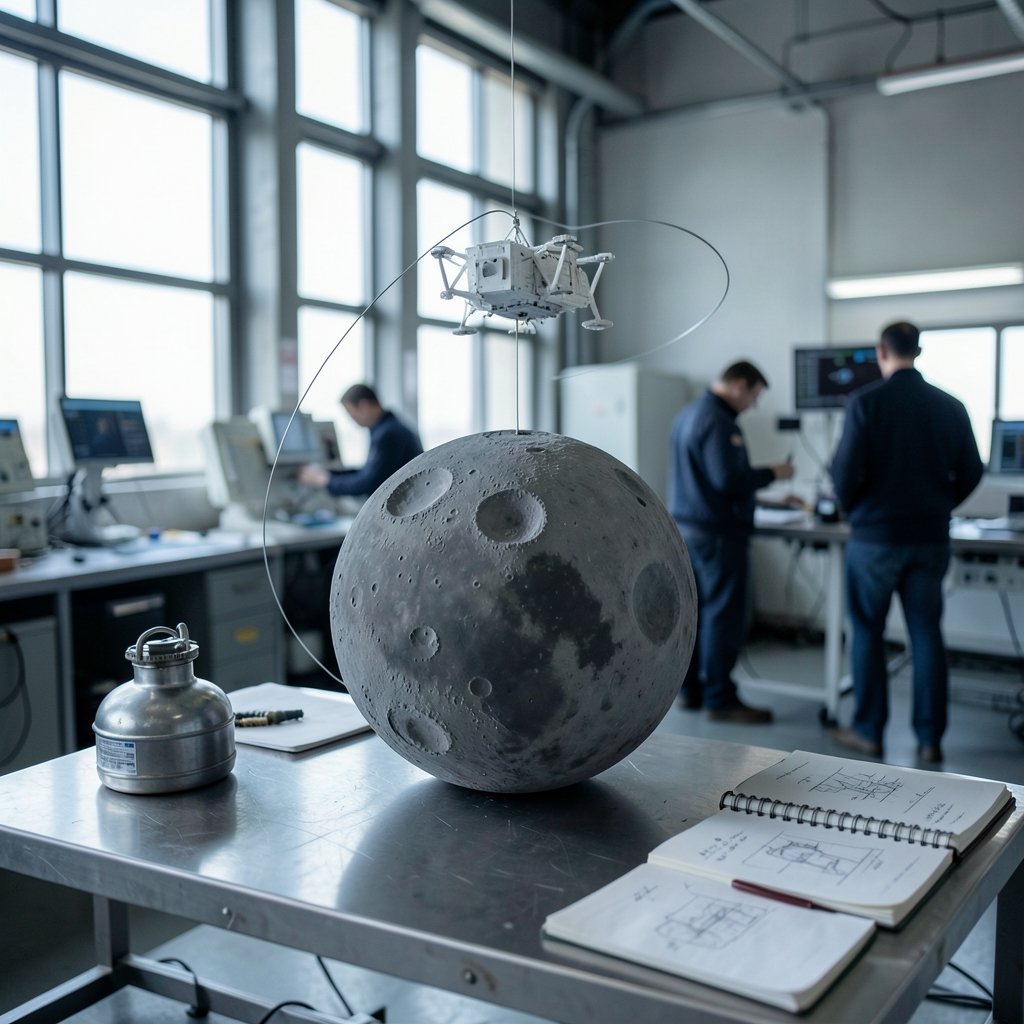
Artemis III is built on a different architecture. Orion is designed to fly a near-rectilinear halo orbit (NRHO), a highly elliptical path that swings close to the Moon at one end and stretches far out at the other. This is the same class of orbit planned for Gateway, the small station NASA and its partners intend to assemble in lunar vicinity.
Why choose it? A few practical reasons stand out:
- Stability. NRHOs are gravitationally well-behaved, meaning a spacecraft can stay in one with relatively little station-keeping fuel.
- Continuous Earth visibility. The orbit geometry keeps the Moon’s South Pole region and Earth in view for long stretches, which simplifies communications.
- Access to the South Pole. Artemis III targets a landing near the lunar South Pole, where permanently shadowed craters may hold water ice. A polar-friendly orbit makes that easier.
The trade-off is complexity. Rendezvous and docking in a long, looping orbit demand precise timing and careful mission design, and the crew’s ride home depends on hitting that orbital window.
Orion’s Orbit Profile in Plain Terms
Here is how the mission profile is generally understood in NASA’s public planning. Orion launches on the Space Launch System, spends a few days traveling to the Moon, and then performs an insertion burn to enter the NRHO. The spacecraft does not carry enough propellant to enter and leave low lunar orbit comfortably, which is part of why the halo orbit is the baseline.
Once in the NRHO, Orion serves as the crew’s home and return vehicle. It docks with the human landing system, two astronauts transfer to the lander and descend to the surface, and the lander later ascends back to meet Orion. The crew then returns to Earth in Orion.
For readers tracking how hardware decisions ripple across the space industry, the same pattern of bold bets and shifting timelines shows up in other sectors. Ambitious multi-product roadmaps rarely land exactly when first announced, whether in spaceflight or in consumer technology.
| Feature | Apollo Low Lunar Orbit | Artemis III NRHO (planned) |
|---|---|---|
| Shape | Near-circular | Highly elliptical halo |
| Station-keeping | Frequent adjustments | Relatively low fuel needs |
| Earth visibility | Intermittent | Long continuous stretches |
| South Pole access | Limited windows | Favorable geometry |
| Rendezvous complexity | Moderate | High |
The Lander: Starship HLS and Its Test Campaign
NASA selected SpaceX’s Starship as the human landing system for Artemis III. The lander is a variant of Starship adapted for lunar operations, and it is large by historical standards, far bigger than the Apollo Lunar Module.
The path to flight readiness runs through a series of demonstrations. SpaceX has conducted integrated flight tests of the Starship upper stage from its Starbase facility in Texas, and NASA has described an uncrewed lunar landing demonstration as a prerequisite before astronauts climb aboard. That uncrewed landing is the milestone most observers watch, because it exercises the descent, landing, and ascent sequence in the actual lunar environment.
Test hardware matters here in a way that is easy to underestimate. Every propellant transfer test, every engine relight, and every landing burn on Earth or in low Earth orbit builds toward the lunar attempt. A single anomaly can reset a schedule by months. (Dhs counter drone test first responders nustl saver 2026)
Why Propellant Transfer Is the Hidden Hurdle
Starship HLS cannot reach the Moon and land on a single tank of fuel. It needs to be refueled in orbit by tanker variants of Starship, a capability that has never been demonstrated at this scale. Cryogenic propellant transfer in microgravity is genuinely hard: fluids behave unpredictably, boil-off is a constant concern, and the plumbing has to work without gravity to help. Until that is proven, the lander’s lunar mission remains theoretical. (Clone hard drive to ssd 2026)
This is the kind of unglamorous engineering that rarely makes headlines but decides mission dates. The flashy result so often depends on unglamorous groundwork that few people ever see.
Spacesuits and the Other Pacing Items
The lander is not the only long pole. The Axiom Extravehicular Mobility Unit (AxEMU), developed by Axiom Space, is the spacesuit Artemis crews will wear on the surface. It has to handle the extreme cold of permanently shadowed regions, provide improved mobility compared with Apollo-era suits, and fit a broader range of body types.
NASA’s own watchdog, the Office of Inspector General, has repeatedly flagged schedule risk across Artemis elements, including suits and landers. Those reports are worth reading for anyone who wants a grounded view of what is actually ready versus what is aspirational. The honest summary: multiple critical systems are maturing in parallel, and the mission moves at the pace of the slowest one.
What “2026” Actually Means
Artemis III’s target date has slipped repeatedly. Public planning moved from 2024 to 2025 to 2026 and, in various statements, later still. The lander and the spacesuit are widely described as pacing items, meaning the date depends on their readiness more than on Orion or the rocket.
That makes 2026 best understood as a planning marker rather than a guarantee. Readers should treat any specific date with healthy skepticism and watch for concrete milestones instead: the uncrewed lunar landing demonstration, successful orbital propellant transfer, and completion of suit qualification testing. When those boxes are checked, a crewed landing becomes plausible. Until then, the calendar is a target, not a commitment.
The pattern is familiar across ambitious programs. Governments and companies set dates to create urgency, then adjust as engineering reality intervenes. Timelines and real-world constraints rarely align neatly, whether the subject is spaceflight or technology policy.
Practical Lessons From Watching Artemis
For anyone following Artemis III closely, a few habits make the coverage easier to navigate.
First, distinguish between developmental tests and qualification hardware. A Starship flight test is not the same as a lander qualified for crew. Headlines often blur the two.
Second, track the uncrewed lunar landing demonstration above all else. It is the single clearest signal that the lander is on track.
Third, read primary sources. NASA’s Artemis mission pages, the Office of Inspector General reports, and SpaceX’s own updates carry more signal than aggregated news. Official test programs often reveal more than press releases.
Fourth, expect the orbit profile to stay stable even as dates move. The NRHO decision is architectural, tied to Gateway and to Orion’s design, so it is unlikely to change. What shifts is timing, not geometry.
How the Pieces Fit Together
It helps to see the mission as a chain rather than a single event. Each link has to hold.
- Launch and transit. SLS sends Orion toward the Moon.
- Orbit insertion. Orion enters the NRHO and begins its loiter.
- Lander arrival. Starship HLS, refueled in orbit, reaches lunar vicinity.
- Docking and transfer. Two astronauts move into the lander.
- Descent and landing. The lander touches down near the South Pole.
- Surface operations. Crew conduct EVAs in the AxEMU suits.
- Ascent and reunion. The lander returns the crew to Orion.
- Return to Earth. Orion brings everyone home.
Any weak link stalls the chain. That is why the mission’s schedule is governed by its least mature component, and why the lander and suit get so much attention.
Conclusion
Artemis III is less a single mission than a stress test of an entire architecture. Orion’s near-rectilinear halo orbit is a deliberate, physics-driven choice that trades simplicity for stability and polar access. The lander, a Starship variant that must be refueled in orbit and proven through an uncrewed lunar landing, carries most of the schedule risk. The spacesuit adds another dependency. As for 2026, treat it as a target shaped by engineering milestones rather than a fixed appointment. The most useful thing a reader can do is follow the concrete demonstrations, because those, not the calendar, will tell you when astronauts actually walk on the Moon again.
FAQ
What orbit will Orion fly during Artemis III?
Orion is planned to enter a near-rectilinear halo orbit, a highly elliptical path that passes close to the Moon at one end and extends far out at the other. It is the same class of orbit planned for Gateway and offers stable station-keeping plus long stretches of Earth visibility.
Why not use a low lunar orbit like Apollo?
Low lunar orbit requires more propellant and frequent station-keeping, and it offers less favorable geometry for reaching the South Pole. The halo orbit is more fuel-efficient over time and better suited to the polar landing targets Artemis III is aiming for.
What lander will Artemis III use?
NASA selected SpaceX’s Starship human landing system. It is a lunar-adapted variant of Starship and is significantly larger than the Apollo Lunar Module. It must be refueled in orbit before it can attempt a lunar landing.
Has the lander been tested on the Moon yet?
As of public planning, an uncrewed lunar landing demonstration is a prerequisite before crews fly. SpaceX has conducted integrated flight tests of Starship hardware from its Texas facility, but those are developmental tests, not a completed lunar landing.
Why does the mission date keep changing?
The schedule depends on the least mature elements, chiefly the lander and the spacesuit. NASA’s Office of Inspector General has flagged schedule risk across Artemis components, and dates have shifted multiple times as engineering milestones slip.
What should I watch to know if Artemis III is on track?
Watch three things: a successful uncrewed lunar landing demonstration, demonstrated orbital propellant transfer between Starship vehicles, and completion of spacesuit qualification testing. When those are done, a crewed landing becomes realistic.
The final assembly and integration flow at Kennedy Space Center is another quiet determinant. Orion’s European-built service module must be mated to the crew module, the launch abort system installed, and the whole stack rolled to the pad for a wet dress rehearsal before launch. Each of those steps has its own test campaign, and each can absorb schedule margin. For observers, the clearest early indicator of a real launch date is the crewed flight test that precedes Artemis III: Artemis II. Until Orion completes a crewed lunar flyby and returns safely, the later mission remains contingent. That sequence—fly the spacecraft, prove the lander, qualify the suit—is the honest roadmap. Everything else is commentary. When NASA and its partners clear those gates, the NRHO rendezvous will move from planning documents into flight history.



