

What is the first thing your bare feet touch when you climb out of bed on a cold morning? That answer says more about your bedroom than the paint color or the headboard ever will. Bedroom flooring gets far less attention than kitchen tile or living room hardwood, yet it shapes how a room feels, sounds, and sleeps. The phrase “beds flooring” is not a standard term, and that ambiguity is exactly why it deserves a clear answer: most people searching it want to know what belongs on the floor of a sleeping room. This guide covers the realistic options, the trade-offs nobody mentions until after installation, and the mistakes that cost homeowners the most money.
What “Beds Flooring” Usually Means in Practice
The term rarely appears in building codes or design textbooks. In everyday use it splits into two meanings. The first is flooring for bedrooms: the surface you walk on around and beside the bed. The second shows up in retail searches, where “beds flooring” pulls up mixed e-commerce listings that bundle bed frames with flooring products. There is no industry definition behind that second usage, so treat those results with suspicion and read the product description carefully before buying.
This article focuses on the first meaning, because that is where real decisions get made. A bedroom floor has to handle bare feet, heavy furniture, dust, occasional spills, and roughly a third of your life spent eight inches above it. That is a different job description from a hallway or an entryway.
The Real Shortlist: Four Flooring Families
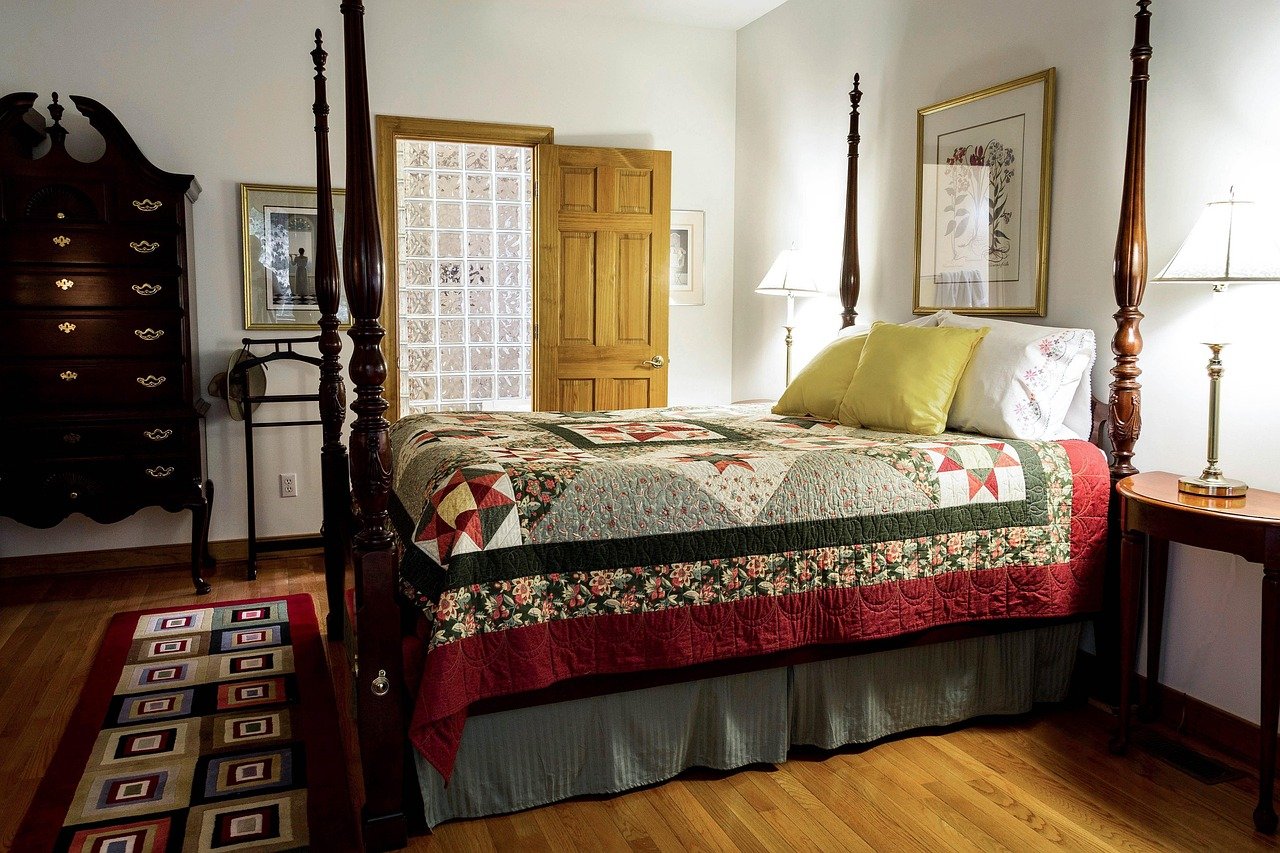
Almost every bedroom floor falls into one of four groups. Each has a personality, and each fails in a predictable way when installed badly.
| Flooring type | Feel underfoot | Cost level | Best for | Main weakness |
|---|---|---|---|---|
| Carpet (wall-to-wall) | Soft, warm | Low to mid | Cold climates, sound control, upstairs rooms | Traps dust and allergens; hard to deep clean |
| Solid or engineered wood | Firm, warm-ish | High | Long-term value, resale appeal | Scratches from bed frames; sensitive to humidity |
| Laminate and luxury vinyl | Firm, neutral | Low to mid | Budgets, pets, moisture-prone rooms | Can sound hollow; wear layer quality varies wildly |
| Tile and stone | Hard, cold | Mid to high | Warm climates, spill-prone rooms | Cold underfoot; grout lines collect dust |
Carpet remains the most common bedroom flooring in the US and UK, largely for comfort and sound insulation. That is background knowledge rather than a hard statistic, so treat it as a general pattern, not a number to quote at a dinner party. Hard surfaces have gained ground in bedrooms since roughly the 2000s and 2010s, driven by allergy concerns and easier cleaning. That trend claim is harder to pin to a single source, so weigh it as a reasonable observation rather than a proven fact.
Carpet: Still the Default for Good Reasons
Carpet does three things well that hard floors cannot match. It absorbs sound, which matters if the bedroom sits above a living room or beside a bathroom. It feels warm on bare feet in winter. And it softens falls, a quiet benefit in kids’ rooms and homes with older residents.
The catch is maintenance. Carpet holds fine dust, pet dander, and the grit that shoes track in. A vacuum with a decent brush roll helps, but the real difference comes from a deep clean every 12 to 18 months and a strict no-shoes rule. Homeowners who skip those two habits are usually the ones who rip carpet out within five years and swear never to return.
Practical tips that actually work:
- Choose a low-pile or loop carpet for bedrooms if allergies are a concern; deep shag looks luxurious and cleans terribly.
- Ask for a dense underlay with a moisture barrier, especially over concrete slabs.
- Keep a doormat at the bedroom door if the room sits near an exterior entrance.
- Vacuum twice a week in homes with pets, not once.
The most common mistake is buying carpet on color alone. A pale, plush carpet in a high-traffic bedroom with a shedding dog will look tired within a year. Pick density and fiber first, color last.
Wood and Engineered Wood: The Resale Favorite
Hardwood has a reputation that sells houses. It is also the floor most likely to be damaged by the furniture sitting on it. Bed frames, dressers, and desk chairs concentrate weight on small points, and felt pads wear out quietly. A few minutes spent fitting fresh pads under every leg is the cheapest insurance a wood floor gets.
Solid wood moves with humidity. In dry winters, gaps can open between boards; in humid summers, boards can cup. Engineered wood handles swings better because its cross-ply core resists expansion, which is why it dominates in basements and slab-on-grade homes. Either way, keep indoor humidity roughly stable and avoid steam mopping, which forces moisture into seams.
If the bedroom sits above a garage or another cold space, check what is underneath before choosing wood. A floor that stays cold will feel cold no matter how beautiful the surface is. That is also where underfloor heating enters the conversation, and compatibility varies by flooring type. Wood and carpet have different thermal resistance limits, so read the manufacturer’s guidance rather than assuming any floor works over any heating system.
Laminate and Luxury Vinyl: The Budget Realist’s Pick
Laminate and luxury vinyl plank (LVP) have quietly become the default answer for bedrooms on a budget, rentals, and pet-heavy homes. LVP shrugs off moisture, survives dropped objects, and installs over most existing hard surfaces. Laminate costs less but is less tolerant of water, so it belongs away from bathrooms and laundry rooms.
Two things separate a good vinyl floor from a bad one. The first is the wear layer, measured in mils; thin wear layers scratch and dull fast. The second is the underlay, which controls the hollow click underfoot that gives cheap laminate away. A quality underlay with an attached acoustic backing makes a mid-priced floor feel far more expensive than it is.
One warning: “waterproof” is a marketing word with limits. Waterproof planks still let water creep into seams and sit against the subfloor. Wipe spills promptly and never let a leak run overnight.
Tile and Stone: Niche but Underrated
Tile in a bedroom sounds odd until you consider warm climates, spill-prone kids’ rooms, or homes where dust and dander are a genuine health issue. Tile is the easiest floor to clean thoroughly and the hardest to damage. The trade-offs are real: it is cold underfoot, grout lines collect dust, and a dropped phone lands harder.
Slip resistance matters here. Standards such as ASTM D2047 for polished floor coefficient of friction and DIN 51130 for ramp testing apply to flooring generally, and some jurisdictions extend them to bedrooms. Standards get revised periodically, so check the current edition rather than relying on an old spec sheet. If the bedroom opens onto a bathroom or a patio, a textured tile beats a polished one every time.
What Building Codes and Health Guidance Actually Require
Here is a fact that surprises many homeowners: residential building codes do not mandate a specific bedroom flooring material. Requirements focus on egress, smoke alarms, and structural loads, not floor finish. The International Code Council publishes the model codes that most US jurisdictions adopt, and flooring choice simply is not in that list.
Indoor air quality is a different story. Public-health guidance recommends low-VOC flooring and adhesives, which matters more in a bedroom than almost anywhere else because you spend hours breathing there with the door closed. The US EPA’s indoor air quality resources explain how volatile organic compounds off-gas from finishes and glues. In practice, that means asking for low-VOC adhesives, letting new flooring air out before moving furniture back in, and choosing products with clear emissions documentation.
Accessibility is the third layer. The ADA Standards address floor surfaces in covered facilities, requiring them to be firm, stable, and slip-resistant, and some residential programs adopt similar rules. If a household member uses a walker or wheelchair, thick carpet becomes an obstacle rather than a comfort. A low-pile carpet with a firm pad, or a hard floor with a few washable rugs, usually serves better.
Matching the Floor to the Room, Not the Trend
The most useful question is not “what is popular” but “what happens in this room.” A bedroom used mainly for sleeping rewards softness and quiet. A bedroom that doubles as a home office needs a surface that survives a rolling chair. A guest room that sits empty for months needs something that handles neglect without warping.
Robotic cleaning has changed the calculus too. Hard floors and low-pile carpet are far friendlier to robot vacuums than deep shag, and if a robot mop is part of the plan, the floor type decides whether it can help at all. Anyone weighing that purchase will find useful context in this guide to the best robot vacuum mop combos that actually clean floors, which covers how surface type changes what these machines can realistically do. For a broader look at how automated helpers fit into a home, this roundup of the best home robots in 2026 that actually earn their floor space is worth a read before spending money. (Measure ring size at home without guessing)
Common Mistakes That Cost Real Money
Most flooring regrets trace back to a handful of avoidable errors.
- Skipping the moisture test. Concrete subfloors release vapor. Test before installing wood or laminate, or the floor will cup within a season.
- Buying before measuring the bed. A king frame with a wide footprint can cover most of a small room’s floor. There is little point paying for premium flooring that will never see daylight.
- Ignoring acoustics. Hard floors in upstairs bedrooms transmit footsteps downstairs. An acoustic underlay costs little and prevents household friction.
- Choosing on showroom lighting. Floor samples look different under bedroom lamps and morning sun. Take a sample home and live with it for a few days.
- Forgetting the transition strips. Doorway thresholds are where floors fail first. Budget for proper trims rather than improvising.
- Letting furniture sit on new floors too soon. Adhesives and finishes need cure time. Read the instructions and wait.
There is also a quieter mistake: treating the bedroom floor as an afterthought to the bed itself. People spend weeks choosing a mattress and minutes choosing what goes under it. The floor outlasts most mattresses, so it deserves the same deliberation.
A Simple Decision Path
For readers who want a straight answer, this sequence works for most bedrooms.
- Cold climate, upstairs room, tight budget: low-pile carpet with dense underlay.
- Resale matters, humidity is stable, budget allows: engineered wood.
- Pets, kids, rentals, or moisture nearby: luxury vinyl plank with a quality wear layer.
- Allergy concerns or warm climate: tile with a textured finish and sealed grout.
- Accessibility needs: low-pile carpet with firm pad, or hard flooring with washable rugs.
Whatever the choice, order 10 percent extra material. Dye lots change, and a repair five years from now with a mismatched plank is a small heartbreak.
Conclusion
Bedroom flooring is one of those decisions that feels minor until it is permanent. Carpet still wins on comfort and quiet, wood wins on value and warmth, vinyl wins on practicality, and tile wins on cleanliness. None of them is universally right. The homeowners who end up happy are the ones who matched the surface to how the room is actually used, tested moisture and acoustics before installation, and spent a little extra on underlay and wear layers instead of on upgrades nobody will feel underfoot. Start with the feet, not the photos, and the rest of the bedroom falls into place.
Frequently Asked Questions
What is the best flooring for a bedroom?
There is no single best option, but low-pile carpet suits cold climates and upstairs rooms, engineered wood suits buyers focused on resale value, and luxury vinyl plank suits pet owners and tight budgets. Match the floor to how the room is used rather than to current trends.
Is carpet or hardwood better for allergies?
Hard flooring generally wins for allergy sufferers because it does not trap dust and dander the way carpet fibers do. If carpet is preferred, choose a low-pile option, vacuum twice weekly with a HEPA filter, and deep clean every 12 to 18 months.
Do building codes require a specific bedroom floor material?
No. Residential building codes address egress, smoke alarms, and structural loads rather than floor finish. Local rules can vary, so confirm with the authority having jurisdiction before a major renovation.
Can I put bedroom flooring over underfloor heating?
Usually yes, but compatibility depends on the material. Wood and carpet have different thermal resistance limits, so check the manufacturer’s guidance for both the flooring and the heating system before committing.
How much extra flooring should I buy?
Order about 10 percent more than the measured area to cover cutting waste and future repairs. Dye lots change over time, so spare planks from the same batch are the only reliable way to patch damage later.
Is “beds flooring” a real product category?
Not in any formal sense. The phrase appears mostly in retail search results that mix bed frames with flooring listings. There is no industry definition, so read product descriptions carefully and treat bundled listings with caution.



