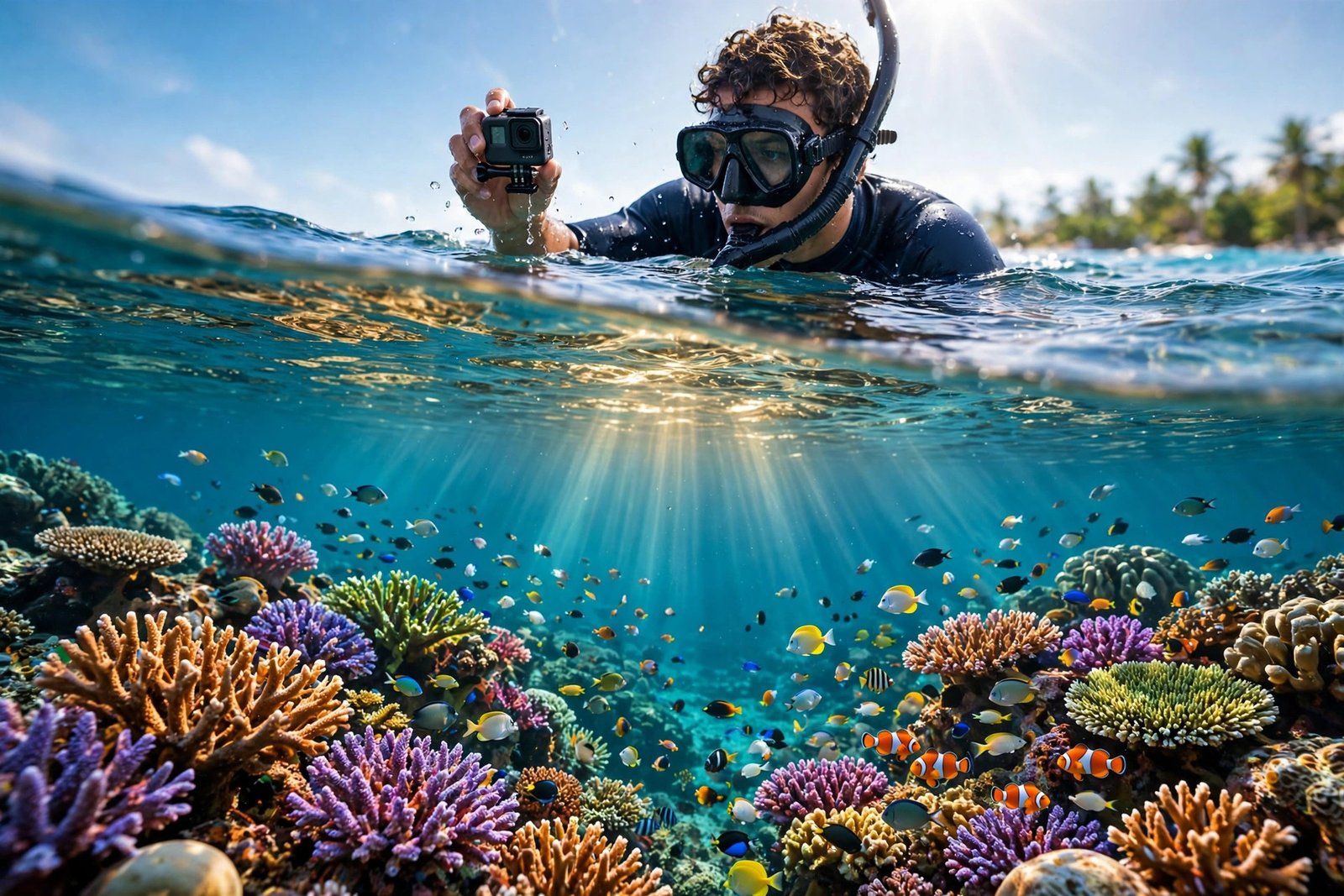
The best action cameras for snorkelling are the ones that stay waterproof without a housing, keep colours true under water and hold steady while you are kicking, breathing and trying not to scare the fish. Snorkelling rarely takes you deeper than a few metres, but water steals red light fast and turns everything blue-green within a metre or two. The best camera for your trip handles that colour shift, survives salt water and is easy to use with wet hands.
Our short answer is that the DJI Osmo Action 5 Pro is the best action camera for snorkelling for most people, because it is waterproof to 20 m without a case, has the largest sensor of the leading models and a built-in depth gauge. The GoPro Hero 13 Black suits GoPro owners who want the highest resolution, and the Insta360 Ace Pro 2 suits low-light snorkellers.
Key takeaways
- Every leading action camera is waterproof without a housing, but the depth rating varies from 10 m to 20 m.
- The DJI Osmo Action 5 Pro leads on depth and low light, with a 20 m rating and a 1/1.3-inch sensor.
- Water steals red light quickly, so a larger sensor and a red filter matter more than raw resolution.
- Rinse the camera in fresh water after every swim, and check the door seals before you get in.
How to choose an action camera for snorkelling
Start with the waterproof rating, and read it carefully. A camera rated waterproof to 10 m without a housing, such as the GoPro Hero 13 Black, is more than enough for snorkelling, where you are usually within 5 m of the surface. A camera rated to 20 m, such as the DJI Osmo Action 5 Pro, gives you extra margin for free diving down to a reef.
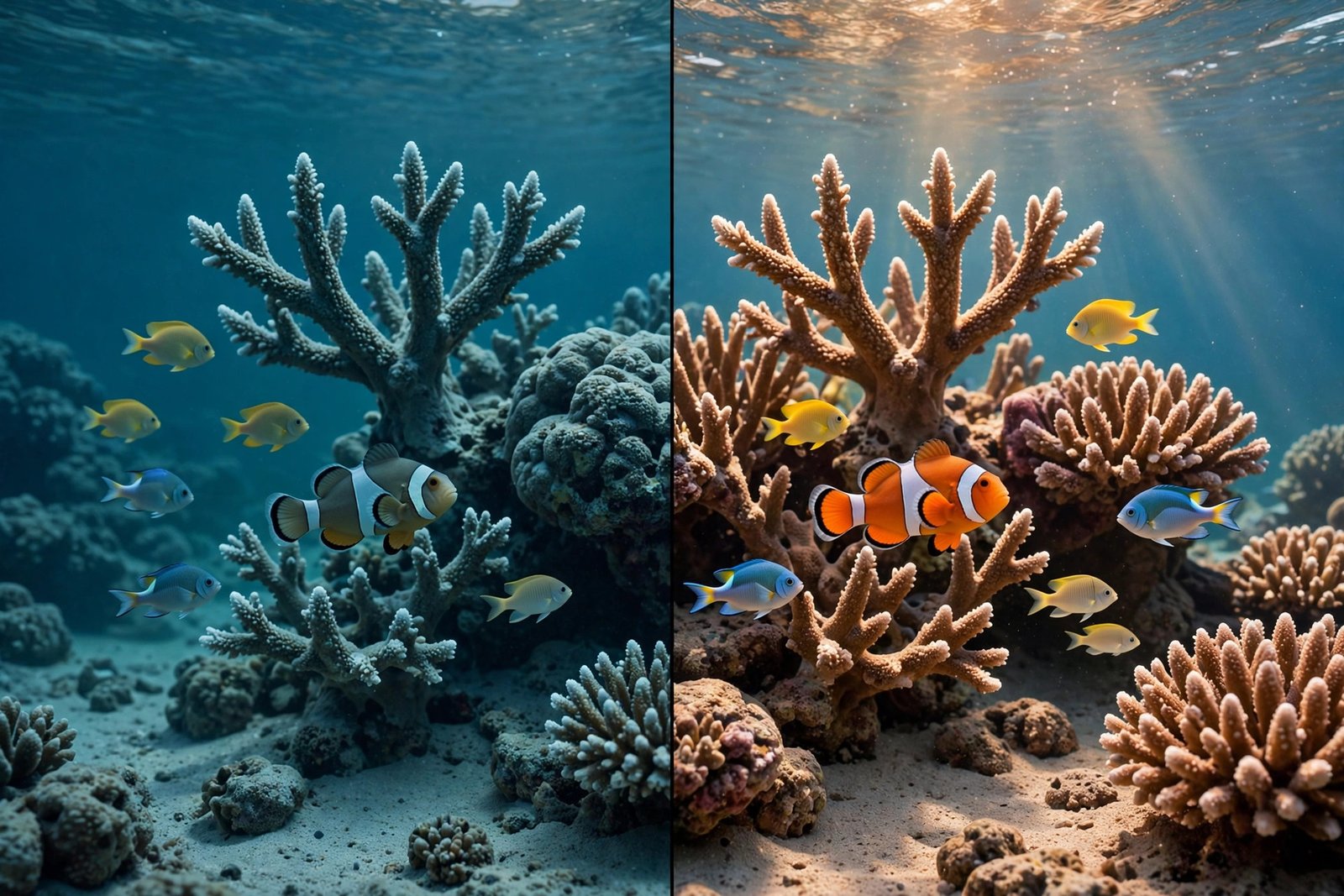
Next, think about colour. Water absorbs red light first, so footage shot deeper than a metre or two looks blue-green unless the camera compensates. Larger sensors gather more light and hold colour better, which is why the DJI’s 1/1.3-inch sensor and the Insta360 Ace Pro 2’s large sensor perform better in murky or shaded water than smaller sensors.
Stabilisation matters more in the sea than on land. You are moving with the swell, kicking and turning your head to follow fish, so electronic stabilisation is what keeps the footage watchable.
The best action cameras for snorkelling at a glance
DJI Osmo Action 5 Pro — the best action camera for snorkelling overall
Best for: snorkellers who want the deepest waterproof rating and the best low-light colour.
The Osmo Action 5 Pro is the strongest snorkelling camera you can buy without a housing. It is waterproof to 20 m with no case, twice the GoPro’s depth, and has a built-in depth gauge meeting the EN13319 standard. Its 1/1.3-inch sensor is the largest here, which helps it hold colour below the surface, and it shoots 4K at up to 120 frames per second with 40 MP stills.
Battery life is another strength, putting it ahead of the GoPro for long sessions. Its colour temperature sensor helps correct the blue-green cast of underwater footage, though a red filter still improves results in deeper water. For the rest of the trip, our guide to the best cameras for travel photography covers larger cameras for everything above the waterline. The trade-off is the mount ecosystem: GoPro’s range of mounts is still wider.
GoPro Hero 13 Black — the best GoPro for snorkelling
Best for: GoPro owners and anyone who wants the highest resolution and the widest accessory range.
The Hero 13 Black is waterproof to 10 m without a housing, which comfortably covers snorkelling, swimming and surfing, and its optional dive case takes the rating to 60 m for scuba. It records 5.3K video at 60 frames per second and takes 27 MP stills.
GoPro’s real advantage is the ecosystem: mounts, filters, housings and batteries are available everywhere, including in dive shops and resort towns. The trade-offs are depth and low light: its 10 m rating is half the DJI’s, and its 1/1.9-inch sensor is smaller, so footage in shaded or murky water is noisier and the colours shift sooner. None of that matters much in bright, shallow water, which is where most snorkelling happens.
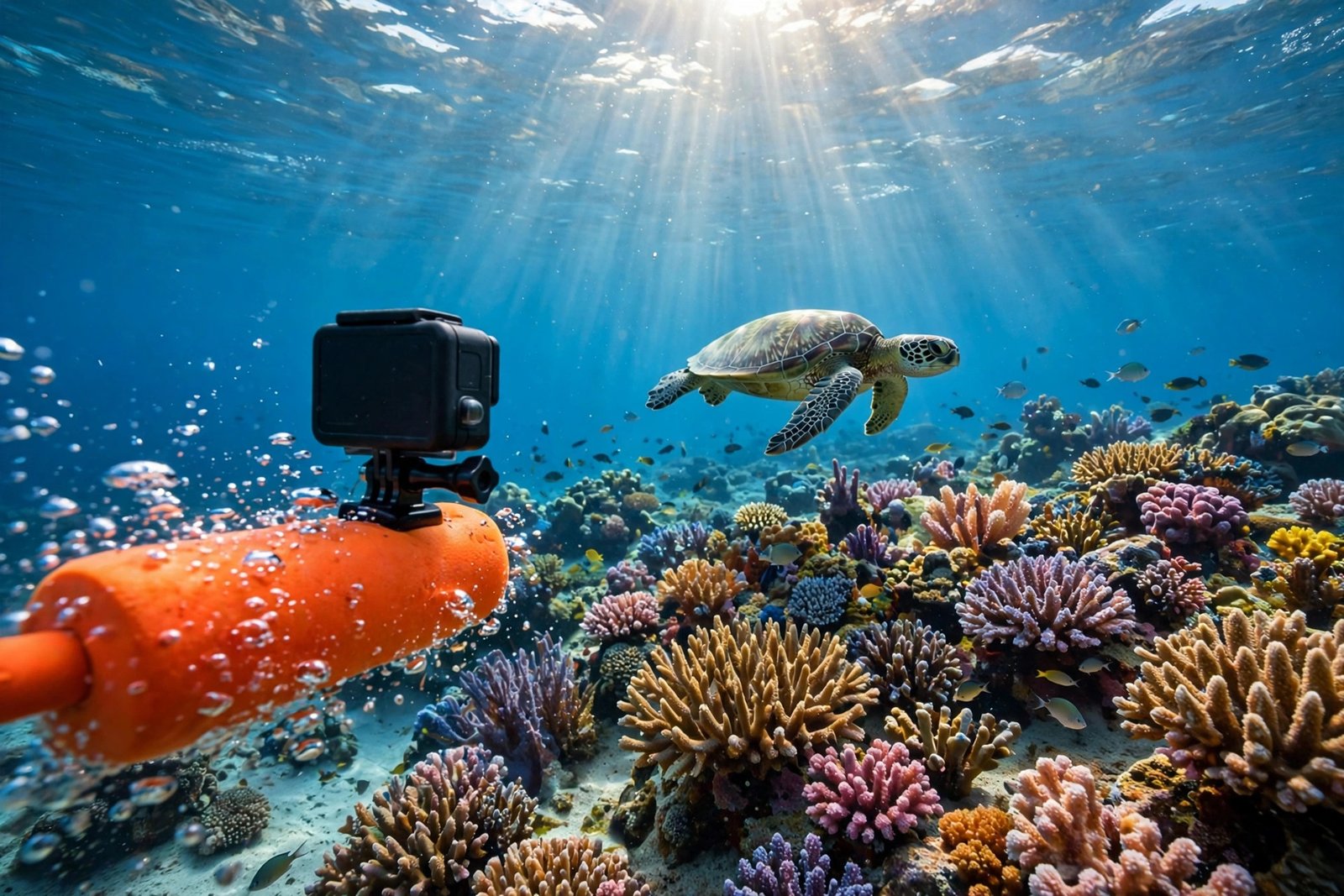
Insta360 Ace Pro 2 — the best action camera for low-light snorkelling
Best for: snorkellers who swim at dawn, in shade or in murky water and want clean, bright footage.
The Ace Pro 2 is waterproof to 12 m without a housing, and its optional dive case takes it to 60 m. Its large sensor and Leica-tuned lens produce brighter, cleaner footage when the light drops, whether that is an early-morning swim or a shaded reef wall.
For snorkelling, its colour handling is a genuine strength: the camera holds warm tones further down than smaller-sensor rivals. The trade-off is size and price: it is the largest and most expensive of the three flagships.
DJI Osmo Action 4 — the best value action camera for snorkelling
Best for: snorkellers who want flagship waterproofing and colour on a smaller budget.
The Osmo Action 4 is the previous DJI flagship, and it remains an excellent snorkelling camera. It is waterproof to 18 m without a housing and shares the same 1/1.3-inch sensor, so its low-light and colour performance is in the same class. It shoots 4K at up to 120 frames per second.
The reason to buy it is price. As the older model it is regularly discounted, and the money saved buys a floating grip, a red filter and a spare battery with change left over. The differences from the Action 5 Pro are real but modest for snorkelling: a shorter battery life, no built-in depth gauge and no built-in storage.
AKASO Brave 8 Lite — the best budget action camera for snorkelling
Best for: first-time snorkellers and families who want waterproof footage without flagship prices.
The Brave 8 Lite is the budget pick, and it is honest about what it is. It is waterproof without a housing to a depth that covers snorkelling and swimming, shoots 4K video, and comes with a bundle of mounts in the box, including a floating grip in many kits.
Expect compromises: its smaller sensor means colours shift sooner, low-light footage is noisier, and stabilisation is weaker in choppy water. For the stills side of a beach holiday, our guide to the best mirrorless cameras under $1000 covers cameras that pair well with a cheap action camera. Do not take it deeper than its rated depth.
Best action cameras for snorkelling: comparison table
| Camera | Waterproof without case | Sensor | Max video | Stills | Standout feature |
|---|---|---|---|---|---|
| DJI Osmo Action 5 Pro | 20 m | 1/1.3-inch | 4K/120fps | 40 MP | Depth gauge, longest battery |
| GoPro Hero 13 Black | 10 m | 1/1.9-inch | 5.3K/60fps | 27 MP | Widest accessory range |
| Insta360 Ace Pro 2 | 12 m | Large sensor | 8K | High resolution | Best low-light footage |
| DJI Osmo Action 4 | 18 m | 1/1.3-inch | 4K/120fps | 10 MP | Best value, deep rating |
| AKASO Brave 8 Lite | Snorkelling depth | Smaller sensor | 4K | Lower resolution | Cheapest, mounts included |
Table: the leading snorkelling action cameras compared on waterproof depth, sensor, video and the feature that matters most in the water.
Bright, shallow water forgives a smaller sensor, while shade and depth reward the larger sensors of the DJI and Insta360 models.
A practical checklist before you get in the water
- Check the seals first: inspect the battery and card doors, make sure they are clean, dry and fully closed, and never open them while the camera is wet.
- Fit a floating grip: a floating handle stops the camera sinking if you let go, and it is far easier to hold than a bare camera with wet hands.
- Add a red filter for depth: a red or magenta filter restores warm colours in blue water and is the cheapest real upgrade you can buy.
- Rinse after every swim: rinse in fresh water after salt water and dry it before opening any door.
- Charge and clear storage: charge the battery the night before and format the memory card.
Torn between the flagships? Pick the DJI for depth and low light, or the GoPro if you already own GoPro mounts. If you want to film yourself talking about the trip as well as the reef, our guide to the best cameras for YouTube beginners covers cameras built for exactly that.
Frequently asked questions
Can I snorkel with a GoPro without a waterproof case?
Yes. The GoPro Hero 13 Black is waterproof to 10 m without a housing, which comfortably covers snorkelling. You only need the optional 60 m dive case for scuba or free dives deeper than 10 m.
Do I need a red filter for snorkelling footage?
In shallow, bright water you can often manage without one, but a red or magenta filter makes a visible difference once you go deeper than a metre or two, because water absorbs red light first. It is one of the cheapest accessories you can buy and does more for colour than any camera setting.
Which action camera is best for snorkelling in 2027?
For most snorkellers it is the DJI Osmo Action 5 Pro, because it is waterproof to 20 m without a case, has the largest sensor of the leading models and a built-in depth gauge.
Will salt water damage my action camera?
Salt water will not damage a properly sealed action camera, but salt left to dry on seals, buttons and the lens can cause problems over time. Rinse the camera in fresh water after every swim, dry it before opening any door, and check the seals regularly for sand or grit.
Can I use an action camera for scuba diving?
Yes, but only with the right case. None of the cameras here is rated deep enough for scuba without a housing: the DJI Osmo Action 5 Pro is rated to 20 m bare, the GoPro Hero 13 Black to 10 m, and the Ace Pro 2 to 12 m.
Is a floating grip really necessary for snorkelling?
It is the single most useful snorkelling accessory. A floating grip stops the camera sinking if you let go, makes the camera far easier to hold with wet hands, and keeps it visible on the surface.
The bottom line
The best action camera for snorkelling is the one that stays dry inside, holds its colour under water and is still in your hand at the end of the swim. For most snorkellers that is the DJI Osmo Action 5 Pro. GoPro owners should stick with the Hero 13 Black, low-light swimmers should look at the Insta360 Ace Pro 2, and budget buyers should pick the Osmo Action 4 or the AKASO Brave 8 Lite.
Water safety note: never snorkel alone, check the depth rating and door seals on your camera before every swim, and respect local conditions, currents and weather warnings. If conditions look rough or you are unsure, stay out of the water.