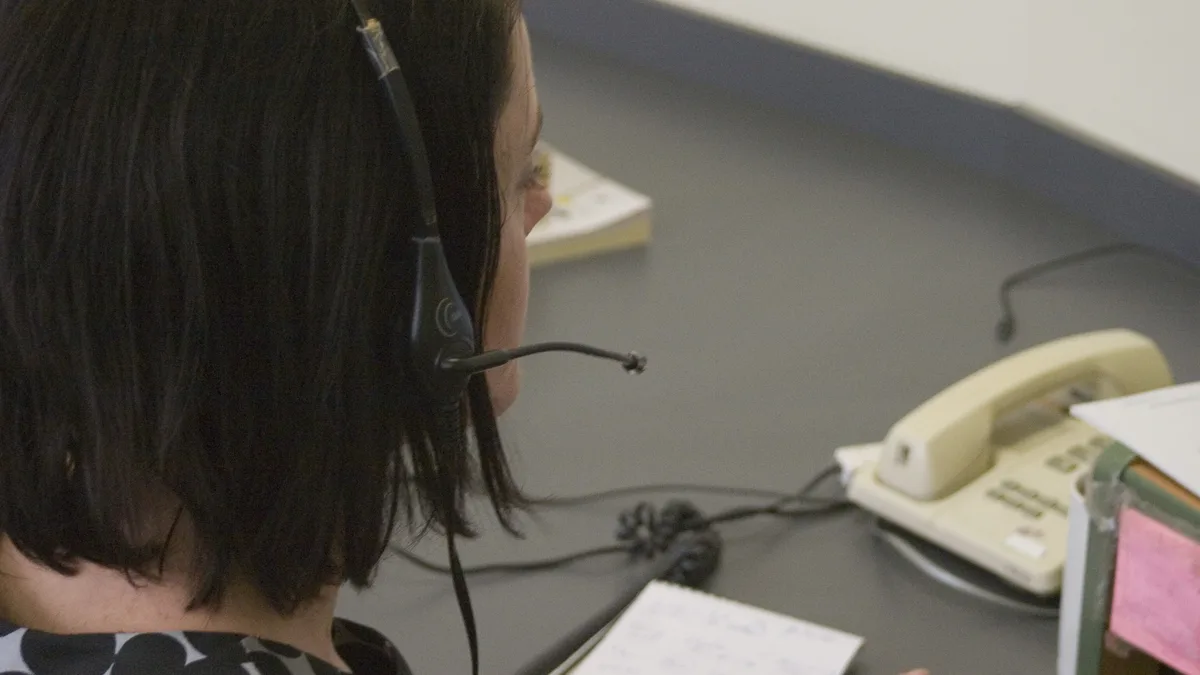
Voice fraud has become one of the cheapest attacks a criminal can run. A short clip of a chief executive on an earnings call or a customer talking to support can now be turned into a convincing fake voice. The best AI voice fraud prevention tools in 2027 exist to catch that call before any money or data moves.
These tools work in the background of a phone call. They analyse the audio for signs of synthesis, compare the voice against a known voiceprint, and check for the small glitches cloned audio leaves behind. Some do it in under a second, while the caller is still saying hello.
This guide rounds up seven tools businesses actually use to stop voice fraud, from call-centre platforms to specialist voice biometric engines. Each one is judged on fake-voice detection, speed, contact-centre fit, and starting cost. Prices are approximate, so check current pricing before you buy.
Key takeaways
- Pindrop is the best overall choice for large contact centres, with deepfake detection and caller risk scoring in one platform.
- Nuance Gatekeeper suits businesses already using Microsoft tools, with voice biometrics built for high call volumes.
- NICE Real-Time Authentication is the best fit for contact centres that already run NICE software.
- Most enterprise tools are priced by custom quote, so expect to negotiate on call volume rather than pay a fixed monthly fee.
- No tool catches every fake voice, so pair detection with a callback rule for payment and password-reset requests.
At a glance: the shortlist
| Product | Best for | Starting price | Standout limit |
|---|---|---|---|
| Pindrop | Large contact centres | Custom quote | Enterprise pricing only |
| Nuance Gatekeeper | Microsoft shops | Custom quote | Needs voice enrolment |
| NICE Real-Time Authentication | NICE contact centres | Custom quote | Best inside the NICE suite |
| Verint Identity Authentication | Regulated industries | Custom quote | Longer setup time |
| Auraya EVA | Fast deployment | Custom quote | Smaller partner network |
| Phonexia Voice Biometrics | Flexible deployment | Custom quote | Needs tuning per language |
| Aculab VoiSentry | Small teams and pilots | Custom quote | Fewer enterprise integrations |
Pindrop — Best overall
Pindrop is the best-known name in voice fraud prevention, and it earns that position by covering the whole problem rather than one part of it. Its platform scores every incoming call for fraud risk, checks the audio for signs of synthetic speech, and verifies the caller against a voiceprint when one exists. Its deepfake detection analyses the audio stream for the artefacts cloning leaves behind, such as unnatural pauses, flat intonation, and missing breath sounds, and it does this in real time. Voice biometrics sits at the heart of the platform, matching the caller against enrolled voiceprints. Deployment is aimed at large operations, with integrations for the major contact-centre platforms and strong reporting dashboards.

Pros: Real-time deepfake detection, caller risk scoring, strong integrations, proven at large scale.
Cons: Custom pricing only, overkill for small teams, setup needs vendor help.
Nuance Gatekeeper — Best for Microsoft shops
Nuance Gatekeeper, now part of Microsoft, brings voice biometrics to businesses that already live in the Microsoft world. It verifies callers by their voice and checks for synthetic speech at the same time, at the scale of a national bank or telecom provider. If your contact centre already runs on Microsoft infrastructure, Gatekeeper slots in with less friction than a standalone tool. Later calls are matched against that print in seconds, using natural conversation rather than fixed passwords, so callers need nothing to remember. Fraud detection runs alongside verification, flagging calls where the audio shows signs of cloning or replay.
Pros: Strong Microsoft integration, passive verification, handles high volumes and many languages.
Cons: Custom pricing only, needs voice enrolment first, heavier fit outside Microsoft.
NICE Real-Time Authentication — Best for NICE contact centres
NICE Real-Time Authentication is built for contact centres that already run NICE software, and it shows. It verifies callers by voice within the first few seconds of a call, using the same platform agents already use for routing and recording. The tool combines voice biometrics with fraud detection: while it checks whether the voice matches the enrolled customer, it also listens for signs that the audio is synthetic or replayed. Suspicious calls are flagged with a risk indicator, and the agent can step up the checks before discussing the account. Pricing is by custom quote, and the tool is not really sold as a standalone product.
Pros: Seamless fit for NICE users, fast passive verification, joined-up reporting.
Cons: Custom pricing only, best inside the NICE suite, weak as a standalone tool.
Verint Identity Authentication — Best for regulated industries
Verint Identity Authentication is aimed at banks, insurers, and other regulated businesses where proving a caller is who they say they are is a compliance matter as well as a security one. It verifies callers by voice and checks for fraud signals in the same pass. The emphasis is on audit trails: every verification is logged, so a compliance team can show exactly how a caller was checked. The platform supports both passive verification, during natural conversation, and active verification, where the caller repeats a phrase. Setup takes longer than with lighter tools, because Verint is usually deployed as part of a wider customer engagement platform.
Pros: Strong audit trails, flexible passive and active checks, built for regulated industries.
Cons: Custom pricing only, longer setup, aimed at enterprise buyers.
Auraya EVA — Best for fast deployment
Auraya EVA is a voice biometric and fraud detection platform that prides itself on getting live quickly. It verifies callers and detects synthetic voices without a long enrolment project, and it works with the telephony a business already has. The system builds voiceprints from ordinary conversation and checks new calls against them in real time. It also runs liveness checks on the audio, looking for the flat, over-smooth quality cloned voices tend to have. EVA is smaller than the giants here, which shows in its partner network and pre-built integrations. Pricing is by custom quote, based on volume.
Pros: Quick to deploy, simple agent experience, works with existing telephony.
Cons: Custom pricing only, smaller partner network, fewer pre-built integrations.
Phonexia Voice Biometrics — Best for flexible deployment
Phonexia Voice Biometrics is a specialist engine rather than a full contact-centre suite, and that is its appeal. It can be deployed on site, in a private cloud, or as a hosted service, which suits businesses with strict data rules or unusual infrastructure. The engine verifies speakers, detects synthetic speech, and supports many languages. It can verify a caller from a few seconds of speech and flag audio that looks generated rather than spoken. Because it is an engine, it needs more integration work than a ready-made platform, so a business will need developers or a partner to wire it in and build the agent screens.
Pros: Flexible deployment, strong accuracy on short noisy calls, wide language support.
Cons: Custom pricing only, needs integration work, less ready-made.
Aculab VoiSentry — Best for small teams and pilots
Aculab VoiSentry is the most approachable tool on this list. It is a voice biometric engine a small team can pilot without an enterprise sales cycle, and it is priced to match. It verifies callers against enrolled voiceprints and can be added to an existing phone system with modest effort. The engine works with short phrases and natural speech, and it can run on standard server hardware or in the cloud. It is not as feature-rich as the enterprise platforms: there is less built-in fraud analytics and fewer ready-made dashboards. VoiSentry suits a pilot or a small contact centre, but a large operation will soon want the risk scoring, reporting, and integrations the bigger tools provide.
Pros: Approachable for pilots, modest integration effort, lower entry cost.
Cons: Custom pricing only, fewer analytics and dashboards, less suited to large operations.
How to choose
Start with your call volume and your existing phone system. A large contact centre with thousands of calls a day needs a platform that scores risk in real time and integrates with the agent desktop, which points to Pindrop, NICE, or Verint. A smaller team can start with a lighter engine such as VoiSentry and prove the value before spending more.
Next, ask how each tool handles enrolment. Passive verification, where a voiceprint is built from normal conversation, is far easier for customers than asking them to repeat a phrase. Finally, agree on what happens when the tool flags a call: a high-risk call gets stepped-up checks, and any payment or password-reset request on a flagged call gets a callback to a known number. Pair voice checks with basics such as passkeys and two-factor authentication, so one failed control does not hand an attacker the account.
Checklist: before you pay
- Confirm the tool detects synthetic and cloned voices, not just verifies known callers.
- Check how fast detection runs, and whether it works while the call is live.
- Ask how voiceprints are stored, encrypted, and deleted when a customer asks.
- Run a trial on real calls, including noisy lines and mobile phones, not just clean demos.
- Agree on the agent workflow for flagged calls before the tool goes live.
- Confirm the renewal price and how it scales with call volume before signing.
Frequently asked questions
Can these tools detect AI-cloned voices?
Yes. The leading tools analyse audio for the artefacts cloning leaves behind, such as unnatural rhythm, missing breath sounds, and over-smooth intonation. No detector is perfect, so pair detection with verification and a callback rule.
Do customers need to enrol their voice first?
For verification, yes. A voiceprint has to be built from a real call before later calls can be matched against it. Deepfake detection, by contrast, works on any call, because it looks for signs of synthesis rather than comparing against a stored voice.
How fast is the detection?
Most enterprise tools score a call within the first few seconds, while the caller is still greeting the agent. That speed matters, because a fraudster who is challenged early has less time to build trust with the agent.
Is voice data private and secure?
Voiceprints are biometric data, so they need the same care as any sensitive personal information. Ask vendors how voiceprints are encrypted, where they are stored, and how a customer can have theirs deleted. Privacy rules vary by country, so check the rules that apply to your customers.
Will these tools replace security questions?
They can reduce the need for them, but most businesses keep a stepped-up check for high-risk actions. A voice check plus a callback or second factor beats any single control. For a wider view of the options, see our roundup of the best AI security platforms for business in 2027.
What does a voice fraud prevention tool cost?
Enterprise tools are usually priced by custom quote, based on call volume and the number of enrolled voices. Smaller engines cost less but still quote per deployment. Always confirm the renewal price and the cost of extra call volume before you sign.
The bottom line
For most large contact centres, Pindrop is the safest pick, because it combines deepfake detection, risk scoring, and voice verification in one platform. Businesses already running Microsoft or NICE should look at Gatekeeper or NICE Real-Time Authentication first, since the integration savings are real. Smaller teams should pilot with Aculab VoiSentry and build the case from real results.
Whichever tool you choose, remember that detection is only half the defence. The other half is process: challenge flagged calls, call customers back on a known number before moving money or resetting access, and review flagged calls every week. Voice cloning will keep improving, so the businesses that stay safe are the ones that treat voice fraud prevention as an ongoing habit, not a one-time purchase.