A low-cost digital camera can still be a useful way to make travel memories and family snapshots, as long as you match the camera to the job. You might want a simple new compact, an older used model, or a camera with interchangeable lenses. Each choice serves a different need, and none has to be a professional tool to make everyday snapshots worth keeping.
This comparison covers practical picks for different budgets and uses, from casual family photos to learning photography. You’ll also find tips for weighing image quality, useful features, and the cost of a complete camera setup. Choose for the photos you actually take, not for a specification you are unlikely to use.
Key Takeaways
- Simple new compacts suit straightforward snapshots in good light.
- A used DSLR kit gives beginners room to learn exposure and lens choice.
- Older pocket cameras can be affordable, but their age affects what to expect.
- Sensor size helps explain how a camera handles dim scenes.
- With used cameras, condition and the included lens matter as much as the model.
What can a $100 camera budget realistically buy?
At $100, most buyers are choosing between a simple new compact, an older used model, and a no-name camera. A basic new compact is the easiest route for casual snapshots, while a used DSLR kit suits a beginner who wants to learn photography. Sensor size means the physical dimensions of the image sensor, which affect how much light it can collect and how the camera performs in dim conditions.
In 2026, that budget can cover a simple new compact, an older used or refurbished compact, or a no-name camera. Some no-name cameras may disappoint on image quality, even when their feature list looks long. A little more money can open up used interchangeable-lens choices, though current prices vary by model and condition.
| Route | Example type | Main advantage | Main tradeoff |
|---|---|---|---|
| Simple new compact | Basic fixed-lens camera | New body and simple controls | Limited lens and low-light options |
| Older used or refurbished compact | Past-generation pocket camera | Optical zoom in a small body | Age and condition affect reliability |
| No-name digital camera | Low-cost generic model | Low entry price | Image quality may disappoint |
A cameras list can make every option look equal, but the main difference is how you plan to use the camera. New compacts ask little of you, while older models may offer optical zoom in a pocket-sized body. A no-name camera can cost less, but the lower price may not bring a useful gain in picture quality.
Used DSLR kits can also fit the $100-$200 range when you buy both the camera and lens secondhand. That route adds weight and more controls, but it gives you a way to learn exposure and change lenses. For a first camera focused on learning exposure and lens choice, put more of the budget toward a tested used DSLR kit.

Is a digital camera under $50 worth buying?
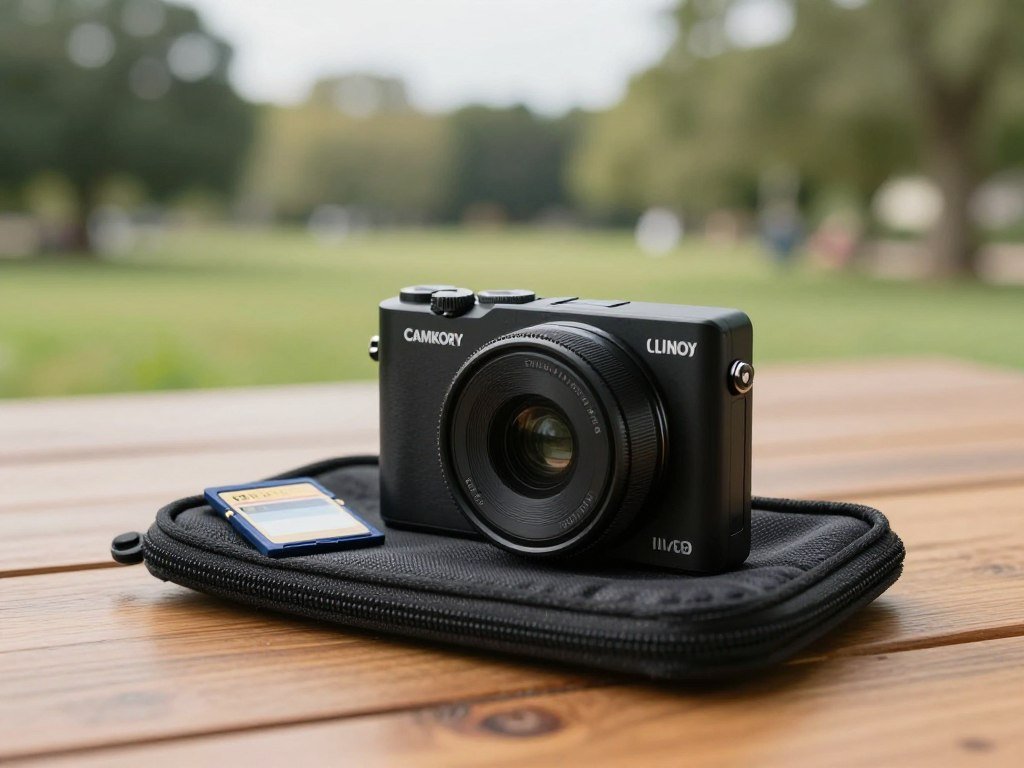
The Camkory is a simple under-$50 choice for casual travel snapshots when convenience matters more than sharp detail. The best cheap digital camera under $50 for easy snapshots is the Camkory, with a 32GB model listed at $50. Choose it for undemanding photos, not dependable professional-quality images.
In a two-year travel-use test, the camera continued to work, though its battery life and flash had worn slightly. After about an hour of charging, the battery lasted around eight hours. Moving files from its SD card to a laptop, then to an iPhone, took less than 10 minutes per transfer.
A small body is easy to carry, but it calls for a few simple habits while you travel. These steps help keep the camera ready for ordinary snapshots:
- Charge the battery before leaving home.
- Protect the small body inside a purse or crossbody bag.
- Use the SD card for file transfers to a laptop or phone.
Focus can be inconsistent, and video may look shaky, so this is not a quality-first camera. The simple controls and included storage can still suit a casual trip, especially when a phone is not the only device you carry. A low price makes sense only if you accept the limits and avoid relying on it for a once-only shot.
Keep a phone or second camera available if a one-time moment cannot be retaken.
Which model is the best cheap digital camera near $100?
For a new compact close to a $100 limit, the Kodak Pixpro FZ45 is the pick to check first. The best cheap digital camera under $100 is the FZ45 when you can find it near that mark. Its listed price is $130, with a sale price of $110, so compare the checkout price with your budget.
The FZ45 fits daytime sharing and small prints better than dark interiors. It gives you a simple fixed-lens camera without the cost or extra steps of a larger system. That can be a useful match for snapshots outdoors, family gatherings near a window, and travel scenes in bright light.
The FZ45’s sensor and lens work best when there is plenty of light on the subject. In a dim room, image quality can fall, and a small camera cannot freeze every quick indoor moment. Keep those limits in mind when comparing the price with the photos you want to make.
If you see it near your target, the camera offers a straightforward route to everyday photos without changing lenses. A higher checkout price does not automatically make it a better buy, especially if you only need a basic compact. Think about whether you will print small pictures, share them online, or shoot in darker places most often.
If the price is well above the target, compare a clean used compact before paying extra for the same basic role.

What other new cameras make sense on a tight budget?
The FZ55 makes sense when its price comes close to $100 and its additional reach fits the way you shoot. It is a practical alternative only when the actual price stays near your limit. It often sells above that budget, so compare the price with the FZ45 before deciding.
The FZ55 is still a compact camera, which keeps the routine simple for snapshots and travel. Its longer zoom range may help when you cannot move closer to a subject. That advantage matters less if you mostly take photos of people nearby or familiar scenes.
Use these three checks to decide whether the FZ55 suits you:
- Compare its price with the FZ45 at checkout.
- Decide whether a rechargeable battery fits your routine.
- Consider whether the longer zoom range matters for your photos.
Battery type can shape a trip more than you expect, especially when you take photos all day. A rechargeable battery suits you if you can charge it between outings. A longer zoom helps with distant subjects, but it does not replace good light or steady hands.
The Vjianger 4K is another low-cost model to compare if you want a flip-over screen for selfies. Its price and feature details appear with other higher-priced compact options later in the comparison. For now, focus on whether the camera’s actual price and everyday controls suit your needs.
Treat a price above the budget as a reason to compare used cameras, not as proof that the more expensive compact is automatically better.

Is a used Sony W800 a sensible pocket-camera choice?
The Sony Cyber-shot DSC-W800 is worth considering as a used pocket compact for basic snapshots, not as a professional camera. Its appeal is a dedicated camera that slips easily into a pocket. Look for a used or refurbished example if you want simple operation without a larger camera body.
The W800 is an older compact with a small-sensor design. That class can work for everyday photos in bright conditions, but it is not a strong choice for dark rooms or demanding work. A recent phone may handle some scenes better through its image processing, so an older camera does not guarantee better results.
A separate pocket camera can still make sense if you prefer optical zoom or want to keep phone use separate from picture taking. The W800 gives you a basic set of controls and a familiar point-and-shoot shape. Its age means you should judge the actual condition, rather than assuming every used listing works well.
Image quality also depends on the scene, your focus, and how steady you hold the camera. A bright outdoor portrait gives a small-sensor compact a fairer chance than a dim birthday dinner. Keep your expectations in line with the camera’s simple role.
Buy this kind of older compact for portability and simple operation, not for a major leap in image quality.
Can older digital cameras give photos a vintage look?
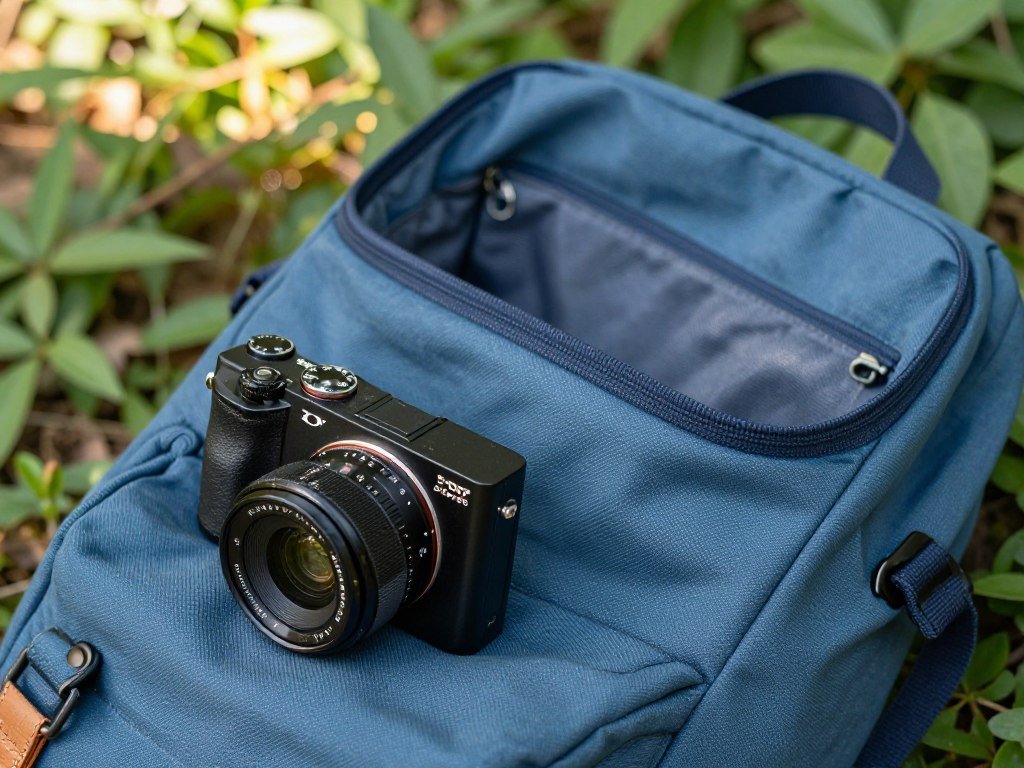
The best cheap digital cameras with a vintage look are often older CCD compacts, and the S95 and LX5 are two used examples to explore. Both have RAW capture, optical zoom, and 10MP 1/1.7-inch CCD sensors. Their nostalgic look is a style choice, not proof of higher image quality.
Canon PowerShot S95 for a pocketable RAW workflow
The Canon PowerShot S95 suits you if you want a small camera that can save RAW files. RAW files keep more image data for later editing than a finished JPEG. That gives you more room to adjust a photo on a computer, though it also adds work and storage needs.
The S95 was around $100 in 2023, which is historical context rather than a current offer. Its pocketable size makes it easier to carry than many cameras with interchangeable lenses. The optical zoom gives you framing choices without relying on digital cropping.
Panasonic Lumix LX5 for a broader zoom range
The Panasonic Lumix LX5 also had a roughly $100 price in 2023. Its broader zoom range suits a buyer who wants more framing options in one compact camera. Both models share a CCD sensor type and RAW capture, but the lens range can guide your choice.
Equivalent focal length means the 35mm-format focal length that gives a similar field of view. Comparing that figure can help you understand how wide or tight a compact lens looks. Still, CCD color and contrast are matters of taste, not a promise of better detail.
Check a camera’s sample images before buying if its color and contrast are the main reason for choosing it.
Which cheap camera works best for photography beginners?
A used DSLR kit is the strongest cheap starting point for a beginner who wants to learn exposure and change lenses. The Canon T2i offers a low-cost learning setup, while the Nikon D3400 is a newer family to compare. Buy a kit with a lens, not just a camera body.
Canon’s 550D/T2i, 600D/T3i, 650D/T4i, and 700D/T5i are similar-generation 18MP DSLR options. A T4i with a lens can be found under $200. The Nikon D3400, D3300, and D3200 have 24.2MP sensors, and a D3400 with a lens can also be found under $200.
| Camera family | Sensor resolution | Stated kit-price context | Beginner fit |
|---|---|---|---|
| Canon 550D/T2i through 700D/T5i | 18MP | T4i kit under $200 | Learn exposure and lens use |
| Nikon D3400 family | 24.2MP | D3400 kit under $200 | Begin with a higher-resolution sensor |
| Canon T2i with 18-55mm kit lens | 18MP | $100 setup example | Practice with a basic zoom lens |
Sample photos made with the T2i in October 2025 used an 18-55mm kit lens as a $100 setup example. That gives you a concrete starting point for a cameras list, but the condition of each kit still matters. The lens helps you frame portraits, street scenes, and wide family pictures without buying another lens immediately.
A DSLR asks you to learn more controls than a simple compact, but that hands-on practice is the point. You can adjust exposure and change lenses as your skills grow. For more first-camera guidance, see this starter photography camera comparison.
Leave room in the budget for a sound kit lens, since a camera body alone cannot make a complete setup.
What changes when you move beyond entry-level DSLRs?
A step up from an entry-level DSLR can mean a more substantial body or a more recent sensor, rather than a guaranteed jump in image quality. Compare the Canon 60D and 7D by body design, not sensor alone. They use roughly the same sensor and processor, while the 7D has a more premium body.
The Nikon D5200 has an updated sensor, while the D7000 uses an 18MP sensor. Those differences may matter if you value the sensor generation or how a camera feels in your hand. They do not tell you the condition of a used camera or which lens comes with it.
| Camera | Sensor or processing comparison | Body distinction | Best fit |
|---|---|---|---|
| Canon 60D | Roughly same sensor and processor as 7D | Less premium body than 7D | Buyers comparing similar image systems |
| Canon 7D | Roughly same sensor and processor as 60D | More premium body | Buyers who want a substantial body |
| Nikon D5200 | Updated sensor | Sensor update is its main distinction here | Buyers seeking the updated sensor |
| Nikon D7000 | 18MP sensor | Different sensor choice from D5200 | Buyers who prefer this 18MP model |
These models can bring a sturdier feel or a different set of controls, but the camera’s role should guide the choice. If you often use the viewfinder and hold the camera for long periods, body comfort may matter. If you want a sensor update, compare the D5200 with the D7000 and D7100.
A model name alone does not show whether a camera has been cared for. Check what the seller includes and whether the lens suits the photos you take. A better body is of little help if the lens is damaged or the controls feel awkward.
Compare body condition and the included lens before paying more for a model name.
Can a used full-frame camera fit a tight budget?
A used full-frame body can fit a $200-$300 budget, but the lens can make the complete setup more expensive. The Canon 6D, Canon 5D Mark II, and Nikon D600 fit that used body bracket. Budget for a compatible lens as well as the body.
The Canon 6D is newer than the 5D Mark II, and the two offer similar image quality. That makes condition, controls, and the lens mount useful parts of the comparison. The Nikon D600 is another body to consider within this budget range.
Full frame describes a sensor close to the size of a 35mm film frame. A larger sensor can collect more light than a smaller one, though lens choice and shooting conditions still shape the result. Full-frame lenses can cost more, so a low body price does not mean a low total kit cost.
Before you choose, work out what the whole setup needs: body, lens, battery, charger, and a way to store images. A body-only listing may look like a bargain but leave you unable to take useful photos. A compatible lens can also affect the weight and size you carry each day.
Choose the best-kept body and compatible lens combination rather than buying the cheapest body in isolation.
Is the Olympus E-M1 Mark II a strong camera under $500?
Around $450 in excellent used condition, the Olympus E-M1 Mark II is a strong sub-$500 choice for buyers who want an adaptable camera system. Its 20MP Micro Four Thirds sensor, weather sealing, 4K video, and in-body image stabilization give it a useful feature set. It suits you if you want a system camera, not a pocket compact.
What the E-M1 Mark II offers
The E-M1 Mark II was estimated at around $450 in excellent used condition in 2025. It has a fully articulating screen and high burst rates, along with in-body image stabilization. Weather sealing can help when you shoot in rough conditions, though it does not make a camera waterproof.
The camera’s Micro Four Thirds sensor is smaller than an APS-C or full-frame sensor. In return, the system gives you a range of bodies and lenses in a more compact format. The best cheap digital camera under $500 depends on whether you want a pocket compact or an interchangeable-lens body.
When a Micro Four Thirds system makes sense
The E-M1 Mark II works with Olympus and Panasonic Lumix Micro Four Thirds lenses. Other bodies include the Olympus E-M5, Lumix GX800, and GM1. That shared mount gives you options for building a small kit, but check the lens mount before adding a body.
| Body | Sensor or system | Stabilization | Weather sealing or screen feature |
|---|---|---|---|
| Olympus E-M1 Mark II | 20MP Micro Four Thirds | In-body image stabilization | Weather sealed, fully articulating screen |
| Olympus E-M5 | Micro Four Thirds system | Not stated here | Not stated here |
| Lumix GX800 | Micro Four Thirds system | Not stated here | Not stated here |
The E-M5 and GX800 give you other bodies to compare, while the GM1 is another compact system option. A four thirds sensor system can suit travel if you want lens choice without carrying a large DSLR. Compare lens size and body controls, since those shape how often you will bring the camera along.
Check the exact lens mount before adding a used body to a system you already own.
Should you choose a Sony a7 II or a Sony a6100?
Around the $500 mark, the a7 II wins for full-frame stabilization, while the a6100 suits buyers who prioritize autofocus and 4K. Choose by the feature you will use most, since the two cameras make different tradeoffs.
Sony a7 II for full-frame shooting
The Sony a7 II was commonly around $500 on eBay in 2025, with prices rising. It has a 24MP full-frame sensor, in-body image stabilization, a tilt screen, and a Sony E-mount. That combination suits you if full-frame shooting and stabilized handheld photos matter most.
The a7 II accepts Sony E-mount lenses, so the lens included with a listing affects the real value. Full-frame lenses can add to the cost of a kit. The tilt screen also moves differently from a fully articulating screen, which may matter for some shooting angles.
Sony a6100 for autofocus and 4K
A mint Sony a6100 from Japan was listed at $503.50 in 2025. It has a 24MP APS-C sensor, 4K video, a full tilt screen, and autofocus. Unlike the a7 II, the a6100 has no in-body image stabilization.
If you need IBIS, the Sony a6500 is an alternative to compare. The a6100 may suit you better when autofocus and 4K video matter more than full-frame capture or body stabilization. For either Sony, check whether the lens meets your needs before judging the asking price.
Compare the included lens and seller’s condition description before treating either body as a complete deal.
What do pricier compact cameras and entry-level Canons add?
Spending more can buy easier transfers or simpler automatic operation, but it does not make every option the right fit. The Canon PowerShot IXY 650 adds Wi-Fi picture transfer, while the Canon EOS Rebel T100 offers Intelligent Auto for simple operation. Pay for the feature that solves a real problem in your routine.
| Model | Listed price | Notable feature | Likely buyer |
|---|---|---|---|
| Vjianger 4K | $80 listed, $64 sale | Flip-over selfie screen | Buyer who wants a low-cost selfie screen |
| Canon PowerShot IXY 650 | $324 | Wi-Fi picture transfer | Buyer who wants easy wireless transfers |
| Canon EOS Rebel T100 | $379 listed, $339 sale | Intelligent Auto | Beginner who wants simple camera operation |
The IXY 650 is a fixed-lens compact, so it keeps the camera experience simple while making transfers more convenient. The Rebel T100 is a camera with interchangeable lenses, which gives you room to change lenses later. Its Intelligent Auto mode is aimed at people who want the camera to handle basic settings.
The Vjianger 4K sits at a lower listed price and has a screen that flips over for selfies. Its name does not mean that every need is covered, so compare its features with the photos and video you plan to make. A screen feature matters most when you use it often.
A higher listed price can reflect a different camera type rather than a better match for your day. Think about whether Wi-Fi transfer, automatic settings, or a flip screen would save time. If none of those features matters, a simpler camera may be enough.
Pay extra for a feature you will use, not simply for a higher listed price.
How should you check a used camera before paying?
For a best cheap digital camera under $20, expect a thrifted or older used compact, and make a working test a condition of purchase. Pay only after confirming that it powers on and records an image. A camera made after 2014 may offer a better balance of age and features, while models released from 2015 through 2019 can offer strong value.
Testing a camera in person
Local listings on Facebook Marketplace and Craigslist can let you test a camera before you hand over money. Shutter count gives a general clue about use and mechanical wear, but it cannot predict exactly how long a camera will last. Check the camera itself, not just its listing photos.
Use this five-item inspection list before paying:
- Power cycle the camera several times.
- Test autofocus on a nearby subject.
- Open live view and check that the screen works.
- Look inside the battery compartment for visible damage.
- Take a test image and confirm playback.
Look over the body and lens for visible wear, then try the main buttons. A camera that starts once may still have a power or battery problem. The test image shows whether the camera can focus, record, and play back a file.
Using a used-camera service
Used-camera services such as MPB and KEH provide condition information, shutter counts, and warranties. That can make it easier to compare cameras when you cannot inspect them in person. Read the condition grade closely, since the same model can have very different wear.
Shutter count is a clue, not a guarantee, and a lower count generally suggests less mechanical use. A warranty can offer extra help if a fault appears after delivery. Even with a service, match the camera grade and included accessories to the price.
Walk away if the camera cannot power on, focus, or save a test image.
Which features matter most for photos and video?
For daytime sharing and small prints, the FZ45 and FZ55 can do the job, but neither is a low-light camera. Both use small 16MP sensors, so dim rooms, night scenes, and fast indoor subjects can challenge them. Bright light is the safer setting for these compact cameras.
Bright-light photos and low-light limits
The FZ45 has a 16.35MP 1/2.3-inch CMOS sensor, 4x optical zoom, a 27mm wide-angle starting point, and a 2.7-inch screen. It records 1080p 30p video, detects faces, and uses AA batteries. The FZ55 has a 16MP 1/2.3-inch CMOS sensor, 5x optical zoom, and a rechargeable lithium-ion battery.
The FZ55 has a 28-140mm equivalent lens range and records 1080p Full HD video. The FZ45 can suit bright-condition sharing, memories, and small prints, but it struggles in dim interiors and with fast indoor action. Neither compact is a strong choice if you often shoot in low light.
| Model | Sensor | Zoom or lens range | Video and key limitation |
|---|---|---|---|
| Kodak FZ45 | 16.35MP 1/2.3-inch CMOS | 4x, starts at 27mm | 1080p 30p, small sensor |
| Kodak FZ55 | 16MP 1/2.3-inch CMOS | 5x, 28-140mm equivalent | 1080p Full HD, no flip screen or mic input |
| Lumix G100 | 20MP | Interchangeable lenses | 4K limit of 10 minutes, no IBIS |
Video needs beyond a basic compact
Neither Kodak compact records above 1080p, and the FZ55 has no flip screen or microphone input. The Lumix G100 adds a microphone input, but it has no IBIS and limits 4K recording to 10 minutes. Its electronic shutter also tops out at 1/500 second.
If video matters, check these three points before choosing:
- Resolution, such as 1080p or 4K.
- Recording limit for each clip.
- Audio connection for an external microphone.
Those details can matter more than a camera’s headline resolution. A microphone input helps when you need clearer sound, while a recording limit can interrupt a long clip. Choose a camera around the weakest condition you regularly shoot, not only the easiest one.
Which cheap camera fits travel, family photos or everyday use?
For learning photography on a limited budget, choose a used DSLR kit; for casual travel, favor a compact body that is easy to carry. The best cheap digital camera for photography depends on the task. Choose a Canon T2i kit to learn, a pocket compact for simple snapshots, or Micro Four Thirds for lens flexibility.
Different camera types suit different routines, so begin with what you want to photograph. A camera that stays at home because it feels too large cannot help you capture an ordinary day. These three uses can narrow your choice:
- Learning photography: start with a Canon T2i kit and practice exposure.
- Carrying a pocket camera: consider the Camkory or Sony W800 for casual snapshots.
- Choosing a fixed-lens travel camera: compare the Ricoh GR IIIx and Lumix LX100 II.
For interchangeable-lens travel photography, the Olympus E-M1 Mark II and Olympus E-M5 are Micro Four Thirds options. They suit you if you want to choose lenses for different scenes. A smaller camera system can make it easier to carry more than one lens without a large DSLR bag.
The Ricoh GR IIIx has a fixed 40mm-equivalent lens and an APS-C sensor. The Lumix LX100 II also has a fixed lens, with a broader focal-length range. Both examples suit buyers who prefer not to change lenses while traveling.
Write down the one feature that matters most for your next trip or family event, then shortlist only cameras that meet it.
Conclusion
The right affordable camera is the one whose strengths match the pictures you plan to take. The FZ45 is the straightforward new choice near $100, while a tested used DSLR or system camera suits learning photography or gaining lens flexibility.
A simple compact can keep everyday snapshots easy, while a larger camera gives you more room to grow. Decide whether convenience, lens choice, or video features matter most before comparing models. A clear priority keeps small extras from taking over your budget.
Set a firm budget, choose the feature you need most, and test the camera before completing a used purchase.
FAQ
How many megapixels do I need for everyday prints?
Around 8MP is generally enough for a sharp 8×10-inch print at 300 pixels per inch. The camera’s focus and the quality of the original image still matter. Larger prints can look sharp from farther away, since viewing distance changes how much detail people notice. For everyday photo books and small wall prints, megapixels alone should not decide your camera choice.
Is a small 1/2.3-inch sensor good for night photos?
A 1/2.3-inch sensor is better suited to bright conditions than night photos. Larger sensors generally collect more light, which can help in dim scenes. Lens aperture also matters, since a wider aperture lets more light reach the sensor. Image stabilization can reduce blur from your hands, but it cannot freeze a moving subject.
Can I move pictures from an old camera to an iPhone?
Yes, you can move pictures with a compatible card reader or by transferring files through a computer. Check that the reader works with both your memory card and iPhone connection. Some cameras also offer Wi-Fi transfer, including the Canon IXY 650. A computer can be a useful middle step if the camera uses an older card format.
What should I check in a used DSLR’s shutter count?
A lower shutter count generally suggests less mechanical use, but there is no universal cutoff. A count is only one clue about how a camera has been used. Check the body’s condition, test its controls, and take a picture before buying. A camera with a higher count may still work well, while a low count cannot rule out other faults.
Are old digital cameras better than phone cameras?
Not in every scene; an old digital camera may give you optical zoom or a nostalgic rendering, while a modern phone can use strong image processing. Phones often handle some low-light scenes well through software. A dedicated camera may feel better for zooming or using physical controls. Choose based on the scene and the look you want.
Do cheap digital cameras use AA batteries?
Some cheap digital cameras use AA batteries, such as the Kodak FZ45. Others use rechargeable lithium-ion batteries, such as the FZ55. AA batteries can be handy when you cannot charge a camera, while a rechargeable battery reduces the need to carry spares. Check the battery type before buying, especially if you plan long days away from a power outlet.