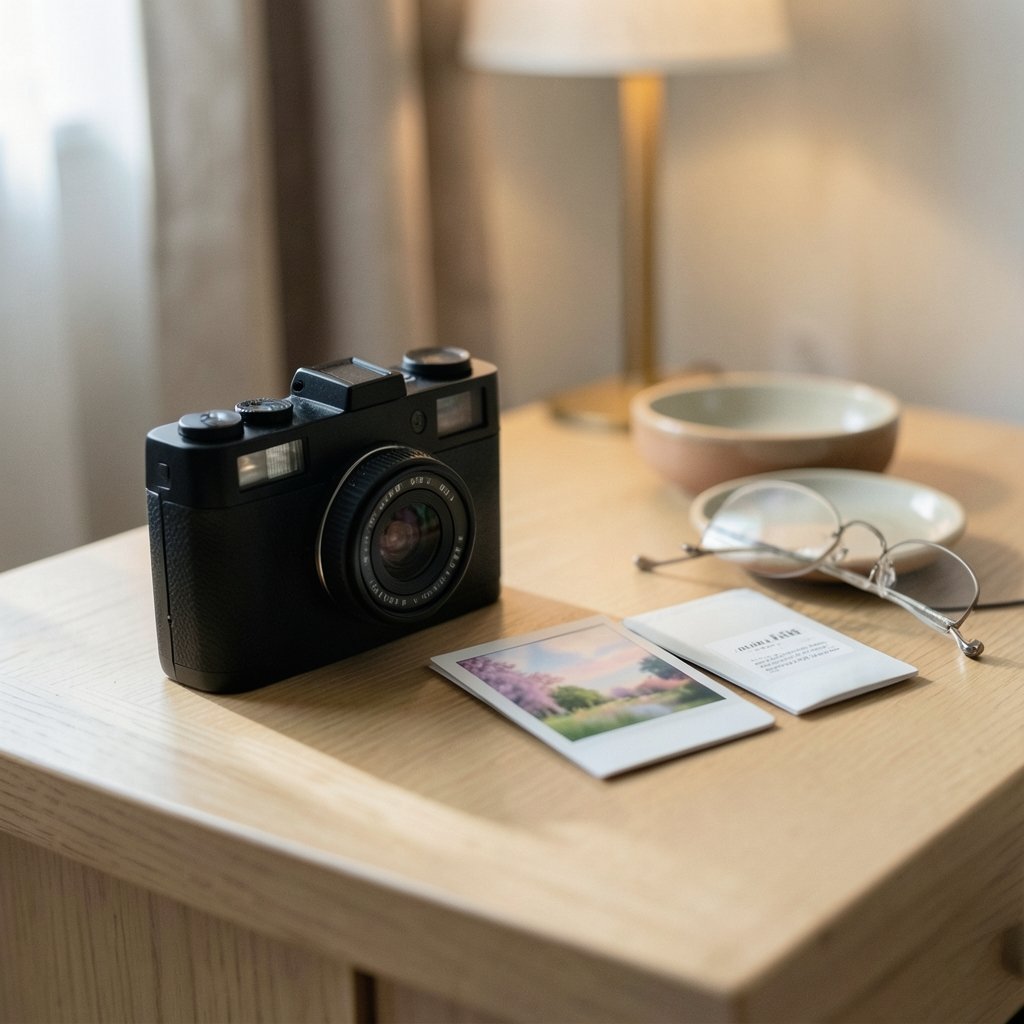
Instant photography was supposed to be a nostalgia story, a slow fade like the format itself. Instead, it did the opposite. Fujifilm’s Instax business has grown into one of the company’s most reliable consumer segments, and Polaroid has spent the past few years rebuilding a lineup that once looked finished. In 2026, the person shopping for an instant camera faces a genuinely crowded shelf, and that is both good news and a trap. More choices mean more ways to buy the wrong camera and then pay for that mistake every time you load a new pack of film.
This guide sorts the market by what actually matters once the novelty wears off: film cost per shot, print consistency, how the camera handles indoors, and whether the controls reward you or just get in the way.
Why the Film, Not the Camera, Decides Your Best Option
Here is the fact most buying guides bury: the camera is a one-time purchase, and the film is a subscription. A camera that costs fifty dollars more than its rival can be the cheaper choice within a single year if it uses a film format that costs less per print.
Two ecosystems dominate. Fujifilm’s Instax line uses sealed cartridges in three sizes (Mini, Square, Wide), and the film is sold almost everywhere, from electronics stores to supermarkets. Polaroid’s i-Type and 600 film comes in flat packs that are easy to swap but historically cost more per frame. Kodak-branded instant cameras exist in the same space, but they are licensed products rather than Kodak-built hardware, so buyers should check who actually manufactures the model before assuming Kodak’s film heritage applies.
The practical advice: decide your film format first, then pick a body. People who buy a camera first and discover the film cost later are the ones who leave it in a drawer. If you want a broader look at how camera hardware and phone photography now overlap, the same logic applies to phones, where the best camera phone 2026 comparisons hinge on sensor and software trade-offs rather than headline megapixels. (Instant camera)
The Short List at a Glance
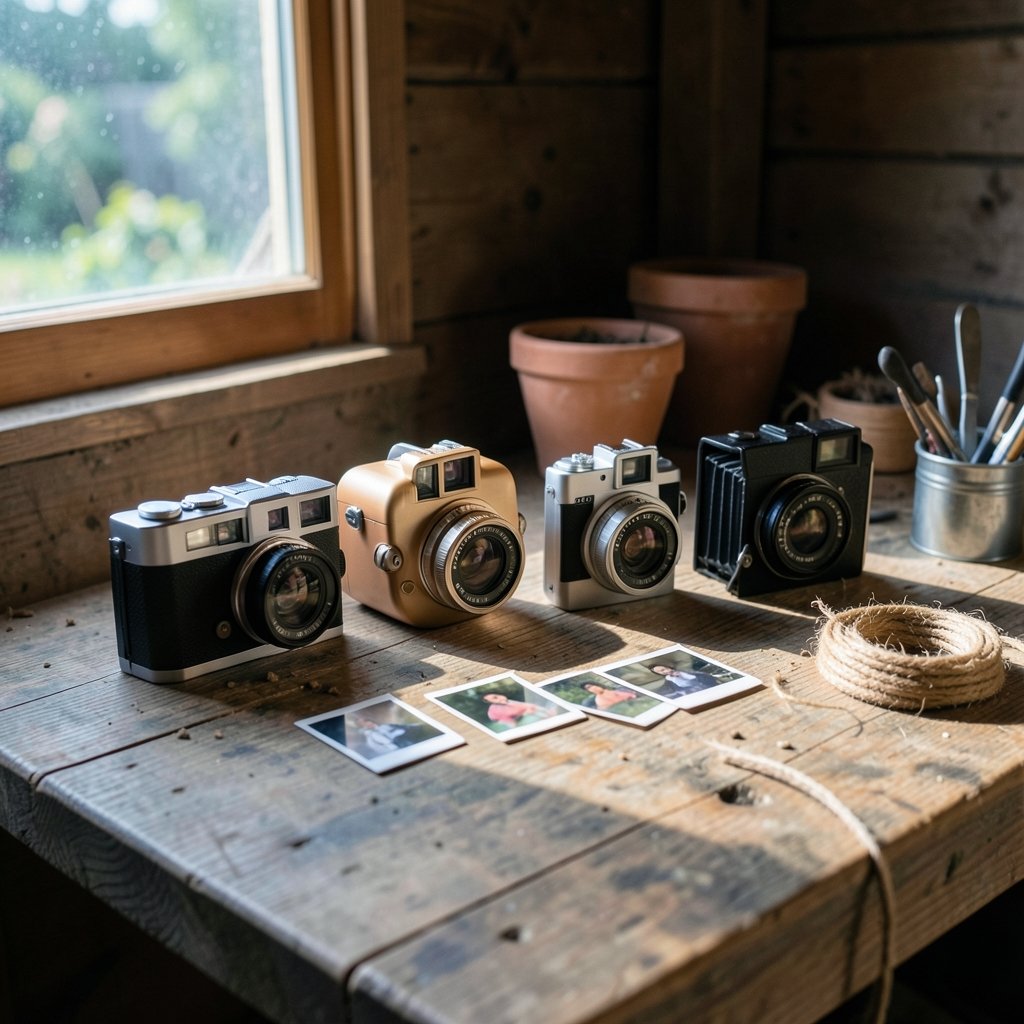
| Camera | Film format | Best for | Controls | Typical buyer |
|---|---|---|---|---|
| Fujifilm Instax Mini 12 | Instax Mini | Casual snapping, gifts | Fully automatic | First-timers, teens |
| Fujifilm Instax Mini 99 | Instax Mini | Creative control | Manual dials, color effects | Enthusiasts |
| Fujifilm Instax Wide 400 | Instax Wide | Group shots, landscapes | Mostly automatic | Families, event shooters |
| Polaroid Now+ | i-Type / 600 | Hybrid app control | Automatic plus app modes | Tinkerers |
| Polaroid Go | i-Type Go | Pocket carry | Automatic | Travelers |
| Polaroid Lab-style printers | Phone-fed | Phone photographers | App only | Social media users |
Treat that table as a starting map, not a verdict. The right camera for a wedding guest taking table shots is not the right camera for someone who wants to learn exposure.
Fujifilm Instax Mini 12: The Default Choice for Good Reason
The Mini 12 replaced the Mini 11 and has become the camera most people picture when they hear “instant camera.” It is fully automatic, uses a twist-to-turn lens that doubles as the power switch, and adds a close-up mode that fixes one of the Mini 11’s weakest points: near-focus shots that came out soft.
What works: the film is the cheapest and most available in the category, the camera is light enough to carry without thinking, and the auto exposure is genuinely competent in daylight. What doesn’t: it offers almost no creative control, and indoor shots without a flash still look muddy. There is a selfie mirror next to the lens, which sounds trivial until you use a camera without one.
The Mini 12 is the correct answer for anyone who wants to take pictures, not learn photography. It is also the model most likely to survive being handed to a child.
Fujifilm Instax Mini 99: For People Who Want to Think
The Mini 99 is the interesting one. It keeps the Mini film format but adds manual exposure compensation, a set of color-effect dials, and a design that looks like a small rangefinder rather than a toy. Fujifilm positioned it as a camera for people who already know they like instant photography.
In practice, the color-effect dials are the feature that earns the price premium. They let you push warmth, coolness, or a light-leak look into the print at capture time, which is the whole appeal of instant film: the print is the edit. The manual exposure dial matters more than it sounds, because instant film has narrow latitude. Overexpose by a stop and you get a washed-out white rectangle. Underexpose and you get mud.
The Mini 99 is not a beginner’s camera, and that is the point. If you are the kind of person who reads manuals, it rewards you. If you are not, the Mini 12 will produce better average results for less money.
Fujifilm Instax Wide 400: The Group-Shot Specialist
Wide film is roughly twice the area of Mini, and that changes what the camera is for. The Wide 400, which succeeded the long-running Wide 300, is the camera you bring to a dinner, a hike, or a party where the point is capturing several people at once.
The trade-offs are real. Wide film costs more per print than Mini, the camera is bulkier, and the Wide 400 remains a mostly automatic machine. But the prints have presence that Mini shots lack. A Wide print on a fridge looks like a photograph. A Mini print looks like a sticker.
One practical note from experience: the Wide 400’s lens and viewfinder are offset from each other, so what you see is not exactly what you get at close range. Shoot from a step back and the framing problem mostly disappears.
Polaroid Now+ and Polaroid Go: The Premium Alternative
Polaroid’s pitch is different from Fujifilm’s. The prints have a softer, warmer, more chemically unpredictable look, and for a lot of buyers that is the entire appeal. The Polaroid Now+ pairs the classic body with a companion app that adds aperture priority, tripod mode, light painting, and remote shutter control. It is the most flexible instant camera in this group on paper.
The Polaroid Go is the opposite bet: a genuinely pocketable instant camera using the smallest Polaroid film format. It is the only instant camera here that disappears into a jacket pocket, which matters more than spec sheets suggest.
The honest caveat is cost and consistency. Polaroid film historically runs higher per shot than Instax, and the chemistry is more temperature-sensitive, so results vary more between packs. Some photographers love that. Others find it maddening. Neither camp is wrong, but buyers should know which camp they are in before spending money.
What Actually Matters When You Shoot
A few hard-won observations that no spec sheet captures:
Indoor light is the great equalizer. Every instant camera here performs worse indoors than outdoors, because the film’s sensitivity is fixed and the built-in flash is small. Standing three feet from your subject with the flash on beats standing eight feet away with the flash on, every time.
Don’t shake the print. This is the most common mistake in instant photography. Shaking does nothing except risk bending the frame. Modern integral film develops in the dark as it ejects, and the image is set within a couple of minutes. Lay it flat, face up, and leave it alone.
Store film cool, shoot it warm. Film packs have a shelf life, and heat degrades them. But film also develops best at room temperature, so pulling a pack out of a cold bag and shooting immediately can shift colors. Let it come up to temperature first.
Buy film in multipacks. Single packs are the most expensive way to shoot. Multipacks cut the per-print cost meaningfully, and instant photographers burn through film faster than they expect, usually in the first week.
Check the film expiry before a trip. Old film produces flat, low-contrast prints, and the failure mode looks like a broken camera rather than expired chemistry.
Matching the Camera to the Person
The most useful way to choose is to start from the shooter, not the spec sheet.
- The casual user who wants prints on the fridge: Instax Mini 12.
- The hobbyist who wants to learn exposure and color: Instax Mini 99.
- The event shooter who wants group photos: Instax Wide 400.
- The tinkerer who wants app control and a distinct look: Polaroid Now+.
- The traveler who wants something pocketable: Polaroid Go.
- The phone photographer who wants prints without a second camera: a phone-fed instant printer.
That last category deserves attention. Instant printers that accept images from a phone have quietly become a real alternative, because most people already carry a capable camera. The trade-off is that you lose the optical viewfinder experience and the discipline of a fixed number of shots. For anyone weighing a dedicated camera against their phone, the best phones 2026 roundups are a reasonable place to check what your pocket already does well.
Accessories Worth Buying and Ones to Skip
Worth it: a small hard case, because instant cameras get tossed in bags and the lens assemblies are plastic. A photo album with proper sleeves, since loose prints scratch. And film multipacks, always.
Skip: decorative stickers and skins that cover the lens or flash. Off-brand film that claims compatibility with Instax or Polaroid formats, because the chemistry is not equivalent and the savings are small. And oversized camera bags that make you less likely to carry the thing.
If you are also outfitting a home or a trip with other gear, the same principle applies across categories: buy for the use case, not the marketing. That holds whether you are comparing home security cameras or a camera that prints on paper.
The 2026 Buying Reality
The instant camera market in 2026 is healthy, which means buyers have leverage. Prices on older models drop when a successor arrives, and the differences between generations are often small. The Mini 12 and the Wide 400 are mature products, and that is a compliment: they do their job without fuss.
The bigger shift is that instant photography has settled into two clear identities. Fujifilm sells a reliable, affordable, widely available system built around cheap film and simple hardware. Polaroid sells an experience built around a distinctive look and a willingness to accept inconsistency. Neither is the “best” instant camera in the abstract. The best one is the one whose film you can afford to shoot and whose prints you actually like looking at.
Buy the film system first. The camera follows.
Conclusion
Choosing among the best instant cameras in 2026 comes down to one question: what will you actually do with it? If the answer is “take snapshots at parties and stick them on the fridge,” the Instax Mini 12 is the sensible, affordable pick, and there is no shame in the obvious choice. If you want to learn how exposure and color interact, the Mini 99 gives you dials worth turning. If group shots matter, the Wide 400’s larger frame justifies its bulk and film cost. And if you want the softer, warmer Polaroid look with app-based flexibility, the Now+ is the most interesting camera in that lineup.
What ties all of them together is the film bill. A camera you love but cannot afford to feed becomes a shelf ornament within a month. So run the numbers on film before you fall for a body, buy in multipacks, keep your packs cool, and stop shaking the prints. Do that, and any camera on this list will earn its place in your bag.
FAQ
What is the best instant camera for beginners in 2026?
The Fujifilm Instax Mini 12 is the most forgiving starting point. It is fully automatic, uses the cheapest and most widely stocked film format, and has a close-up mode that fixes the soft near-focus shots that plagued earlier models. Beginners who want to learn controls should look at the Mini 99 instead, but expect a steeper learning curve and more wasted frames at first.
Is Instax or Polaroid film cheaper?
Instax film generally costs less per print and is far easier to find in physical stores. Polaroid film typically runs higher per shot and is more sensitive to temperature during development. The gap has narrowed over time, but for high-volume shooters Instax film remains the more economical choice.
How long does an instant photo take to develop?
Integral instant film develops in roughly 90 seconds to a few minutes depending on the format and ambient temperature. Cooler conditions slow development. The image is light-safe almost immediately after ejection, but colors continue to shift slightly during the first few minutes, so judge the final result after it has fully developed.
Should I shake an instant photo to develop it faster?
No. Shaking does not speed development and can bend or damage the frame. Modern integral film develops behind a chemical pod that spreads automatically as the print ejects. Lay the print flat and face up in a spot away from direct sunlight and leave it alone.
Can I use my phone to make instant prints?
Yes, through instant printers that accept images wirelessly from a phone. These are a good fit for people who already take most of their photos on a phone and want physical prints without carrying a second camera. The trade-off is losing the optical viewfinder and the discipline of a fixed shot count.
How should I store instant film?
Keep unopened packs in a cool, dry place and avoid leaving them in a hot car or direct sun. Bring film up to room temperature before shooting, since cold film can shift colors. Check the expiry date before a trip, because expired film produces flat, low-contrast prints that look like a camera fault rather than old chemistry.