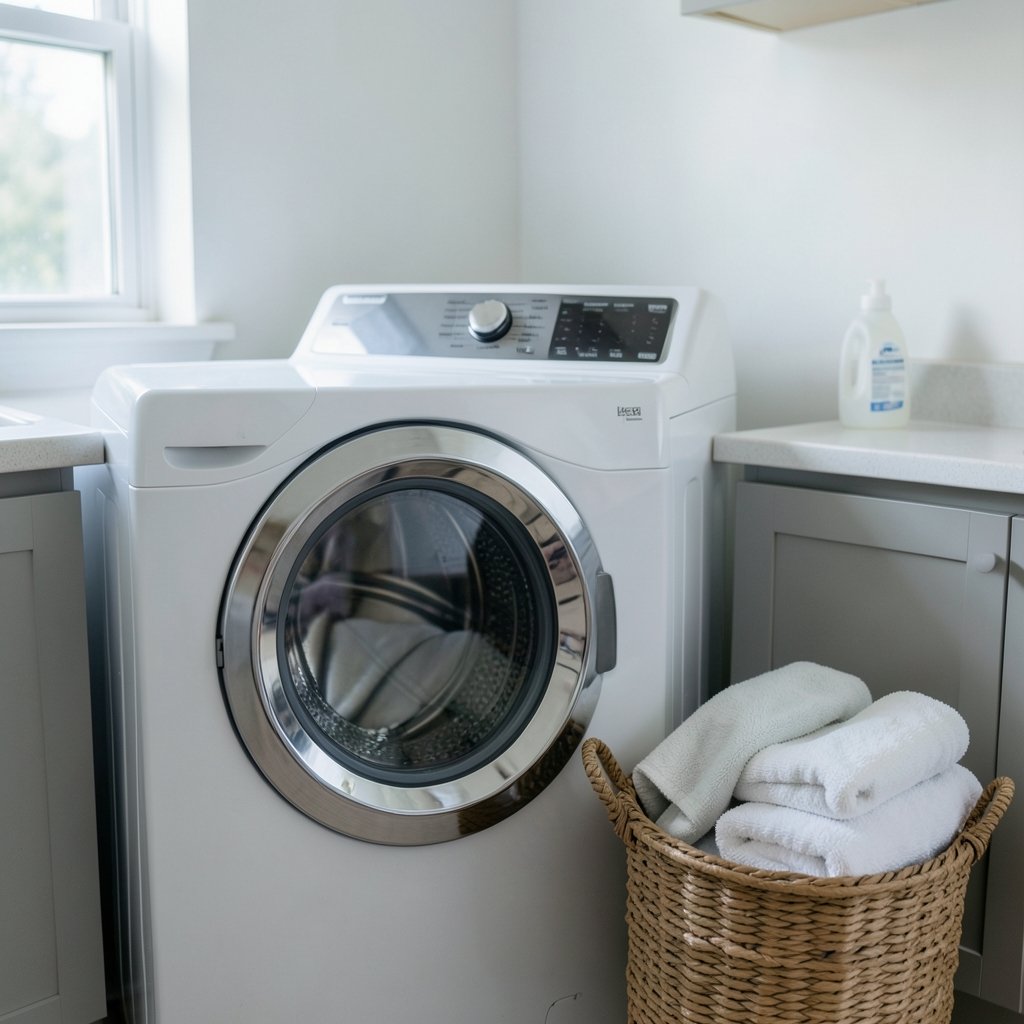
What if the real reason your laundry never ends isn’t your schedule, but the drum in your laundry room? A king-size comforter, three sets of soccer kits, and a week of towels shouldn’t need two loads. Yet that’s exactly what happens when a washer is a size too small for the household it serves. This is why so many buyers end up hunting for the best large capacity top load washing machine, and why the search is trickier than it looks.
The top-load category is crowded, the labels are inconsistent, and bigger isn’t automatically better. Capacity numbers get inflated, water use climbs with drum size, and a machine that swallows a duvet may also shake a second-floor laundry room apart. This guide walks through how capacity is really measured, where top-loaders win and lose against front-loaders, which features earn their price, and the mistakes that cost people money after delivery day.
How Big Is “Large Capacity,” Really?
Capacity on a washer is measured in cubic feet of drum volume, not pounds of clothing. That sounds simple until you notice there’s no single mandatory definition of “large capacity” in the United States. One brand’s “large” is another brand’s “extra large,” and marketing language does a lot of heavy lifting.
The practical consequence: compare cubic feet, not adjectives. A machine listed at 4.5 cu. ft. and one at 5.3 cu. ft. are not in the same class, even if both say “large” on the box. Industry bodies publish capacity measurement standards, but retailers rarely put those numbers front and center, so the spec sheet is your friend.
As a rough guide for household sizing:
| Household size | Practical capacity range | Notes |
|---|---|---|
| 1–2 people | 3.5–4.2 cu. ft. | Large-capacity models are overkill unless you wash bulky items |
| 3–4 people | 4.3–5.0 cu. ft. | The sweet spot for most families |
| 5+ people or heavy bulky use | 5.0–5.5+ cu. ft. | Check floor strength and door clearances first |
One more thing people learn the hard way: a bigger drum doesn’t mean you should fill it. Overloading a high-efficiency top-loader defeats the whole point, because clothes need room to tumble and detergent needs water to work. A 5.5 cu. ft. machine stuffed to the top cleans worse than a 4.5 cu. ft. machine loaded properly.
Top-Load vs. Front-Load: The Honest Trade-Off
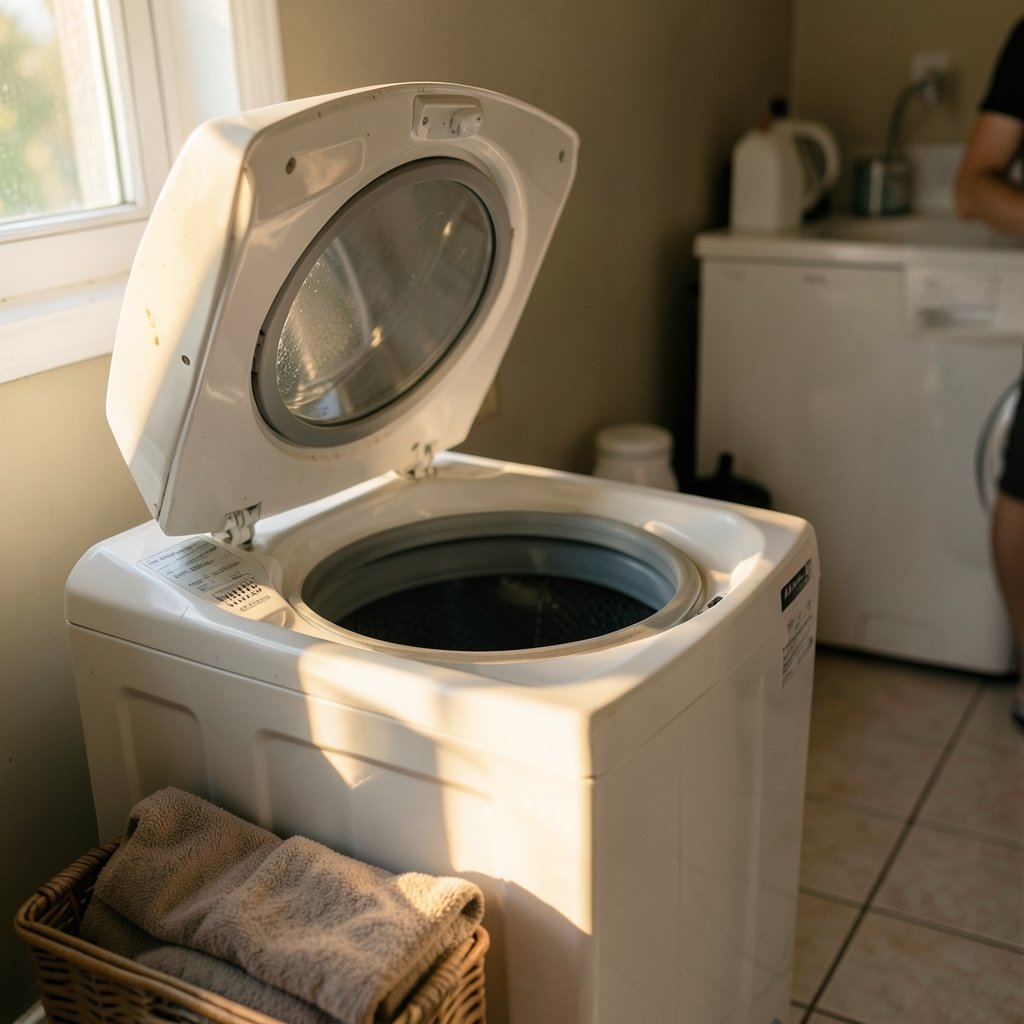
Top-load washers are generally less water- and energy-efficient than front-loaders of similar capacity. That’s not a knock on top-loaders so much as physics: front-loaders tumble clothes through a shallow pool of water, while top-loaders typically need more water to move fabric around.
So why do people still buy top-loaders in huge numbers? Three reasons, and they’re good ones.
First, loading ergonomics. No bending, no crouching, no wrestling a wet duvet out of a low drum. For anyone with back or knee issues, that alone settles the debate.
Second, mid-cycle flexibility. Drop a stray sock in after the wash starts. Try that with a front-loader and you’ll be mopping.
Third, price and simplicity. Top-loaders generally cost less up front and have fewer parts to fail. No door boot to clean, no door lock assembly to replace.
The trade-off is real, though. Front-loaders typically spin faster, which extracts more water and cuts dryer time. They also tend to be gentler on fabric. If energy bills and dryer runtime matter more than bending over, a front-loader deserves a look, and it’s worth reading up on how a washing machine with dryer best brand comparison shakes out before committing to a separate washer and dryer at all.
Agitator or Impeller? This Choice Matters More Than Brand
Inside every top-loader is one of two designs, and it shapes everything about how the machine washes.
An agitator is the tall central post that twists back and forth. It uses more water, moves clothes aggressively, and handles heavy soil, work clothes, and grimy kids’ gear well. The downside is fabric wear and the loss of usable drum space, since the agitator occupies the middle.
An impeller (sometimes called a wash plate) is a low-profile disc at the bottom that creates a rolling wave of water. It frees up the full drum, uses less water, and is gentler on clothes. The catch is that it can struggle with ground-in stains and doesn’t handle a giant, heavy load as confidently.
Here’s the honest summary most salespeople won’t give you: if your laundry is mostly lightly soiled everyday clothing and you want maximum capacity in a given footprint, an impeller model makes sense. If you’re washing greasy workwear, cloth diapers, or heavily soiled athletic gear, an agitator model will usually outperform it. Neither is “better.” They’re built for different loads.
Features Worth Paying For (and Ones That Aren’t)
Large-capacity top-loaders have crept upmarket, and the feature list has grown accordingly. Some of it earns its keep.
Worth it:
- A deep fill or water-level override option. High-efficiency machines sense load size and use minimal water. That’s good for the bill, less good for a muddy dog bed. A manual deep-fill setting is a genuine quality-of-life upgrade.
- A bulky items or bedding cycle with a slower, longer wash action.
- A true soak cycle. Stain treatment works better when detergent has time to act.
- Suspension quality. Big drums on spin can walk a machine across the floor. Better suspension and a solid leveling setup matter more as capacity grows.
- A stainless steel drum. More durable than plastic-coated alternatives over a decade of use.
Often not worth it:
- App connectivity. Being able to start a load from your phone rarely changes anyone’s week, and it’s one more thing to break.
- Steam refresh cycles. Nice in theory, underwhelming in practice on a top-loader.
- Extreme cycle counts. A dozen specialty cycles usually means a dozen you’ll never touch.
One feature that quietly matters: a soft-close lid. On a machine this tall, a lid that slams gets old fast.
Water, Energy, and the Label Most People Ignore
Every covered appliance sold in the U.S. carries an EnergyGuide label, which shows estimated annual energy use and cost based on standardized test procedures. It’s the single fastest way to compare two machines on the showroom floor, and most shoppers walk right past it.
The label won’t tell you everything. It’s built around standardized test cycles, not the way you actually wash. But it does reveal which models are outliers, and a machine that’s dramatically thirstier than its peers will show up there.
If efficiency is a priority, look for models that meet ENERGY STAR criteria, which sit above the federal minimum. The criteria get revised periodically, so confirm which version is currently in effect rather than trusting an old badge on a clearance model.
A practical note on detergent: high-efficiency top-loaders are designed for low-water operation, and HE detergent is formulated for exactly that. Using a regular detergent in a low-water machine can produce excess suds that cushion the wash action and leave residue on clothes. It’s one of the most common and most avoidable mistakes new owners make, and the fix costs nothing.
Mistakes People Make Before and After Buying
The purchase is where most of the pain happens, and almost none of it is about the machine itself.
Measuring the space, not the machine. Large top-loaders commonly run around 27 to 28 inches wide, but depth and height vary considerably, and lid clearance matters if cabinets sit above the unit. Measure the opening, the doorway into the room, and the turn in the hallway.
Skipping the floor check. A full drum of wet towels is heavy. On an upper floor, vibration and out-of-balance spins can be genuinely disruptive. A level machine on a solid floor is non-negotiable.
Forgetting the hookups. Hoses, drain height, and outlet placement all need to line up. A machine that needs a longer drain hose than the space allows becomes a return.
Ignoring the water sensor question. Anyone who has come home to a puddle knows the value of early warning. It’s worth understanding where a water leak sensor under washing machine where place it it should sit before the first load runs, not after.
Neglecting the machine after install. A washer that smells is a washer that wasn’t maintained. Leaving the lid open between loads, wiping the dispenser, and running a cleaning cycle periodically keeps a big drum from turning into a mildew farm. The habits in this guide on how to clean washing machine so it stops smelling lasts longer apply to top-loaders too, even without a door gasket to worry about.
Overloading on day one. The first week is when people test the limits. Resist. Loads should sit loosely, with room for items to move.
Matching the Machine to Your Actual Life
The best large capacity top load washing machine isn’t the biggest one on the floor. It’s the one that matches three things: your household size, your soil level, and your laundry room’s physical limits.
A family of five with a muddy-pawed dog and a kid in travel sports needs an agitator model with a deep fill option and a bulky cycle, even if it costs a few cubic feet of usable space. A couple in a condo washing sheets and gym clothes needs an impeller model with a big drum, quiet suspension, and a sane water factor. Those are different machines, and buying the wrong one for the wrong reason is where regret comes from.
It’s also worth thinking about the whole laundry system rather than the washer alone. Dryer capacity, folding space, and even the small appliances on the counter all compete for the same room and the same budget. Someone outfitting a new home is often making a dozen of these decisions at once, from the laundry room to the kitchen, where picking the best espresso machine for home involves the same discipline: match the machine to real habits, not to the spec sheet’s biggest number.
Conclusion
Bigger drums solve a real problem, but only when the size is honest, the design fits the load, and the machine actually fits the room. Compare cubic feet rather than marketing words, decide between agitator and impeller based on what you actually wash, check the EnergyGuide label, and measure the doorway before you measure your enthusiasm.
Get those four things right and the laundry pile shrinks, the loads get fewer, and the machine earns its floor space for a decade. Get them wrong and you’ll be the person returning a washer that never fit through the door in the first place.
Frequently Asked Questions
What is considered large capacity for a top load washer?
Most of the market treats roughly 4.5 cubic feet and up as large capacity, with 5.0 to 5.5 cubic feet sitting at the top of the range. There’s no single mandatory definition, though, so brands use the term loosely. Always compare the actual cubic feet on the spec sheet rather than the word “large” on the label.
Is a bigger washer always better?
No. A larger drum means more water per load, more weight on the floor, and a bigger footprint. For one or two people, a 4.0 cubic foot machine often cleans better than an oversized one that never gets filled properly. Size should follow household size and the bulkiest items you regularly wash.
Agitator or impeller for a large family?
Families with heavy soil, work clothes, or sports gear usually do better with an agitator, which moves clothes more aggressively and handles tough stains. Families washing mostly everyday clothing benefit from an impeller’s larger usable drum and gentler action. It comes down to what goes in the basket each week.
Do large top load washers use more water?
Generally, yes, compared with front-loaders of similar capacity, because top-load designs typically need more water to move fabric. Within the top-load category, impeller models use less water than agitator models. The EnergyGuide label shows estimated annual energy use and is the quickest way to compare specific machines.
How much space do I need for a large capacity top loader?
Most large top-loaders are around 27 to 28 inches wide, but depth and height vary by model, and you need clearance for the lid to open fully. Measure the installation opening, the doorway into the laundry area, and any hallway turns before buying. Also confirm the floor can handle a full drum of wet laundry without excessive vibration.
Why does my new washer leave suds on clothes?
It’s usually detergent. High-efficiency top-loaders use little water, and regular detergent can create excess suds that don’t rinse away. Switch to an HE-formulated detergent, use less of it, and avoid overloading the drum. If the problem continues, run a cleaning cycle to clear residue from the drum.