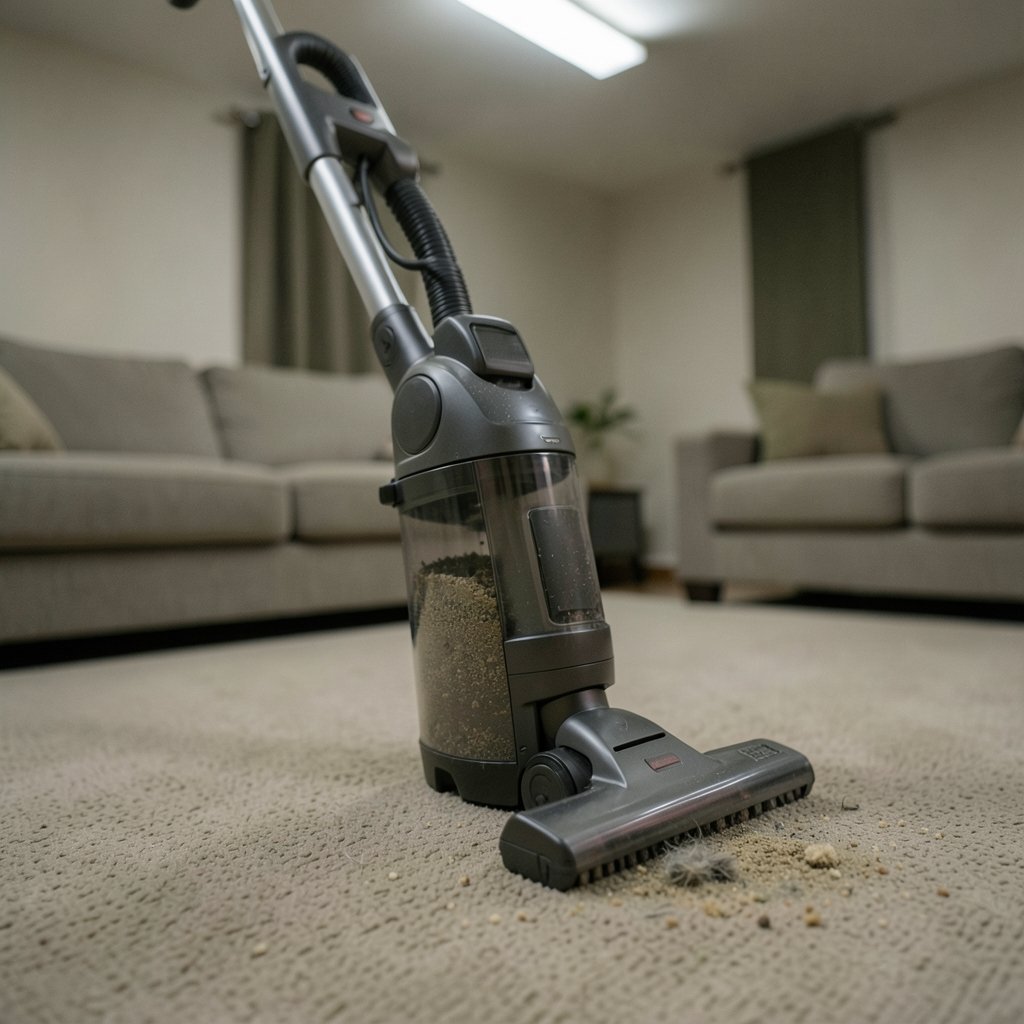
What if the carpet in your living room is quietly holding onto more dirt than the bin of your vacuum ever shows you? That’s the strange thing about carpet. It hides everything. Crumbs, dust, pet hair, and fine grit all sink below the surface, and a weak vacuum just polishes the top of the pile while the grit grinds away at the fibers underneath. Picking the best vacuum for carpet is less about chasing a flashy spec sheet and more about matching the machine to your carpet’s height, your home’s dust problem, and how much hassle you’re willing to tolerate on a Sunday afternoon. (Robot vacuum cliff sensors fail black carpet works)
Why Carpet Is Harder on Vacuums Than Hard Floor
Carpet is a high-friction surface. Every pass of the vacuum has to push through pile, pull embedded soil upward, and do it without tearing the fibers loose. The Carpet and Rug Institute runs a Seal of Approval program that tests vacuums specifically on carpet for soil removal, dust containment, and carpet wear, which tells you something important: cleaning carpet well is a different job from cleaning a tile floor. (Best vacuum for carpet)
That friction has real consequences. Brush rolls work harder, belts stretch and snap, and airflow drops as fine dust packs into filters. If you’ve ever noticed a machine that felt strong on bare floors suddenly wheezing on a rug, that’s the physics at work. Carpet demands airflow plus agitation, and it punishes machines that only have one of the two.
The Features That Actually Matter on Carpet
Before brand names, get the fundamentals right. These are the levers that separate a vacuum that genuinely deep-cleans from one that just makes stripes in the pile.
Strong airflow and a real brush roll
Agitation loosens soil; airflow carries it away. An upright with a motorized brush roll usually beats a suction-only canister on medium-pile carpet because the brush digs into the fibers. On low-pile and flat-weave rugs, airflow alone can be enough, and an aggressive brush roll may actually be too much.
Adjustable height settings
Carpet height and pile change everything. Deep-pile and shag carpets can stall or clog uprights with aggressive brush rolls, so adjustable height settings or a canister with an air-driven head are often the safer call. A machine with only one height is a gamble on anything plush.
HEPA filtration and a sealed system
A HEPA filter is defined by U.S. Department of Energy standard as removing at least 99.97% of particles 0.3 micrometers in diameter. That number matters in a carpeted bedroom, because every step kicks fine dust back into the air. Sealed-system vacuums claim lower dust re-emission, and dust containment is part of the testing criteria used in carpet-vacuum certification programs.
Bagged versus bagless
This is a genuine trade-off, not a clear winner. Bagged models tend to contain dust better when you empty them. Bagless models avoid ongoing bag costs but can release a puff of dust into the air when you dump the bin. If allergies run in the house, that puff is worth thinking about.
Weight and maneuverability
Uprights are typically heavier than canisters, and weight is one of the most consistent complaints in owner reviews. A 20-pound upright that cleans brilliantly but lives in the closet because it’s exhausting to haul upstairs is a bad vacuum in practice.
Upright vs. Canister vs. Robot: A Practical Comparison
| Type | Best for | Strengths | Watch-outs |
|---|---|---|---|
| Upright | Wall-to-wall medium pile, whole-home carpet | Strong agitation, large bins, deep cleaning | Heavy, bulky on stairs, single-height models struggle on shag |
| Canister | Stairs, mixed flooring, deep pile | Light wand, easy above-floor cleaning, gentler heads | Smaller bins, air-driven heads can underperform on thick pile |
| Cordless stick | Quick daily touch-ups, low pile | Fast, light, easy to store | Short runtime, small bin, weaker deep cleaning |
| Robot | Maintenance passes between deep cleans | Hands-off, daily debris control | Limited suction depth, navigation quirks |
Robots deserve an honest place in this conversation. They’re excellent at keeping surface debris from ever working its way down into the pile. They are not a substitute for a real deep clean on medium or deep pile. If you want a robot as a helper rather than a hero, it’s worth understanding how navigation affects coverage, since lidar and camera systems behave quite differently around furniture and dark floors, and how cliff sensors can misread very dark carpet and stall a robot mid-run. A robot that stops dead on your black rug isn’t cleaning anything. (Robot vacuum cleaning solution alternatives that actually)
Matching the Vacuum to Your Carpet
The single most common mistake people make is buying for the whole house instead of the worst room. Walk through your home and note the pile height and traffic level in each carpeted space. Then match:
- Low-pile, berber, and flat-weave: Almost anything with decent airflow works. A cordless stick is genuinely sufficient here, and a robot can handle daily upkeep.
- Medium-pile, wall-to-wall: This is upright territory. Prioritize adjustable height, a solid brush roll, and HEPA filtration.
- Deep-pile and shag: Be careful. Aggressive brush rolls tangle and stall. Look for height adjustment or a canister with a gentler head, and test the machine’s clearance before committing.
- Stairs and landings: A canister or a lightweight stick wins on practicality, even if the upright cleans better on the main floor.
- Pet households: Hair wrap is the enemy. Brush rolls choke on long hair, so look for designs with easy-access brush rolls or anti-tangle combs, and read up on what actually works for long human hair before you buy.
If carpet is only part of your flooring mix, a vacuum-mop combo can cover hard floors and rugs in one pass, though combo machines rarely match a dedicated upright on deep carpet. It’s a coverage decision, not a cleaning-power decision.
Maintenance Habits That Keep Carpet Cleaning Effective
A great vacuum degrades quietly. Filters clog, belts stretch, and brush rolls wrap themselves in hair until the agitation is gone. The machine still runs, which is exactly the trap. These habits preserve performance more than any upgrade:
- Empty or change the bag before it hits the fill line. Airflow drops sharply as bags pack tight.
- Wash or replace filters on the schedule in the manual. A clogged HEPA filter turns a strong vacuum into a weak one.
- Cut hair off the brush roll monthly, or more often in pet homes.
- Check the belt for cracks and stretching. Belts are cheap and failure is sudden.
- Clear blockages in the hose and wand, especially after cleaning fringed rugs.
- Vacuum slowly. Two slow passes remove far more soil than four fast ones.
That last point is the one people ignore most. Carpet cleaning is a patience game. Rushing the pass is the same as using a weaker vacuum.
What to Ignore in the Aisle
Marketing loves numbers that don’t translate to carpet. Amps and watts measure electrical draw, not cleaning ability. “Powerful suction” claims without airflow data are noise. A vacuum with lower measured suction but better agitation and a sealed system can outperform a higher-suction rival on carpet every time.
Warranty terms vary widely, often from one to five years, and they’re a decent proxy for how much the maker trusts the build. Read what’s covered. Belts and brush rolls are frequently excluded, which tells you where failures happen.
Also ignore the urge to buy the biggest machine. Weight and maneuverability complaints show up again and again in owner reviews for a reason. The best vacuum for carpet is the one that gets used weekly, not the one with the most impressive spec sheet.
Common Mistakes That Undermine Even Good Vacuums
- Setting the height too high. The brush roll barely touches the pile, and nothing deep gets lifted. Lower it until you feel resistance, then back off one notch.
- Skipping the pre-vacuum on new carpet. New carpet sheds fibers for weeks. Empty the bin constantly during that period.
- Using a robot as the only vacuum on plush carpet. It maintains; it doesn’t deep clean.
- Ignoring the edges. Most debris collects along walls where the head can’t reach. Use the crevice tool.
- Overfilling the bin. Bagless bins lose suction fast once they pass the max line.
Conclusion
The best vacuum for carpet isn’t a single model. It’s the machine that matches your pile height, your dust sensitivity, and your willingness to actually push it around the house. Uprights with adjustable height and real agitation remain the safest bet for wall-to-wall medium pile. Canisters win on stairs and mixed flooring. Cordless sticks and robots are excellent maintenance tools but shouldn’t carry the deep-cleaning load alone.
Get the fundamentals right, keep the brush roll and filters clean, and vacuum slower than feels natural. Do that, and almost any well-chosen vacuum will outperform a premium machine that’s neglected. Your carpet will tell you the difference within a month.
Frequently Asked Questions
Is an upright or canister vacuum better for carpet?
For wall-to-wall medium-pile carpet, an upright generally wins because the motorized brush roll agitates the pile and lifts embedded soil. Canisters are better for stairs, mixed flooring, and very deep pile where an aggressive brush roll would tangle or stall.
How often should I vacuum carpet?
High-traffic areas benefit from two to three passes per week. Bedrooms and low-traffic rooms can get by weekly. The key is slow passes rather than frequent fast ones, since slow movement gives airflow time to pull soil out of the pile.
Does HEPA filtration matter if I don’t have allergies?
It still helps. A HEPA filter removes at least 99.97% of particles 0.3 micrometers in diameter, and carpet collects and releases fine dust constantly. Even without allergies, better filtration means less dust settling back onto surfaces after you clean.
Can a robot vacuum replace a regular vacuum on carpet?
Not on medium or deep pile. Robots are excellent for daily debris control between deep cleans, but their suction and agitation are limited. Treat a robot as maintenance and keep a full-size vacuum for weekly deep cleaning.
Why does my vacuum struggle on thick or shag carpet?
Deep pile creates resistance that stalls aggressive brush rolls and blocks airflow. Adjustable height settings help, and canisters with gentler heads often cope better. Very plush carpet may need a machine with a height range designed for it.
How do I know when to replace my vacuum instead of repairing it?
If the motor still runs but performance has dropped, start with filters, belts, and a brush-roll cleaning, since those fix most problems cheaply. Replace the machine when the housing cracks, the motor smells hot, or repairs cost more than a comparable new unit.