
What good is a vacuum if it only skims the surface of your carpet? Most people blame their vacuum when the carpet still looks flat and dull after a pass, but the real culprit is usually a mismatch between the machine and the floor under it. Carpet is a different animal from hard flooring. It traps soil down in the pile, it fights back against airflow, and it rewards machines built for agitation and sustained suction. This guide breaks down what separates a carpet-capable vacuum from a hard-floor specialist, which types work best, and the practical habits that keep a good vacuum performing like new. (Robot vacuum cliff sensors fail black carpet works)
Why Carpet Needs a Different Kind of Vacuum
Hard floors are forgiving. A decent suction tool glides over tile or wood and picks up what sits on top. Carpet is three-dimensional. Dirt works its way down between fibers, and the only way to pull it out is to disturb the pile while pulling air through it. That combination, mechanical agitation plus strong airflow, is the core requirement.
There is also a filtration dimension people overlook. Whatever the vacuum picks up has to stay in the machine. A vacuum with weak filtration can exhaust fine dust back into the room, which defeats part of the purpose. Machines with HEPA-style filtration are designed to trap fine particles rather than blow them back into the air. The concept is straightforward even if specific test numbers vary by model, and it matters more in carpeted rooms where dust settles into fibers and gets stirred up again with every footstep.
The third factor is airflow resistance. Dense, plush, or high-pile carpet restricts air. A vacuum that performs well on a low-pile rug can choke on a thick frieze. This is why “best” is never a single machine for every home. It is a fit between the vacuum’s design and the carpet you actually own. (Best vacuum for carpet)
The Main Types, Compared Honestly
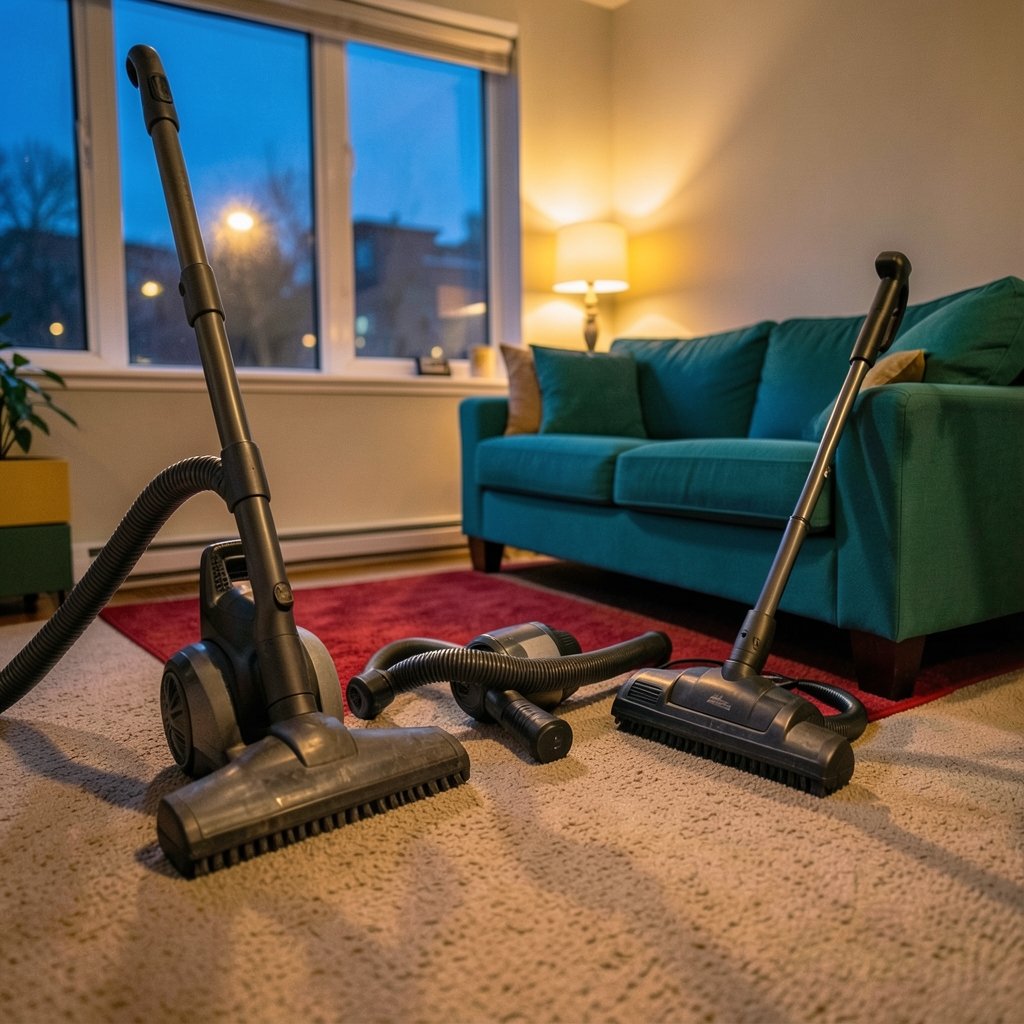
Each style of vacuum makes trade-offs. There is no category that wins on every axis, so the useful question is which trade-off suits your home.
| Type | Strengths on carpet | Weaknesses | Best for |
|---|---|---|---|
| Full-size upright | Powered brush roll, strong agitation, large bin | Heavy, bulky, awkward on stairs | Wall-to-wall carpet in family homes |
| Canister | Flexible reach, good above-floor cleaning, long hose | Costs more, canister drags behind | Mixed flooring with carpeted rooms |
| Cordless stick | Light, fast, easy to grab daily | Short runtime, small bin, less sustained suction | Quick touch-ups between deep cleans |
| Robot vacuum | Hands-off daily maintenance | Limited deep-clean power, navigation quirks | Keeping traffic lanes clear automatically |
| Bagged upright | Consistent filtration, easy emptying | Ongoing bag cost | Allergy-sensitive households |
The upright remains the classic carpet choice because the weight of the machine sits over the brush roll, pressing it into the pile. That downward force is not a flaw, it is the point. Canisters suit homes where carpet is one part of a mixed floor plan, since the powered head does the carpet work while the body stays out of the way. Cordless sticks are genuinely useful but should be treated as a supplement, not a replacement, for a deep-cleaning machine.
What to Look For Before You Buy
Brush roll design
A motor-driven brush roll is the single most important feature for carpet. It agitates the pile and flicks embedded soil loose so airflow can carry it away. Look for a brush roll you can remove or at least clean easily, because hair wraps around it and quietly kills performance. If long hair or pet fur is a constant battle in your house, the practical fixes for tangling are worth reading before you pick a model.
Suction that holds up
Suction that fades after ten minutes is not suction. Corded machines generally sustain airflow longer than cordless ones, which trade runtime and bin size for convenience. If your carpet is dense or your home is large, a corded unit removes a variable you would otherwise fight every week.
Filtration and dust containment
If anyone in the house has allergies, filtration deserves real weight. A sealed system with quality filters keeps fine dust inside the machine. Bagless models avoid consumable costs but demand regular filter maintenance, and a clogged filter cuts suction fast. Bagged machines offer more consistent filtration and easier emptying at the cost of buying bags.
Weight and maneuverability
Full-size uprights with large bins often land in the 15 to 20 pound range. That is fine on a single floor and miserable on a staircase. Be honest about your layout before you fall for a heavy machine with great specs.
Height adjustment
Carpet pile varies. A vacuum with adjustable height settings can seal properly against both a low-pile berber and a thick plush. Fixed-height machines tend to either float over deep pile or dig into low pile.
Where Robot Vacuums Fit In
Robot vacuums have gotten genuinely good, but they are maintenance tools, not deep cleaners. Running one daily keeps traffic lanes clear and reduces how much soil gets ground into the pile between proper vacuuming sessions. That is a real benefit, and it compounds over months.
They also come with quirks worth knowing. Navigation quality varies a lot, and the difference between lidar and camera systems shapes how well a robot maps your rooms and avoids getting stuck. Dark carpets can confuse cliff sensors on some models, which is a known frustration in homes with black rugs. And if you want mopping too, the combo category has its own rules about what actually cleans versus what just smears. None of this makes robots a bad buy. It just means you should pair one with a corded upright or canister rather than expecting it to do everything.
Bagged vs. Bagless: The Real Trade-Off
This debate generates more heat than it deserves. Bagged machines give you consistent filtration, tidy emptying, and no cloud of dust when you open the bin. Bagless machines give you no consumable costs and a visible reminder of how much you picked up, which is oddly motivating.
The practical mistake people make with bagless vacuums is neglecting the filters. A washable filter that never gets washed turns into a clog, and a clogged filter strangles airflow. If you choose bagless, put filter cleaning on a calendar. If you choose bagged, keep spare bags on hand so you never run a full bag, which is worse than running no vacuum at all.
Mistakes That Undermine a Good Vacuum
Even a well-chosen machine underperforms when these habits creep in:
- Skipping slow passes. Carpet needs time. Rushing across the room in wide, fast strokes gives the brush roll no chance to agitate the pile. Slow, overlapping passes do more than a second fast run.
- Ignoring the brush roll. Hair, thread, and fiber wrap around the roll and reduce agitation. Check it monthly and cut away tangles.
- Letting the bin or bag overfill. A full bin restricts airflow. Empty at two-thirds, not at the brim.
- Neglecting filters. Clean or replace them on schedule. This is the most common cause of “my vacuum lost suction.”
- Using the wrong height setting. If the machine feels hard to push, it is digging in. If it glides with no resistance, it is not sealing.
- Skipping edges and corners. Dirt collects along baseboards. Use the crevice tool instead of pretending the edges clean themselves.
Matching the Vacuum to Your Carpet
Low-pile and berber carpets are forgiving. Most quality uprights handle them well, and height adjustment keeps the brush from wearing the fibers. Medium-pile carpets are the sweet spot for a standard powered upright. High-pile and frieze carpets are the hard case. They need strong airflow, a height setting that lets the head ride higher, and patience. A vacuum that seals too tightly on deep pile can stall or fight you across the room.
Pet owners face an extra layer. Pet hair mats into pile and wraps brush rolls. A machine with strong agitation and a tangle-resistant roll earns its price in a pet household. The same logic applies if you are dealing with long human hair, which behaves much like pet fur on a brush roll.
Practical Buying Advice
Buy for the carpet you have, not the carpet in the showroom. If most of your home is carpeted, a full-size upright with a powered brush roll, adjustable height, and sealed filtration is the sensible default. If carpet is confined to bedrooms and the rest is hard floor, a canister with a powered head covers more ground. If you want daily upkeep without lifting a finger, add a robot as a supplement and keep a corded machine for weekly deep cleans.
Also budget for maintenance. Bags, filters, and belts are consumables. A cheap vacuum with expensive filters can cost more over three years than a mid-range machine with affordable ones. And check that replacement parts are easy to find, because a vacuum you cannot maintain is a vacuum you will replace early.
Conclusion
The best vacuum for carpets is not the one with the biggest number on the box. It is the one with a powered brush roll that agitates the pile, airflow that holds up over a full room, filtration that keeps dust out of the air, and a weight you will actually tolerate carrying up the stairs. Uprights remain the classic carpet answer for good reason, canisters suit mixed flooring, and cordless sticks and robots work best as supplements rather than substitutes. Match the machine to your pile height, keep the brush roll and filters clean, and slow down your passes. Do those things and almost any well-chosen vacuum will outperform a premium machine used carelessly.
Frequently Asked Questions
What is the best type of vacuum for wall-to-wall carpet?
A full-size upright with a motor-driven brush roll, adjustable height, and sealed filtration is the most reliable choice for wall-to-wall carpet. The machine’s weight presses the brush into the pile, and corded power sustains suction through a full room. Canisters with powered heads are a strong alternative in homes with mixed flooring.
Is a robot vacuum enough for carpeted rooms?
For most homes, no. A robot vacuum is excellent for daily upkeep and keeping traffic lanes clear, but it lacks the agitation and sustained suction of a corded upright for deep cleaning. The practical setup is a robot for daily passes plus a corded machine for a weekly deep clean.
How often should I vacuum carpet?
High-traffic areas benefit from vacuuming several times a week, while bedrooms and low-traffic rooms can usually wait a week. The key variable is soil volume, not the calendar. Homes with pets, kids, or allergy sufferers should lean toward more frequent passes with slow, overlapping strokes.
Why does my vacuum lose suction on carpet?
The usual causes are a full bin or bag, a clogged or dirty filter, a brush roll wrapped in hair, or a height setting that seals too tightly against deep pile. Check those four things in that order before assuming the motor is failing.
Do bagged or bagless vacuums work better on carpet?
Both work well. Bagged machines offer more consistent filtration and tidier emptying, which helps in allergy-sensitive homes. Bagless machines avoid bag costs but require disciplined filter cleaning, since a neglected filter cuts suction quickly.
How do I stop pet hair from ruining my vacuum’s brush roll?
Choose a model with a tangle-resistant brush roll and removable roll access, then check it monthly. Cut away wrapped hair with scissors rather than pulling, which can damage bristles. Strong agitation plus regular dehairing keeps pickup consistent in pet households.



