
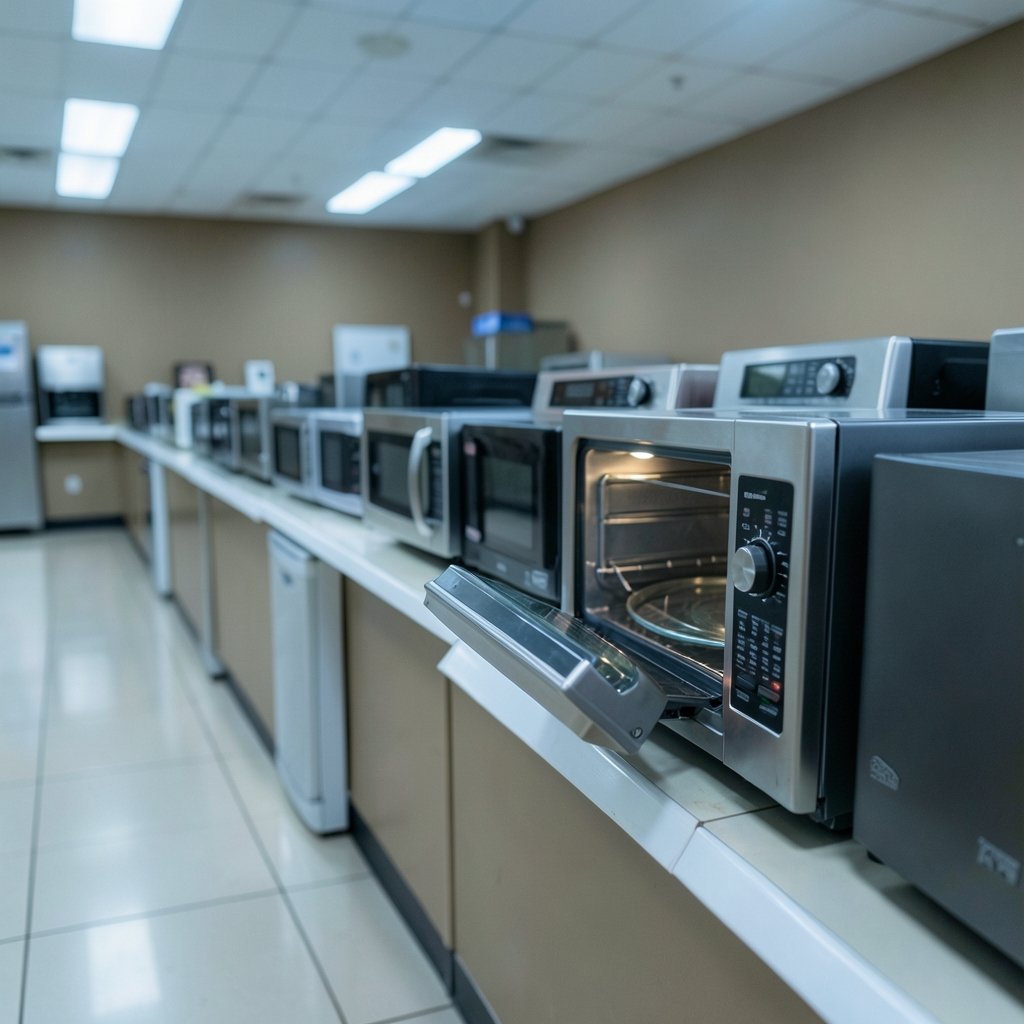
What is the one appliance that gets used twenty times a day, yet gets the least thought at the store? For most households, it is the microwave. People walk in, squint at a wall of shiny boxes, pick the one that looks nice, and walk out. Then they get home and discover the door opens the wrong way, the buttons are a puzzle, and reheating soup takes four minutes instead of two.
Buying a microwave oven is not complicated, but it is easy to get wrong. The differences between models are real: power output, size, sensor accuracy, and how the door opens all change how the appliance feels after a month of daily use. This guide walks through what matters, what is marketing noise, and what to check before you pay.
Start With Power, Not Price
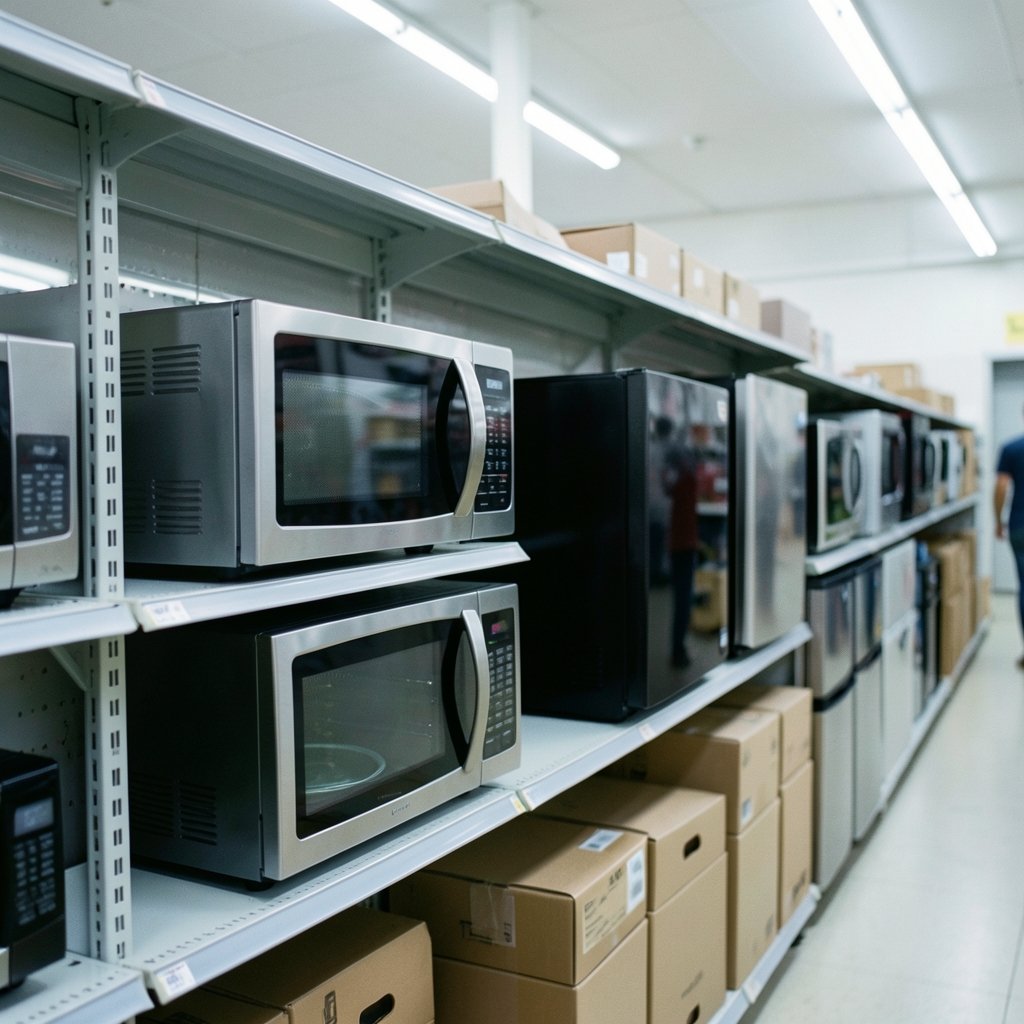
The single most important number on the box is output power, usually listed in watts. Most consumer models run somewhere between roughly 600 W and 1,200 W. Higher wattage generally means faster heating, and most recipes and package instructions are written for a reference power of about 1,000 W.
Here is the practical trap. A 700 W oven does more than heat more slowly; it heats unevenly in a different way. If a frozen meal says “cook on high for 5 minutes,” a low-power oven may need 7 or 8 minutes, and the center may still be cold. People blame the food. The oven is the problem.
A simple rule of thumb:
| Output power | Best for | Watch out for |
|---|---|---|
| 600–700 W | Singles, reheating coffee, softening butter | Long cook times, uneven results in dense food |
| 800–900 W | Small families, reheating, defrosting, simple cooking | Still slower than recipe times assume |
| 1,000–1,200 W | Daily cooking, larger portions, browning functions | Higher price, needs a dedicated circuit in some homes |
If the microwave will be your main cooking tool, do not go below 900 W. If it is a reheating machine for one person, 700 W is fine and saves money.
Match the Size to Your Counter and Your Plates
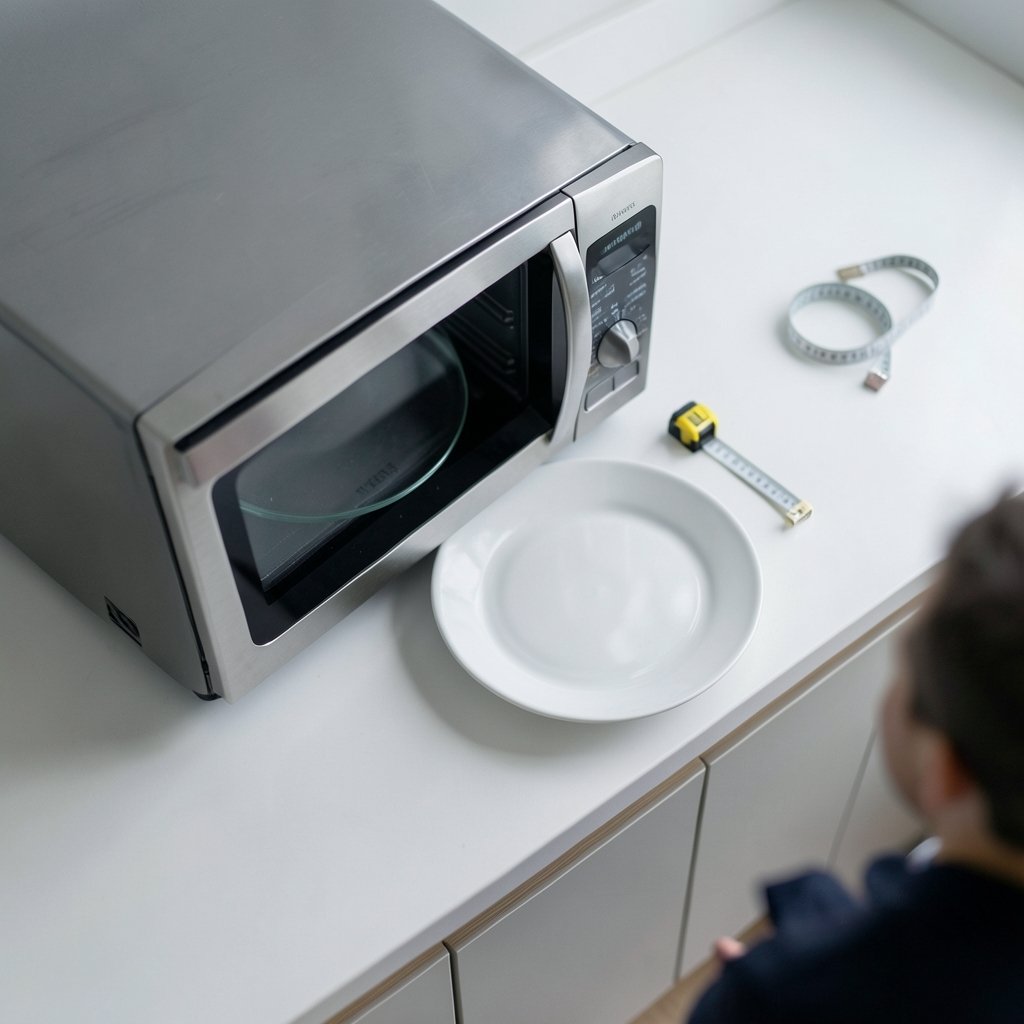
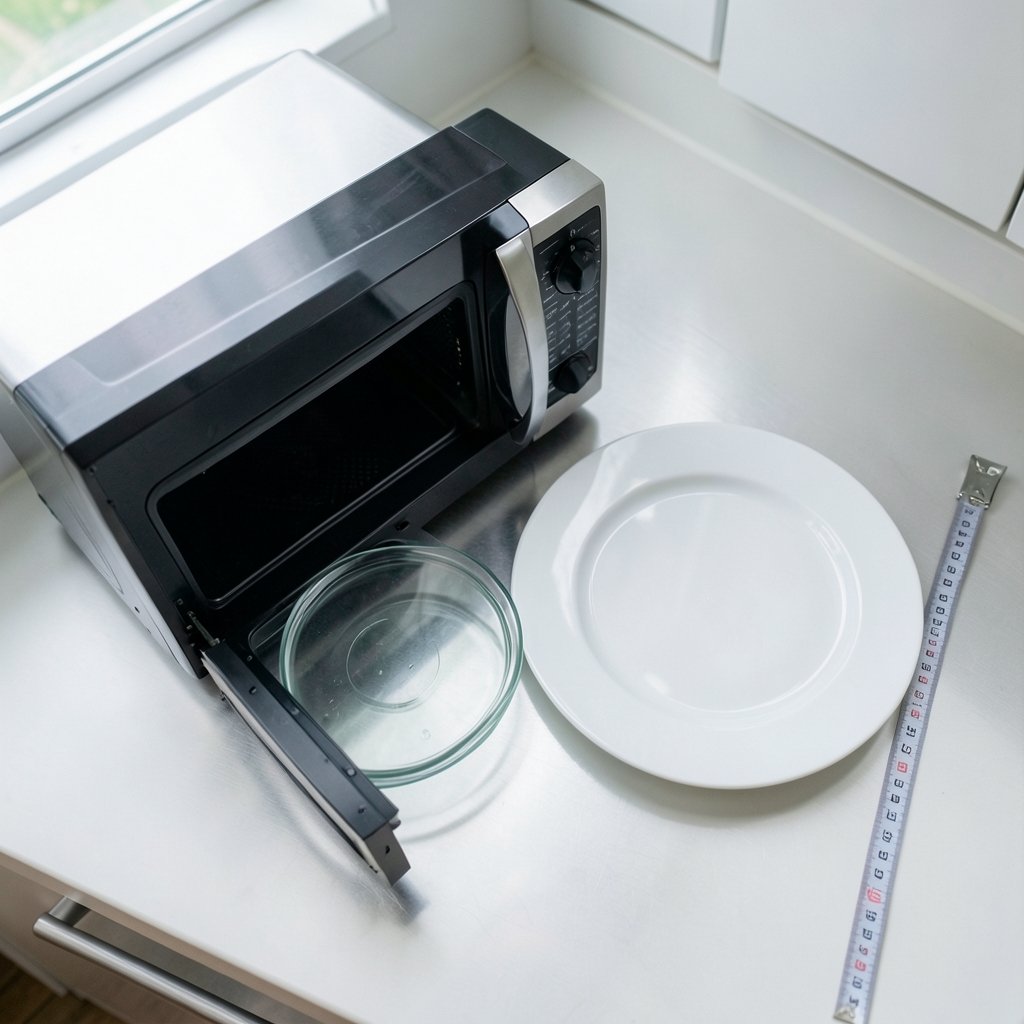
Capacity is usually listed in liters or cubic feet, and the number on the box tells only half the story. What actually matters is the turntable diameter and the interior height. A 25-liter oven with a small turntable will not fit a dinner plate, no matter how big the cavity sounds.
Measure before you shop. Take a tape measure to your counter, note the depth available under the upper cabinets, and check the width of your largest plate. Then check the product dimensions as well as the capacity. A common mistake is buying a large-capacity oven that overhangs the counter edge or blocks a cabinet door.
Also think about door swing. Most countertop models have a left-hinged door that pulls toward you. In a tight corner, that door may hit a wall or a fridge. Some models offer a right-hinged or drop-down door, which can solve the problem entirely.
Countertop, Over-the-Range, or Built-In?
There are three main form factors, and each suits a different kitchen.
Countertop models are the default. They are cheap, portable, and easy to replace. They eat counter space, which is the main trade-off.
Over-the-range models mount under the upper cabinets and double as a range hood. They save counter space and look built-in, but installation is a real project, and the ventilation performance varies a lot between models. If you are remodeling, this is worth planning for.
Built-in and combination models sit flush in cabinetry and often add convection or grill functions. They look premium and cook more like a real oven, but they cost more and need a trim kit and a cabinet cutout.
A quick comparison:
| Type | Space cost | Installation | Typical price band | Best for |
|---|---|---|---|---|
| Countertop | Uses counter space | None | Low to mid | Renters, small kitchens, second ovens |
| Over-the-range | Frees counter | Professional install | Mid to high | Kitchens that need a hood anyway |
| Built-in / combination | Uses cabinet space | Cabinet modification | High | Remodels, baking and roasting needs |
Sensors, Inverter Tech, and the Features Worth Paying For
Walk down the aisle and every box promises something. Some of it matters.
Sensor cooking is the feature most worth the upgrade. A humidity sensor detects when food is releasing steam and adjusts the time automatically. It is the difference between perfectly steamed vegetables and a rubbery mess. If you buy one upgrade, buy this one.
Inverter technology delivers continuous power instead of cycling the magnetron on and off. In practice, this means gentler defrosting and more even heating at low power settings. It is genuinely useful if you defrost meat often.
Convection mode turns the microwave into a small oven that can brown and crisp. It works, but it is a compromise. If you bake regularly, a real oven is better. If you want one appliance that does both, it is a reasonable choice.
Grill elements add browning on top. They are handy for melting cheese and finishing leftovers, but they rarely replace a broiler.
Features that are mostly noise: dozens of preset programs you will never scroll to, a “pizza” button, and decorative touch panels that smudge. Keep the interface simple. A dial plus a start button is easier to use at 7 a.m. than a 20-button membrane keypad.
Safety and Everyday Use: What People Get Wrong
Microwaves are safe when used correctly, and the physics is less scary than the name suggests. Microwaves are a form of non-ionizing radiation, sitting between radio waves and infrared on the electromagnetic spectrum. They heat food by exciting polar molecules, chiefly water, and by ionic conduction. They do not make food radioactive. Household ovens typically operate around 2.45 GHz, a band set aside internationally for industrial, scientific, and medical use.
Regulators take leakage seriously. In the United States, rules limit leakage to 5 mW/cm² measured 5 cm from the oven surface, and that limit applies over the oven’s lifetime, including after day one. That is why a damaged door seal or a bent hinge is a real reason to stop using an oven and get it checked.
The most common everyday mistakes are simpler:
- Heating food in metal-rimmed dishes or foil, which can arc and spark.
- Using unmarked plastic containers that are not labeled microwave-safe.
- Boiling whole eggs in the shell, which can burst.
- Running the oven empty, which can damage the magnetron.
- Forgetting to stir, which leaves cold spots where bacteria survive.
On food safety, the guidance is consistent: microwaving is a legitimate way to cook, but it requires stirring, covering, and standing time so heat distributes evenly. A food thermometer is a cheap habit that removes the guesswork.
Energy, Running Costs, and the Standby Drain
For small portions, a microwave uses far less energy than a conventional oven because it heats the food rather than the oven cavity and the air around it. That is why reheating a plate of leftovers in a microwave is usually the efficient choice. Exact savings vary widely depending on the study and the assumptions, so treat any single percentage you see online with suspicion.
The sneaky cost is standby power. Many models draw a small amount of electricity continuously to keep the clock and display running. The amount varies by model and by region, so check the energy label where one is required. In the EU, household microwaves fall under the energy-labelling framework; in the US, efficiency is driven more by voluntary programs. Either way, the label is a useful tiebreaker between two similar ovens.
What to Check Before You Pay
A few minutes of checking prevents most returns.
Read the one-star reviews first. Skip the five-star praise and look for patterns in the complaints. “Door latch broke after six months” repeated ten times is a signal. “Too loud” repeated ten times is a preference.
Confirm the plug and circuit. High-power combination models can draw more current than a shared kitchen circuit comfortably supplies. Check the manual’s electrical requirements before delivery day.
Check the warranty and the magnetron coverage. The magnetron is the expensive part. A warranty that covers it for several years is worth more than a longer warranty that excludes it.
Measure the delivery path. A 30-inch box does not fit through a 28-inch doorway. This sounds obvious until it happens.
Think about the interface you will actually use. If anyone in the house has limited vision or dexterity, look for large buttons, high-contrast displays, and a physical dial. Accessibility matters more than a sleek glass panel.
If you are outfitting a first apartment or a dorm room, the same logic applies to other starter gear. A good example is the approach in this guide to the best flight sticks for beginners, which stresses fit and real-world use over spec-sheet bragging. The same principle holds for kitchen appliances: buy for how you will actually use it. (Best e readers 2026 actually matters before you buy)
Where the Deals Are, and Where They Are Not
Microwave prices swing more than people expect. The same model can differ by 30 percent between retailers and between months. The best windows are typically major sales events and clearance cycles when a new model year replaces the old one. Buying last year’s model with the same wattage and sensor is often the smartest move.
Be careful with open-box and refurbished units. A returned microwave may have a damaged door seal, which is exactly the part you cannot inspect properly in a store. If you buy open-box, test it immediately: boil a cup of water, check the door closes firmly, and look for arcing or unusual noise.
Also resist the bundle trap. A “matching” set of appliances rarely saves money unless you genuinely need all of it. The same discipline applies to other impulse purchases, such as when people wonder whether a perfume mystery box blind buy fragrance bundle is worth the risk. Usually the answer is to buy the specific thing you need rather than the package that looks like a deal.
Conclusion
Buying a microwave oven comes down to four decisions: power output, physical size, form factor, and whether you pay for sensor cooking. Get those right and the rest is detail. Aim for at least 900 W if you cook regularly, measure your counter and your plates before you order, choose the door swing that fits your layout, and prioritize a humidity sensor over a long list of preset buttons.
Then use it well. Stir, cover, check the temperature of meat, keep metal out, and replace any oven with a damaged door seal. A microwave is one of the few appliances that earns its counter space every single day. Treat the purchase as a ten-minute research project rather than a five-second grab, and it will quietly do its job for a decade.
Frequently Asked Questions
Is a higher-wattage microwave always better?
Not always, but usually for daily cooking. Higher wattage heats faster and more evenly, and it matches the reference power most recipes assume. For light use such as reheating coffee or softening butter, a 700 W model is perfectly adequate and cheaper to buy.
How long should a microwave oven last?
Most households get roughly seven to ten years from a well-made unit, though this varies with build quality and use. The magnetron is the part most likely to fail first. A warranty that specifically covers the magnetron is more valuable than a longer general warranty that excludes it.
Can I put metal in a microwave?
No, with narrow exceptions. Metal reflects microwaves and can cause arcing, sparks, and damage. Foil used in tiny amounts to shield thin edges is sometimes recommended by manufacturers, but only when the manual explicitly says so. When in doubt, use glass or ceramic labeled microwave-safe.
Does a microwave kill nutrients in food?
Microwaving is generally comparable to other cooking methods and sometimes better, because short cook times and minimal water preserve water-soluble vitamins. The bigger nutrient losses come from boiling food in a lot of water for a long time, not from the microwave itself.
What size microwave fits a standard dinner plate?
Look for a turntable diameter of at least 12 to 13 inches, or roughly 30 to 33 centimeters, and check the interior height. Capacity in liters is a rough guide only. Always compare the actual turntable size and cavity dimensions rather than trusting the headline number.
Is an inverter microwave worth the extra cost?
If you defrost meat and fish often, yes. Inverter models deliver continuous low power instead of pulsing on and off, which produces gentler, more even defrosting. If you mostly reheat leftovers on high power, the benefit is smaller and you can safely save the money.



