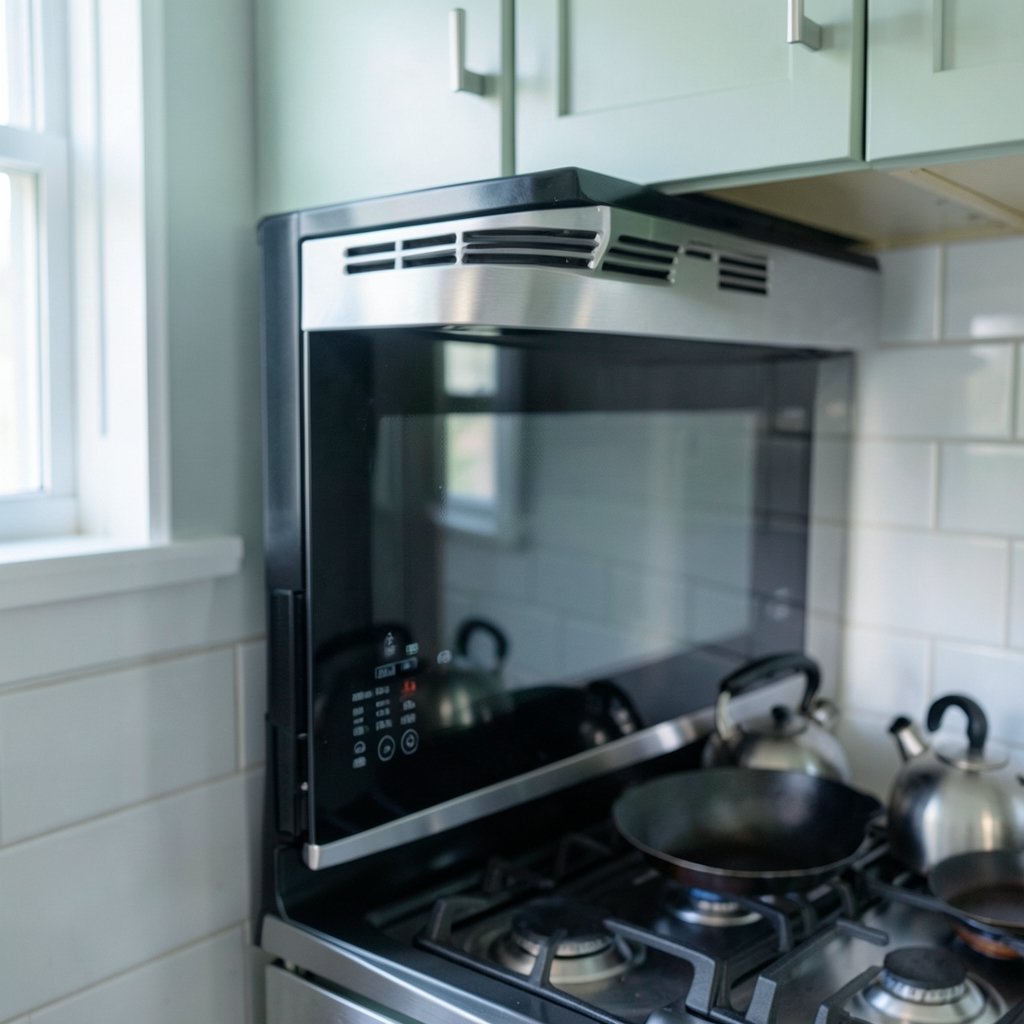
What if the most overlooked appliance in your kitchen is the one hanging right above your stove? Over-the-range microwaves, usually shortened to OTR microwaves, do three jobs at once: they heat food, they light your cooktop, and they pull smoke and grease out of the air. That triple duty makes them one of the most practical appliances you can buy, and also one of the easiest to get wrong. A unit that vents poorly, mounts awkwardly, or lacks the power you need will annoy you every single day.
This guide cuts through the marketing noise. It explains what actually separates a good OTR microwave from a mediocre one, which specs matter, which ones are mostly decoration, and how to match a unit to your kitchen before you spend a dime.
What Makes an OTR Microwave Different From a Countertop Model

A countertop microwave just needs an outlet and some counter space. An OTR unit is a built-in appliance. It mounts under the upper cabinets above your range, typically at 30 inches wide to line up with a standard 30-inch range, though 36-inch models exist for wider setups. Many installations also need roughly 12 to 15 inches of cabinet depth above the unit, so measure before you shop.
The big difference is the vent hood built into the bottom. Most OTR microwaves move somewhere around 300 to 400 CFM of air, which is enough for light cooking but not for heavy searing or wok work. The unit also includes a surface light, usually LED on newer models, so you can actually see what you are cooking.
That combination is why OTR microwaves are so common in apartments and mid-size kitchens: they save counter space and replace a separate hood in one move.
Venting: The Decision Most Buyers Get Wrong


Here is the mistake that causes the most regret. People buy an OTR microwave without checking how it will vent, then discover it cannot be ducted in their kitchen.
Most OTR units are convertible, meaning they support three setups:
| Venting Mode | How It Works | Best For |
|---|---|---|
| Recirculating (ductless) | Pulls air through a charcoal filter and blows it back into the room | Apartments and kitchens with no duct path |
| Vertical exterior vent | Sends air up through a duct in the cabinet above | Homes with an existing roof or wall duct |
| Rear or horizontal vent | Sends air out through the back wall | Homes with a duct directly behind the unit |
Recirculating mode is convenient, but it is genuinely weaker. It traps some grease and odors, yet it does not remove smoke or moisture the way a ducted setup does. If you cook often, ducted is worth the extra effort. If ducting is impossible, plan to replace the charcoal filter regularly and accept that your kitchen will hold onto cooking smells a little longer.
This is also where small details matter. If you are building out a smart or automated kitchen setup, remember that device pairing has its own quirks; the same care you would take with a Z-Wave inclusion vs exclusion order applies to getting any connected appliance configured correctly the first time.
Power, Capacity, and the Specs That Actually Matter
Marketing pages love big numbers. Here is how to read them.
Wattage. Most OTR microwaves land between roughly 900 and 1,100 watts of cooking power. Higher wattage means faster, more even heating, especially for dense foods. For most households, 1,000 watts is a comfortable sweet spot. Do not pay a premium for a tiny bump in wattage unless everything else about the unit is right.
Capacity. OTR models typically run from about 1.1 to 2.2 cubic feet. Capacity measurements are not standardized across brands, so a “1.6 cu ft” from one maker may not match another. Check the turntable diameter instead if you regularly heat large plates or casserole dishes. A bigger turntable is a more honest signal of usable space.
Sensor cooking. This is one of the few features worth prioritizing. A humidity sensor detects when food is releasing steam and adjusts the cook time. It works well for leftovers, vegetables, and oatmeal. It is not magic, but it removes a lot of guesswork.
Convection and air-fry modes. These have become common on newer OTR models. Convection lets the microwave act like a small oven, which is genuinely useful in a kitchen without double ovens. Air-fry mode is more of a bonus than a replacement for a dedicated air fryer, but it handles frozen snacks well.
Noise. Higher CFM generally means more noise. Many units publish sone or decibel ratings. If your kitchen opens into a living area, listen to a demo unit or read owner reports before committing to a high-CFM model.
Matching the Microwave to Your Kitchen and Your Wiring
Before you fall in love with a model, run this checklist.
- Measure the opening. Width, height, and depth of the space between your range and the cabinet above. Write the numbers down and take them shopping.
- Check the electrical setup. Most OTR microwaves need a dedicated 120 V grounded circuit, often on a 20 A breaker per the manufacturer’s instructions. Some are hardwired and some plug in. If you are replacing an existing unit, match the new one to the old wiring to keep the job simple.
- Confirm the vent path. Look above and behind the unit. Is there a duct? Does it exit vertically or horizontally? If not, you are choosing recirculating mode.
- Plan for the filter. Charcoal filters need periodic replacement in recirculating setups. Grease filters need washing every month or two. Put it on a calendar.
- Budget for installation. Swapping an existing OTR unit is usually straightforward. A first-time install may need new ducting, a new circuit, or cabinet modification, and those costs add up fast.
One practical tip from experience: take a photo of your current setup, including the cabinet above and the wall behind, before you go to the store. Sales staff can spot mounting problems from a photo far faster than from a description. Also note whether your current unit vents up, back, or recirculates; that single fact narrows your options more than any other.
Safety, Certification, and Efficiency Details Worth Knowing
Microwaves sold in the U.S. are regulated under federal performance standards for microwave ovens, which include limits on leakage. Look for a UL or ETL listing mark on the unit; that mark means the product was tested to recognized safety standards. If you are buying used or refurbished, confirm the mark is still legible and the door seal is intact.
Efficiency is a quieter consideration. Microwaves use relatively little energy compared with a full oven, and federal appliance standards also address standby power. If you are choosing between two similar units, a model with a simpler display and fewer always-on features will typically sip less power when idle.
If you are also upgrading storage or the electronics around your kitchen, the same spec-sheet discipline pays off elsewhere. Choosing a micro SD card endurance vs performance balance for a security camera or dash cam is the same kind of decision: match the spec to the actual workload instead of chasing the biggest number.
Common Mistakes Buyers Make
A few patterns show up again and again.
- Buying by brand loyalty alone. Model-to-model variation within a brand is often bigger than the difference between brands.
- Ignoring the vent mode until install day. This is the number one cause of returns and rewiring bills.
- Overpaying for features you will not use. If you never bake, convection is dead weight.
- Skipping the turntable measurement. A large capacity with a small turntable is frustrating in daily use.
- Forgetting the filter schedule. A clogged charcoal filter makes a recirculating unit perform noticeably worse.
- Assuming all installs are equal. A first-time install is a different project from a swap.
For readers who enjoy the technical side of appliance matching, the logic is similar to picking power equipment: a UPS pure sine wave vs simulated sine wave decision comes down to what the load actually needs, not what sounds impressive on the box. The same is true of microwave wattage and CFM ratings.
How to Compare Two Models Side by Side
When you are down to a shortlist, build a simple comparison table like this one and fill it in from spec sheets, not marketing copy.
| Feature | What to Check | Why It Matters |
|---|---|---|
| Width | 30 or 36 inches | Must match your range and cabinet opening |
| Wattage | 900 to 1,100 W | Faster, more even heating |
| Capacity | 1.1 to 2.2 cu ft | Fits your dishes and containers |
| Turntable | Diameter in inches | Real usable space for plates |
| Vent CFM | 300 to 400 CFM typical | Smoke and odor removal |
| Vent mode | Recirculating, vertical, rear | Must match your duct situation |
| Sensor cooking | Yes or no | Removes guesswork |
| Noise rating | Sones or dB if listed | Comfort in open kitchens |
| Certification | UL or ETL mark | Safety testing confirmation |
Fill this out for two or three finalists and the right choice usually becomes obvious. If a spec sheet does not list something, that is a signal in itself.
Conclusion
The best OTR microwave is not the one with the longest feature list. It is the one that fits your opening, matches your venting situation, and delivers solid cooking power without drowning your kitchen in noise. Start with measurements and the vent path, then compare wattage, turntable size, and sensor cooking. Skip the features you will never touch, and budget honestly for installation if this is a first-time job.
Get those fundamentals right, and your OTR microwave quietly does its three jobs for years. Get them wrong, and you will be reminded every time you cook.
Frequently Asked Questions
How much does a good OTR microwave cost?
Prices vary widely by brand, capacity, and features, and they change often, so check current listings before buying. As a general pattern, basic models sit at the low end, mid-range units with sensor cooking and stronger venting cost more, and models with convection or air-fry modes sit at the top. Installation is a separate cost and can rival the appliance price if new ducting or wiring is needed.
Can any OTR microwave vent outside?
No. The unit must support the vent mode you need, and your kitchen must have a path for the duct. Most OTR microwaves are convertible and can vent vertically, horizontally, or recirculate. If your kitchen has no duct, you are limited to recirculating mode regardless of what the microwave can do.
Do I need a dedicated circuit for an OTR microwave?
Most models call for a dedicated 120 V grounded circuit, often on a 20 A breaker, per the manufacturer’s installation instructions. Some units are hardwired and others plug in. Always follow the specific manual for your model rather than assuming, and consult a licensed electrician if you are unsure about your existing wiring.
Is recirculating venting good enough?
It is workable but weaker than ducted venting. Recirculating mode passes air through a charcoal filter and returns it to the room, so it catches some grease and odors but does not remove smoke or moisture as effectively. If you cook frequently or sear food often, ducted venting is worth pursuing.
What wattage should I look for?
Most OTR microwaves fall between roughly 900 and 1,100 watts. Around 1,000 watts suits most households well. Higher wattage heats dense foods faster and more evenly, but it should not be the only reason you pick a model.
How often should I replace the filters?
Grease filters should be washed roughly every month or two, depending on how much you cook. Charcoal filters in recirculating setups need replacement periodically, typically every few months, because they cannot be washed and restored. A clogged charcoal filter noticeably reduces performance, so keep a spare on hand.