
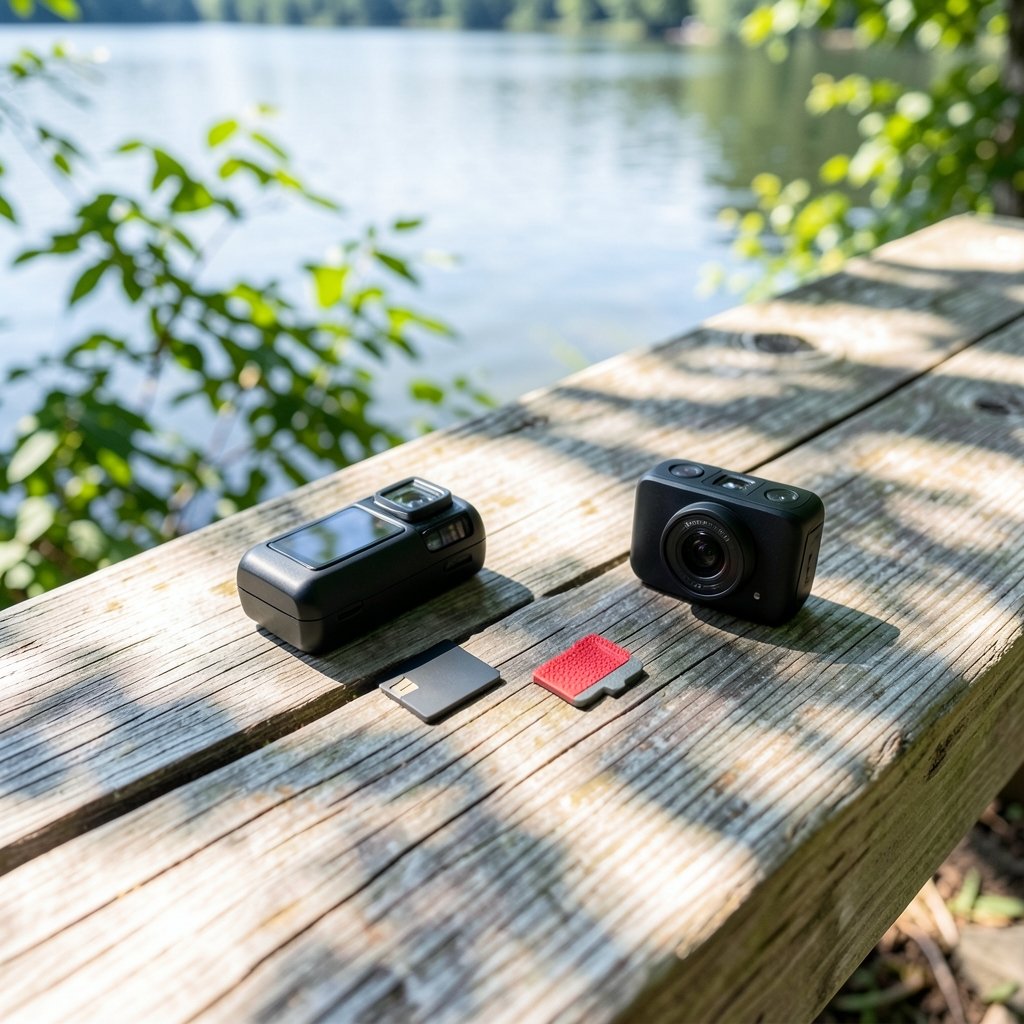
Can a memory card be fast and tough at the same time, or does one always come at the cost of the other?
That question matters more than most people realize. A micro SD card that writes 4K video flawlessly can still die in a dashcam within a year. Meanwhile, a card rated for years of constant recording may crawl when someone tries to copy a wedding video off it. The labels on the package promise speed. They rarely promise a long life. Knowing which numbers describe which trait is the difference between a card that lasts and one that quietly fails.
What Endurance and Performance Actually Measure
Endurance describes how much data a card can be written to before its flash memory wears out. Flash cells have a limited number of write cycles. Every time data is written, erased, and rewritten, the cells degrade slightly. Cards are generally rated in TBW (terabytes written), a figure that appears on datasheets far more often than on retail packaging.
Performance describes speed. That includes sequential write speed (important for video recording), sequential read speed (important for transferring files), and random read/write speeds (important for running apps). Speed ratings like Class 10, UHS Speed Class 3, and Video Speed Class 30/60/90 describe minimum sustained write speeds. They say nothing about how long the card will survive.
That gap is the core problem. A buyer sees “V90” and assumes premium quality across the board. In reality, that label only guarantees a minimum write speed of 90 MB/s.
Why High Speed and High Endurance Pull in Different Directions
Card makers face real engineering trade-offs. To hit very high sequential write speeds, manufacturers often use controllers and NAND configurations optimized for throughput. High-endurance cards designed for dashcams and surveillance systems tend to prioritize wear leveling, error correction, and sometimes pseudo-SLC caching to spread writes evenly and reduce stress on any single block.
The result is that the two product lines can diverge:
| Feature | Speed-focused card | Endurance-focused card |
|---|---|---|
| Typical use | 4K video, burst photography | Dashcams, security cameras, continuous logging |
| Headline spec | V30, V60, V90 write speed | TBW rating, warranty for continuous recording |
| NAND priority | Throughput | Write-cycle tolerance |
| Heat behavior | Can run hotter under sustained load | Often tuned for steady, moderate writes |
| Failure pattern | Slows or errors under sustained writes after cache fills | Slows in daily use, but lasts longer |
This is a marketing pattern, not an absolute law. Some premium cards deliver both. But the pattern explains why a fast card is not automatically a durable one, and why “high endurance” is a marketing term with no single governing specification behind it.
The Ratings You See Are Not Endurance Ratings
This trips up almost everyone. The familiar symbols on a card describe speed, not lifespan.
The SD Association defines Speed Class, UHS Speed Class, Video Speed Class, and Application Performance Class (A1/A2). These cover minimum sustained write speeds and, for A1/A2, random read/write input/output operations per second for running apps. None of them describes endurance. The SD Association publishes the specifications that define these classes, and endurance is simply not among them.
So when a card advertises “A2” for app performance or “UHS-II” for bus speed, the buyer learns nothing about how many writes the card can absorb. That information lives in datasheets, warranty terms, and vendor-specific endurance statements, which are not standardized across brands.
TBW Ratings Are a Ceiling, Not a Prediction
A TBW rating tells you the write volume a manufacturer expects the card to handle within its warranty. It is useful as a rough comparison within one brand’s lineup. Across brands, it is unreliable, because there is no shared testing standard for how TBW is measured. (SD Standard Overview)
Real endurance also depends heavily on workload:
- Sequential writes (large video files) stress cells differently than random writes (small log files, database activity).
- Temperature matters. Cards in hot dashcams or enclosed cameras age faster.
- Host behavior matters. A device that rewrites the same small file constantly causes far more wear than one that appends large files.
A card rated for a high TBW might still fail early in a poorly ventilated camera that writes in tiny random chunks at high heat. The rating is a best-case guide, not a guarantee.
Matching the Card to the Job
The practical rule is simple: choose the card based on the workload, not the biggest number on the box.
Dashcams and security cameras
These devices write continuously, often in loops, often in heat. Endurance matters far more than peak speed. A V30 card with a solid endurance warranty will usually outlast a faster card with no endurance claim. Look for lines explicitly marketed for continuous recording, and check the warranty wording for dashcam or surveillance use.
Action cameras and drones
Here, sustained write speed is the priority. 4K and higher frame rates demand consistent minimum write speeds, and a slow card causes dropped frames or recording stoppages. A V30 or V60 card is typically the practical floor for 4K. Endurance still matters, but the write volume per session is lower than in a dashcam running all day.
Phones and tablets
Random performance (A1/A2) affects app responsiveness, while sequential speed affects photo and video capture. Endurance is less of a concern because phones write far less total data than surveillance devices. If someone is also upgrading the rest of the machine, a GPU upgrade install guide covers a similar principle: match the component to the real workload rather than the biggest spec sheet.
Music players, retro handhelds, and game devices
These are mostly read-heavy. Almost any reputable card works, and endurance is rarely the bottleneck. If the device is a handheld console, though, check whether the game library is large enough to need a bigger card, much like a family weighing which card games to bring on a trip. (SD card)
Common Mistakes Buyers Make
A few habits cause most premature card failures:
- Buying on speed alone for a continuous-write device. The fastest card is not the toughest card.
- Ignoring the warranty terms. Some warranties exclude dashcam or surveillance use, which tells you the maker does not expect the card to survive it.
- Using tiny capacities in loop-recording devices. Small cards fill and rewrite more often, accelerating wear.
- Skipping the format step. Formatting in the device, not on a computer, avoids compatibility quirks.
- Trusting a single benchmark. Burst speed can drop once the cache is exhausted, so a short test can look better than real-world sustained performance.
What Actually Works in Practice
Experienced users tend to follow a few habits that hold up across brands:
- Buy endurance-rated cards for anything that records continuously. The premium is small compared to losing footage.
- Keep spare cards. Cards fail, and having a formatted backup avoids downtime.
- Rotate cards in high-wear devices. Pulling a card periodically and checking it for errors catches problems early.
- Watch for slowdowns. A card that suddenly writes slower is often nearing the end of its usable life.
- Check the datasheet, not the packaging. TBW and endurance statements live in technical documentation.
For anyone building or upgrading a device around a card, the same logic applies as with other hardware choices. A keyboard stand for stage performance is chosen for stability under repeated use, not for a single impressive spec. Cards deserve the same scrutiny.
How to Compare Two Cards Fairly
When two cards sit side by side, a fair comparison looks at four things:
- Sustained write speed for the target resolution and frame rate.
- Endurance statement or TBW, if the manufacturer publishes one.
- Warranty terms, especially exclusions for continuous recording.
- Intended application, as stated by the maker.
If a card lacks an endurance statement and its warranty excludes dashcam use, treat it as a general-purpose card and keep it out of continuous-write devices. That single rule prevents most disappointments.
The Verdict: Endurance Wins for Wear, Speed Wins for Capture
There is no universal winner. Endurance is the deciding factor for any device that writes constantly: dashcams, security cameras, body cams, and data loggers. Performance is the deciding factor for devices that capture bursts of high-bitrate data: action cameras, drones, and phones shooting 4K.
The mistake is assuming one spec covers both. Speed ratings describe how fast data moves. Endurance describes how long the card can keep moving it. Buyers who check both, and match them to the workload, get cards that last. Buyers who chase the biggest speed number often end up replacing cards far sooner than expected.
Conclusion
Micro SD card endurance and performance measure different things, and the packaging rarely makes that clear. Speed classes tell you how fast a card writes. TBW ratings and endurance warranties tell you how much writing it can survive. For continuous-recording devices, endurance should lead the decision. For high-bitrate capture, sustained write speed should. The best card is not the fastest or the toughest in the abstract. It is the one whose strengths match the job it will actually do.
Frequently Asked Questions
What is the difference between micro SD card endurance and performance?
Performance describes speed: how quickly a card reads and writes data. Endurance describes lifespan: how much total data can be written before the flash memory wears out. A card can be excellent at one and mediocre at the other.
Does a faster micro SD card last longer?
Not necessarily. High speed and high endurance are separate design goals, and some fast cards trade durability for throughput. Always check the endurance statement or TBW rating rather than assuming speed implies longevity.
What does TBW mean on a memory card?
TBW stands for terabytes written. It estimates the total volume of data a card can handle within its rated life or warranty. Because there is no shared testing standard across brands, TBW is most useful for comparing cards within the same manufacturer’s lineup.
Which card should I use in a dashcam?
Choose a card explicitly rated for continuous recording, with a warranty that covers dashcam or surveillance use. Sustained write speed still matters, but endurance is the priority because dashcams rewrite data constantly, often in high heat.
Do speed class ratings tell me anything about endurance?
No. Speed Class, UHS Speed Class, Video Speed Class, and Application Performance Class all describe speed or app performance. None of them measures how many write cycles a card can survive.
How can I make a micro SD card last longer?
Use endurance-rated cards in continuous-write devices, avoid tiny capacities in loop-recording hardware, format cards in the device, keep them cool, and watch for sudden slowdowns that signal wear. Replacing a card before it fails is cheaper than losing the data on it.
For dashcam and surveillance buyers, the practical takeaway is to read the warranty before the spec sheet. A card that carries a continuous-recording endorsement and a stated TBW is a safer bet than one with a higher speed class and vague longevity claims. Where two endurance cards compete, compare their published write volumes and warranty exclusions side by side, then weigh the price difference against the cost of replacing footage. Finally, treat every card as consumable hardware with a finite life. Back up recordings regularly, retire cards that show slowdowns or errors, and keep a formatted spare on hand. Endurance and performance are both worth understanding, but only one of them tells you how long the card will keep working.



