
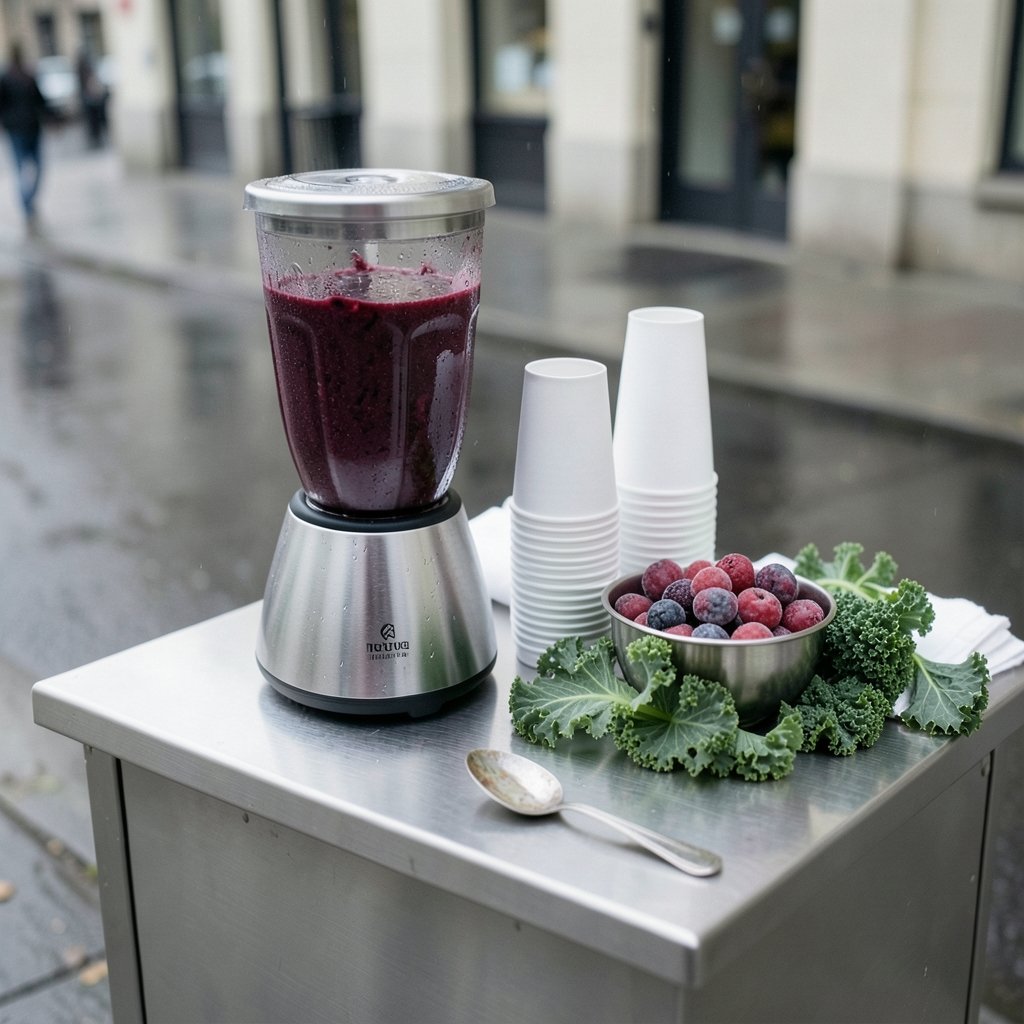
What separates a smoothie that glides down your throat from one you have to chew? Most people blame the recipe. The real culprit is usually the machine. A blender that can’t break down frozen berries or kale stems will leave you with gritty, fibrous sips no matter how carefully you layer the ingredients.
That’s why picking the best blender for smoothies comes down to a few physical realities: blade speed, jar shape, motor durability, and how much noise and cleanup you’re willing to tolerate. This guide walks through what actually matters, where money is well spent, and which common mistakes turn a $400 machine into an expensive paperweight.
Why Blade Tip Speed Beats Wattage
The single most useful number in blender shopping isn’t printed on the box. It’s blade tip speed — how fast the outer edge of the blade travels, calculated as rotation speed multiplied by blade radius. High-performance machines typically push blade tips to roughly 200 to 300 mph. That velocity, not the wattage rating, is what shatters ice and pulps fibrous greens.
Wattage is a weak proxy. Consumer blenders range from about 300 W for personal single-serve units to 1,500 W and beyond for high-performance models. A watt rating tells you how much electricity the motor draws, not how effectively it turns a frozen strawberry into velvet. Jar geometry and blade design matter just as much, which is why two blenders with identical motors can perform completely differently.
Manufacturers rarely publish blade tip speed, so shoppers are left reading between the lines. A practical workaround: look at what the machine is rated to do. If a blender’s manual confidently promises hot soup from raw vegetables or flour from whole grains, its blade tip speed is almost certainly in the high-performance range. If the marketing focuses on “smoothies and shakes” with no mention of ice crushing, expect compromise.
The Three Tiers of Smoothie Blenders
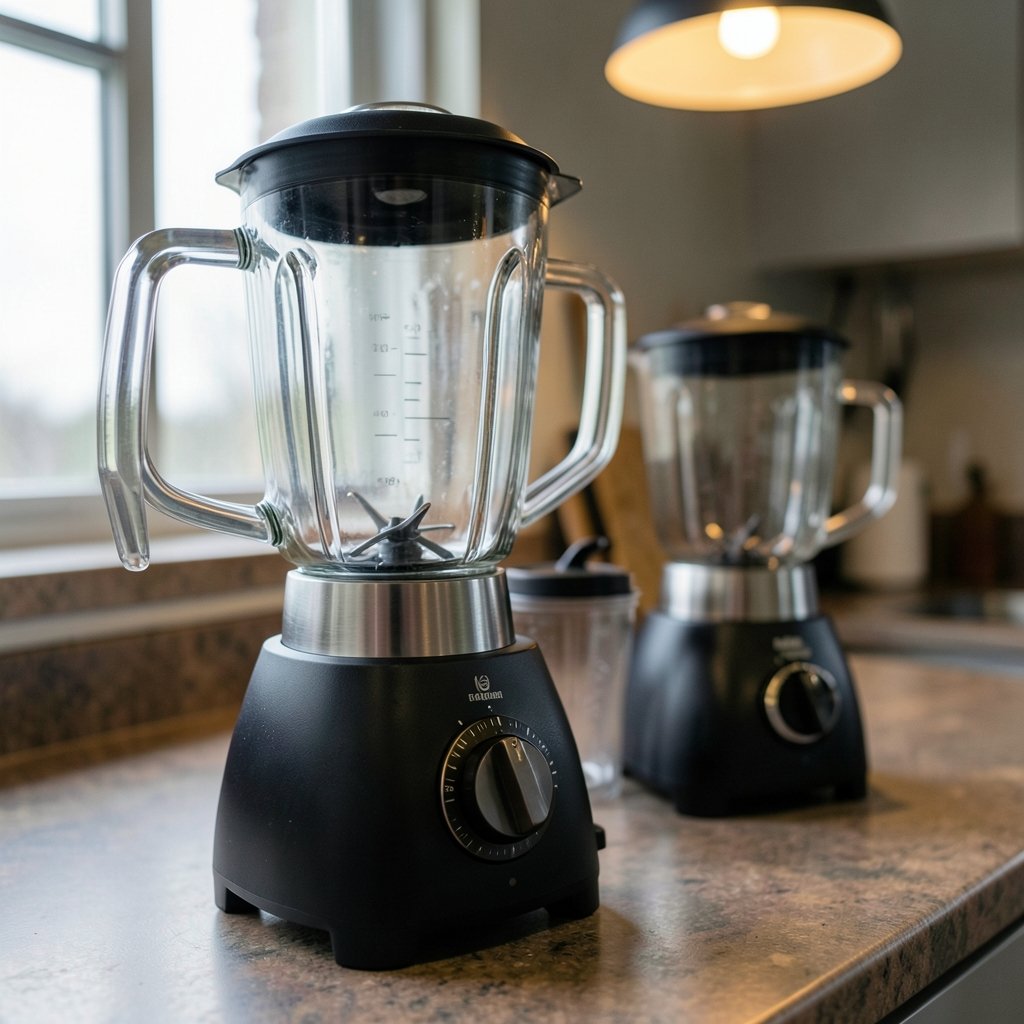
Most blenders fall into recognizable price and performance bands. The table below summarizes what each tier realistically delivers.
| Tier | Typical Price | Motor Range | Best For | Main Weakness |
|---|---|---|---|---|
| Personal / single-serve | Under $50 | 300–500 W | One smoothie, soft fruit, protein shakes | Struggles with ice and frozen fruit; small jars |
| Mid-range full-size | $100–$200 | 700–1,000 W | Daily smoothies, moderate ice | Inconsistent with leafy greens; shorter warranty |
| High-performance | $300–$600+ | 1,200–1,500 W+ | Frozen fruit, kale, nut butters, hot soup | Loud; expensive; bulky on the counter |
High-performance blenders from brands like Vitamix and Blendtec are the reference class. They’re common in commercial kitchens and serve as the benchmark in most independent blender testing. That reputation is earned, but it comes with trade-offs most reviews gloss over.
Jar Shape and the Vortex Problem
A blender doesn’t just chop. It circulates. The motor spins the blade, the blade throws ingredients outward, and the jar walls funnel them back down toward the blade. That cycle is the vortex, and its quality determines whether you get a uniform purée or a chunky pocket of frozen fruit stuck above the blades.
Tall, narrow jars create a strong, stable vortex that pulls ingredients down efficiently. Wide, short jars are more stable on the counter and easier to scrape, but they can leave chunks near the top unless the blender includes a tamper — a plunger you push through the lid to force ingredients back into the blade zone. If you plan to blend thick mixtures like frozen fruit with minimal liquid, a tamper is not a luxury. It’s the difference between a smoothie and a smoothie with surprises.
This same vortex principle shows up in other blending tasks. Anyone who has tried to make iced matcha that stays smooth, bright, and clump-free knows that powder distribution depends on fluid dynamics as much as blade sharpness — the same reason a good vortex matters for frozen berries. (Clean whiteboard so it stops ghosting writes smooth)
What Independent Tests Actually Measure
Serious blender testing follows a predictable script. Reviewers throw the hardest ingredients at each machine: ice cubes, frozen berries, and kale or spinach. Those three cover the full range of failure modes. Ice tests raw power and blade sharpness. Frozen berries test whether the vortex can handle dense, irregular solids. Leafy greens test whether fibrous material gets fully pulped or leaves stringy bits behind.
If you’re evaluating a blender yourself, run the same trio before the return window closes. A machine that handles ice but leaves kale fibers intact will disappoint you daily. A machine that purées kale but stalls on frozen mango is a different kind of letdown.
For context on what these machines are and how they evolved, the encyclopedia overview of the history and design of blenders explains the vortex and blade geometry concepts in more depth than any product page will.
Noise, Cleaning, and the Costs Nobody Mentions
Two practical costs hit every blender owner, and neither appears in glossy marketing.
Noise. High-performance blenders are genuinely loud — often above 90 dB at close range. That’s comparable to a lawn mower. If you blend at 6 a.m. in an apartment, your neighbors will know. Some models include sound enclosures, but they add bulk and price. Ear protection isn’t a joke for daily users; prolonged exposure to that noise level adds up.
Cleaning. “Self-cleaning” cycles are standard on high-end models: add warm water and a drop of dish soap, blend for 30 seconds, rinse. It works surprisingly well for smoothies. Personal blenders often take a different route, with dishwasher-safe cups that you unscrew and toss in the rack. Either approach beats scrubbing dried fruit residue out of a blade assembly by hand, which is the single most common reason blenders end up in the back of a cupboard.
A related habit worth adopting: rinse the jar immediately after pouring. Smoothie residue dries into a cement-like film within an hour, and no self-clean cycle fully rescues a neglected jar.
Warranty Length Is a Quality Signal
Warranty terms tell you what the manufacturer thinks of its own motor. High-performance blenders commonly carry 7- to 10-year warranties. Budget models typically offer 1 to 3 years. That gap isn’t marketing generosity — it reflects expected motor life under heavy loads.
When comparing models, read the fine print. Some warranties cover the motor but not the jar, blade assembly, or bearings. Others void coverage if you blend hot liquids or run the machine continuously beyond a stated limit. A long warranty with heavy exclusions is worth less than a shorter one that covers the whole unit.
Matching the Blender to Your Actual Habits
The best blender for smoothies is the one that fits how you’ll really use it. A few honest questions narrow the field fast.
- How often will you blend? Once a week favors a personal blender. Daily use justifies spending more on a machine with a long warranty and a motor that won’t burn out.
- What goes in the jar? Soft fruit and yogurt are easy. Frozen fruit, ice, and kale demand high blade tip speed and a jar shape that maintains a strong vortex.
- How many people? A single-serve cup handles one person. Families need a 64-ounce jar or larger.
- Where does it live? High-performance blenders are tall and heavy. Measure your counter and cupboard clearance before buying.
- How much noise can you tolerate? If the answer is “not much,” prioritize models with sound-dampening features or accept that you’ll blend at civilized hours.
There’s a parallel lesson in other kitchen equipment: matching the tool to the job beats buying the most powerful option. The same logic applies when choosing a blender and food processor combo — a machine that does two jobs adequately often serves a small kitchen better than two specialized units gathering dust. (Blender)
Common Mistakes That Ruin Smoothies
Even a great blender underperforms in careless hands. These errors show up again and again. (Food Safety Basics)
Overloading the jar. Filling past the max line starves the vortex of air space and stalls the motor. Blend in batches instead.
Adding frozen fruit first. Liquid belongs at the bottom, near the blade. Frozen ingredients go on top, where gravity and the vortex can pull them down gradually.
Skipping liquid entirely. Thick blends need a minimum liquid base to circulate. If the machine sounds like it’s struggling, add a splash of water, juice, or milk.
Ignoring the tamper. If your blender came with one, use it. Pushing ingredients into the blade zone is faster and safer than shaking the jar.
Blending hot liquids in a sealed jar. Steam expands and can pop the lid off. Vent the lid and start on low speed.
Never cleaning the blade assembly. Residue buildup dulls performance and harbors odors. A quick rinse after every use prevents the problem entirely.
What About Personal Blenders?
Single-serve blenders deserve a fair hearing. They’re cheaper, take up less counter space, and the cup doubles as your travel mug. For soft-fruit smoothies and protein shakes, they work fine.
The limits are real, though. Lower blade tip speed and smaller jars mean frozen fruit often comes out in gravel-sized pieces. If your smoothie routine depends on frozen berries or ice, a personal blender will frustrate you within a month. If your routine is banana, yogurt, and milk, it’ll serve you for years.
Conclusion
The best blender for smoothies isn’t the most expensive one on the shelf or the one with the biggest wattage number. It’s the machine whose blade tip speed, jar geometry, and motor durability match the ingredients you actually blend, at a noise and cleanup level you can live with. Look past the marketing, check the warranty fine print, and test your hardest ingredients before the return window closes. Do that, and you’ll spend once instead of twice.
Frequently Asked Questions
Is a high-wattage blender always better for smoothies?
No. Wattage measures power draw, not blending effectiveness. Blade tip speed, jar shape, and blade design determine how well a blender handles ice and fibrous greens. A well-designed 800 W machine can outperform a poorly designed 1,200 W one. Use wattage as a rough tier indicator, not a ranking.
Can a personal blender handle frozen fruit?
Usually with difficulty. Personal blenders typically have lower blade tip speed and smaller jars, so frozen fruit often emerges in chunks. They handle soft fruit, yogurt, and protein powder well. If frozen berries are a daily habit, a full-size machine is the better investment.
How loud are high-performance blenders?
Often above 90 dB at close range, roughly comparable to a lawn mower. That’s a genuine trade-off for the power they deliver. Some models offer sound enclosures, and blending at reasonable hours solves most of the problem for home users.
How long should a good blender last?
Warranty length is the best available signal. High-performance models commonly carry 7- to 10-year warranties, while budget models offer 1 to 3 years. With regular use and prompt cleaning, a well-built blender should comfortably outlast its warranty period.
Do I need a tamper?
If you blend thick mixtures with minimal liquid, yes. A tamper pushes ingredients back into the blade zone when the vortex stalls. Many high-performance blenders include one. For thin smoothies with plenty of liquid, you’ll rarely need it.
What’s the easiest way to clean a blender after a smoothie?
Add warm water and a drop of dish soap, then run the blender for about 30 seconds. Rinse and air dry. This self-cleaning routine works well for smoothie residue and takes less effort than disassembling the blade assembly. Rinse immediately after pouring, before residue dries.



