Crate & Barrel is going on the offensive in a furniture market that is barely growing. The Crate & Barrel 50-store expansion announced by chief executive Janet Hayes would add 50 new Crate & Barrel and CB2 stores over five years, lifting the retailer from about 100 stores today to about 150. It is a physical retail push at a time when many chains are shrinking their footprints, and Hayes has been blunt about why: if the market will not grow, the only way to grow is to take customers from someone else.
Hayes laid out the plan in an interview with Fortune at a new CB2 store in New York’s Chelsea district, and her framing left little room for doubt. “It’s absolutely a market steal play,” she said, describing a strategy built on better stores, better products and a supply chain that has been rebuilt to survive tariffs and disruption. The first phase adds 30 stores over three years, followed by 20 more in the two years after that, the most aggressive store opening period in the company’s recent history.
The timing matters because the backdrop is unforgiving. The United States furniture market is stagnant, shoppers are still pinched by inflation, and tariffs have repeatedly forced retailers to rethink where their goods come from. Hayes, who took over as chief executive in 2020 and has steered the company through a pandemic and repeated tariff shocks, argues that those pressures are exactly what make the moment right: a retailer that has fixed its sourcing, inventory and stores can win share while weaker rivals struggle to adapt.
Key takeaways
- Crate & Barrel plans to add 50 new Crate & Barrel and CB2 stores over five years, growing from about 100 stores to about 150.
- The first 30 stores arrive within three years, with 20 more in the two years after that.
- Chief executive Janet Hayes calls the plan “a market steal play” because the United States furniture market is stagnant, so growth must come from rivals.
- Revenue rose 1.6 percent last year, according to parent company Otto Group, which does not publish full financial results for the retailer.
- Hayes credits tariff pressure with forcing a supply chain overhaul, including more sourcing from Vietnam and more upholstery production in the United States.
At a glance: the Crate & Barrel 50-store expansion
| Detail | What is planned |
|---|---|
| New stores | 50 new Crate & Barrel and CB2 stores over five years |
| Phase one | 30 stores in the next three years |
| Phase two | 20 more stores in the two years after that |
| Current store count | About 100 Crate & Barrel and CB2 stores |
| Chief executive | Janet Hayes, in the role since 2020 |
| Recent revenue | Up 1.6 percent last year, according to parent Otto Group |
| Market backdrop | A stagnant United States furniture market |
What the 50-store plan actually involves
The headline number is simple, but the plan behind it is a two-speed rollout. Thirty new stores in three years is roughly ten openings a year, a brisk pace for a furniture retailer whose stores are large, design-led spaces rather than small mall units. The following 20 stores over two years keep the same tempo, which suggests the company expects the first wave to prove the model before the second wave follows. Hayes has not published a list of locations, so the geography of the expansion is still an open question, and that detail will matter a great deal: a new store steals share only if it opens where rivals are weak or where demand is underserved.
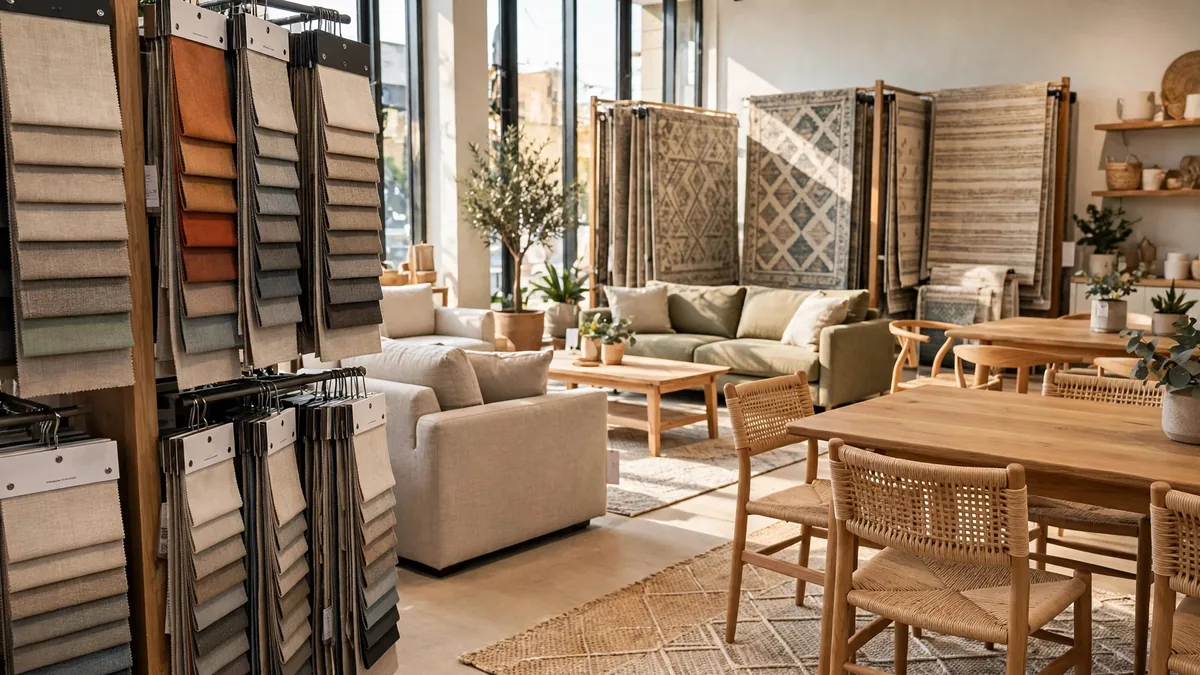
Both brands are part of the push. Crate & Barrel is the main brand, known for sofas, dining furniture, kitchenware and home goods, while CB2 is its younger, more design-forward sister brand. Opening stores under both names lets the company cover two different shoppers in the same market without forcing one brand to stretch beyond its identity. The new CB2 location in Chelsea, where Hayes gave the interview, is the template: a more elevated look, with bigger rug displays, more fabric swatches and warmer wood tones that feel homier. “We are building better quality products,” Hayes said. “You have to bring good quality to the market to be able to do that.”
Why Hayes calls it a market steal play
Hayes is unusually candid about the logic. In a growing market, a retailer can open stores and ride the rising tide. In a flat market, every new customer has to come from a competitor, and Hayes embraces that reality rather than dressing it up. Her phrase, “It’s absolutely a market steal play,” is striking precisely because retail chief executives usually talk about serving unmet demand or reaching new audiences. Hayes is saying the demand already exists; it is sitting in other people’s stores, and Crate & Barrel intends to win it over.
That framing also sets a clear test for the plan. If the expansion works, Crate & Barrel should gain share even while the overall furniture market stays flat. If it does not, the company will have spent heavily on stores in a market that cannot support them, and the new locations will cannibalise existing ones or sit underused. The 1.6 percent revenue rise reported by Otto Group last year shows the company is growing modestly already, but it is a long way from the kind of growth that 50 new stores would imply. The gap between that modest growth and the scale of the ambition is the central tension in the story.
A chief executive shaped by crisis
Few retail chief executives have had a more turbulent run than Janet Hayes. She took over Crate & Barrel in 2020, at the start of a pandemic that upended how people shop for their homes, and has since steered the retailer through repeated tariff shocks that changed the cost of almost everything it sells. Her career before Crate & Barrel included senior roles at Williams-Sonoma and at Nike, two companies that taught her both the home category and the discipline of a global brand, and that background shows in how she talks about the business. Another chief executive making a similar quality-first argument is at Chanel — see how Chanel’s chief executive is answering AI saturation with handmade luxury.
Hayes hews to the old adage, “Don’t let a good crisis go to waste,” a lesson that echoes the warnings other chief executives are giving about supply chains — see Ram Charan’s warning to CEOs about China’s manufacturing model. She says she took the tariffs as an opportunity to really understand the weaknesses in Crate & Barrel’s supply chain and to fix them, rather than simply passing higher costs on to shoppers or waiting for the pressure to pass. That is a revealing choice of words. Tariffs are usually described by retailers as a burden to be managed. Hayes describes them as a diagnostic tool, a stress test that exposed where the company was too dependent on single suppliers or single routes, and she used the findings to rebuild.
How tariffs forced a supply chain rebuild
The supply chain work is the least visible part of the expansion story and arguably the most important. On Hayes’s watch, Crate & Barrel has diversified its supplier base, notably sending more sourcing to Vietnam, and invested in technology to position inventory where it is most likely to sell and forecast demand more accurately. It has also moved more upholstery sourcing to the United States, shortening the distance between maker and buyer for some of its most important products. The company has overhauled everything from its warehouse management software to its e-commerce site, and it now accepts buy-now, pay-later services in an appeal to inflation-pinched consumers.
The flat furniture market behind the plan
The expansion only makes sense against the backdrop Hayes describes: a United States furniture market that is not growing. Furniture demand is closely tied to the housing market: when home sales slow and people move less often, they buy less furniture. A sofa bought five years ago is still a sofa, and in a tight economy many households will keep it rather than replace it. That is why the market is flat, and why Hayes is explicit that growth has to come at the expense of the competition. The wider outlook for the year ahead is mixed — see five trends that will define 2027, according to Fortune.
What it means for shoppers and rivals
For shoppers, the most immediate effect is choice. Fifty new stores means more places to see furniture in person, more fabric and rug options on display, and more local competition for their spending. Rival retailers will feel the pressure first in the markets where Crate & Barrel opens, and they will have to answer with their own stores, prices or service. That competition is generally good for shoppers, at least in the short term, because it pushes retailers to offer more for the same money.
Checklist: what to watch as the stores open
- Location announcements: which cities get the first 30 stores, and whether they sit near strong rivals.
- Opening pace: whether the company keeps to roughly ten stores a year in the first three years.
- Brand split: how many new stores carry CB2 versus Crate & Barrel.
- Stock and delivery: whether new stores stay stocked and deliver furniture on time.
- Revenue signals: any further updates from Otto Group on Crate & Barrel revenue growth.
- Rival responses: price moves or store openings from competitors in the same markets.
Frequently asked questions
How many stores is Crate & Barrel planning to open?
Fifty new Crate & Barrel and CB2 stores over five years: 30 in the next three years and 20 more in the two years after that, taking the total from about 100 to about 150.
Who is the chief executive behind the plan?
Janet Hayes, who has led Crate & Barrel since 2020. She previously held senior roles at Williams-Sonoma and Nike, and she has steered the retailer through the pandemic and repeated tariff shocks.
What does “market steal play” mean?
Hayes means that because the United States furniture market is stagnant, Crate & Barrel can only grow by winning customers away from rivals, rather than by riding overall market growth.
How did Crate & Barrel perform recently?
Parent company Otto Group reported earlier this year that Crate & Barrel revenue rose 1.6 percent last year. Otto Group does not publish full financial results for the retailer.
What changed in the supply chain?
The company diversified suppliers, sending more sourcing to Vietnam, moved more upholstery production to the United States, and overhauled warehouse software, e-commerce and demand forecasting. It also added buy-now, pay-later options.
Where will the new stores open?
Locations have not been disclosed. The plan covers both brands, and the new CB2 store in New York’s Chelsea district is the format Hayes showed to Fortune.
Bottom line
The Crate & Barrel 50-store expansion is a rare thing in modern retail: a large, public commitment to physical stores in a category many had written off as a showroom for online shopping. Hayes is not pretending the market will do the work for her. She is saying, in unusually plain language, that growth has to be taken from rivals, and that the company has rebuilt its supply chain, its stores and its products so it can take it.
What makes the plan worth watching is not the number 50 but the groundwork behind it. If the new stores deliver the elevated experience Hayes describes, and if they stay stocked and busy, the market steal play could work. If they do not, the company will have learned an expensive lesson in a flat market. Either way, the next five years will show whether a furniture retailer can still grow by opening doors.