

Here is a number to consider: industry estimates put a single autonomous car’s data output at several terabytes per day. Sending all of that to a distant data center and waiting for a response wastes resources and adds delay. At highway speed, a few hundred milliseconds can separate a safe stop from a crash. That gap between where data is created and where it gets processed is what edge computing exists to close.
What Is Edge Computing, Really?
Edge computing is the practice of processing and storing data near the physical location where it is generated, rather than routing everything through a centralized cloud or data center. The “edge” can be a factory floor gateway, a cell tower, a retail store server, a hospital imaging device, or even a smart doorbell.
The core logic is simple. If a sensor produces data that only needs to be acted on locally, sending it across the internet adds latency, cost, and risk. Moving the computation to the source flips that equation. As the Linux Foundation’s LF Edge community frames it, edge computing is less a single technology and more a way of structuring where work happens across a distributed system.
It helps to think of edge computing as a spectrum rather than a binary. On one end sits the device itself (a camera, a pump sensor, a wearable). In the middle sit local gateways and on-premises servers. Farther out sit regional edge data centers and telecom infrastructure. The cloud still exists. It just stops being the only stop on the route.
Why the Cloud Alone Stopped Being Enough
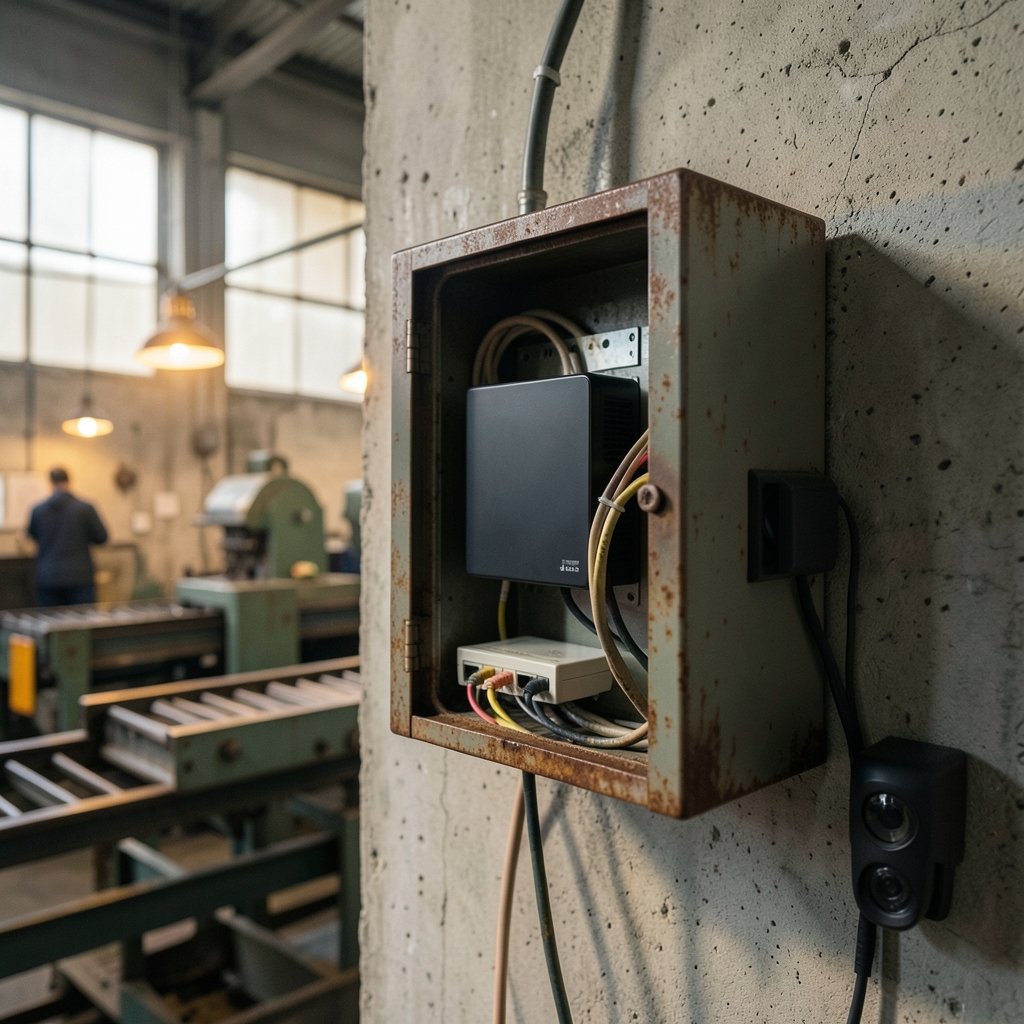
For roughly a decade, “move it to the cloud” was the default answer to almost every infrastructure question. That worked beautifully for web apps, email, and analytics dashboards. Then came connected factories, real-time video analytics, and millions of IoT sensors, and the model started to strain.
Three pressures drove the shift:
- Latency. Physics is unforgiving. Data traveling to a distant region and back adds round-trip time that no amount of optimization fully erases. For industrial control loops or augmented reality, that delay matters.
- Bandwidth. Streaming raw high-definition video from thousands of cameras to a central cloud is expensive. Filtering at the edge and sending only meaningful events cuts transfer costs dramatically.
- Reliability. A factory or mine that loses its internet connection should not lose its ability to operate. Local processing keeps critical functions running when the WAN goes down.
There is a fourth, quieter pressure: data sovereignty. Regulations increasingly require that certain data stay within a jurisdiction or even on-premises. Processing locally can simplify compliance in ways that a multinational cloud region cannot.
Where Edge Computing Shows Up in the Real World
Edge computing is not a futuristic concept. It is already embedded in systems people rely on daily, often without noticing.
| Industry | Edge Use Case | Why Local Processing Helps |
|---|---|---|
| Manufacturing | Vibration and temperature monitoring on production lines | Detects anomalies in milliseconds, avoids costly downtime |
| Healthcare | Portable imaging and patient monitoring devices | Keeps sensitive data on-site and supports immediate alerts |
| Retail | Shelf sensors and checkout-free stores | Reduces bandwidth and speeds up customer experience |
| Automotive | Onboard perception and driver-assistance systems | Safety decisions cannot wait for a round trip |
| Energy | Grid sensors and remote substation monitoring | Maintains control when connectivity is unreliable |
Notice a pattern. In each case, the value comes from acting fast on data that is generated locally. The cloud still handles long-term storage, model training, and cross-site analytics. The edge handles the moment-to-moment decisions.
This is also where edge computing overlaps with other fast-moving fields. The same distributed architecture that supports real-time inference is closely tied to what edge AI is and how it works, where machine learning models run directly on local hardware rather than in a remote data center.
Edge Computing vs. Cloud Computing: A Practical Comparison
People often frame edge and cloud as rivals. They are better understood as collaborators with different jobs. Here is how the two compare on the dimensions that actually drive architecture decisions.
| Dimension | Cloud Computing | Edge Computing |
|---|---|---|
| Location | Centralized data centers | Near the data source |
| Latency | Higher, depends on distance | Very low, often milliseconds |
| Bandwidth use | High for raw data transfer | Low, sends only filtered results |
| Scalability | Massive and elastic | Distributed, scales by deployment |
| Best for | Training, storage, analytics, backups | Real-time decisions, local control |
| Failure mode | Depends on network connectivity | Keeps working offline |
The practical takeaway: most mature systems use both. A common pattern is to train a model in the cloud, deploy it to edge devices, and periodically sync results back. If you want a deeper breakdown of the trade-offs, this comparison of quantum computing vs classical computing is a useful reminder that “where computation happens” is a recurring theme across every wave of computing. (Edge computing)
What Actually Works in Practice
Theory is tidy. Deployments are messy. Based on patterns that show up repeatedly in real edge rollouts, here is what separates projects that succeed from those that stall.
Start with one painful problem, not a platform. Teams that try to build a grand unified edge architecture before proving a single use case usually drown in complexity. The projects that work pick one measurable pain point, such as reducing scrap rates on a line or cutting video backhaul costs, and solve it narrowly first.
Design for offline from day one. A surprising number of edge pilots assume constant connectivity and then fail the first time a link drops. Build local buffering, local decision logic, and graceful reconnection into the design from the start.
Treat device management as a first-class problem. Managing hundreds or thousands of distributed nodes is genuinely harder than managing a handful of cloud servers. Updates, security patches, and monitoring across a fleet require tooling that many teams underestimate.
Watch the power and thermal budget. Edge devices often live in cramped, hot, or unpowered environments. Hardware that performs beautifully in a lab can throttle or fail in a factory cabinet in summer.
Do not over-engineer security at the perimeter. Every edge node is a potential entry point. The common mistake is bolting on security after deployment. Identity, encryption, and signed updates need to be in the plan from the beginning.
A frequent misstep deserves its own mention: assuming edge means “no cloud.” Teams sometimes rip out cloud dependencies only to rebuild inferior versions of services the cloud already provides well. The goal is placement, not elimination.
The Hardware Side: Why Efficiency Matters at the Edge
Edge deployments put unusual demands on hardware. Devices must often run on limited power, fit in small enclosures, and operate for years without maintenance. That constraint is pushing interest in chip designs that process information more like the brain does. If you are curious how that connects, this explainer on what neuromorphic computing is covers the low-power, event-driven approach that could suit future edge devices well.
The broader trend is clear: as models get smaller and chips get more efficient, more intelligence moves outward. According to NIST, fog and edge computing raise distinct security and trust considerations compared with centralized systems, which is one reason standards work in this area has accelerated. The IEEE and other standards bodies have also published foundational work on edge and fog architectures that shapes how vendors build interoperable systems today.
How Edge Computing Connects to the Next Wave of Tech
Edge computing does not exist in isolation. It sits at the intersection of several larger shifts, and understanding those connections helps predict where the field is heading.
For one, the spread of 5G networks makes edge deployment more practical by reducing the network latency between devices and nearby infrastructure. For another, the growing maturity of on-device AI means more decisions can happen locally without a round trip. And as quantum research matures, some of the hardest optimization problems may eventually be split between classical edge systems and remote quantum resources. The latest breakthroughs in quantum computing offer a useful window into how that division of labor might evolve.
There is also a practical skills dimension. Edge projects blend networking, embedded systems, security, and data engineering. Teams that treat it as “just cloud, but smaller” tend to struggle. Teams that respect its distinct constraints tend to thrive.
Common Myths Worth Retiring
A few persistent misconceptions keep circulating, and clearing them up saves real time.
Edge computing is not simply “small cloud.” The operational model, failure modes, and tooling are genuinely different. Assuming otherwise leads to fragile designs.
Edge does not replace the cloud. The overwhelming majority of successful deployments use both, with clear boundaries about what runs where.
Edge is not only for giant enterprises. Smaller operations increasingly benefit too, especially in retail, agriculture, and healthcare, where off-the-shelf edge hardware has lowered the entry cost considerably.
Latency is not always the main driver. For many teams, bandwidth cost, data sovereignty, or offline reliability matters more than shaving milliseconds. Knowing your actual driver changes the architecture you should build.
Conclusion
Edge computing is best understood as a correction, not a revolution. For years, the industry pushed nearly all computation toward centralized clouds because that was simpler and cheaper at scale. As devices multiplied and real-time demands grew, that single-direction flow stopped fitting every situation. Edge computing restores balance by putting processing where it makes sense: close to the data when speed, cost, or reliability demands it, and in the cloud when scale, storage, or heavy computation wins.
The teams that get the most from it share a common trait. They resist the urge to treat edge as a buzzword or a silver bullet. Instead, they ask a plain question about each workload: where should this actually run? Answer that honestly, start with one concrete problem, and design for the messy realities of distributed hardware, and edge computing becomes less of a trend to chase and more of a practical tool in the kit.
Frequently Asked Questions
What is edge computing in simple terms?
Edge computing means processing data close to where it is created instead of sending it to a distant data center. Think of a security camera that recognizes a person on the spot rather than streaming everything to the cloud. The processing happens locally, so results arrive faster and less bandwidth is used.
Is edge computing the same as cloud computing?
No. They are different but complementary. Cloud computing centralizes processing and storage in large data centers, which is great for heavy analytics and long-term storage. Edge computing distributes processing to local devices and gateways for speed and reliability. Most real systems combine both.
What are the main benefits of edge computing?
The biggest benefits are lower latency, reduced bandwidth costs, better reliability when connections fail, and easier compliance with data locality rules. For many organizations, the strongest driver is simply keeping critical operations running when the network is unavailable.
Does edge computing replace the cloud?
It does not. Edge computing changes where certain tasks run, but the cloud remains essential for training models, storing large datasets, coordinating devices, and running analytics that do not need to be instant. The two work together in a layered architecture.
What are common mistakes when deploying edge computing?
Frequent mistakes include starting with a grand platform instead of one clear use case, assuming constant connectivity, underestimating fleet management for many devices, ignoring power and thermal limits, and treating security as an afterthought. Planning for offline operation and signed updates early avoids most of these problems.
Is edge computing only useful for large companies?
No. While large manufacturers and telecoms were early adopters, off-the-shelf edge hardware has made it accessible to smaller operations too. Retailers, farms, clinics, and logistics firms increasingly use edge processing for tasks like local video analytics, equipment monitoring, and real-time inventory tracking.



