
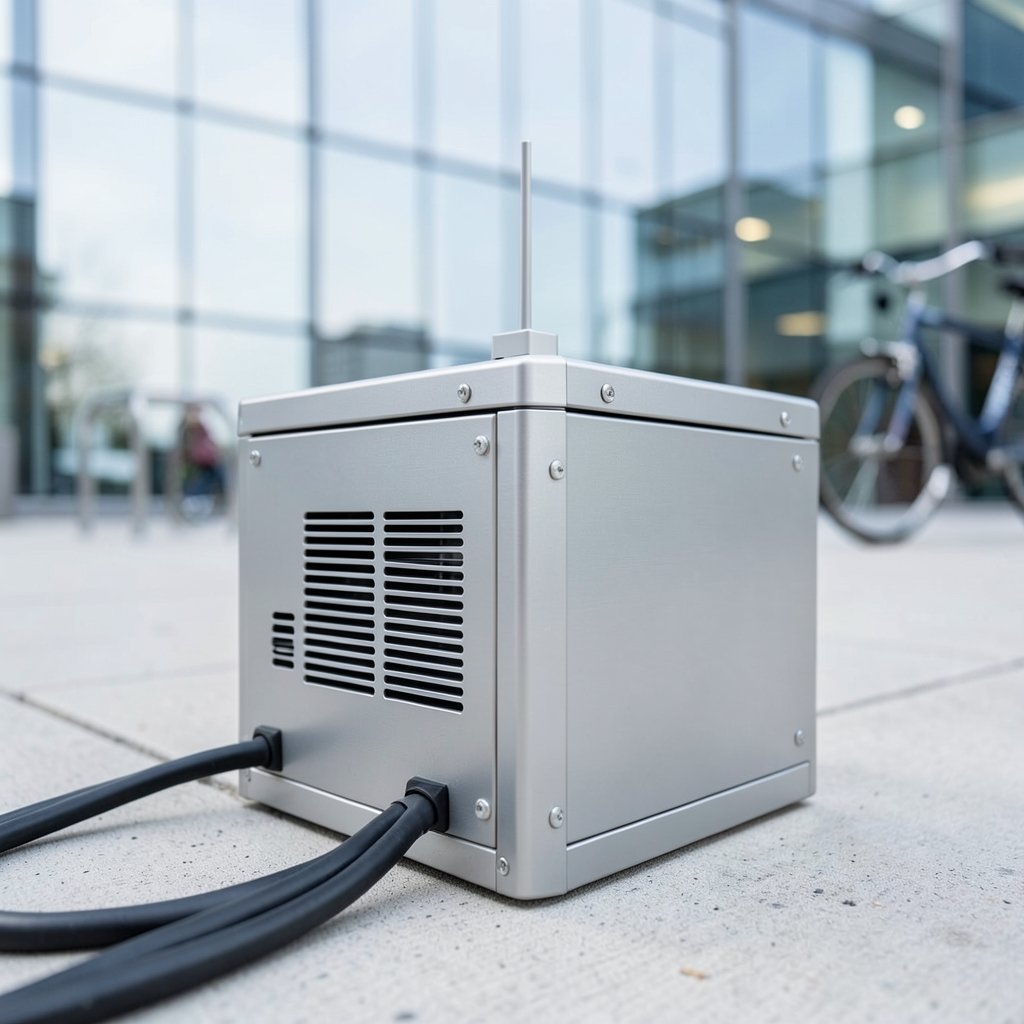
Gartner once predicted that by 2025, roughly 75% of enterprise-generated data would be created and processed outside a traditional centralized data center or cloud. That number is striking because it flips the old assumption on its head. For two decades, the default was to ship data to a faraway server and wait. Edge computing reverses that flow, pushing the work closer to where the data is actually born: a factory floor, a retail aisle, a cell tower, a moving truck.
But knowing why edge computing matters and knowing how to actually deploy it are two very different things. Plenty of pilots stall after the first proof of concept. The teams that succeed tend to follow a structured sequence rather than buying hardware and hoping for the best. This guide walks through the edge computing implementation steps in the order that experienced practitioners recommend, with the practical tips and common mistakes that separate a working rollout from an expensive science project.
Why Edge Computing Implementation Fails Without a Plan
The core promise of edge computing is simple: cut latency, reduce bandwidth costs, and keep sensitive data local. A machine-vision system that inspects parts on an assembly line cannot afford to round-trip video frames to a distant region and wait for a verdict. The physical world moves too fast.
The trouble is that edge deployments are operation-heavy. You are not spinning up a virtual machine in a comfortable data center with cooling, redundant power, and a security team on site. You are putting compute in a dusty cabinet, a retail back room, or a rooftop enclosure. That shift changes everything about how you design, secure, and maintain the system.
According to the Wikipedia entry on edge computing, the model spans a spectrum from device-level processing all the way to regional edge data centers. Choosing where on that spectrum your workload belongs is the first real decision, and getting it wrong is the most common reason projects fail. If you want a broader conceptual grounding before you plan, it helps to first understand what edge AI is and how it works, since AI workloads are now the dominant driver of edge investment.
Step 1: Start With the Constraint, Not the Technology

The single biggest mistake teams make is starting with a hardware shopping list. The right starting point is a hard constraint that the cloud cannot satisfy. There are usually only three:
- Latency: The decision must happen in milliseconds, faster than a network round-trip allows.
- Bandwidth: Moving raw data (especially video) to a central location is too expensive or too slow.
- Sovereignty or privacy: Data legally or contractually cannot leave the site.
Write the constraint down as a measurable target. “Reduce inspection latency to under 50 milliseconds” is a plan. “Move to the edge” is a slogan. A useful discipline here is to ask what happens if you simply don’t do this, and whether a cheaper cloud optimization would solve it first. Often it does.
Step 2: Map the Architecture and Decide What Runs Where
Once the constraint is clear, map your workload across the edge tiers. A practical breakdown looks like this:
| Tier | Typical hardware | Best for | Watch out for |
|---|---|---|---|
| Device edge | Sensors, cameras, embedded chips | Sub-millisecond filtering, safety cutoffs | Very limited compute and memory |
| Near edge | Gateways, industrial PCs | Local inference, protocol translation | Physical security exposure |
| Site edge | On-prem servers, micro data centers | Aggregation, local dashboards, buffering | Power and cooling constraints |
| Regional edge | Telecom or regional cloud nodes | Multi-site coordination, model training | Still a network dependency |
The key insight is that most workloads are hybrid, not purely edge or purely cloud. Inference runs locally; model retraining and long-term analytics run centrally. Design that split explicitly rather than letting it emerge by accident.
Step 3: Choose an Orchestration and Management Layer
You will almost certainly manage more than one edge site, and probably dozens. Manual configuration does not scale. This is where container orchestration earns its place. Kubernetes-based tooling lets you push the same deployment to many locations and manage them as a fleet.
The trade-off is complexity. A full Kubernetes control plane is heavy for a single small device. Lightweight distributions and GitOps workflows help, but the principle is what matters: treat every edge node as a replaceable, declaratively managed unit. If a node fails, you swap it and the configuration reappears automatically. Teams that skip this step end up with “snowflake” devices that nobody dares touch.
For teams already running cloud-native infrastructure, the operational habits transfer directly. The same discipline that makes a Kubernetes cluster upgrade safe in the cloud applies at the edge, just with more caution about bandwidth and rollback windows.
Step 4: Build Security In From Day One
Edge sites are physically exposed in a way data centers never are. A gateway in a retail stockroom can be unplugged, stolen, or tampered with. That reality should reshape your security model toward zero trust: assume the network is hostile and the device may be compromised.
Practical measures that actually work in the field:
- Signed, verified updates so a tampered image cannot be installed.
- Hardware root of trust where the budget allows.
- Least-privilege network segmentation so a compromised camera cannot reach the corporate core.
- Encrypted local storage, because devices get decommissioned and resold.
A common mistake is treating security as a later phase. Retrofitting it onto a fleet of already-deployed devices is painful and expensive. If your edge estate includes monitoring and detection tooling, the same rigor you would apply to a Wazuh SIEM detection workflow belongs at the edge too, because edge nodes are now part of your attack surface.
Step 5: Solve Operations Before You Scale
Ask any practitioner what the hardest part of edge computing is, and the answer is rarely the hardware or the model. It is operations. Remote sites have no on-site engineer. When something breaks at 2 a.m. in a facility three hours away, you need remote diagnostics, reliable out-of-band access, and a way to push fixes without a truck roll.
Three operational capabilities are non-negotiable:
- Fleet observability: Centralized logs, metrics, and health checks for every node.
- Over-the-air updates with rollback: A bad update must be reversible without physical access.
- Inventory and lifecycle tracking: Know what is deployed where, and when it reaches end of life.
Teams consistently underestimate the cost of these capabilities, then discover them the hard way. Budget for operations as a first-class line item, not an afterthought. This is also where thermal management matters: edge boxes in hot enclosures throttle or fail silently, so monitoring temperature the way you would check GPU temperature on a workstation is genuinely useful. For AI-heavy edge deployments, understanding neuromorphic computing can also inform long-term hardware choices, since low-power architectures are reshaping what is feasible at the far edge. (What is edge computing?)
Step 6: Run a Bounded Pilot With Real Success Metrics
Now, and only now, deploy. Pick one site, one use case, and a fixed timeline. Define success metrics before you start: latency, uptime, cost per inference, and the operational burden on staff. A pilot that “seems to work” but cannot be measured will not survive the transition to a business case.
Keep the pilot genuinely small. The goal is to learn where your assumptions break, and they will break. Connectivity drops. A sensor vendor’s API behaves differently than documented. A field technician needs a workflow you never designed. Capture those lessons in a runbook you will reuse.
A useful comparison of pilot approaches:
| Approach | Cost | Learning value | Risk |
|---|---|---|---|
| Single-site, single-use-case | Low | High | Low |
| Multi-site “big bang” | High | Medium | High |
| Simulation only | Low | Low | Medium (misses reality) |
The single-site pilot almost always wins. Resist the pressure to scale before you have a repeatable deployment recipe.
Step 7: Scale Deliberately and Standardize Everything
Scaling from one site to fifty is not fifty times the work, but it is not trivial either. What makes it manageable is standardization: one hardware reference design, one deployment pipeline, one monitoring stack, one security baseline. Every exception you allow at scale becomes a permanent maintenance cost.
Roll out in waves. Start with sites that are low-risk and easy to reach. Use each wave to harden the deployment recipe. Track a small set of fleet-wide metrics and watch for drift. And keep a clear decommissioning plan, because edge hardware has a finite life and a growing pile of forgotten devices is both a security and a budget problem.
For organizations blending edge with generative AI pipelines, the same staged discipline applies to image-to-video AI ad pipelines, where local processing and central coordination must be carefully balanced. And as edge hardware becomes more capable, the boundary between what edge AI can do locally and what still needs the cloud keeps shifting, which is exactly why a modular architecture pays off.
Common Mistakes That Derail Edge Rollouts
A few patterns show up again and again. Treating the edge as “just smaller cloud” ignores the physical reality of power, cooling, and access. Skipping fleet management guarantees a maintenance nightmare. Over-engineering the first pilot wastes budget on scale you do not yet need. And ignoring the operational cost of remote sites turns a promising project into a permanent support burden.
The teams that get this right tend to be boringly disciplined. They measure first, pilot small, standardize early, and treat security and operations as core requirements rather than add-ons.
Conclusion
Edge computing implementation is less about exotic technology and more about sequencing decisions correctly. Start with a hard constraint the cloud cannot meet. Map your workload across the edge tiers. Choose an orchestration layer you can actually operate. Build security and remote operations in from the beginning. Pilot on one site with real metrics. Then scale in waves, standardizing ruthlessly as you go.
The organizations that succeed are not the ones with the most impressive hardware. They are the ones that respected the operational reality of putting compute in the physical world. Follow the steps in order, keep the pilot small, and let each stage earn the next. That discipline is what turns an edge pilot into infrastructure that quietly does its job, year after year.
FAQ
What is the first step in edge computing implementation?
The first step is defining a hard constraint that centralized cloud cannot satisfy, such as a latency ceiling, a bandwidth cost problem, or a data-residency requirement. Starting with hardware or vendor selection before this constraint is clear is the most common cause of failed projects.
How long does an edge computing pilot usually take?
Most practitioners recommend a bounded pilot of roughly three to six months at a single site with one use case. The exact duration depends on how complex the workload is and how quickly you can define measurable success criteria like latency, uptime, and cost per inference.
Do you need Kubernetes to run edge computing?
No, but you almost certainly need some form of fleet orchestration once you manage more than a handful of sites. Kubernetes-based tooling is popular because it lets teams push identical deployments to many locations, but lightweight alternatives exist for small or constrained devices.
What is the biggest security risk at the edge?
Physical exposure is the defining risk. Edge devices sit in stockrooms, factories, and outdoor enclosures where they can be tampered with, stolen, or unplugged. A zero-trust model with signed updates, hardware root of trust, and network segmentation is the practical response.
How is edge computing different from cloud computing?
Cloud computing centralizes compute and storage in large data centers, while edge computing places processing close to where data is generated. The trade-off is that edge reduces latency and bandwidth costs but introduces operational complexity, because remote sites lack the physical protections of a data center.
What metrics should define a successful edge deployment?
Track latency against your original constraint, uptime per site, cost per inference or per transaction, and the operational burden on staff. Fleet-wide visibility into these numbers is what lets you scale confidently instead of guessing whether the rollout is actually working.



