

What happens when a factory robot, a heart monitor, or a self-driving shuttle cannot afford the half-second it takes to ask a distant data center for permission to act? That question sits at the heart of edge computing in IoT. Instead of shipping every sensor reading to the cloud, edge systems process data right where it is created: on the device, on a local gateway, or in a nearby micro-data-center. The idea sounds simple. Putting it into practice is where things get interesting, and where a lot of teams stumble.
What Edge Computing in IoT Actually Means
Edge computing is a model that moves computation and storage closer to the sources of data. In an IoT deployment, that usually means a layered setup: the device edge (sensors, cameras, controllers), a gateway or fog layer that aggregates and filters data locally, and the cloud for long-term storage, heavy analytics, and fleet-wide coordination.
The U.S. National Institute of Standards and Technology gave this middle layer a formal name. Its Special Publication 800-191, published in 2019, defines fog computing as a layer that sits close to the things producing data and provides processing, storage, and networking services between devices and the cloud. That definition matters because it gives architects a shared vocabulary. It also highlights a messy reality: “edge,” “fog,” and “multi-access edge computing” are used inconsistently across industry and academia, and the definitions overlap without being identical.
The standards body ETSI launched its Multi-access Edge Computing work in 2014, originally calling it Mobile Edge Computing, then renaming it in 2016 to reflect a broader scope beyond cellular networks. Cellular standards work through 3GPP has also added edge enablers over successive releases. In other words, this is not a vendor fad. It has real standards behind it, even if the terminology still wobbles.
Why Move Processing to the Edge at All?
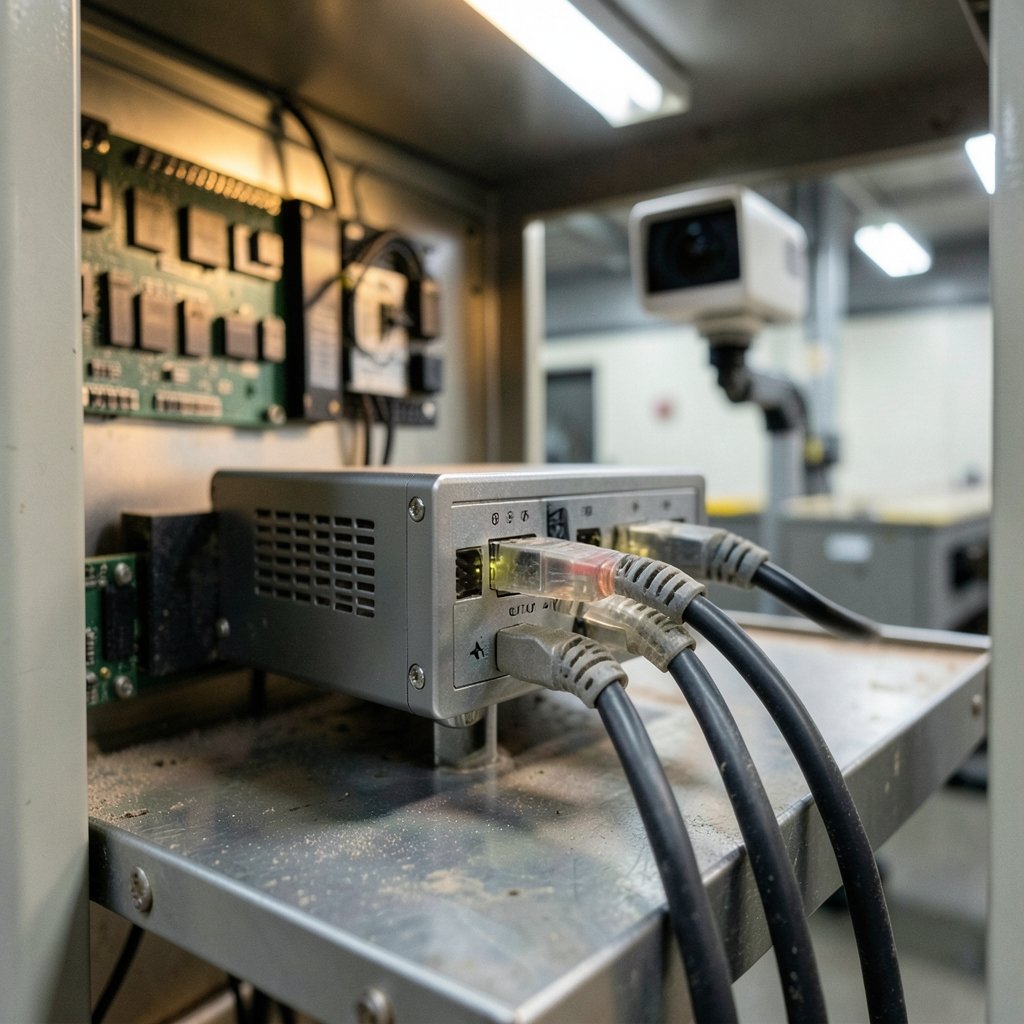
Three forces push IoT workloads toward the edge: latency, bandwidth, and reliability.
Latency is the headline. For industrial control loops, autonomous systems, and safety functions, a round trip to a distant cloud can be too slow or too unpredictable. Processing locally shortens that loop. Be careful with specific millisecond claims, though. Measured savings vary enormously by network, workload, and geography, and any “we cut latency by X milliseconds” figure deserves a source and a test on your own hardware.
Bandwidth and cost are the quieter wins. A single high-definition camera can generate gigabytes per day. Multiply that by hundreds of devices and the backhaul bill and cloud egress charges add up fast. Filtering, aggregating, and summarizing at the edge means you send events and insights upstream instead of raw noise. The benefits of processing data closer to the source go well beyond speed; they reshape what a network has to carry at all.
Reliability is the third force. An edge node can keep critical functions running when the WAN link drops. That matters in mines, farms, ships, and remote substations where connectivity is intermittent by default, not by exception.
The Architecture in Plain Terms
Most working IoT edge deployments share a common shape, even when the vendor names differ.
| Layer | Typical hardware | What it does | Common pitfall |
|---|---|---|---|
| Device edge | Sensors, cameras, PLCs, microcontrollers | Sampling, basic filtering, safety interlocks | Trying to run heavy analytics on tiny chips |
| Gateway / fog | Industrial PCs, edge servers, cellular gateways | Aggregation, local inference, protocol translation, buffering | Skipping remote management and patching |
| Cloud | Regional data centers | Long-term storage, model training, fleet dashboards | Treating cloud as the only source of truth |
The practical lesson from teams that have shipped these systems: put the decision as close to the actuator as the safety case allows, and put the learning where compute is cheap. Train models in the cloud, deploy them to the edge, and send back only the data needed to improve them. Understanding how data movement closer to users changes everything helps frame why this split works so well.
Where Edge Computing in IoT Earns Its Keep
Some use cases fit the edge model almost perfectly.
Predictive maintenance on rotating machinery benefits from continuous vibration analysis. A local node can flag anomalies in real time and upload only the interesting windows.
Video analytics at retail stores, ports, and construction sites often runs on a local box because streaming every frame to the cloud is wasteful and sometimes legally awkward.
Agriculture uses edge gateways to combine soil, weather, and equipment data in fields with poor coverage, syncing summaries when a connection appears.
Healthcare monitoring pushes alerting logic onto bedside devices so a nurse is notified even if the network hiccups.
Smart grids place protection and measurement logic at substations, where response times are measured in cycles, not seconds.
Notice a pattern: the strongest cases involve either a hard timing requirement, a bandwidth constraint, or an unreliable link. If none of those apply, the edge may add complexity without adding value.
Where It Gets Hard: The Last Mile and Beyond
The hardest part of edge computing is rarely the compute. It is everything around it. The challenges of the last mile are where most projects lose time and budget: power, physical access, mounting, cooling, cabling, and the simple fact that someone has to drive to a remote site to fix a frozen gateway.
A few practical traps show up again and again.
Treating edge nodes like pets, not cattle. If each device is hand-configured and lovingly maintained, you cannot scale past a few dozen. Fleets need automated provisioning, remote updates, and rollback plans from day one.
Underestimating the security surface. Distributing compute across many locations multiplies the number of things that can be attacked and complicates patching. Guidance aimed at IoT device makers, such as NISTIR 8259 published in 2020, lays out foundational security activities that apply directly to edge hardware. Ignoring them is a common and expensive mistake.
Forgetting about data gravity. Teams sometimes move compute to the edge but leave the data pipeline unchanged, so they still pay to ship everything upstream. The savings never materialize.
Skipping observability. You cannot debug what you cannot see. Edge deployments need local logging, health telemetry, and alerting that works even when the uplink is down.
Over-engineering the first pilot. A proof of concept with custom hardware and bespoke software is impressive in a demo and painful in production. Standardize early.
How to Plan a Rollout That Actually Ships
A staged approach beats a big-bang deployment every time. A practical seven-stage implementation path starts with use-case selection and ends with measured operations, and it deliberately keeps early phases small. The same discipline shows up in a sensible edge rollout plan: pick one high-value site, instrument it, prove the numbers, then replicate.
- Define the decision, not the technology. State exactly what must happen locally and how fast.
- Map the data path. Know what stays local, what gets summarized, and what goes to the cloud.
- Choose hardware against the environment. Dust, heat, vibration, and power quality decide more than CPU benchmarks.
- Build the management layer first. Provisioning, updates, and monitoring are not phase-two nice-to-haves.
- Pilot on one site. Measure latency, bandwidth, and failure modes with real traffic.
- Harden security. Identity for every device, encrypted transport, signed updates, and a patch cadence.
- Scale with templates. Turn the pilot into a repeatable deployment package.
You also need numbers to defend the investment. Useful metrics include round-trip latency, uplink volume saved, local inference accuracy, device uptime, and mean time to recover from a failure. Tracking the right edge computing metrics turns a vague “it feels faster” story into a budget conversation that finance teams can follow.
Skills, Tools, and the Human Side
Edge computing in IoT is a hybrid discipline. It borrows from embedded engineering, network operations, cloud platform work, and data science. Teams often discover midway that their cloud engineers are uncomfortable with physical hardware and their OT specialists distrust remote updates. Bridging that gap is a management problem as much as a technical one.
On the tooling side, open-source projects under the Eclipse and Linux Foundation Edge umbrellas have offered reference implementations for edge gateways and edge-native application patterns. Project status changes over time, so verify what is actively maintained before committing. Containerization helps portability, but small devices may need lighter runtimes. The honest answer is that no single stack fits every deployment, and experienced teams keep the application logic portable rather than betting on one vendor’s platform.
A beginner-friendly walkthrough of how edge computing works step by step can help stakeholders who are new to the model build intuition before architecture debates begin.
Common Mistakes and What Actually Works
After the hype settles, the teams that succeed tend to share habits.
They start with a boring, measurable problem rather than a moonshot. They automate device onboarding before the fleet grows. They test failure modes on purpose, pulling the network cable and cutting power to see what the system does. They keep a cloud fallback for non-critical functions so the edge is not a single point of failure. And they document the data contract between edge and cloud so both sides can evolve independently.
They also resist the temptation to edge-ify everything. Centralized cloud processing remains cheaper and easier for workloads that tolerate latency and have reliable connectivity. The mature posture is a deliberate split, not an ideological one. Following established edge computing best practices keeps latency low without turning the deployment into an unmanageable snowflake.
Conclusion
Edge computing in IoT is less a product than a design decision: choose where each piece of logic should live, then build the plumbing to support that choice. The standards exist, the hardware is mature, and the use cases are real. What separates successful deployments from stalled pilots is rarely the processor. It is discipline about scope, honest measurement, and a management layer built before it is urgently needed. Start small, instrument everything, and let the data tell you where the edge actually pays off.
FAQ
What is edge computing in IoT in simple terms?
It means processing data near where it is created, such as on a sensor, a local gateway, or a nearby server, instead of sending everything to a distant cloud. This cuts delay, saves bandwidth, and lets critical functions keep working when the internet connection drops.
Is edge computing the same as fog computing?
Not exactly. Fog computing is a term formalized in NIST Special Publication 800-191 to describe a layer between devices and the cloud that provides processing, storage, and networking. Edge computing is the broader idea of processing near the data source. The terms overlap heavily, and industry usage is inconsistent.
Does edge computing replace the cloud for IoT?
No. Most working systems use both. The edge handles time-sensitive decisions, filtering, and local buffering, while the cloud handles long-term storage, model training, fleet dashboards, and coordination across many sites. The split depends on latency needs, bandwidth costs, and how reliable the connection is.
What are the biggest security risks at the edge?
The main risks are a larger attack surface from many distributed nodes, slow patching, weak device identity, and physical access to hardware in the field. Foundational guidance for IoT device security, such as NISTIR 8259, recommends practices like unique device identity, secure update mechanisms, and restricted access that apply directly to edge deployments.
How do you measure whether edge computing is working?
Track round-trip latency for critical actions, uplink data volume before and after local filtering, local inference accuracy, device uptime, and mean time to recover from failures. Compare these against a baseline captured before the rollout so the improvement is provable rather than assumed.
Do small businesses need edge computing for their IoT projects?
Only if a real constraint justifies it, such as a hard timing requirement, expensive or limited bandwidth, or unreliable connectivity. For many small deployments, cloud processing is cheaper and simpler. A short pilot that measures latency and data volume will show quickly whether the edge adds value.



