What do you do when raw sewage is backing up into your bathtub at 11 p.m. and every plumber you call says “we don’t handle septic”? That panic is more common than most homeowners admit, and it is exactly the situation emergency septic pumping exists to solve. This guide walks through what an emergency pump-out actually involves, how fast help can realistically arrive, what it costs you in disruption, and the mistakes that turn a smelly inconvenience into a genuine health hazard. (Choose gaming router that actually lowers your ping)
What Counts as an Emergency Septic Pumping Call?
Not every slow drain deserves a tanker truck. An emergency pump-out is the urgent attendance of a vacuum tanker to empty an overflowing septic tank, cesspit, pump station, or grease trap. The keyword there is overflow. According to drainage industry guidance, tanker emergencies cluster in two places: off-mains residential properties and commercial sites with grease traps or pump wet wells. The common triggers are missed scheduled empties, equipment failure, or a sudden jump in load, such as a house full of guests or a restaurant running a busy weekend. (Dehumidifier drain pump when it beats gravity hose)
The line between “call tomorrow” and “call now” comes down to what is physically happening on your property. Here is the practical split:
| Situation | Urgency | Why |
|---|---|---|
| Slow drains, mild odor, no backup | Routine | Likely partial blockage or a tank nearing capacity |
| Gurgling fixtures after each flush | Soon | Tank or drain field is struggling to absorb flow |
| Sewage backing up into lowest drains | Emergency | Tank is full or the outlet is blocked |
| Standing sewage in the yard or around the lid | Emergency | Overflow is reaching the surface and public health risk rises |
| Alarm on a pump or lift station | Emergency | Pump failure can fill a wet well fast |
If you can see or smell sewage above ground, stop reading and start calling. Surface effluent carries pathogens, and it can contaminate wells, gardens, and neighboring ground.
Why Septic Systems Fail Without Warning
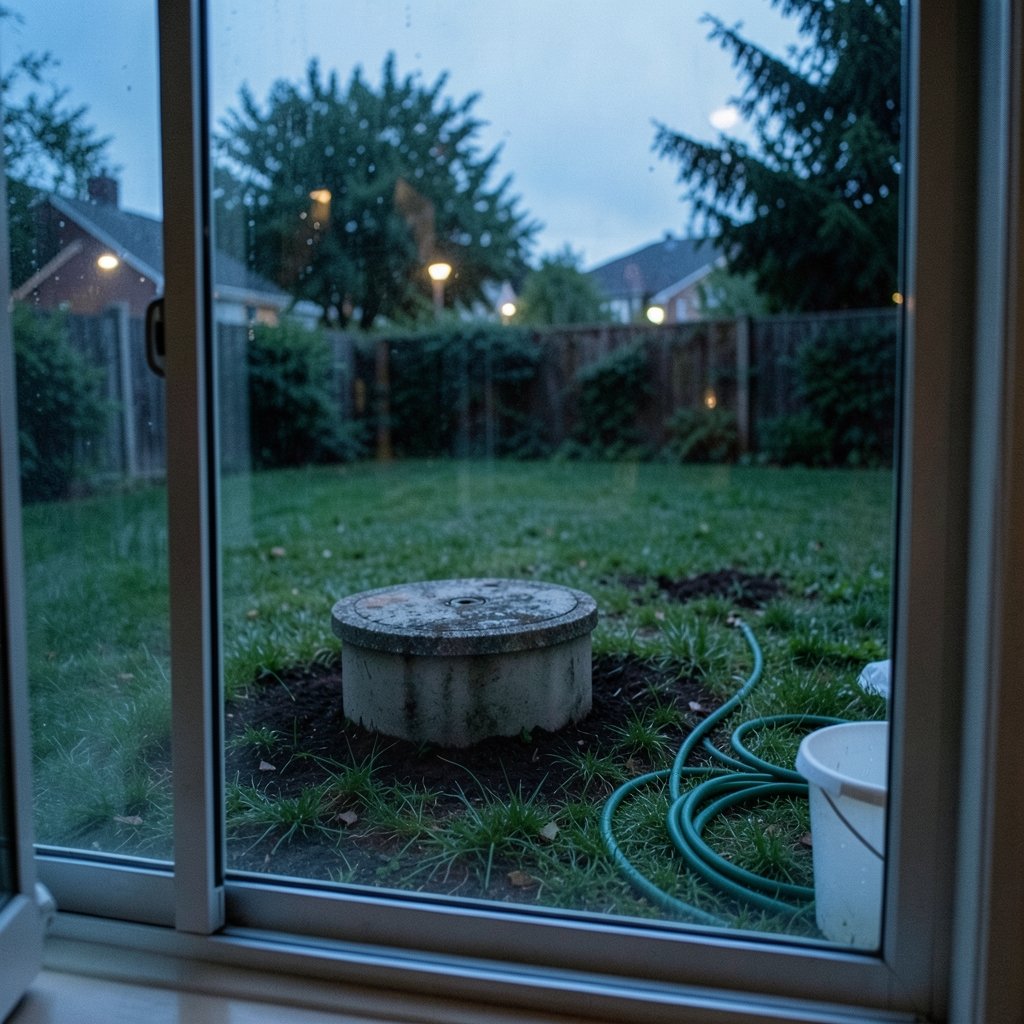
Septic tanks rarely fail on a whim. They fail because the math catches up. A tank fills with solids and sludge over time, and the clear layer that should drain into the drain field shrinks. Once the solids layer gets too thick, waste exits the tank faster than the soil can absorb it, and the whole system backs up.
Several things accelerate that timeline:
- Missed pump-outs. Domestic septic tanks typically require servicing once or twice a year, depending on household size and tank volume. Skip a couple of cycles and you are gambling.
- Water overuse. A leaking toilet flapper running 24 hours a day can add hundreds of liters to a tank each day.
- Wrong waste. Wipes, cooking grease, and heavy chemical cleaners disrupt the bacterial balance that does the actual work.
- Pump or lift station failure. Properties where the gradient does not allow gravity flow rely on a lift station to push wastewater uphill. When the pump dies, the well fills quickly, and the overflow arrives without much warning.
That last point deserves emphasis. Lift stations are genuinely dangerous to work on for anyone unfamiliar with the electrical controls and confined-space risks involved. Homeowners should never open a pump chamber and start poking around. Call a licensed operator.
What Happens During an Emergency Pump-Out
The process itself is less dramatic than the situation that triggers it. A vacuum tanker extracts liquid and semi-liquid waste, sludge, silt, grease, and slurry from tanks, chambers, sumps, and pits, then transports it for licensed disposal. Here is how a typical callout unfolds.
- Triage on the phone. The operator asks about tank location, access, the last pump-out date, and whether sewage is surfacing. Be honest. A 30-second conversation saves a wasted trip.
- Access check. The tanker needs a route to the tank lid. A garden hose cannot reach it, and neither can a truck blocked by a parked car, a locked gate, or a low branch. Clear the path before the crew arrives.
- Tanker attendance. Response times vary wildly by area. In dense urban areas with heavy traffic, attendance within two to four hours is a reasonable expectation; rural properties and storm conditions push that out.
- Emptying and measurement. The crew pumps the tank down and records the volume removed. That figure matters for billing and for future planning.
- Basic inspection. Good operators look for obvious problems while the tank is open, including damaged baffles, blocked outlets, and pump condition where equipment is installed.
- Disposal. The waste goes to a licensed treatment or disposal facility. This is not a detail you should skip; unlicensed dumping is an environmental offence and a sign you hired the wrong crew.
Many operators run septic services on a call-in or emergency basis around the clock, every day of the year, though availability varies by location. Ask about 24/7 coverage when you first call, not when you need it.
How Fast Can a Tanker Really Get There?
This is where expectations and reality often collide. A tanker is a heavy vehicle with limited legal disposal routes and a finite number of crews. During a regional flood or a cold snap that freezes lines, demand spikes and everyone waits.
What actually speeds things up in practice:
- Calling a company that owns its own tankers. Brokers add a layer between you and the truck.
- Being clear about access. Tell them the tank is 40 meters from the road behind a side gate, and they will plan accordingly.
- Having a second option ready. Keep one local, licensed tanker number saved in your phone before you need it. Scrambling for a number mid-overflow is how people end up paying a premium to a company they know nothing about.
While you wait, stop using water. That means no flushing, no showers, no dishwasher, no laundry. Every liter you send down the drain adds to the overflow. If sewage is surfacing outdoors, keep children and pets away, wear gloves if you must move anything, and wash thoroughly afterward.
What It Costs and What Drives the Price
Pricing for emergency pumping is rarely a flat rate. The bill is built from several moving parts: tank size, volume removed, distance to the disposal facility, time of day, and urgency. Emergency and after-hours rates sit above scheduled maintenance, which is precisely why planned emptying is cheaper over the long run.
| Cost factor | Effect on your bill |
|---|---|
| Tank size and volume pumped | Larger volume means more truck capacity and higher disposal fees |
| Time of call | Nights, weekends, and holidays carry premiums |
| Access difficulty | Long hose runs or restricted access add labor |
| Waste type | Grease and heavily contaminated loads cost more to dispose of |
| Disposal distance | Longer hauls to licensed facilities raise the charge |
| Extra work | Jetting, repairs, or pump replacement add to the total |
The cheapest call you will ever make is a scheduled pump-out. The most expensive is the one where a tanker arrives, empties a full tank, and then you still need a drain field assessment because the damage was done months earlier.
Mistakes That Make an Emergency Worse
First-hand experience from drainage crews points to a handful of repeat offenders. These are the moves that turn a manageable pump-out into a multi-day saga.
- Opening the tank lid yourself. Septic tanks produce hydrogen sulfide and methane, and the gases can overwhelm you in a confined space. Leave the lid to the professionals.
- Pouring chemical “miracle” products down the drain. They do not empty a full tank, and some damage the bacterial balance your system depends on.
- Ignoring the pump alarm. A beeping lift station alarm is an early warning, not a suggestion. Deal with it before the well overflows.
- Blaming the tank when the problem is the drain field. If the tank is pumped and the backup returns within days, the outlet or drain field is the real culprit. You need a different kind of investigation.
- Hiring the cheapest quote without checking licensing. Ask where the waste goes. A legitimate operator will tell you without hesitation.
There is a useful parallel in home technology: the fix that looks simple often has a hidden layer of complexity. The same logic applies to smart home hardware, where knowing how a smart lock emergency power port works can save you from a lockout. Septic systems reward the same preparation mindset. If you run a home office or a small business on the property, protecting your network from avoidable outages is the same kind of preventive thinking as scheduling a tank pump-out, which is why choosing a gaming router that actually lowers your ping matters less than the basics you set up in advance. And if your property has a basement or a dehumidifier running constantly, a dehumidifier drain pump is worth understanding when it beats a gravity hose, because condensate and wastewater both punish systems that are not planned properly.
Preventing the Next Emergency
Prevention is unglamorous and effective. A few habits keep tankers away from your driveway.
- Schedule pump-outs by calendar, not by crisis. Once every one to two years for a typical household is a sensible starting point; larger households and commercial kitchens need more frequent service.
- Know your tank. Find the lid, note the size, and record the last pump-out date. Keep it somewhere you will actually look.
- Watch your water. Fix running toilets and dripping taps promptly. Spread laundry loads across the week.
- Protect the drain field. Do not park vehicles or plant deep-rooted trees over it.
- Book a maintenance contract if you run a business. Commercial sites with grease traps and pump wells benefit from scheduled collection far more than from emergency calls.
Conclusion
Emergency septic pumping is not a mysterious process; it is a vacuum tanker, a licensed crew, and a measured pump-out, arriving under pressure. The real story is what leads up to that call: a tank that was never emptied on schedule, a pump that failed quietly, or a drain field that was asked to do too much. Handle those three things and the emergency calls become rare. When one does happen, the playbook is short. Stop using water, clear access to the tank, call a licensed local operator, and keep everyone away from surfaced sewage until the truck pulls in. The smell fades. The bill is easier to swallow when you know exactly what you are paying for.
FAQ
How often should a septic tank be pumped to avoid emergencies?
Most domestic tanks need emptying once or twice a year, depending on household size and tank volume. Commercial kitchens and properties with grease traps usually need more frequent collection. Treat that as a starting rhythm and adjust based on your operator’s inspection findings.
Can I pump my own septic tank?
No. Pumping requires a vacuum tanker, safe handling of raw waste, and licensed disposal at an approved facility. Opening a tank lid also exposes you to dangerous gases in a confined space. This is one job where the equipment and the legal disposal chain both matter.
What should I do while waiting for the tanker?
Stop all water use immediately: no flushing, showers, laundry, or dishwashing. Keep children and pets away from any surfaced sewage, and make sure the crew has a clear path to the tank lid. Document the situation with photos in case you need them for insurance.
Does homeowners insurance cover emergency septic pumping?
Coverage varies widely by policy and provider, and many standard policies exclude routine maintenance while covering sudden failures. Check your specific policy wording or ask your insurer directly. Do not assume either way before the bill arrives.
How long does an emergency pump-out take?
The pumping itself is often a short job once the tanker is on site. The variable is attendance time, which can range from a couple of hours in urban areas to much longer in rural locations or during regional demand spikes such as flooding.
Can a full tank damage my drain field permanently?
Yes, and this is the expensive part. When a tank stays full, solids escape into the drain field and clog the soil pores. Pumping the tank fixes the tank, but a failed drain field may need replacement, which costs far more than a scheduled pump-out ever would.