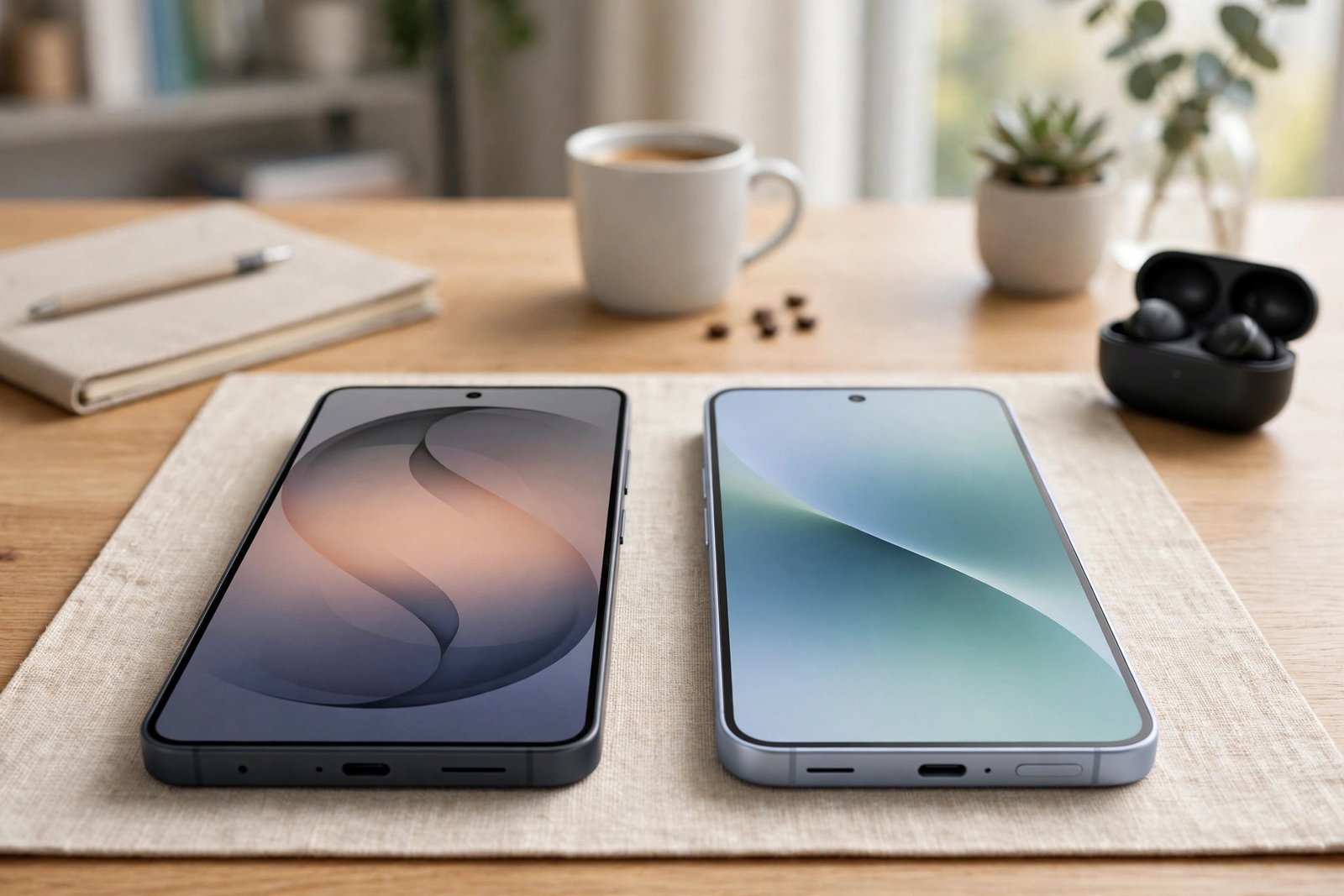
The Samsung Galaxy S26 vs Google Pixel 10 question is the Android buyer’s dilemma in its purest form. Both phones run Android, both promise excellent cameras and smart software, and both are built to last for years. Yet they come from very different ideas about what a phone should be. The short answer is this: choose the Galaxy S26 if you want the most versatile hardware, the brightest display and the widest range of features, and choose the Pixel 10 if you want the cleanest Android experience, Google’s camera processing and the smartest everyday software.
The Galaxy leans on Samsung’s hardware strength and its own layer of features, while the Pixel leans on Google’s software and a camera that does much of its work after you press the shutter.
Key takeaways
- Both are strong Android flagships; the winner depends on whether you value hardware versatility or software simplicity.
- Samsung offers more features, more customisation and a brighter, more vivid display.
- Google offers cleaner software, faster updates and computational photography that flatters everyday shots.
- Battery life depends on use, signal and settings, so compare real-world patterns rather than a single claim.
- Exact Galaxy S26 pricing and some specifications were not confirmed at the time of writing — check before you buy.
Design and build
Samsung and Google take different routes to a premium phone. The Galaxy S26 follows Samsung’s established design language: a slim body, a display that runs close to the edges and a polished, confident finish. It feels like a flagship designed to show off its screen. The Pixel 10 follows Google’s quieter approach, with a distinctive camera bar, a matte finish on some models and a design that prioritises grip and everyday use over visual drama.
In the hand, the Galaxy tends to feel sleeker and more screen-led, while the Pixel tends to feel a little more practical, with a shape that is easy to hold and a finish that resists fingerprints. Neither is fragile by design, but both are glass phones, and both benefit from a case.
Best for a sleek, screen-led design: the Galaxy S26.
Best for a practical, understated design: the Pixel 10.
Display: vivid versus natural
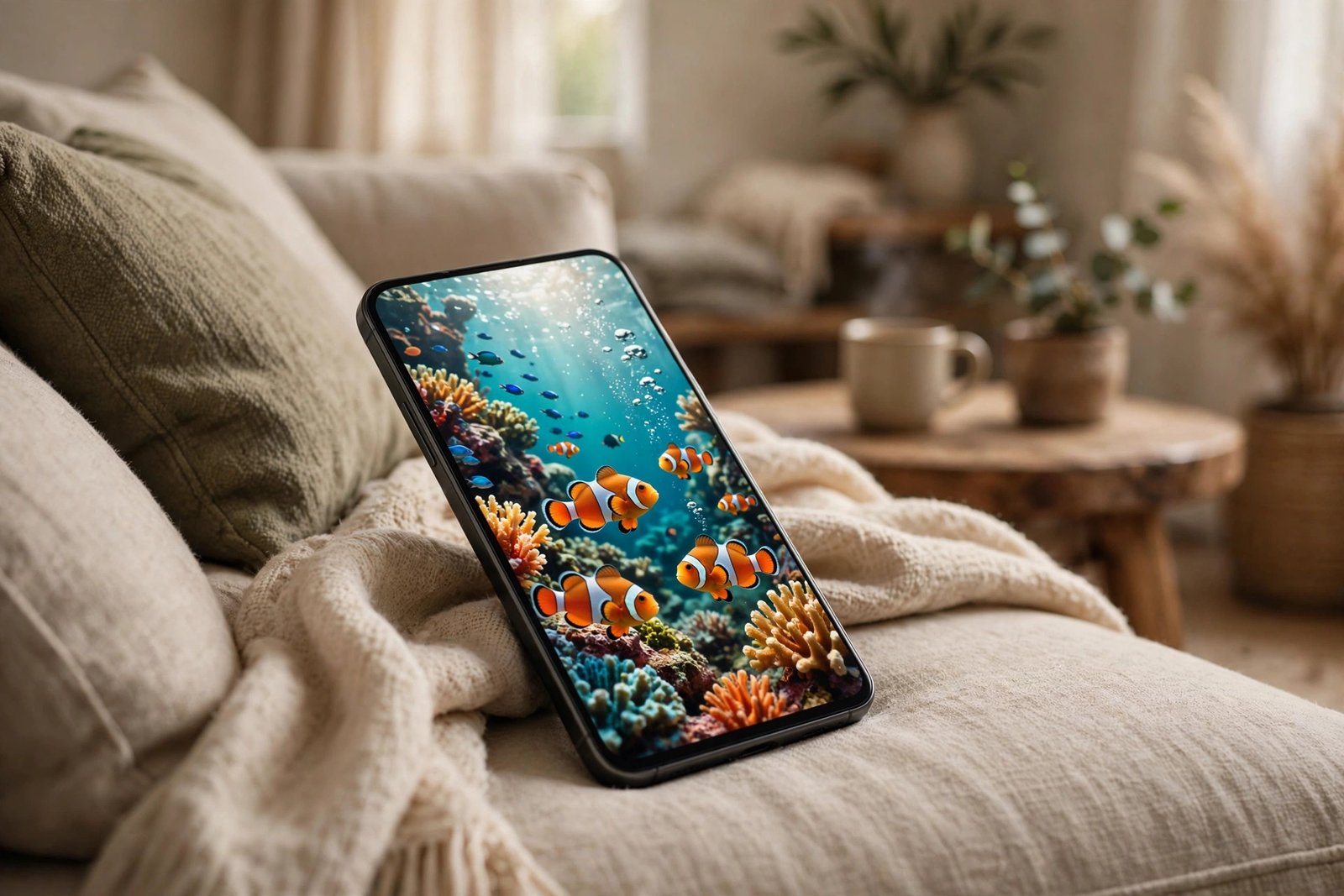
Display quality is one of the clearest differences between these two phones. Samsung makes some of the best phone screens in the world, and the Galaxy S26 shows it. Colours are vivid, contrast is deep and outdoor visibility is strong, which makes photos, video and maps look striking in bright light. The Pixel 10 display is also excellent, but Google tunes it for a more natural look, with accurate colour and a calmer presentation that suits reading and long browsing sessions.
For most people, both screens are more than good enough. The difference shows up at the edges: in direct sunlight, during long video sessions, and when you compare the same photo on both phones. Samsung’s panel often looks more impressive at first glance, while Google’s looks more faithful to the original scene. A smooth refresh rate makes scrolling feel fluid, but it can use more battery, so both phones let you balance smoothness against power use.
Cameras: hardware reach versus computational skill
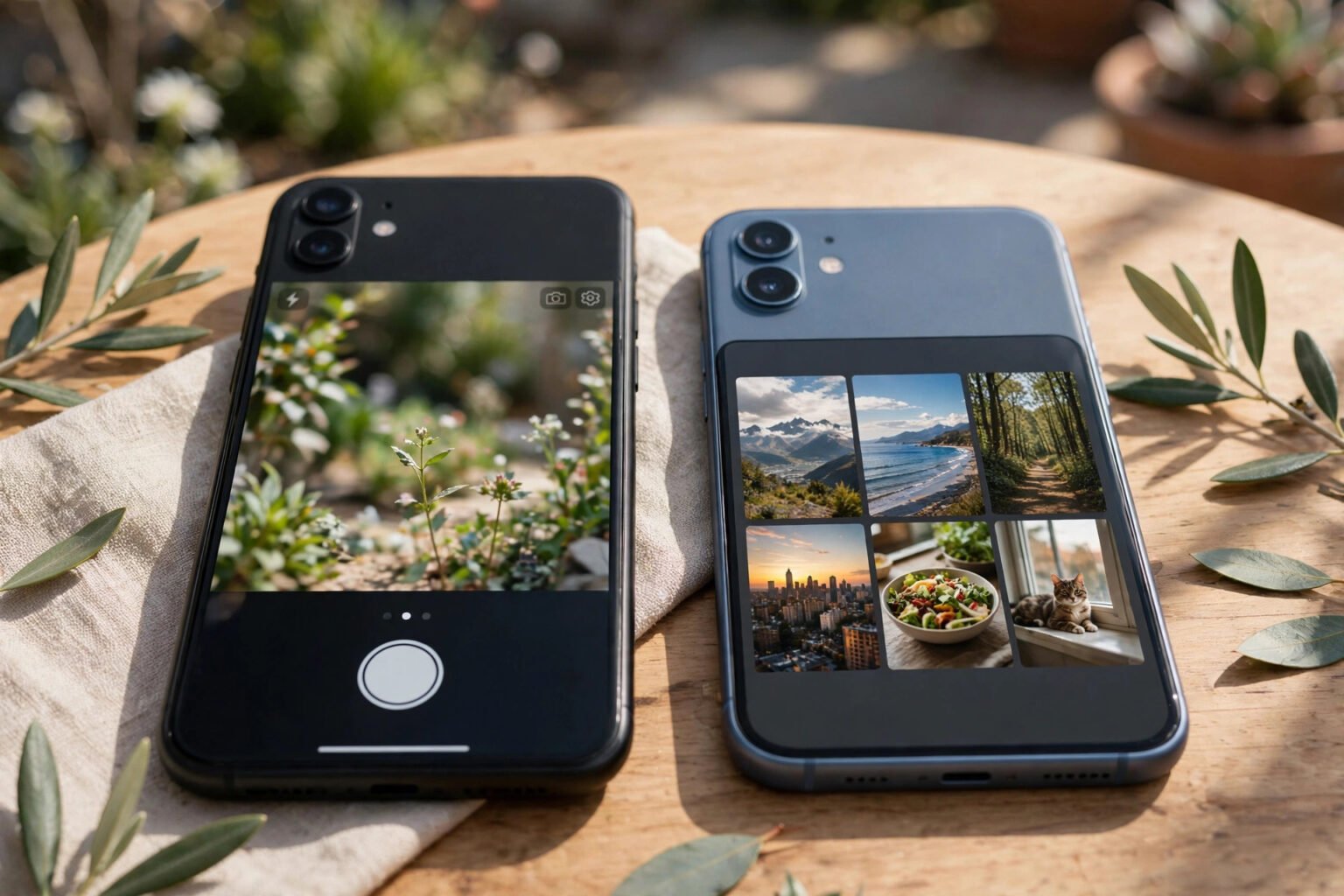
Camera quality is where this comparison gets interesting, because Samsung and Google solve the same problem in opposite ways. Samsung gives you versatile hardware: a main camera, an ultra-wide camera and a zoom lens, with tools for night photography, high-resolution detail and creative control. Google gives you computational photography: software that combines multiple exposures, sharpens detail and balances light in ways that flatter everyday shots, even when conditions are difficult.
In daylight, both phones produce excellent photos. The Galaxy S26 tends to deliver punchy, detailed images with strong zoom, which suits travel, events and wildlife. The Pixel 10 tends to deliver natural, well-balanced photos with reliable skin tones and pleasing colour, which suits portraits, family photos and everyday scenes. For a broader view of what to look for in a camera phone, see our guide to the best camera phones.
Night photography is a useful test. Samsung has built a strong reputation for bright, detailed low-light shots, while Google’s Night Sight has long been one of the best tools for rescuing a dark scene. Try both in the same dim room or street, and compare the results on a larger screen. Pay attention to noise, detail in shadows and whether faces look natural rather than smoothed.
Best for zoom, detail and creative control: the Galaxy S26.
Best for point-and-shoot portraits and low-light stills: the Pixel 10.

Software and AI: two versions of Android
Software is the heart of this comparison, because both phones run Android but feel very different. The Galaxy S26 runs Samsung’s interface on top of Android, with a wide range of features: customisable home screens, themes, split-screen multitasking, Samsung’s own apps and a suite of AI tools for photo editing, translation, writing and call handling, depending on region and model. It is powerful and flexible, and it rewards people who like to tailor their phone.
The Pixel 10 runs Google’s cleanest version of Android, with the Google Assistant and Google’s AI features built in from the start. The interface is simpler, with fewer duplicate apps and a more consistent design. Features such as Call Screen and Magic Eraser, where available, are designed to solve everyday problems quietly rather than to show off. Updates also arrive quickly, often on the day Google releases them. If you are also weighing Apple’s alternative, our comparison of the iPhone 17 vs Galaxy S26 puts Samsung’s flagship in a wider context.
Best for customisation and feature depth: the Galaxy S26.
Best for clean software and fast updates: the Pixel 10.
Battery life and charging
Battery life is difficult to compare from a single figure, because screen time, signal strength, camera use and background apps all change the result. Both phones are designed to get most people through a full day of normal use, with power-saving modes to stretch that further. Samsung has traditionally offered larger batteries and a wider range of power options, while Google has leaned on software efficiency and adaptive battery features that learn your habits and limit power to apps you rarely use.
In practice, a heavy day of navigation, photography and video will drain either phone faster than a quiet day of messaging and reading. Charging is a practical difference: check whether a charger is included and what speeds each phone supports. For more on getting the most from a charge, see our guide to the best phones for battery life.
Best for flexible power options and fast top-ups: the Galaxy S26.
Best for adaptive, learn-as-you-go battery management: the Pixel 10.
Ecosystem, accessories and value
Ecosystem matters more than many buyers expect. Samsung offers a wide range of accessories and companion devices, from Galaxy Buds and Galaxy Watch to Samsung tablets and laptops, with continuity features that link them together. Google offers its own ecosystem — Pixel Buds, Pixel Watch, Nest devices and tight integration with Gmail, Maps, Photos and Drive — which suits people who already live in Google’s services.
Accessories are worth checking before you buy. Confirm that your existing charger, car mount, earbuds and watch work with the phone you choose, or budget for replacements. Price is the hardest part of this comparison to pin down. Exact pricing for the Galaxy S26 had not been confirmed at the time of writing, and prices for both phones vary by region, storage size, retailer and trade-in offer. Compare the total cost, not just the headline price, and get a trade-in quote for your current phone.
Galaxy S26 vs Pixel 10 at a glance
| Area | Galaxy S26 | Pixel 10 |
|---|---|---|
| Design | Slim, screen-led, polished | Practical, understated, easy to grip |
| Display | Vivid, high-contrast, strong outdoors | Natural, colour-accurate, calm |
| Cameras | Versatile zoom, strong night mode | Computational photography, natural portraits |
| Software | Feature-rich, customisable, AI-led | Clean, simple, fast updates |
| Battery | Flexible power options, fast top-ups | Adaptive battery, efficient in daily use |
| Ecosystem | Best with Galaxy Buds, Watch and tablet | Best with Google services, Pixel Buds and Watch |
Caption: Galaxy S26 vs Pixel 10 compared by approach rather than by unconfirmed specifications. Exact specs, pricing and availability should be checked with the maker at the time of purchase.
A practical checklist before you buy
Work through this list before you commit. It takes ten minutes and prevents the most common regrets.
- List the services you use most. Note Gmail, Google Photos, Samsung apps, banking and work tools, and which phone handles them best.
- Name your top three uses. Photography, video, work, messaging, reading or navigation — rank them honestly.
- Try both cameras on the same subject. Photograph a person and a low-light scene, then view the results on a larger screen.
- Use both interfaces for a few minutes. Open settings, change the wallpaper and try split-screen or multitasking.
- Check software support. Ask how many years of operating-system and security updates are promised.
- Compare total cost. Include storage, case, charger if needed, trade-in value and any plan.
- Check your accessories. Confirm earbuds, watch, charger and car mount work with your choice.
- Read the returns policy. Know the window for returning or exchanging the phone.
Frequently asked questions
Which is better, Galaxy S26 or Pixel 10?
Neither is better for everyone. The Galaxy S26 suits people who want versatile hardware, a vivid display and deep customisation. The Pixel 10 suits people who want clean software, fast updates and Google’s computational photography. Choose by your top uses and the services you already rely on.
Which phone has the better camera?
It depends on what you photograph. The Galaxy S26 offers more zoom range and strong low-light hardware. The Pixel 10 offers natural, well-balanced photos with reliable skin tones, thanks to Google’s processing. Test both on the same subjects and judge the results on a larger screen.
Which phone has better battery life?
Both are designed for a full day of normal use, but real battery life depends on screen time, signal, camera use and settings. Samsung leans on capacity and power options, Google on adaptive software. Check charging speed and your own daily pattern before deciding.
Is the Galaxy S26 price confirmed?
Exact pricing had not been confirmed at the time of writing and varies by region, storage and retailer. Check the maker’s site and reputable retailers at the time you buy, and compare trade-in offers before deciding.
Should I switch from Samsung to Pixel, or the other way?
Switching between Android phones is usually straightforward, with transfer tools for photos, contacts and messages. The main adjustment is learning a new interface and deciding which of Samsung’s extra features you will actually use. Switch if the other phone clearly wins on your top uses; stay if the difference is small.
Which phone will get updates for longer?
Both makers have improved their update promises, but the exact number of years can vary by model and region. Ask for the operating-system and security update promise for the exact model you buy, and check the maker’s support page rather than relying on a retailer’s claim.
The bottom line
The Galaxy S26 vs Pixel 10 choice comes down to what you value most in an Android phone. Samsung offers the most versatile package: a superb display, flexible cameras, deep customisation and a wide ecosystem of accessories. Google offers the smartest package: clean software, fast updates, computational photography and AI features that solve everyday problems quietly.
Your next step is simple. List the services you rely on, try both cameras on the same subject, and compare total cost including trade-in. The phone that wins on those three tests is the right Android flagship for you — whichever name is on the back.