
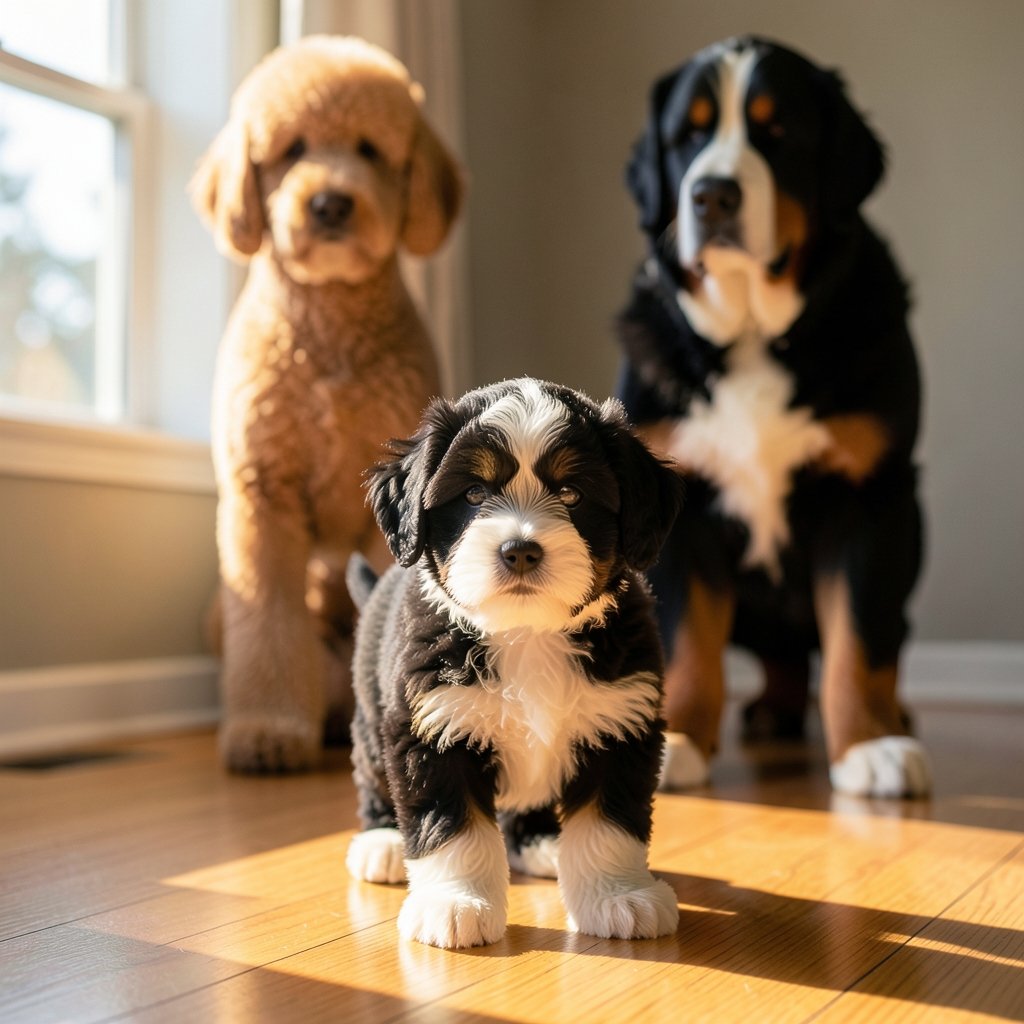
What if the puppy advertised as “mini” grows into a 50-pound dog that takes up half your couch? For anyone searching for mini Bernedoodle puppies, that scenario is not a rare fluke. It happens all the time, and it usually starts with a label that sounds more precise than it actually is. (Mini led blooming subtitles actually reduces halo)
Here is the honest version. The Mini Bernedoodle is not a breed. It is not a standardized size class. It is a cross between a Bernese Mountain Dog and a Poodle, bred down in size, and the word “mini” is a breeder’s shorthand rather than a guarantee. That does not make these dogs a bad choice. It just means buyers need to ask sharper questions than the average puppy listing encourages. (Evercade nexus vs retroid pocket 6 vs miyoo mini plus which)
This guide walks through what a mini Bernedoodle actually is, how big they really get, what health screening should look like, and where the marketing tends to outrun the reality.
What Is a Mini Bernedoodle, Exactly?
A Bernedoodle is a cross between a Bernese Mountain Dog and a Poodle. Breed histories commonly trace the cross to a Canadian kennel in the early 2000s, though that origin story is repeated more often than it is verified.
A Mini Bernedoodle is the smaller version of that cross. Breeders typically produce them by pairing a Bernese Mountain Dog with a Miniature Poodle or a Toy Poodle, or by breeding smaller Bernedoodles to each other. Those are two very different genetic routes, and they produce very different dogs.
That matters more than most buyers realize. Neither the Bernedoodle nor the Mini Bernedoodle is recognized as a breed by major registries such as the American Kennel Club. There is no breed standard, no official size chart, and no governing body setting minimums or maximums. When a listing says “mini,” it is describing a breeder’s category, not a regulated classification. (Best mini pcs 2026 actually matters before you buy 2)
The practical result: two puppies from two different breeders, both labeled “mini Bernedoodle,” can grow into adults of noticeably different size, coat, and temperament. The label tells you roughly what to expect. It does not tell you what you are getting.
How Big Do Mini Bernedoodles Actually Get?
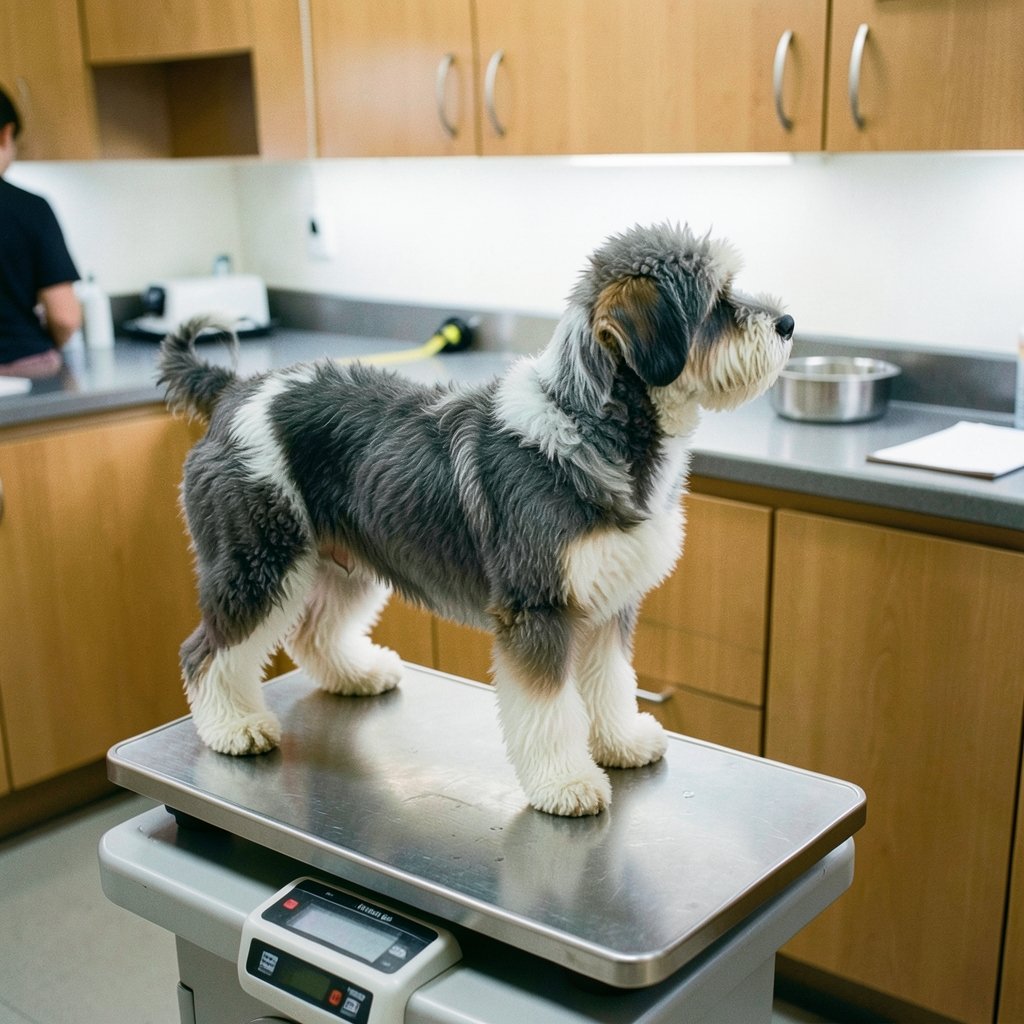
This is where expectations and reality most often collide. Commonly cited adult weights for “mini” Bernedoodles cluster around 25 to 50 pounds (11 to 23 kg), but sources disagree substantially, and the “toy” and “mini” categories overlap from breeder to breeder.
A few things drive that spread:
- The Poodle parent’s size. A Toy Poodle pairing produces smaller puppies than a Miniature Poodle pairing, even within the same breeder’s program.
- Generational breeding. First-generation crosses (F1) inherit traits directly from both parents, so littermates can differ markedly in size. Later generations bred for consistency tend to be more predictable, but “more predictable” is not the same as “guaranteed.”
- Sex and individual genetics. Males typically run larger than females, and individual variation inside a litter is normal.
The takeaway is simple: treat every size estimate as a range, not a promise. If a breeder quotes an exact adult weight, ask what that number is based on. A responsible breeder will talk about ranges, parent weights, and past litters rather than quoting a precise figure.
Why the “Mini” Label Deserves Skepticism
Size-based labels are a marketing convenience, and the market rewards small. Very small “mini” or “toy” Bernedoodles sometimes command premium prices, and extreme size reduction raises genuine welfare concerns. Pushing dogs smaller and smaller can compromise structure and health, and the pressure runs in one direction: smaller sells.
So what should you do with the word “mini”? Use it as a starting filter, not a final answer. Confirm the parent sizes, ask about past litters, and be suspicious of anyone who guarantees an adult weight on a crossbreed puppy.
What Temperament Should You Expect?
Bernedoodles are generally described as affectionate, social, and fairly trainable, blending the Bernese Mountain Dog’s steady, people-oriented nature with the Poodle’s sharper intelligence and eagerness to work. Most owners describe them as family dogs that want to be near their people.
But crossbreed variability is real, and it cuts both ways. Because first-generation crosses inherit traits from both parents, puppies in the same litter can differ markedly in temperament as well as size. One puppy may lean toward the laid-back Bernese side; another may inherit more of the Poodle’s sensitivity and energy.
What actually works in practice is meeting the puppy’s parents, or at least seeing video of them, and asking how the breeder socializes the litter. Puppies raised with household noise, handling, and early exposure to different people tend to settle into family life more smoothly. A breeder who cannot tell you anything about temperament beyond “they’re all sweet” is telling you something.
Coat, Grooming, and the Hypoallergenic Myth
Bernedoodles are typically described as low- to non-shedding with wavy or curly coats. That is the appeal for many families, and it is often the reason people start looking at Poodle crosses in the first place.
Two cautions are worth taking seriously.
First, coat type is variable in a crossbreed. A puppy may end up with a wavy coat that sheds lightly or a tight curl that barely sheds at all. You often cannot tell with certainty at eight weeks old, which is when most puppies go home.
Second, “hypoallergenic” is not a scientifically established claim for any dog. Coat type affects how much hair lands on your floor, but allergens also come from dander and saliva. Anyone promising an allergy-free dog is overselling.
Grooming is the practical issue most new owners underestimate. Curly, low-shedding coats mat easily and usually require regular professional grooming, often every six to eight weeks, plus brushing at home between appointments. Budget for it before you buy. Matting is uncomfortable for the dog and expensive to fix.
Health Screening: The Questions That Actually Matter
This is the section to read twice. The Bernese Mountain Dog side of the cross carries elevated risk of certain cancers and orthopedic conditions, including hip and elbow dysplasia. The Poodle side carries risk of conditions including progressive retinal atrophy and sebaceous adenitis. Responsible breeders screen the parent dogs before breeding them.
Because specific prevalence figures vary by study, the useful move is not memorizing statistics. It is knowing what to ask:
- Ask for health clearances on both parents. Hip and elbow evaluations, eye exams, and relevant genetic testing. Ask to see documentation rather than accept a verbal assurance.
- Ask about the grandparents. Clearances two generations back tell you more than one.
- Ask what happens if a puppy develops a hereditary problem. A breeder with a written health guarantee and a clear policy differs from one who goes quiet at the question.
- Ask to visit. Seeing where the puppies are raised, and meeting the mother at minimum, tells you more than any listing photo.
- Ask about the contract. Spay/neuter terms, return policies, and registration paperwork should all be in writing.
Common mistakes buyers make: falling for a photo before asking about the parents, paying a deposit before seeing any health documentation, and accepting “vet checked” as a substitute for genetic and orthopedic screening. A vet check confirms a puppy looks healthy today. It says nothing about inherited risk.
Lifespan estimates for Bernedoodles are commonly cited around 12 to 15 years, but these are breeder estimates rather than registry or peer-reviewed data. Treat them as a rough guide.
What Do Mini Bernedoodle Puppies Cost, and Why?
Specific price figures vary enormously by region, generation, coat, color, and the breeder’s reputation, so quoting a single number would be misleading. What is worth understanding is the structure.
Pricing tends to climb with three things: smaller adult size, “rare” coat colors or markings, and the breeder’s perceived prestige. Only the last of those correlates reliably with quality. A premium price is not proof of health testing, and an unusually low price is usually a signal that something is being skipped.
The useful comparison is not price against price. It is price against what is included: health clearances on both parents, a written guarantee, vaccination and deworming records, socialization, and a breeder willing to answer questions after the sale. Match the dog to your actual needs, not to the most impressive label attached to it. A dog is a long commitment.
Matching the Dog to Your Actual Life
Mini Bernedoodles are often pitched as apartment-friendly, and some are. But a 45-pound dog with Poodle energy needs real exercise, and a bored Bernedoodle is a creative Bernedoodle. Daily walks, some play, and basic training go a long way. A fenced yard helps but is not mandatory if you put in the time.
The bigger match question is time. These are social dogs that generally do not thrive when left alone all day. If your household is empty from morning to evening, that is worth factoring in before you fall for a puppy photo.
For households that like comparing options before committing, the instinct is a good one. List what you actually need, then check whether the option in front of you delivers it. With dogs, “what you actually need” includes grooming time, exercise time, and a realistic budget.
Conclusion
Mini Bernedoodle puppies are affectionate, often low-shedding, and genuinely lovely family dogs. They are also sold under a label that promises more precision than the genetics can deliver. The “mini” in the name is a breeder’s category, not a breed standard, and adult size can land anywhere from roughly 25 to 50 pounds depending on the parents and the generation.
That is not a reason to walk away. It is a reason to ask better questions. Confirm the parent sizes. Ask for health clearances on both sides of the cross. Meet the mother if you can. Get the guarantee in writing. Budget for grooming before you budget for the puppy. Do those things and the gap between the label and the dog shrinks dramatically, which is exactly what you want when you are bringing home a companion for the next twelve years or so.
Frequently Asked Questions
Are Mini Bernedoodles a recognized breed?
No. Neither the Bernedoodle nor the Mini Bernedoodle is recognized as a breed by major registries such as the American Kennel Club. They are designer crosses, which means there is no breed standard, no official size chart, and no governing body enforcing consistency between breeders.
How big will a Mini Bernedoodle get?
Commonly cited adult weights cluster around 25 to 50 pounds (11 to 23 kg), but sources disagree substantially and the “toy” and “mini” categories overlap between breeders. The Poodle parent’s size, the generation of the cross, and individual genetics all affect the outcome. Treat any exact weight quoted for a puppy as an estimate, not a guarantee.
Do Mini Bernedoodles shed or cause allergies?
They are typically described as low- to non-shedding with wavy or curly coats, but coat type varies in a crossbreed and cannot always be predicted at eight weeks old. The “hypoallergenic” label is not scientifically established for any dog, since allergens also come from dander and saliva. Low shedding also means more grooming, usually every six to eight weeks professionally plus brushing at home.
What health problems should I ask about?
The Bernese Mountain Dog side carries elevated risk of certain cancers and orthopedic conditions such as hip and elbow dysplasia. The Poodle side carries risk of conditions including progressive retinal atrophy and sebaceous adenitis. Ask to see health clearances on both parents, ask about the grandparents, and get the health guarantee and return policy in writing before paying a deposit.
How much exercise does a Mini Bernedoodle need?
These are social, moderately active dogs that generally need daily walks plus some play and basic training. A fenced yard helps but is not essential if you put in the time. What matters more is companionship: they generally do not thrive when left alone all day, so an empty household from morning to evening is worth factoring in before committing.
How long do Mini Bernedoodles live?
Commonly cited lifespans are around 12 to 15 years, but these are breeder estimates rather than registry or peer-reviewed data, so treat them as a rough guide. Health screening on the parents, good nutrition, regular veterinary care, and appropriate exercise are the factors you can actually influence.



