
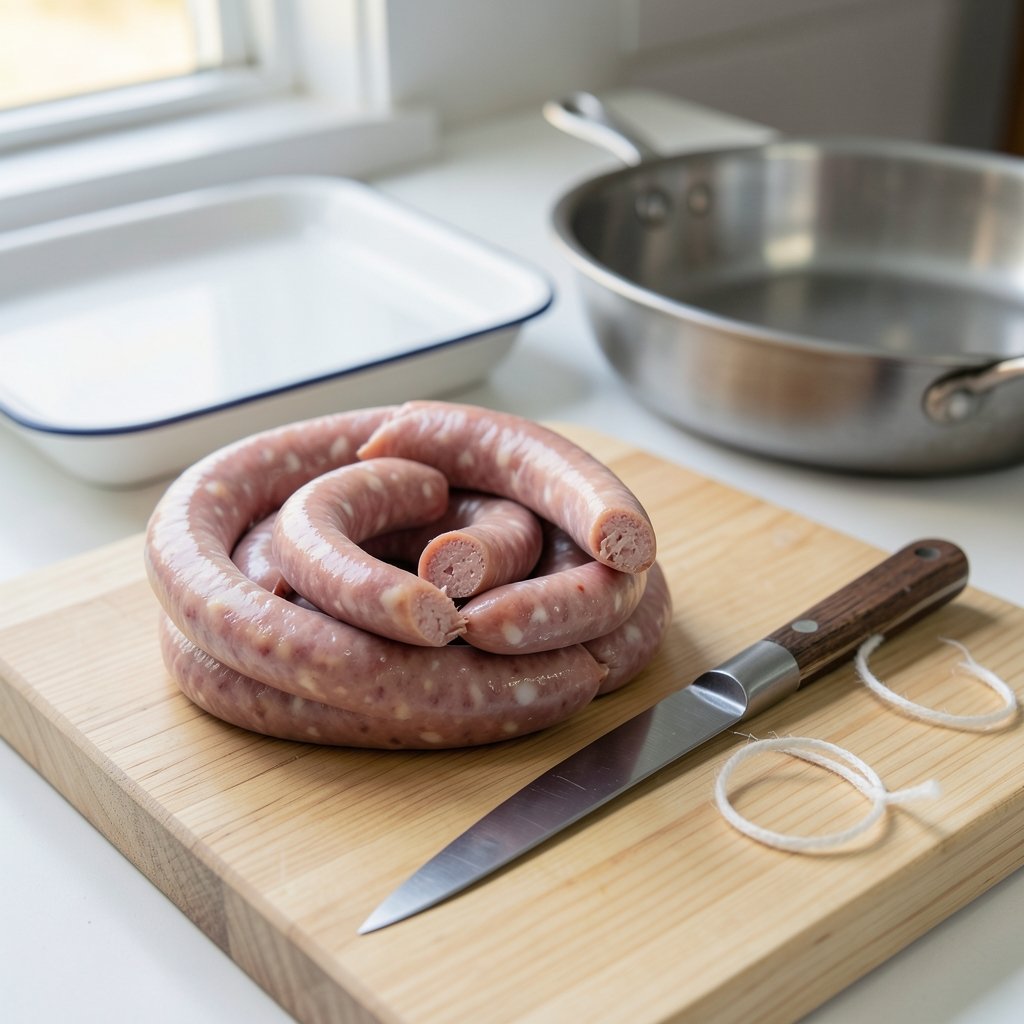
What makes a sausage a “link” instead of a patty, a roll, or a loose pile of seasoned meat? The answer is simpler than most people expect, and it explains a lot about why breakfast links snap when you bite them while a bratwurst feels completely different in the mouth. The word describes a shape and a method, not a recipe. Once you understand that distinction, shopping, cooking, and even reading a label all get easier.
What Actually Makes a Sausage a Link?
A link is ground, seasoned meat stuffed into a continuous casing and then twisted or tied into segments. That’s the whole definition. The casing can be natural intestine, collagen, or cellulose, and the meat can be pork, beef, chicken, or a blend. None of that changes whether it’s a link. (Mesh wifi wired backhaul not working your ethernet link)
This is trade and kitchen usage rather than a codified rule. No single official standard defines the word “link” itself. What regulators actually define are finished products with names like frankfurter, bologna, or fresh pork sausage. In the United States, those definitions live in the federal standards of identity for meat products, which set out what a given product name is allowed to contain. The link shape sits on top of those rules as a packaging and forming choice.
That gap trips people up constantly. Someone buys “Italian sausage links” expecting a regulated guarantee and gets a fennel-forward fresh pork product with no formal definition behind the name. It’s still sausage. It’s just that the word doing the work in that phrase is “Italian,” and even that is a culinary convention with wide regional variation.
Natural Casings vs. Artificial Casings

The casing decides how a link looks, how it cooks, and how it feels in your mouth. Three materials dominate.
| Casing type | Typical use | Edible? | Notes |
|---|---|---|---|
| Sheep intestine | Thin breakfast links | Yes | Small diameter, tender snap |
| Hog intestine | Bratwurst, larger links, frankfurters | Yes | Wider, chewier bite |
| Beef intestine | Large-diameter sausages | Yes | Sturdy, used for bigger formats |
| Collagen | Mass-market fresh links | Yes | Uniform, consistent, easy to machine |
| Cellulose | Industrial skinless products | No | Peeled off before sale |
Natural casings are the traditional choice, and they’re the reason two links from the same batch can look slightly different. Intestine is a biological material, so diameter varies. That variance is a feature for people who care about texture and a nuisance for anyone trying to hit an exact weight.
Collagen casings solve the consistency problem. They’re manufactured from collagen, they stuff and link at high speed, and they give a reliable snap. Cellulose casings go a step further: they’re tough enough to survive industrial processing and then get stripped away, which is how you end up with skinless frankfurters and hot dogs.
Here’s a practical tip that saves frustration. If a recipe calls for piercing links before grilling, check the casing first. Thin sheep casings split easily once pierced, and the fat that escapes is exactly the fat you wanted basting the meat. Thicker hog casings tolerate a poke or two. When in doubt, don’t pierce, and cook gentler instead.
Breakfast Links, Italian Links, and Regional Expectations
Walk into any American supermarket and “breakfast links” means small-diameter fresh pork sausage, usually seasoned with sage and black pepper. “Italian sausage links” usually means fennel, sold fresh, and labeled hot or sweet depending on whether chili is in the mix. Both are conventions, not rules, and they vary by region and by butcher.
In the UK and Ireland, the situation flips. There, “link” is simply the default form of a fresh sausage, and the interesting regulatory question isn’t the shape but the composition. UK rules govern what can be called a sausage and what percentage of meat it must contain. Those labelling requirements changed after Brexit, so older summaries found online may no longer reflect current law.
The practical takeaway for shoppers is the same on both sides of the Atlantic: the product name tells you less than the ingredient list and the meat percentage. A package that says “pork sausage” and lists pork first at a high percentage is a different product from one that leads with water and lists pork further down, even if both are links of the same size. (Fix high cpu usage windows 11 practical troubleshooting)
Fresh vs. Cured: Two Very Different Products
This is the distinction that matters most for safety, and it’s the one most home cooks blur.
Fresh links are raw. They must be cooked before eating. That includes breakfast links, most Italian links, and fresh bratwurst. Ground meat carries a different risk profile than whole cuts because grinding distributes surface bacteria throughout the product. The federal safe minimum internal temperature for ground meats is 160 °F, and that applies to fresh sausage links too. A instant-read thermometer is the only reliable way to know you’ve hit it. Color is not a test.
Cured links are treated with nitrite, which delivers the pink color, the characteristic flavor, and, critically, control of botulism risk. Frankfurters and many smoked sausages fall here. Nitrite levels in cured meats are regulated, and these products are typically ready to eat or need only reheating.
A word on the health conversation, because it comes up whenever links are discussed. In 2015, the International Agency for Research on Cancer classified processed meat as Group 1, meaning carcinogenic to humans, with colorectal cancer as the main evidence. That classification covers processed meat generally, not links specifically, and it’s about regular long-term consumption patterns rather than any single meal. Links aren’t uniquely risky compared with other processed meats. They’re just one form of them.
How to Cook Links Without Splitting Them
Technique matters more than equipment. A few habits make the difference between a juicy link and a burst one.
- Start lower than you think. High heat sets the casing fast while the center is still raw, and the pressure has to go somewhere. Medium or medium-low heat gives the interior time to catch up.
- Brown first, then finish gently. A quick sear for color followed by lower heat to cook through works well for fresh pork links.
- Use a thermometer, not a timer. Pull links at 160 °F for fresh pork and let them rest a couple of minutes.
- Simmer in liquid for thick links. Beer, stock, or water for the first half of cooking, then a fast sear to finish, is the standard bratwurst method for good reason.
- Don’t crowd the pan. Steam trapped between links keeps the surface from browning and effectively poaches them.
- Avoid the fork. Poking releases juices and starts the split you were trying to prevent.
Thin breakfast links cook in a few minutes per side. Thick fresh links need ten to fifteen minutes depending on diameter and starting temperature. If you’re cooking a big batch and want to keep them warm, hold them at low heat in a covered pan rather than stacking them on a plate where they’ll steam themselves soggy.
Storage, Freezing, and the Leftover Question
Fresh raw links belong in the coldest part of the fridge and should be cooked within a day or two of purchase, or frozen. Freeze them in a single layer first, then bag them, so they don’t fuse into a brick. Cooked links keep for a few days refrigerated.
One mistake people make: thawing links on the counter. Ground meat should thaw in the fridge or under cold running water in a sealed bag. Room-temperature thawing pushes the exterior into the temperature danger zone while the center is still solid.
If you’re reheating cooked links, gentle heat is again the answer. A microwave on high turns a snappy casing into a tough one in seconds. A skillet with a splash of water and a lid does the job far better.
The Tech Side of Link Production
Industrial sausage making relies on automated stuffers and linkers that twist casings at set intervals, which is why supermarket links are so uniform. Output is measured in links per minute, and the numbers vary enormously between machines, so any specific figure needs a named manufacturer’s specification before it means anything.
The same logic applies to the digital side of food production. Modern plants run continuous monitoring on processing equipment, and the same performance questions that affect a home PC, like a runaway process dragging everything down, show up on factory floors too. If you’ve ever wondered why a machine slows to a crawl mid-shift, the diagnostic habits in this guide to fixing high CPU usage on Windows 11 are the same ones technicians use on production terminals. Keeping a plant’s networked scales and label printers responsive is unglamorous work, but a stalled label printer stops a line just as surely as a broken stuffer. The same goes for Mac-based admin machines in the front office; knowing what the numbers mean when you check CPU usage on a Mac saves hours of guessing.
Shopping: What to Look For on the Label
A short checklist covers most of it.
- Meat percentage. Higher is generally better, though fat content matters for texture. A very lean link eats dry.
- Ingredient order. Meat first is a good sign. Water high in the list means you’re paying for brine.
- Casing type. Natural casings are often labeled as such, and some producers note “sheep casing” specifically.
- Cured or fresh. Look for “fully cooked” or “ready to eat” versus “cook thoroughly.”
- Nitrite sources. Sodium nitrite appears directly, while celery powder indicates a naturally cured product. Both involve nitrite chemistry.
If you’re buying online or from an unfamiliar seller, apply the same caution you would to any unfamiliar purchase. The habits in this guide to checking whether a link is safe apply just as well to a butcher’s web shop as to anything else you click.
Conclusion
Sausage links are less mysterious once you separate the three things people confuse: the shape, the casing, and the cure. The shape is just a stuffed, twisted segment. The casing decides texture and how carefully you need to cook. The cure decides whether the product is raw or ready to eat, and that’s the one with real safety stakes. Get those straight and the rest is craft: moderate heat, a thermometer, and the patience not to pierce a casing that’s doing its job. Whether you’re browning breakfast links on a Sunday morning or simmering bratwurst before a game, the same handful of habits produces a better result than any gadget will.
Frequently Asked Questions
What is the difference between a sausage link and a sausage patty?
A link is meat stuffed into a casing and twisted into segments, while a patty is formed from bulk sausage with no casing at all. The meat blend can be identical. The difference is the casing, which changes how the product cooks, how it holds moisture, and how it feels when you bite it. Patties brown faster because there’s no skin to resist heat.
Are sausage links already cooked?
Most are not. Fresh links, including breakfast links, Italian links, and fresh bratwurst, are raw and must reach 160 °F internally before eating. Some products, like frankfurters and certain smoked sausages, are fully cooked and labeled ready to eat. Always check the package for cooking instructions rather than assuming.
Why do my sausage links always split open?
Splitting usually comes from heat that’s too high, which sets the casing before the inside is cooked, so pressure builds and finds a weak point. Piercing the casing makes it worse. Start on medium-low heat, cook thicker links partly in liquid, and use a thermometer instead of guessing. Thin sheep casings are especially prone to bursting.
Are natural casings better than collagen?
They’re different rather than better. Natural casings give an irregular, tender snap and vary in diameter because they come from animals. Collagen casings are uniform, machine-friendly, and consistent. Many people prefer natural for texture, while collagen wins on predictability. Both are edible and safe.
Can you eat the casing on sausage links?
Yes, if it’s a natural, collagen, or otherwise edible casing, which covers nearly all retail links. Cellulose casings are the exception. They’re tough and are peeled off during manufacturing, which is why skinless hot dogs have no casing at all. If a package doesn’t specify, the casing is almost certainly edible.
Are sausage links bad for you?
Links are processed meat, and processed meat was classified as Group 1 carcinogenic to humans in 2015, with colorectal cancer as the main evidence. That classification reflects regular long-term consumption, not occasional meals, and it applies to processed meat broadly rather than links specifically. Fat and sodium content also vary widely by product, so the label is the place to check.



