
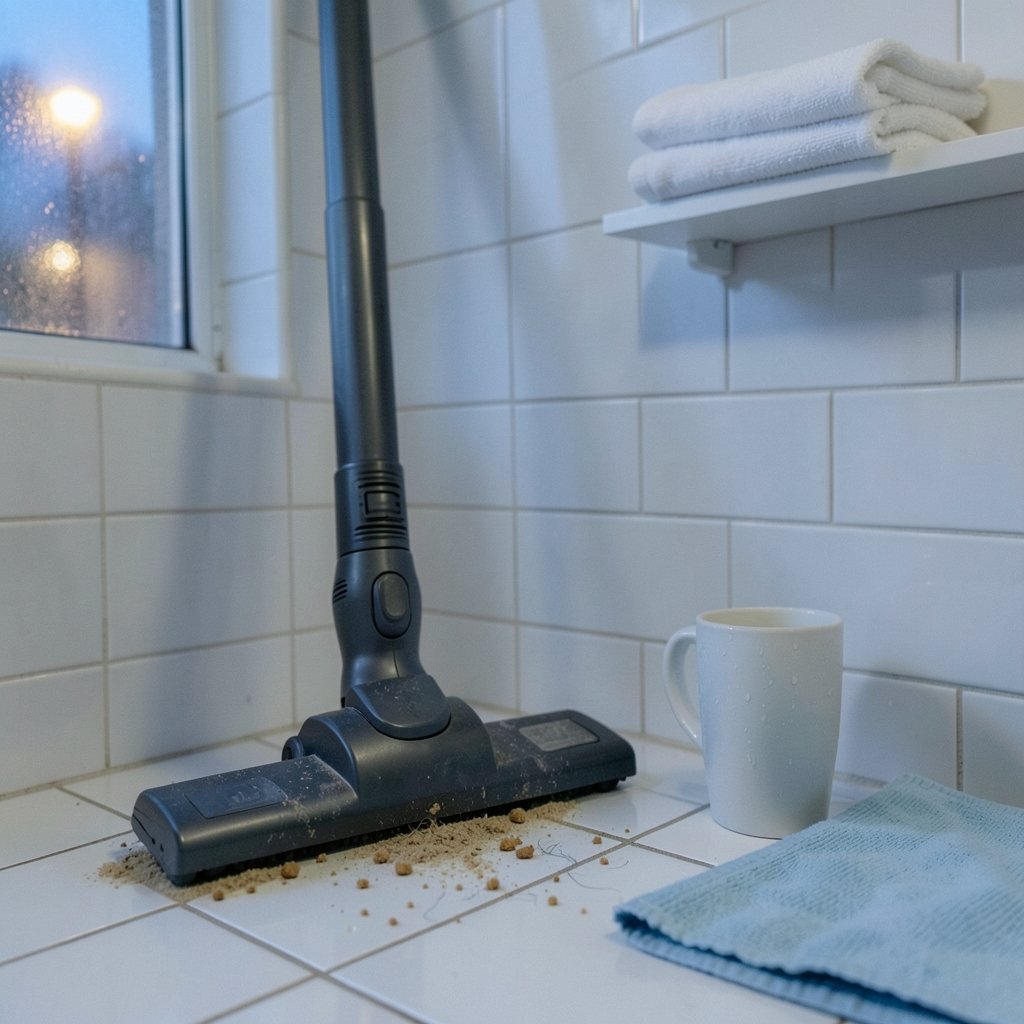
What if the vacuum sitting in your closet is the wrong tool for 80 percent of your cleaning jobs? That’s the odd truth about stick vacuums. They’re the best-selling vacuum type in many markets, yet most people buy one without understanding what it can and can’t do. The result: frustration, a dead battery at the worst moment, and a nagging feeling that the thing wasn’t worth the money.
The stick vacuum is neither a gimmick nor a miracle. It’s a specific tool with a specific job. Get the job right and it becomes the vacuum you reach for every day. Get it wrong and it collects dust in the closet, literally.
What a Stick Vacuum Actually Is
A stick vacuum is a slim, upright-style vacuum with the motor and dust cup mounted in the handle or wand. You hold it like a broom and push it across the floor. Most modern versions are cordless and run on lithium-ion batteries, though corded models still exist and often deliver stronger, consistent suction.
Here’s the catch that manufacturers don’t put on the box: the term “stick vacuum” is marketing language, not a formal standard. Definitions vary by retailer and brand. Some 2-in-1 models convert into a handheld; others are fixed uprights with a long wand. This matters when you’re comparing specs, because a “stick” from one brand may be a very different machine from a “stick” made by another.
The category exploded during the 2010s and 2020s as lithium-ion batteries improved. Cordless sticks overtook corded uprights in many Western markets. Exact market-share numbers vary widely by source and year, so treat any single percentage you see online with suspicion.
Cordless vs. Corded: The Honest Trade-Off
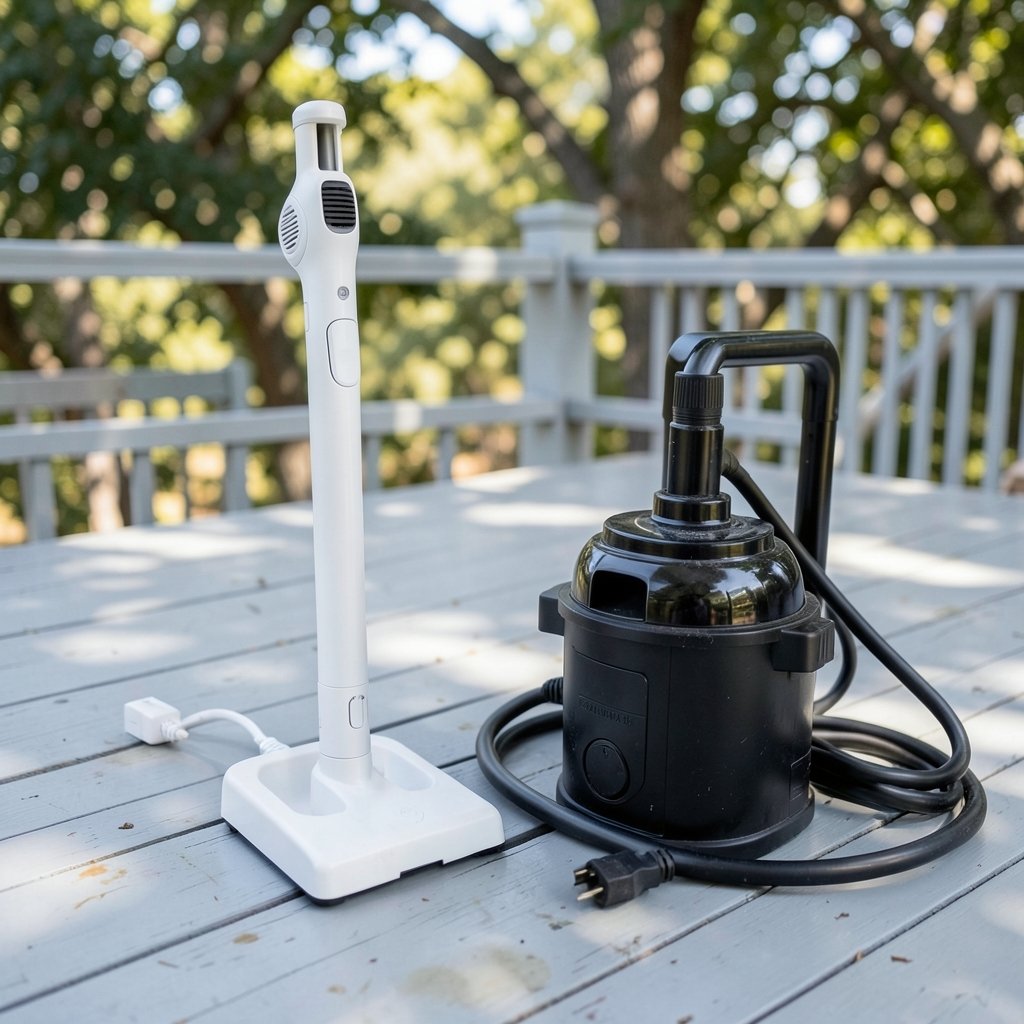
This is the decision that shapes everything else. Cordless gives you freedom and speed. Corded gives you power and stamina. There’s no model that wins on both.
| Feature | Cordless Stick | Corded Stick |
|---|---|---|
| Runtime | 20–60 minutes, often in eco mode only | Unlimited |
| Suction consistency | Drops as battery drains | Constant |
| Weight | Usually 5–8 lbs | Often 10–16 lbs |
| Best for | Daily quick cleans, hard floors, stairs | Deep carpet work, large homes |
| Battery wear | Degrades over years | Not applicable |
A practical warning about runtime claims: manufacturers usually quote minutes in the lowest-power “eco” mode. Switch to max power and that 60-minute claim can collapse to under 10 minutes. Runtime also fades as the battery ages, so a three-year-old stick rarely matches its spec sheet.
If you’re weighing navigation and sensor tech across models, it helps to understand how the machine “sees” your home. The differences between lidar vs camera navigation explain a lot about why some cleaners map rooms efficiently and others bump around.
Where Stick Vacuums Genuinely Shine
Stick vacuums are brilliant at the small, frequent jobs that make a home feel clean. Think crumbs under the kitchen table, pet hair on the sofa, dust along baseboards, and the daily pass through the hallway. The convenience factor is real. When a vacuum takes ten seconds to grab and start, you actually use it.
They’re also excellent on hard floors. A lightweight stick with a soft roller head glides over tile and wood and picks up fine dust that a heavy upright might scatter. For stairs, cars, and tight corners, the handheld conversion mode on many models is genuinely useful.
Pet owners often find sticks indispensable for quick touch-ups between deeper cleans. If long hair is your nemesis, the lessons in this guide to handling long human hair apply just as well to stick vacuum brush rolls, which tangle fast and need regular cutting free.
Where They Fall Short
Deep carpet cleaning is not a stick vacuum’s strength. Short battery life at high power, smaller dust cups, and lighter suction mean they struggle with embedded dirt in plush carpet. A corded upright or a dedicated carpet machine will out-clean almost any stick on thick pile. If carpet is your main floor type, read up on what makes a vacuum good for carpet before you buy a stick as your only machine.
Dust cup capacity is another quiet limitation. Many sticks hold well under a liter, so you’ll empty them often, sometimes mid-job. That’s fine for a 500-square-foot apartment and annoying in a 2,500-square-foot house.
Then there’s filtration. When a stick vacuum says HEPA, it usually means the exhaust filter, not a sealed whole-machine HEPA system. True whole-unit HEPA certification is rare in this category. Allergy sufferers should look for sealed systems and be skeptical of bold claims.
The Regulatory Backstory Most Buyers Miss
Here’s a piece of history that explains why modern vacuums look the way they do. From September 2014, EU rules capped mains-powered vacuum cleaners at 900 watts of input power. From September 2017, energy labels became mandatory for corded vacuums, covering annual energy use, cleaning performance on carpet and hard floor, dust re-emission, and noise. Battery-powered vacuums were outside that scope entirely.
Then, in November 2018, the EU’s General Court annulled the vacuum energy-label regulation on procedural grounds. The label disappeared. The 900-watt power cap, however, stayed. That cap pushed corded vacuum design toward efficiency, and it’s a big reason today’s corded machines do more with less power.
In the US, the Department of Energy set energy-conservation standards for household vacuum cleaners effective September 2015, again covering corded models. Cordless sticks have largely escaped energy regulation on both sides of the Atlantic, which is why their efficiency claims are harder to verify.
Battery safety is regulated, though. Lithium-ion cells in cordless vacuums are subject to UN 38.3 transport testing, and in the EU the Batteries Regulation (EU) 2023/1542 phases in requirements from 2024 onward, including removability and replaceability provisions for portable batteries by 2027. That’s a big deal for repairability: sealed, glued-in batteries have short lives, and right-to-repair advocates frequently cite stick vacuums as a prime example of disposable design.
Battery Reality: What the Numbers Don’t Tell You
Battery anxiety is the number one complaint stick vacuum owners report, and it’s justified. A few practical truths:
- Quoted runtime is best-case. Eco mode, new battery, room temperature.
- Max power is a sprint. Expect a fraction of the quoted time.
- Cold rooms hurt. Lithium-ion cells lose capacity in the cold.
- Batteries age. After two to three years, expect noticeably shorter runs.
- Replaceable beats sealed. A model with a user-replaceable battery can last a decade; a sealed one is landfill fodder.
If you want a machine that handles both vacuuming and mopping without juggling two devices, the trade-offs in these vacuum mop combos that actually clean are worth studying, because the same battery and capacity logic applies.
Practical Tips That Actually Make a Difference
After you buy, small habits separate a stick vacuum that lasts from one that dies early.
- Empty the dust cup after every use. Full cups choke airflow and stress the motor.
- Wash filters monthly, dry fully. A damp filter breeds odor and kills suction.
- Cut hair off the brush roll regularly. Scissors or a seam ripper work; tangled hair burns out motors.
- Store the battery at mid-charge. Leaving it at 100 percent or 0 percent for months shortens life.
- Use the right mode. Turbo for carpet, eco for hard floors and quick passes.
- Check the brush roll height. On carpet, a floating head that sits too high barely touches the pile.
Common mistakes are predictable. People run max power constantly and wonder why the battery dies in eight minutes. They never clean the filter and blame the vacuum for weak suction. They use a stick as their only vacuum in a carpeted house and conclude stick vacuums are useless. None of these failures are the machine’s fault.
Stick Vacuum vs. Robot Vacuum vs. Full Upright
The smartest setup for most homes is a combination, not a single hero machine. A robot handles daily maintenance on open floors. A stick handles quick targeted cleans, stairs, and above-floor spots. A full upright or canister does the deep weekly work on carpet.
Robots have their own quirks, of course. They get confused by dark flooring, and their sensors sometimes fail in ways that look like breakdowns. This explainer on why robot cliff sensors fail on black carpet is a good reminder that no automated cleaner is set-and-forget. Sticks avoid that particular problem because you’re the navigation system.
If you’re comparing a stick against a full vacuum-mop combo, this breakdown of the best vacuum mop combo options will help you decide whether one device can genuinely replace two.
How to Choose Without Regret
Match the tool to your floor type and home size. That’s the whole game.
- Mostly hard floors, apartment or small home: a lightweight cordless stick is close to ideal.
- Mostly carpet, large home: buy a corded upright first, then add a cheap stick for quick jobs.
- Pets and long hair: prioritize a tangle-resistant brush roll and easy-access battery.
- Allergies: look for sealed filtration; a HEPA-labeled exhaust filter alone is insufficient.
- Long-term value: insist on a replaceable battery.
Check the weight in your hand if you can. A stick that feels heavy after two minutes will stay in the closet. And ignore the marketing watts; suction and airflow at the head matter more than the number on the box.
Conclusion
The stick vacuum earns its popularity honestly. It’s fast, light, and genuinely pleasant to use for the small jobs that make up most of cleaning. But it’s a specialist, not a universal soldier. Buy one expecting deep carpet performance or all-day runtime and you’ll be disappointed. Buy one as the quick-response tool in a multi-machine setup and you’ll wonder how you lived without it.
Know your floors, respect the battery, clean the filter, and pick a model with a battery you can replace. Do that, and the stick vacuum becomes exactly what it should be: the vacuum you actually use.
Frequently Asked Questions
How long do stick vacuums really run on a charge?
Expect 20 to 60 minutes in eco mode on a new battery. In max power mode, many models drop below 15 minutes. Runtime also declines as the battery ages, so a two-year-old machine may deliver half its original time.
Can a stick vacuum replace a full-size vacuum?
For homes with mostly hard floors and no pets, often yes. For carpeted homes, large spaces, or heavy shedding, no. Most cleaning experts recommend a stick as a companion to a full upright or canister, not a replacement.
Are cordless stick vacuums weaker than corded ones?
Generally, yes, especially at the floor head. Corded models deliver constant power, while cordless suction drops as the battery drains. Modern cordless sticks are strong enough for daily surface cleaning but rarely match a corded upright on deep carpet.
What does HEPA mean on a stick vacuum?
Usually it refers to the exhaust filter only, not a sealed whole-machine HEPA system. True whole-unit HEPA certification is rare in stick vacuums. If allergies are a concern, look for sealed filtration designs and check independent test results.
Why does my stick vacuum lose suction?
The usual culprits are a full dust cup, a clogged or damp filter, a tangled brush roll, or a blocked wand. Clean the filter monthly, empty the cup after each use, and cut hair off the brush roll regularly. Suction usually returns immediately.
Is it worth paying more for a replaceable battery?
Yes, if you plan to keep the vacuum more than two or three years. Sealed batteries make the whole machine disposable once they fade. A user-replaceable battery can double or triple the useful life of an otherwise good vacuum.



