
What if the biggest news in supercomputing this month had nothing to do with GPUs? For years, coverage of the race for the fastest machines on Earth focused on accelerators. At SC26 in Chicago, that changed. NVIDIA pushed a rack-scale CPU platform built for scientific simulation, AMD opened a new AI supercomputer to researchers, and the TOP500 list showed a quiet but real shift in who runs the fastest systems. Here is what changed, why it matters, and what to watch next.
Why CPU news is suddenly the headline
Scientific computing has a dirty secret: plenty of the hardest workloads never touch an accelerator. Weather models, molecular dynamics, and airflow simulations are memory-hungry and branch-heavy. They stress the CPU, the memory subsystem, and the network between nodes. That is exactly the gap the latest hardware announcements target.
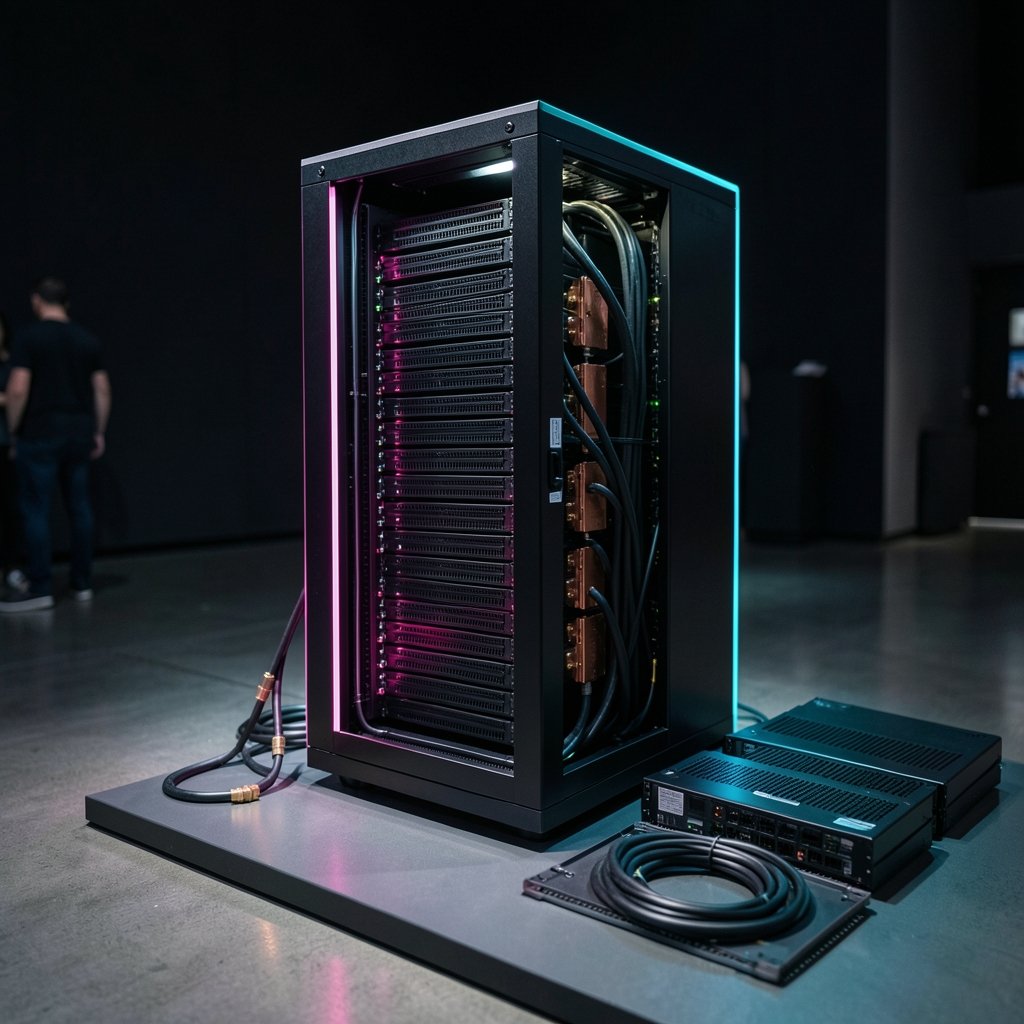
NVIDIA used SC26 to announce the Vera CPU rack-scale platform for high-performance computing. The pitch is simple: one rack holds 192 Vera CPUs wired together with Quantum-X800 InfiniBand networking, delivering more than 200 TB/s of aggregate peak memory bandwidth. The company says its first fully custom data center CPU delivers about 2x greater energy efficiency than x86 CPUs on the workloads it targets.
That framing matters. For a decade, “HPC news” has meant GPU specs and power budgets. Vera signals that vendors now see the CPU rack as a product category of its own, with networking and software bundled in rather than sold as afterthoughts.
What is actually inside NVIDIA’s Vera platform?
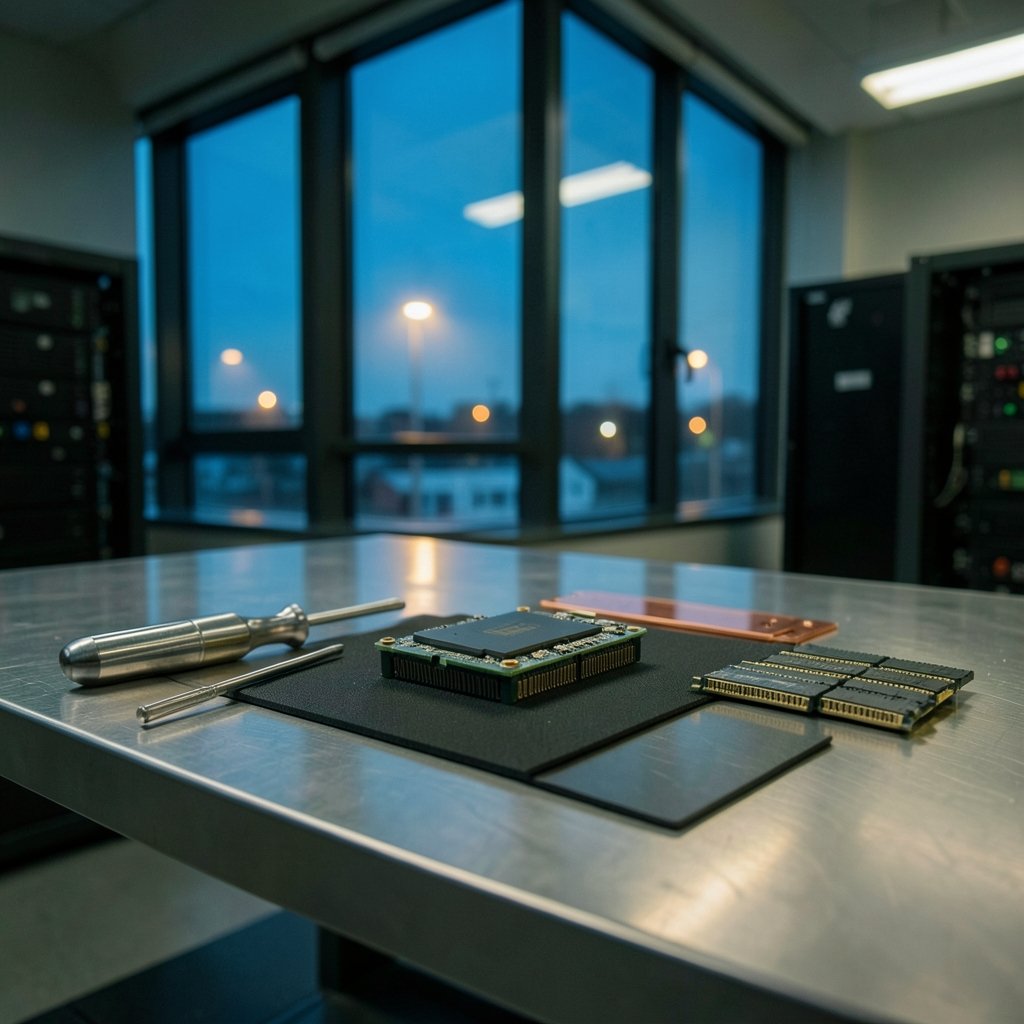
Vera is not a small tweak. Each CPU carries 88 custom Olympus cores running 176 threads, a large unified L3 cache, and SOCAMM2 LPDDR5X memory pushing 1.2 TB/s of bandwidth per chip. The rack is fully liquid-cooled in an MGX design, packs roughly 300 TB of memory and 1 PB of storage, and reuses chassis, power, and cooling parts from the existing NVL72 rack so deployments do not need a ground-up rebuild of the data center.
The performance claims are specific, which is refreshing. In an OpenFOAM motorBike Large airflow simulation, Vera reportedly ran at 1.9x the performance of an x86 system and 2.4x the performance per watt. On the open-source WRF weather forecasting model, NVIDIA projects 1.6x more performance and 2x better efficiency.
Networking does a lot of the heavy lifting. Quantum-X800 InfiniBand handles the interconnect, and in-network computing (SHARP) offloads some of the coordination work that would otherwise burn cycles on the processors themselves. If you have ever wondered why network gear deserves its own budget line, the same principle applies at home: offloading work from the main processor keeps the whole system moving, which is why router hardware offloading explained (your CPU not doing the heavy lifting) is worth understanding even at small scale.
Who is buying it first?
The first named customer is a serious one. Germany’s climate computing center, DKRZ, has selected Vera CPUs for its HLRE-5 supercomputer, a climate science system expected to come online in early 2028. The full platform will ship from Dell Technologies, HPE, Lenovo, and Supermicro, with availability expected in early 2027.
That timeline is the practical takeaway for anyone planning procurement. The hardware is announced, the partners are named, and the first big scientific deployment is scheduled. But nothing is orderable today, and benchmark numbers on real customer workloads will not exist until systems land.
AMD’s Lux opens to scientists
AMD’s news is more immediate. Lux, the HPE-built AI supercomputer developed with the US Department of Energy at Oak Ridge National Laboratory, is now open to scientific users. It debuted at No. 14 on the November 2026 TOP500 list with 220.79 petaflops, roughly a sixth of Oak Ridge’s earlier exascale system’s performance, and it is built mainly for low-precision AI math rather than double-precision simulation.
The machine packs more than 4,000 AMD MI355X GPUs and is billed as the first dedicated “AI Factory” for the DOE’s Genesis Mission. Half of its 3.5 million annual node-hours are reserved for Genesis work such as fusion plant design and river forecasting. The rest are available for other users.
That split is the interesting part. It is a working model of how AI-focused supercomputers get shared between mission-driven science and outside research. If your instinct is to treat “AI supercomputer” as a marketing phrase, Lux is a concrete example of what the label means in practice: low-precision throughput first, traditional simulation second.
AMD’s bigger picture: 40% of the TOP500
Lux is one machine, but the TOP500 list tells a broader story. AMD now powers 40% of the list, up 14 points from the prior year, with 202 systems compared to 177 previously. Its chips sit in four of the world’s ten fastest machines, including El Capitan at No. 2. China’s LineShine holds the top slot.
The list also showed unusually low turnover this cycle, which is worth noting. Fewer new entries means the installed base is aging and refresh cycles are stretching out. For buyers, that usually means longer lead times and more pressure to squeeze value from existing hardware rather than replace it.
A quick comparison of the two headline systems shows how differently they are built:
| Feature | NVIDIA Vera platform | AMD Lux |
|---|---|---|
| Primary target | Memory-bound HPC simulation | Low-precision AI math |
| Compute unit | 192 Vera CPUs per rack | 4,000+ MI355X GPUs |
| Interconnect | Quantum-X800 InfiniBand | HPE system fabric |
| Notable benchmark | OpenFOAM, WRF | TOP500 No. 14, 220.79 petaflops |
| Availability | Early 2027 from Dell, HPE, Lenovo, Supermicro | Open to users now |
| First big customer | DKRZ HLRE-5 (2028) | DOE Genesis Mission |
Neither machine wins outright. They solve different problems, and that is the healthiest sign in this batch of news.
The storage and networking layer nobody tweets about
Behind every headline system sits a less glamorous stack. At SC26, storage vendors pushed job-level quality-of-service controls, PCIe Gen6 flash, and computational storage designs that put an NPU and memory directly inside the drive. One design was rated at 36,800 DMIPS with 64 GB of memory and support for PyTorch, vLLM, OpenVINO, and llama.cpp, with claimed data transfer reductions of 10 to 100 times for suitable workloads.
Mixed-media drive designs also appeared, pairing high-endurance pSLC flash with high-capacity QLC behind a single controller so every bay adds usable capacity instead of duplicating cache drives. One vendor noted that losing a drive in a 24-drive setup removes about 4 percent of cache, versus 25 percent in designs with dedicated cache drives.
These details rarely make headlines, but they decide whether a supercomputer actually delivers its benchmark numbers. A machine that can compute faster than it can feed data is a very expensive space heater.
How to read supercomputer news without getting fooled
Announcement season rewards skepticism. A few habits separate useful signal from noise.
- Check whether the benchmark is the workload you care about. A 1.9x OpenFOAM result says little about a sparse linear algebra code.
- Look at the memory bandwidth and network numbers as well as peak compute. Memory-bound science lives or dies on those figures.
- Note the difference between announced, shipping, and deployed. Vera is announced for early 2027; HLRE-5 arrives in 2028.
- Ask what precision the performance claim uses. Low-precision AI throughput and double-precision simulation results are not comparable.
- Watch the software stack. Compilers and libraries tuned for a new architecture often matter more than the silicon.
The most common mistake readers make is treating a press release benchmark as a purchasing fact. The second most common is ignoring power and cooling. A rack-scale liquid-cooled platform changes your facility requirements, as well as your compute budget.
What this means for the wider hardware world
Supercomputer announcements tend to trickle down. Networking ideas, memory packaging, and efficiency tricks that debut in HPC racks show up in enterprise gear a few years later. That is why even readers who will never touch a petaflop should care about InfiniBand in-network computing and SOCAMM2 memory.
The same pattern appears across the industry. Computer vision news (what’s actually changing in 2026) shows how quickly research hardware becomes everyday tooling, and Tesla’s robotaxi, semi, and roadster bets show how hardware roadmaps shape entire product lines years before launch. If you want a sense of where mainstream servers are heading, watch what the national labs install first.
Security hardware follows a similar curve. The best hardware security keys in 2026 that actually stop phishing exist because enterprise and government buyers demanded phishing-resistant authentication, and a hardware security key backup strategy to avoid getting locked out is now standard advice for anyone managing credentials at scale. Big science budgets push these standards into the mainstream. (Tesla website robotaxi semi roadster three hardware bets 2026)
Conclusion
The supercomputer hardware news from SC26 is really one story told twice. NVIDIA is betting that scientific simulation needs a purpose-built CPU rack with fast memory and smarter networking, and it has a German climate center and four major system vendors lined up to prove it. AMD is betting that AI-first machines like Lux, with dedicated mission hours and low-precision muscle, will carry the next wave of scientific discovery.
Both bets are reasonable, and neither is settled. The Vera numbers are vendor projections until independent systems ship. Lux is real and open today, but its TOP500 rank of No. 14 shows it is not chasing raw peak performance. What is clear is that the CPU, the network, and the storage layer are back at the center of the conversation after years of GPU-dominated coverage. For anyone tracking hardware, that is the headline worth keeping.
FAQ
What is NVIDIA’s Vera CPU platform?
It is a rack-scale high-performance computing platform built around NVIDIA’s first fully custom data center CPU. A single rack holds 192 Vera CPUs connected by Quantum-X800 InfiniBand, with more than 200 TB/s of aggregate peak memory bandwidth and a fully liquid-cooled design.
When will Vera systems be available?
NVIDIA says the full platform will come from Dell Technologies, HPE, Lenovo, and Supermicro, with availability expected in early 2027. The first large scientific deployment, DKRZ’s HLRE-5 climate supercomputer, is expected in early 2028.
What is AMD’s Lux supercomputer used for?
Lux is an HPE-built AI supercomputer at Oak Ridge National Laboratory focused on low-precision AI math. Half of its 3.5 million annual node-hours go to the DOE’s Genesis Mission for work like fusion plant design and river forecasting, and the rest are available to other scientific users.
How fast is Lux compared to other supercomputers?
Lux debuted at No. 14 on the November 2026 TOP500 list with 220.79 petaflops. That is roughly one sixth of Oak Ridge’s earlier exascale system’s performance, reflecting its focus on AI workloads rather than peak double-precision simulation.
Why is the TOP500 list important?
It ranks the world’s fastest supercomputers and reveals vendor momentum. In the latest list, AMD powers 40 percent of the systems, up from 177 machines to 202, and four of the top ten. The list also showed unusually low turnover, suggesting longer refresh cycles.
Does supercomputer hardware news affect regular buyers?
Often, yes. Networking techniques, memory packaging, and efficiency designs that debut in HPC racks tend to reach enterprise and consumer hardware later. Following national lab deployments is one of the better ways to preview what mainstream servers will look like in a few years.
The same applies to software: libraries and compilers tuned for these architectures will eventually ship in mainstream distributions, lowering the barrier for smaller labs and enterprises. Watch the power and cooling specs too. Rack-scale liquid cooling, once exotic, is becoming a standard design choice, and that shift will influence data center retrofits well beyond HPC. For now, the practical advice stands: separate announced from shipping, match benchmarks to your workloads, and treat vendor projections as claims to verify rather than facts to budget around. The next twelve months of deployments will tell us which of these two bets ages better.



