
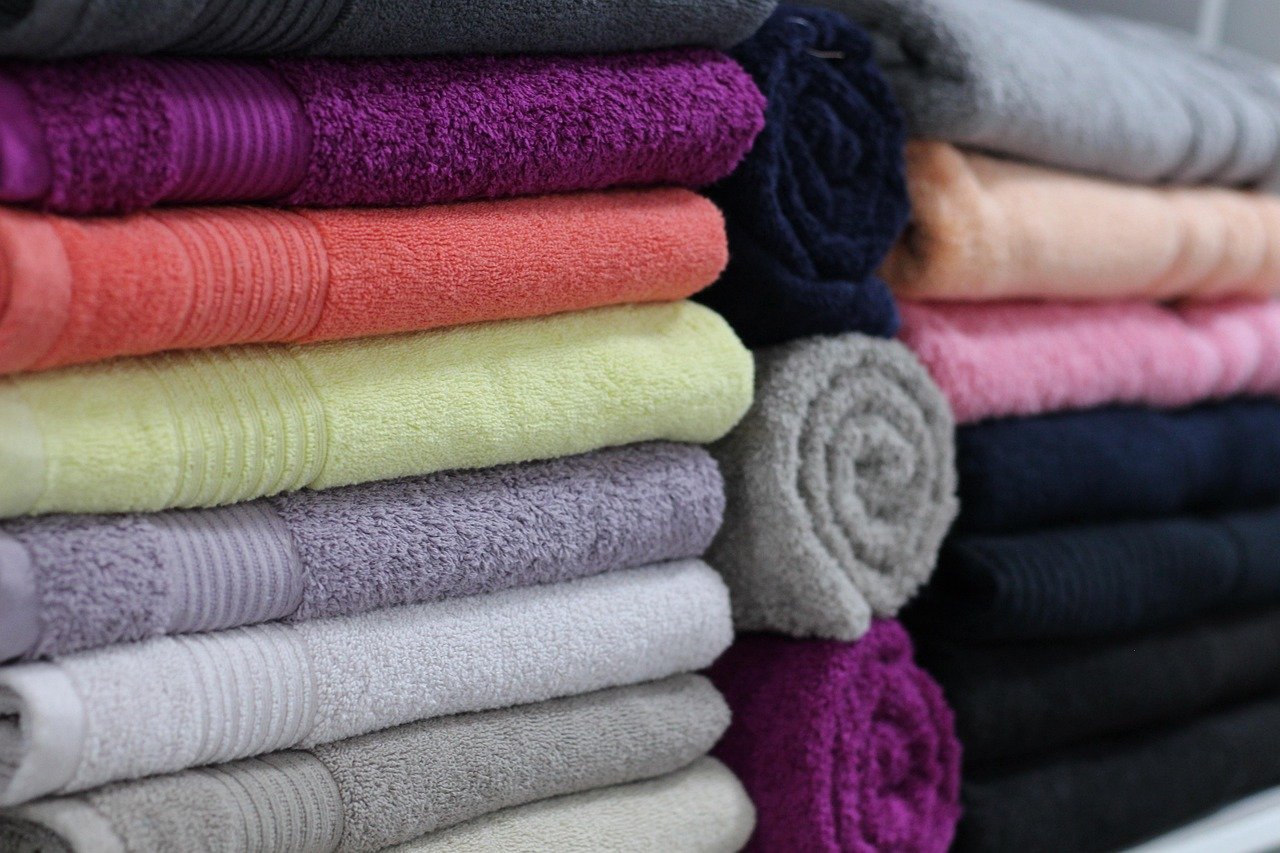
What makes a towel feel soft, dry you off in seconds, and still turn scratchy after a few months? In most cases, the answer is terry cloth. This looped fabric is one of the hardest-working textiles in any home, yet most people never think about how it is built. That is a shame, because understanding the basics of terry cloth helps you buy better towels, wash them correctly, and spot a cheap imitation before you spend money on it.
What Terry Cloth Actually Is
Terry cloth is a woven fabric covered in small, uncut loops of yarn. Those loops sit on one side or both sides of the fabric, and they are the whole point of the material. A flat woven cotton sheet can soak up water, but a terry towel traps water in thousands of tiny loops and holds it there until you wring it out.
The word “terry” is generally traced back to the French tiré, meaning “drawn,” which refers to how the loop yarn is drawn through the base fabric during weaving. Treat that as the commonly told story rather than a settled fact, since etymologies of textile terms are often fuzzy.
The structure itself comes from a third set of lengthwise yarns, called the pile warp. During weaving, these yarns are held slack and pushed forward so they arch over a wire or reed. The result is a row of loops. In velvet, those loops get cut afterward. In terry cloth, they stay intact. That single decision, cut or uncut, is what separates a plush robe from a velour one.
The Two Main Types You Will See on Labels
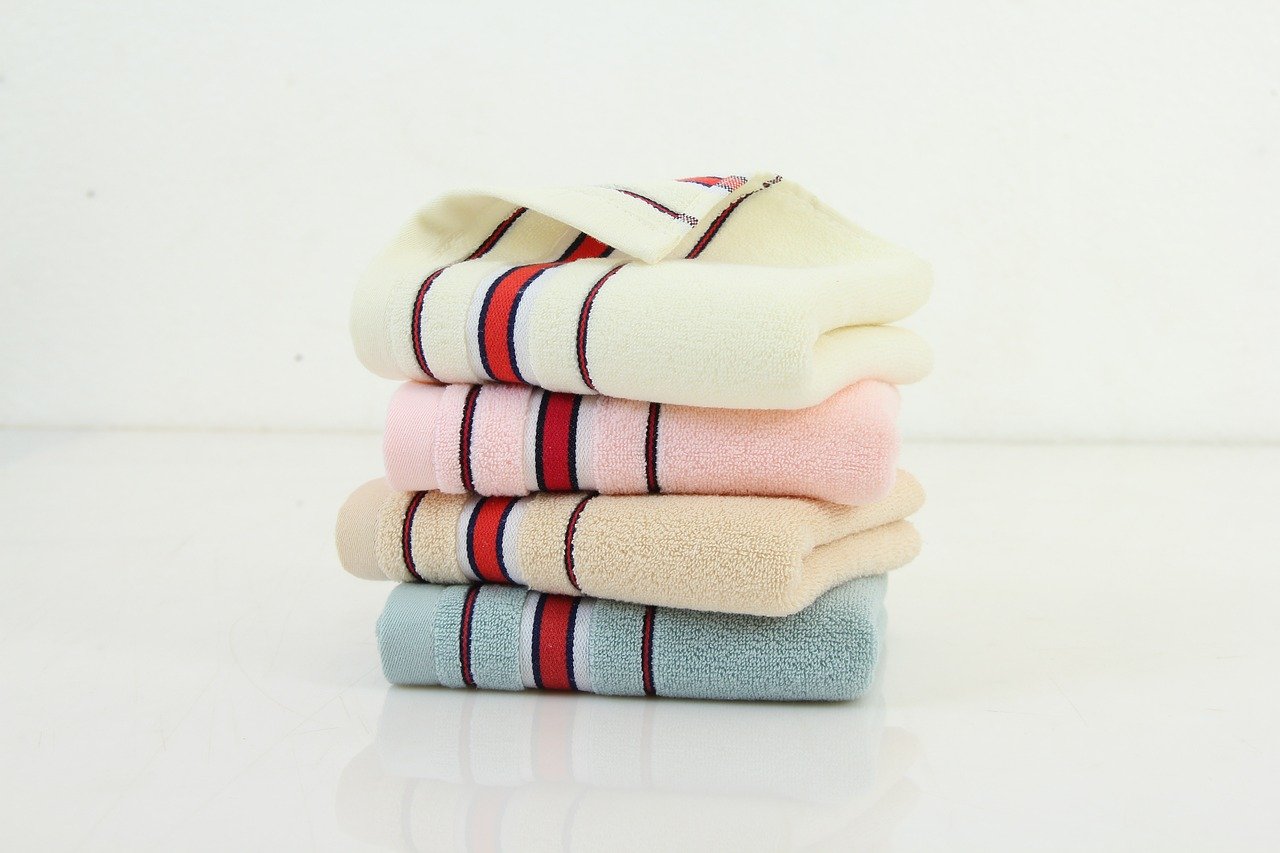
Walk through the towel aisle and you are mostly looking at two versions of the same idea.
| Type | Loop placement | Typical use | Feel |
|---|---|---|---|
| Turkish terry (standard terry) | Loops on both sides | Bath towels, beach towels, bath mats | Thick, plush, highly absorbent |
| French terry | Loops on one side only, usually the back | Sweatshirts, joggers, baby clothes, loungewear | Smooth outside, soft looped inside |
French terry is the one that surprises people. It is not a towel fabric at all in most cases. It behaves like a midweight knit, drapes well, and breathes, which is why it shows up in athleisure. If you have ever pulled on a sweatshirt that felt soft against the skin but smooth on the outside, you have worn French terry.
Turkish terry, sometimes just called terry towelling, is the classic bath towel build. Loops on both faces mean water gets pulled from your skin on contact. The density of those loops, not the thickness of the towel, is what determines how well it dries you.
Why Terry Cloth Absorbs So Well
Cotton is hydrophilic, meaning its cellulose fibers attract and hold water. Terry cloth multiplies that natural trait by exposing far more fiber surface than a flat weave would. Every loop adds surface area, and surface area is where absorption happens.
This is also why a thin, well-made terry towel can outperform a thick, poorly made one. If the loops are sparse, long, and loosely twisted, water has fewer fibers to grab onto. If the loops are dense and the cotton is good, the towel works harder at a lower weight.
There is a practical catch here. Long loops feel luxurious in the store but snag on rings, zippers, and hangnails. Short, dense loops feel a little flatter at first but hold up far better over years of washing. That trade-off is worth knowing before you pay a premium for a heavy towel.
A Short Note on Where It Came From
Terry weaving is closely tied to textile centers that grew up around the eastern Mediterranean, and the phrase “Turkish towel” reflects that association. Beyond that, be careful with the history you read online. Specific claims about exact dates and inventors of looped toweling circulate widely but are hard to confirm, and many popular retellings repeat the same unverified details. If the history matters to you, check a textile encyclopedia or a museum collection rather than a shopping blog.
What Terry Cloth Is Made Of
Most terry cloth is cotton, and that is the version worth buying for anything that touches water. Cotton blends with polyester are extremely common because polyester adds durability and helps the fabric dry faster. The trade-off is real: polyester does not absorb water the way cotton does, so a high-polyester towel will feel less thirsty and can develop a slightly slick hand feel.
A practical rule of thumb is to check the fiber content label before anything else. A towel labeled 100 percent cotton will behave very differently from one that is 60 percent cotton and 40 percent polyester, even if they look identical on the shelf.
How to Judge Quality in the Store
You do not need a laboratory to evaluate terry cloth. A few quick checks do most of the work.
- Rub the surface. Run your palm across the loops. If they pull and snag immediately, they will snag in the wash too.
- Check the loop density. Look closely at the base fabric. If you can see a lot of flat ground between loops, the towel is thin on absorbency.
- Read the fiber label. Cotton first, blends second, and be suspicious of unlabeled bargains.
- Weigh it in your hand. Heavier is not always better, but a towel that feels weightless rarely performs.
- Look at the edges. A finished hem with tight stitching survives washing. A loose overlock seam will fray within months.
One mistake people make constantly is buying towels by thickness alone. Thick terry that is loosely woven holds water in the gaps rather than in the fibers, dries slowly, and starts to smell musty. Density beats bulk every time.
Caring for Terry Cloth So It Lasts
Terry cloth is durable, but it is not indestructible, and most towel failures come down to laundry habits rather than manufacturing.
Skip the fabric softener. This is the single most common mistake. Softener coats the cotton fibers with a waxy film that feels nice for one wash and then quietly blocks absorption. Your towel starts pushing water around instead of soaking it up. If your towels have already gone flat, a wash with half a cup of white vinegar can help strip the buildup.
Avoid high heat. Hot dryer cycles break down cotton fibers and make loops brittle. A medium setting with dryer balls does the job and keeps the pile from matting.
Wash before first use. New terry often carries sizing and manufacturing residue that reduces absorbency. One wash fixes it.
Do not overload the machine. Terry needs room to move so the loops can open and release dirt. Cramming towels in leaves detergent trapped in the pile, which is a common cause of that sour smell.
Treat snags early. If a loop pulls out, trim it with scissors rather than yanking it. Pulling stretches the surrounding weave and creates a run.
Where Terry Cloth Shows Up Beyond the Bathroom
Towels and bathrobes are the obvious uses, but terry cloth has quietly spread into a lot of other categories. It appears in beach cover-ups, baby hooded towels, makeup removal pads, gym towels, pet drying robes, and even some upholstery and car detailing cloths where absorbency matters more than looks.
French terry, meanwhile, has become a staple of casual fashion. Sweatshirts, joggers, shorts, and lightweight hoodies all rely on that one-sided loop structure for softness against the skin. If you are trying to work out what a garment is made of from a photo, loop texture on the inside face is one of the clearest visual clues, and a guide on how to identify clothing from an image can help you separate French terry from fleece or jersey at a glance.
Brands that sell both towels and terry apparel increasingly rely on digital previews before a product ever ships. That is where an AI fashion model generator for clothing brands earns its keep, since loop texture and drape are exactly the details that flat product shots tend to flatten out.
Common Myths Worth Dropping
A few ideas about terry cloth circulate so widely that people treat them as fact. They are not.
Myth: Higher GSM always means a better towel. GSM, or grams per square meter, measures weight. It says nothing about loop quality, cotton grade, or weave density. A 600 GSM towel made from short, weak fibers will underperform a well-built 450 GSM towel.
Myth: Terry cloth is only for bathrooms. French terry has been a fashion fabric for decades, and the loop structure is what gives it that distinctive softness.
Myth: Fabric softener makes towels last longer. It does the opposite over time by coating the fibers and reducing absorbency. Softness and performance are not the same thing.
Myth: All cotton terry is the same. Cotton quality varies enormously, and so does loop construction. Two towels can carry identical labels and behave completely differently after ten washes.
Terry Cloth and Style
Terry has an image problem in some circles. It reads as casual, domestic, and slightly sporty, which is why it rarely appears in formal wardrobes. But French terry has found a comfortable home in relaxed, understated dressing, the kind of quiet, well-cut casual wear that pairs a looped sweatshirt with tailored trousers. If that aesthetic appeals to you, the principles behind old money clothes style actually get it apply neatly here: choose texture over logos, fit over flash, and let the fabric do the talking.
Terry cloth rewards that approach. A good cotton terry robe or a well-made French terry sweatshirt looks better the more it is worn, provided it is washed properly and not overloaded with softener.
Conclusion
Terry cloth earns its place through simple engineering. Uncut loops create surface area, surface area creates absorbency, and cotton makes the whole thing work. Once you understand that structure, the shopping decisions get easier: check the fiber label, feel the loop density, skip the fabric softener, and stop equating thickness with quality. Whether you are buying bath towels, a robe, or a French terry sweatshirt, the same few principles separate a piece that lasts a decade from one that goes flat in a season.
Frequently Asked Questions
What is the difference between terry cloth and French terry?
Standard terry cloth has uncut loops on both sides and is built for absorbency, which is why it is used for towels and bathrobes. French terry has loops on one side only, usually the back, with a smooth face on the outside. That makes it a knit suitable for sweatshirts, joggers, and loungewear rather than drying.
Is terry cloth always made of cotton?
No. Cotton is the most common fiber because it absorbs water well, but polyester blends are widespread. Blends add durability and dry faster, though they absorb less. Always check the fiber content label, since two towels that look identical can perform very differently.
Why do my terry towels stop absorbing water?
Fabric softener and dryer sheets are the usual culprits. They leave a waxy coating on the cotton fibers that repels water. Detergent residue from overloaded washing machines causes similar problems. Washing with white vinegar and skipping softener usually restores absorbency.
Does higher GSM mean a better towel?
Not necessarily. GSM measures weight per square meter, not quality. Loop density, cotton fiber length, and weave construction matter more. A well-made mid-weight towel often outperforms a heavy one with sparse, loosely twisted loops.
Can terry cloth be washed in hot water?
Warm water is usually the safer choice. Very hot washing and high-heat drying break down cotton fibers over time and make loops brittle. Medium dryer heat with dryer balls keeps the pile from matting while still drying thoroughly.
What is terry cloth called in other countries?
In the UK, Australia, and New Zealand, it is commonly called terry towelling. The term “Turkish towel” is also used for looped cotton toweling, reflecting the fabric’s historical association with eastern Mediterranean textile centers.



