
The Galaxy S27 Ultra is shaping up to be Samsung’s most difficult flagship in years, and the problems are not fixable by software. Leaks point to a phone that loses camera hardware its predecessors kept for half a decade, arrives into the memory pricing crisis the industry has seen, and wears a redesign fans have greeted with open scepticism. Samsung has not confirmed any of it, but the reports are consistent.
Forbes framed it as three challenges facing the Galaxy S27 Ultra. The first is the camera: the phone is expected to drop its 3x telephoto lens and laser autofocus module, leaving three cameras where four used to be. The second is cost: surging AI-driven memory demand has pushed prices up, and the S27 Ultra may ration its fastest memory and storage to the most expensive configurations. The third is design: a new edge-to-edge camera plateau borrowed from the iPhone, yet serving no engineering purpose.
Leaks also point to a larger battery, a new main sensor and a next-generation chip, and Samsung has turned difficult launches into strong sellers before. But the three challenges explain the negative conversation, and why Samsung’s early-2027 launch choices matter more than usual.
Key takeaways
- The Galaxy S27 Ultra is expected to lose its 3x telephoto camera and laser autofocus module, leaving three rear cameras instead of four.
- Samsung will reportedly rely on AI focus technology and a new Zoom Enhancer feature to fill the gap.
- Rising memory prices may mean LPDDR6 RAM and UFS 5.0 storage appear only on 512GB and 1TB models.
- The new edge-to-edge camera plateau resembles the iPhone 17 Pro, but leaks suggest the space inside is largely empty.
- Brighter spots include a rumoured 5,700mAh battery, a new 200MP sensor and a Snapdragon 8 Elite Extreme Gen 6 chip.
| Feature | Galaxy S26 Ultra | Galaxy S27 Ultra (reported) |
|---|---|---|
| Rear cameras | Four, including 3x telephoto | Three; 3x telephoto removed |
| Laser autofocus | Present since S21 Ultra | Removed; AI focus instead |
| Main camera | 200MP ISOCELL HP2 | 200MP ISOCELL HP6, better low light |
| Battery | 5,000mAh | About 5,700mAh |
| Chip | Snapdragon 8 Elite Gen 5 | Snapdragon 8 Elite Extreme Gen 6 |
| Starting price | $1,399.99 in the US | At least $1,399, unconfirmed |
Challenge One: The Camera Loses Hardware
The first challenge is the camera system. Tipster Ice Universe says the Galaxy S27 Ultra will ditch the laser autofocus module, the first time Samsung has removed it since the Galaxy S21 Ultra in 2021. Ice Universe posted on X on 24 November 2026 that the removal was confirmed, explaining why the latest design render shows only a main camera, ultrawide, telephoto and LED flash. In the leaker’s summary, the S27 Ultra loses both the 3x telephoto camera and the laser autofocus module versus the S26 Ultra.
The module fires an invisible infrared beam at the subject to measure distance, helping the camera lock focus quickly in low light and on close-ups, where standard autofocus can hunt. It covers for phase-detection autofocus where phone cameras struggle most: dim rooms, evening portraits, close-ups. Losing it means sensor-based focusing must do all of that work alone.
The 3x telephoto loss is the more visible cut. The S26 Ultra’s 10-megapixel 3x lens gave owners dedicated optical zoom for portraits and mid-range subjects. Without it, the S27 Ultra keeps a single 5x telephoto, reportedly 50 megapixels, beside a 200-megapixel main camera and 50-megapixel ultrawide. The 5x lens reaches further but cannot replace a separate optical 3x option, and 2x to 4x shots will rely on digital cropping instead of true optical zoom.
Challenge Two: The Price Squeeze
The second challenge is money, largely outside Samsung’s control. Surging AI data-centre demand has pushed memory and chip prices up across the smartphone industry, a crunch widely called the RAMpocalypse. Samsung raised the S26 Ultra to $1,399.99 in the US in October 2026, and the S27 Ultra is expected to cost at least $1,399.
The cost pressure is already shaping the phone’s specifications. Tipster reports suggest Samsung may ration LPDDR6 RAM and UFS 5.0 storage to higher tiers, with 16GB of RAM reserved for top storage options. PhoneArena agrees, suggesting LPDDR6 and UFS 5.0 could be limited to the 512GB and 1TB variants. Base-model buyers may therefore pay a flagship price for last-generation memory.
The problem is compounded by the wider lineup. Supply-chain reports suggest a four-device range: Galaxy S27, S27+, a new S27 Pro and the S27 Ultra, with the Pro sitting between the standard flagship and the Ultra. That squeezes the Ultra from below: if the Pro offers much of the experience for less, the Ultra must justify its premium.
Challenge Three: A Design Fans Did Not Ask For
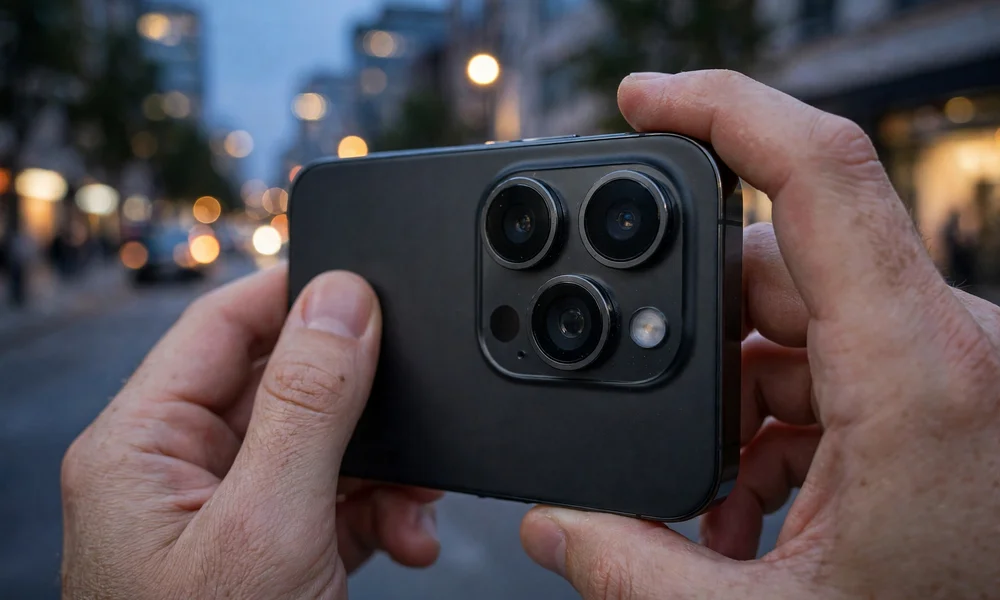
The third challenge is the phone’s appearance, which has drawn the most emotional reaction. Ice Universe reported earlier in November 2026 that the premium phone would move to a design with an edge-to-edge camera plateau, similar to the one on the iPhone 17 Pro and the iPhone 18 Pro. Samsung’s Ultras have used individual floating camera rings since 2022; the new design abandons that identity for a look associated with Apple.
The comparison with Apple is what makes the design so awkward. Apple’s plateau maximises space: it contains the chipset and keeps heat away from the rest of the device. Samsung’s design, Ice Universe says, will reportedly be cosmetic. The leaker wrote that the “entire right side is almost completely empty”, referring to the space to the right of the camera lenses and flash. A large area of functionally meaningless empty space is hard to defend on a phone costing well over a thousand dollars.
Ice Universe wrote that people are unhappy because Samsung seems to be abandoning a design philosophy it once stood for: “Entities should not be multiplied beyond necessity.” The redesign may still help: a wider housing could improve stability, cooling, and compatibility with magnetic wireless chargers. Early renders often lack fine detail, so first reactions could prove premature, but first impressions matter, and this one has been poor.
What Samsung Is Offering Instead
Samsung’s answer to the missing hardware is software. When asked what would replace laser autofocus, Ice Universe replied the phone will “use AI focus technology”. Details are unconfirmed, but the direction is clear: machine-learning focusing that predicts and tracks subjects rather than measuring distance. It is not automatically a downgrade, and laser autofocus never reached long distances anyway. But it is a bet, judged on results.
There is a more concrete software answer for the missing 3x lens. In an update on 25 November 2026, researchers found a Galaxy AI feature called Zoom Enhancer hidden in the One UI 9.5 beta. It uses AI to sharpen zoomed-in and low-resolution photos. Samsung’s own description reads: “Use AI to enhance clarity and sharpness at higher zoom levels when the Zoom enhancer icon appears.” It warns that “AI-generated details may differ from the actual scene”: the feature invents detail the camera never captured.
The hardware that is improving may offset some of the losses. The 200-megapixel main camera is reportedly moving from the ISOCELL HP2 sensor to the new Samsung S5KHP6, which Ice Universe claims will boost brightness and night detail. The battery is expected to jump from 5,000mAh to around 5,700mAh, the first battery change in six years, with 60W wired charging retained. The phone is also expected to keep the S Pen, which no iPhone can match. For how the current model compares with its biggest rival, see iPhone 17 Pro vs Samsung Galaxy S26; for the wider flagship picture, see Galaxy S26 vs Pixel 10 and iPhone 17 vs Samsung Galaxy S26.
What Comes Next
The January or February 2027 Unpacked event will confirm the camera system, memory tiers, battery and price, and early reviews will show whether AI focus and Zoom Enhancer replace the missing hardware. Until Samsung announces, everything here is a leak-based report, not a confirmed specification.
If the HP6 sensor delivers visibly better low-light photos and the 3x crop holds up, many buyers will not miss the dedicated lens. If focus hunting appears in dim light, or Zoom Enhancer produces the invented detail its warning describes, the cuts will define the phone’s reputation. The second test is price: hold the line near $1,399 and the phone looks fair; raise it again while the base model ships older memory, and the value argument collapses.
What It Means for Buyers
Anyone considering the S27 Ultra should wait for the official announcement and the first camera reviews. The leaks describe a phone trading hardware for software, memory tiers for cost control, and a distinctive design for one borrowed from Apple. Any one trade could work out. All three together make this the riskiest Ultra launch in years.
S26 Ultra owners have little reason to rush: its camera is more versatile and the S27’s gains are incremental. For owners of older Ultras, the decision is closer if the price is right. For Samsung, the stakes are strategic: the Ultra must prove Samsung still sets the Android agenda.
The Galaxy S27 Ultra Checklist: Six Things to Check Before You Buy
- Test the 3x range yourself. In a store demo, shoot at 2x, 3x and 5x and compare with the S26 Ultra.
- Check low-light focus. Try focusing in a dim room and watch for hunting or missed focus.
- Read the base model’s memory spec. Confirm whether your configuration gets LPDDR6 and UFS 5.0 before paying.
- Compare the battery claim. Look for real-world battery tests, not the 5,700mAh headline figure.
- Price it against the S27 Pro. If the Pro covers your needs for less, the Ultra’s premium needs justification.
- Wait for Zoom Enhancer reviews. Check whether AI-enhanced zoom photos look natural or show invented detail.
Frequently Asked Questions
Is the Galaxy S27 Ultra losing its 3x telephoto camera?
According to tipster Ice Universe, yes: the S27 Ultra is expected to drop its 10-megapixel 3x telephoto lens, leaving a single 50-megapixel 5x telephoto. Samsung has not confirmed this, so it remains a leak-based report.
What replaces the laser autofocus module?
Samsung will reportedly rely on AI focus technology. A Galaxy AI feature called Zoom Enhancer, found in the One UI 9.5 beta, also uses AI to sharpen zoomed-in photos, though Samsung warns AI-generated details may differ from the actual scene.
When will the Galaxy S27 Ultra launch?
Reports point to a Galaxy Unpacked event in January or February 2027, with February looking more likely. Samsung has not announced an official date.
How much will the Galaxy S27 Ultra cost?
No price has been confirmed. The Galaxy S26 Ultra rose to $1,399.99 in the US in October 2026, and the S27 Ultra is expected to cost at least $1,399.
Will the S27 Ultra have a bigger battery?
Leaks point to around 5,700mAh, up from 5,000mAh, Samsung’s first Ultra battery change in six years. Wired charging is expected to stay at 60W, and Qi2 magnetic charging is also rumoured.
Should I wait for the S27 Ultra or buy the S26 Ultra?
The S26 Ultra has more camera hardware, while the S27 Ultra offers a bigger battery, a new sensor and a newer chip. If camera versatility matters most, the S26 Ultra is safer; if battery life matters more, wait for S27 Ultra reviews.
The Bottom Line
The Galaxy S27 Ultra faces three genuine challenges: a camera that loses hardware its predecessors kept for years, a cost squeeze that may ration the fastest memory to the most expensive models, and a redesign borrowed from Apple without Apple’s engineering reason. Each is survivable alone; together they make this Samsung’s most difficult Ultra launch.
But a larger battery, a better sensor, a new chip and effective AI software could still make it strong. The verdict comes at the early-2027 Unpacked event and in the first camera reviews. Until then, patience: the leaks are detailed but still leaks.