Ever noticed how a room can look spotless, then a shaft of afternoon sun cuts through the window and reveals a snowstorm of floating dust? That moment explains why so many people buy a vacuum, use it faithfully, and still feel like their home is dusty an hour later. The machine is picking up crumbs and hair just fine. The problem is the stuff you can’t see, and most vacuums are only half-built to handle it.
Dust is not one substance. It’s a mix of skin cells, textile fibers, soil tracked in from outside, pollen, pet dander, and sometimes chemical residues from plastics and flame retardants. Particle sizes span a huge range, and the smallest fractions are the ones that stay airborne longest and settle deepest into carpets and upholstery. A vacuum cleaner for dust has to do two jobs at once: pull that material out of surfaces, and then keep it locked inside the machine instead of blowing a fine cloud back into the room. Plenty of models claim to do both. Fewer actually manage it.
Why fine dust is harder to capture than visible debris
A vacuum’s job sounds simple until you look at the physics. Airflow carries particles toward the machine, but the largest debris needs raw suction while the smallest particles need filtration. Those two demands pull in opposite directions. A filter fine enough to trap tiny particles restricts airflow, and restricted airflow means less pickup at the floor nozzle. Cheap vacuums solve this by using a coarse filter and letting the fine stuff pass straight through.
There’s also a measurement problem. HEPA is a filter rating, not a vacuum rating. A true HEPA filter is commonly defined as capturing at least 99.97% of airborne particles at 0.3 micrometers, the size that tends to slip through filter media most easily. But a vacuum can carry a genuine HEPA filter and still leak dust around poorly sealed seams, past the bin gasket, or through the exhaust housing. Whole-machine sealed filtration is the stronger claim, and it’s the one worth looking for on the box.
European buyers see a different labeling system. EN 1822 classifies high-efficiency filters by grade, such as H13 and H14, based on tested efficiency at the most penetrating particle size. The two systems are related but not identical, and neither one is enforced as a legal definition of a “HEPA vacuum” in the United States. That gap is exactly where marketing language thrives.
The filtration chain: where dust actually escapes
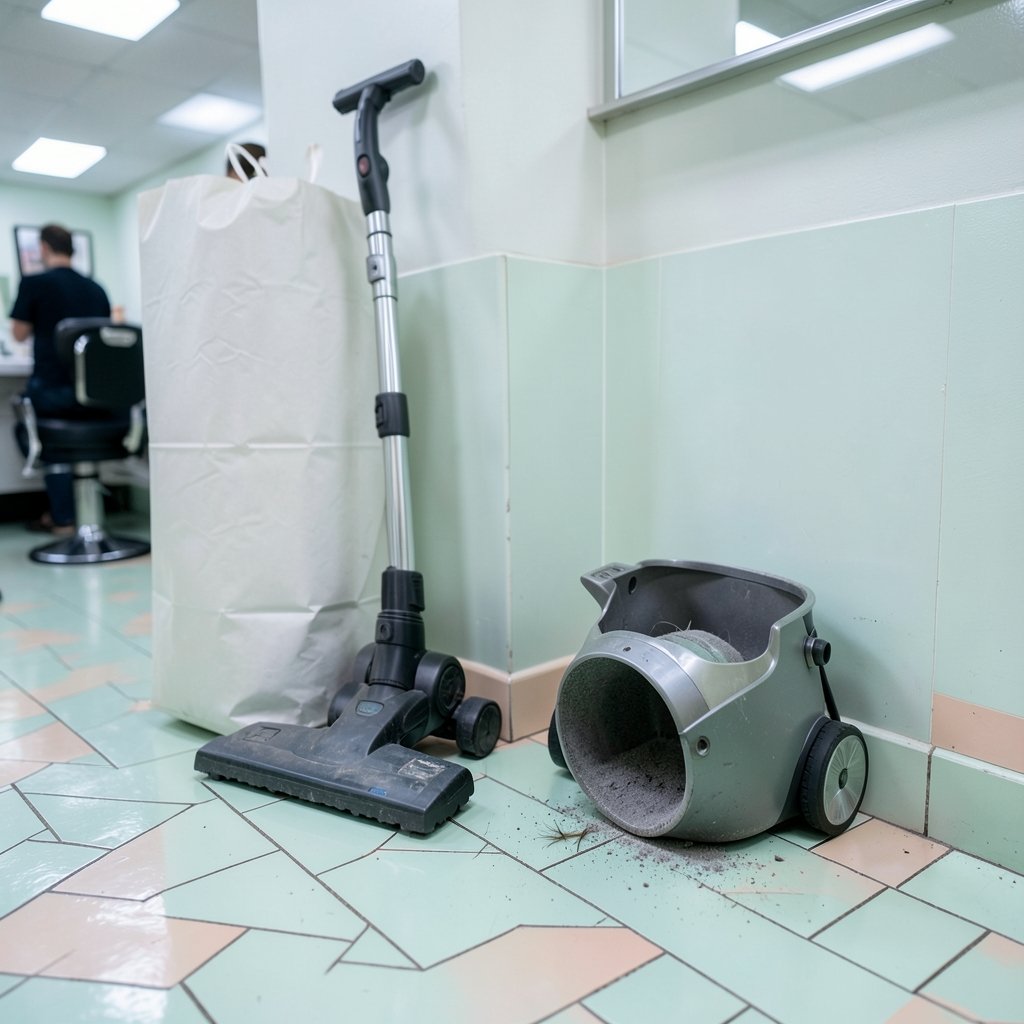
Think of a vacuum as a chain with four links, and dust escapes at the weakest one.
- The floor nozzle and brush. Poor sealing against the floor lets dust puff sideways before it’s ever captured.
- The bin or bag. Emptying a bagless canister in the open air can aerosolize a cloud of fine dust right back into your breathing zone.
- The primary filter. A clogged or rinsed-and-reused filter drops airflow and pickup fast.
- The exhaust filter and housing seals. This is where “HEPA” claims get tested in real life.
Most people focus entirely on link one and ignore the rest. In practice, links two through four are where a dust problem quietly persists. A bagged machine generally releases fewer particles during emptying than a bagless bin, simply because you’re not tipping a cloud of dust into the air. Bagless designs are convenient, but they demand careful emptying, ideally straight into an outdoor bin with the lid close by.
Matching the machine to the surface
Carpet acts as a reservoir. It holds dust, dander, and grit deep in the pile, and every footstep stirs some of it back up. Hard floors are easier to clear, but dust settles on them visibly and drifts into corners. The right vacuum depends on which surface dominates your home.
| Surface type | What matters most | Common mistake |
|---|---|---|
| Wall-to-wall carpet | Strong agitation, sealed filtration, slow passes | Vacuuming too fast for the brush to lift grit |
| Low-pile rugs | Adjustable height, edge cleaning | Leaving the brush spinning on delicate edges |
| Hard floors | Soft brush or suction-only mode, good edge pickup | Blowing dust into corners with a side exhaust |
| Upholstery and mattresses | Crevice and upholstery tools, HEPA exhaust | Skipping these surfaces entirely |
| Mixed homes | Versatility and filter quality over raw power | Buying for one surface and guessing on the rest |
Robot vacuums deserve their own note. They’re excellent for maintenance between deep cleans, and modern navigation has gotten genuinely good. If you’re weighing navigation types, this breakdown of robot vacuum lidar vs camera navigation key differences explains which sensor setup handles cluttered rooms and dark corners better. Just don’t expect a robot to replace a full-size machine for embedded carpet dust.
Suction numbers don’t tell the whole story
Air watts, sealed suction, and motor wattage get printed in big type, but there’s no single consumer-standardized rating for dust removal across brands. A machine with modest suction and excellent sealing can outperform a high-wattage model with leaky housing. What actually matters in practice:
- Sealed system design. Look for wording about whole-machine or sealed HEPA filtration, rather than a HEPA filter alone.
- Filter access. If you can’t reach the filter easily, you won’t clean it, and performance will quietly decay.
- Weight and maneuverability. A vacuum you dread hauling out gets used less, and consistency beats specs.
- Noise level. Quieter machines make it easier to do a slow, thorough pass without rushing.
One practical habit that separates tidy homes from dusty ones: vacuum slowly. Pushing a machine quickly across carpet gives the brush barely any time to agitate the pile. Two slow passes in overlapping lanes lift far more fine dust than one fast sweep.
Where robot vacuums fit into a dust plan
A robot running daily keeps loose dust from accumulating, which is genuinely useful in high-traffic zones and under furniture you’d otherwise skip. The catches are familiar to anyone who owns one. Cliff sensors can misread very dark flooring and stop the robot mid-job, a quirk covered in this guide to what happens when robot vacuum cliff sensors fail on black carpet. Long hair wraps around brushes and reduces pickup over time, though some designs handle it better, as this look at robot vacuum long human hair explains. And when a wheel jams, the whole schedule collapses, which is why knowing how to fix a robot vacuum wheel stuck error fast saves a lot of frustration.
For homes that want one device to do both jobs, a vacuum mop combo can reduce the number of passes needed on hard floors, where damp wiping removes settled dust instead of only stirring it. The best robot vacuum mop combos that actually clean the floor tend to be the ones with strong filtration and a dock that handles dirty water hygienically, rather than the ones with the biggest spec sheet.
The maintenance habits that decide the outcome
Here’s the uncomfortable truth: most “my vacuum doesn’t work anymore” complaints are maintenance failures, not product failures. A clogged filter chokes airflow, and a choked machine can’t capture fine dust no matter what the box promised.
- Empty the bin before it’s full. Dust has to travel through the airstream, and a packed bin blocks that path.
- Wash or replace filters on the manufacturer’s schedule. Rinsed filters must dry completely before reuse, or you’ll get a musty smell and reduced airflow.
- Check the brush roll for wrapped hair every few weeks. Hair compresses the bristles and kills agitation.
- Inspect seals and gaskets for cracks. A worn gasket is a silent dust leak.
- Clear the hose and wand of blockages. A partial clog feels like weak suction but is really restricted flow.
People also make a strategic mistake: they vacuum the same visible path every time. Dust accumulates along baseboards, under beds, on top of door frames, and inside sofa cushions. A short crevice-tool session on those spots once a month does more for indoor dust levels than upgrading to a more powerful machine.
Bagged, bagless, and the emptying problem
The bagged-versus-bagless debate is older than most of the machines on sale today, but it still matters for dust. Bagless canisters let you see what you’ve collected, which is satisfying and also a reminder of how much fine material was sitting in your carpet. The tradeoff comes at emptying time, when tipping the bin can release a puff of fine particles.
If you go bagless, empty it outdoors or into a lined bin, and do it before the bin is packed. If you go bagged, you get cleaner emptying and often more consistent airflow as the bag fills, at the cost of buying bags. Neither choice is wrong. What’s wrong is owning a bagless machine and emptying it in the middle of a bedroom with the windows shut.
Do you need a separate air purifier?
Vacuums remove dust from surfaces. They don’t continuously clean the air, and some of what they disturb becomes airborne during cleaning. That’s why a vacuum with sealed filtration and a standalone air purifier complement each other rather than compete. In workshops and dusty hobby rooms, the combination matters even more, and this piece on whether an air purifier clears workshop dust covers where the limits are. If you’re also dealing with mopping solution residue on hard floors, this guide to robot vacuum cleaning solution alternatives that actually work is worth a read before you refill the tank.
What the evidence says about health benefits
Public-health guidance consistently notes that reducing allergen reservoirs, especially carpets and upholstery, can lower indoor allergen levels, and HEPA filtration helps keep captured material contained. The evidence that vacuuming alone improves asthma outcomes is mixed, so it’s fair to treat a good vacuum as one part of a broader dust strategy rather than a cure. Ventilation, decluttering, washable bedding, and moisture control all pull weight too. Household dust composition varies enormously between homes, which is why no single machine guarantees a dust-free result.
Conclusion
A vacuum cleaner for dust earns its keep through sealing and maintenance, not marketing wattage. Look for whole-machine filtration rather than a HEPA badge alone, match the machine to your dominant floor surface, and treat filter care as part of ownership rather than an afterthought. Add slow passes, edge attention, and a sensible emptying routine, and the dust you see in that shaft of sunlight will shrink noticeably. The machine matters. The habits matter more.
Frequently Asked Questions
Does a HEPA vacuum really remove dust from the air?
Not continuously. A HEPA filter traps particles as air passes through the machine, so it stops dust from being exhausted back into the room. It doesn’t scrub the room’s air the way an air purifier does. Sealed whole-machine filtration is the claim to look for, since a HEPA filter alone can still leak around gaskets.
How often should I vacuum to control dust?
High-traffic areas and homes with pets or allergies generally benefit from vacuuming two to three times a week, with a slower deep pass weekly on carpets. Less trafficked rooms can go weekly or biweekly. Consistency matters more than intensity, because dust settles continuously.
Is bagged or bagless better for dust?
Bagged machines typically release fewer particles when you empty them, since the dust stays enclosed. Bagless bins are convenient but can aerosolize fine dust if tipped indoors. If you choose bagless, empty it outdoors or into a lined bin before it’s full.
Why does my vacuum leave dust behind on hard floors?
Usually it’s airflow, not suction power. A clogged filter, full bin, or blocked hose restricts flow, and a side-exhaust design can blow dust into corners. Check the filter and hose first, then try slower passes and a soft brush attachment.
Do robot vacuums help with dust or just crumbs?
They help meaningfully as daily maintenance, keeping loose dust from building up in traffic lanes and under furniture. They struggle with deeply embedded carpet dust and need brush and filter cleaning to stay effective. Most dusty homes do best with a robot plus a full-size machine.
What does EN 1822 mean on a vacuum filter?
EN 1822 is a European standard that classifies high-efficiency filters by grade, such as H13 or H14, based on tested efficiency at the hardest-to-capture particle size. It’s a filter classification, not a whole-machine rating, so it tells you about the filter media rather than the vacuum’s seals.