
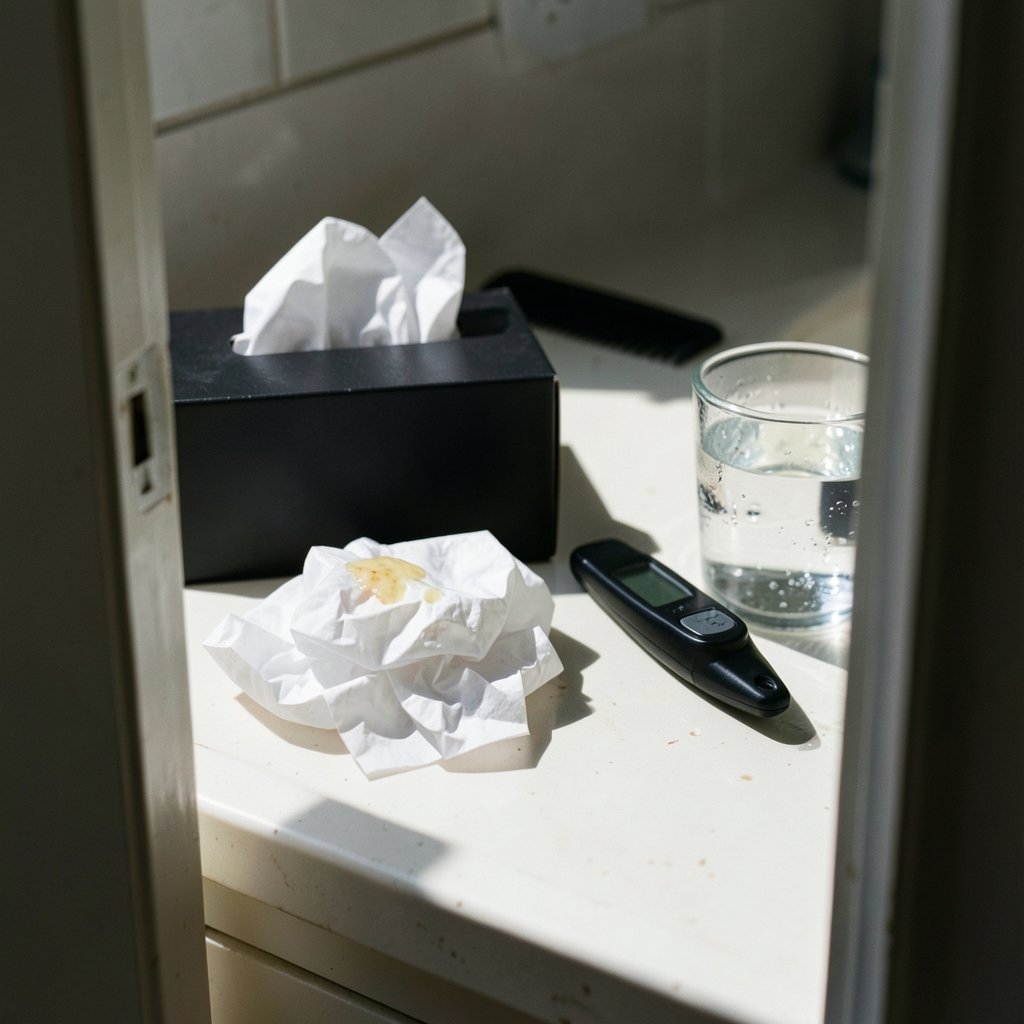
Quick Answer: What does yellow snot mean?
Yellow snot usually means your immune system is doing its job. When white blood cells called neutrophils pile up and break down in nasal mucus, the enzymes they release give the discharge a yellow or greenish tint, and this happens during ordinary viral colds too.
The color is not a reliable sign of a bacterial infection, so a yellow nose alone should not send you hunting for antibiotics. It can also show up with allergies, dry indoor air, or irritants like smoke, and a stubborn one-sided yellow discharge in a child often points to something stuck in the nostril.
Before you panic or reach for leftover pills, check how long symptoms have lasted, whether you have a fever, how severe the facial pressure is, whether the discharge comes from one side only, and whether other signs like cough or sore throat are improving or getting worse.
Why Yellow Snot Happens at All

Here is a question worth sitting with for a second: have you ever blown your nose, seen a bright yellow blob, and immediately felt your stomach drop? Most people have. The color feels like a warning light on a dashboard. But the biology behind it is far less dramatic than the panic it causes.
Mucus is not waste. It is a thin, slippery layer that lines your nose and sinuses, trapping dust, pollen, and germs before they travel deeper into your airways. On a normal day, you swallow most of it without noticing. When your body detects an invader, it ramps up production and sends in the cavalry.
That cavalry is mostly neutrophils, a type of white blood cell packed with an enzyme called myeloperoxidase. The enzyme has a greenish hue. When neutrophils arrive in force, fight, and then die off, they get swept into your mucus along with everything else. The result is the yellow-to-green spectrum people find so alarming. In other words, the color is a sign that your immune system showed up to work, not proof that bacteria have taken over.
This is the same logic that explains why money symbols and health signals alike get misread when people skip the underlying mechanism. A symbol is not the thing itself, and a color is not a diagnosis.
Yellow vs. Green vs. Clear: What the Shades Suggest
People tend to treat yellow and green as different alarm levels. In practice, the two sit on the same continuum, and the shade shifts with how concentrated and how old the mucus is.
| Mucus color | What it often reflects | When to worry |
|---|---|---|
| Clear | Normal baseline, early cold, allergies | Rarely a concern on its own |
| White | Congestion slowing mucus flow, mild dehydration | Usually harmless |
| Pale yellow | Early immune response, neutrophils arriving | Common in the first days of a cold |
| Bright yellow | Active white-cell activity, thicker mucus | Still usually viral |
| Green | Older, more concentrated mucus with dead cells | Not automatically bacterial |
| Brown or black | Old blood, dust, smoke exposure | Worth a doctor visit if it persists |
| Red or pink | Fresh blood from irritation or dryness | See a doctor if recurring |
The key takeaway from that table is that color alone cannot separate viral from bacterial illness. A widely cited 2006 review in Clinical Infectious Diseases concluded that colored nasal discharge is a poor predictor of bacterial sinusitis. That finding has held up in later guidance, which is why antibiotic stewardship programs keep repeating it.
A useful mental model: think of yellow snot the way you think of a busy construction site. The noise and mess do not tell you whether the crew is building something new or repairing storm damage. You need the timeline and the symptoms to know what is actually going on.
The Timeline Matters More Than the Color
If color is unreliable, what should you actually pay attention to? The answer is duration and pattern. Clinicians who treat sinus problems look at how long symptoms last and how they evolve, not at what color lands on the tissue.
A typical viral cold follows a predictable arc. Days one through three bring clear or whitish discharge, sneezing, and a scratchy throat. Around days four through seven, the mucus often thickens and turns yellow or green. Then it thins out and fades. That middle stretch is exactly when people assume they have “caught a bacterial infection,” and it is exactly when the immune response is at its peak.
Bacterial sinusitis, by contrast, tends to announce itself in one of three ways. Symptoms drag on for ten days or more without improving. Symptoms are severe from the start, with high fever and intense facial pain. Or there is a double worsening, meaning you start to feel better and then crash again. Those patterns, not the color, are what the 2012 guideline from the Infectious Diseases Society of America uses to define likely bacterial infection.
That distinction matters because it changes what you do. Someone with yellow snot on day four of a cold needs rest and fluids. Someone with yellow snot on day twelve, plus facial pressure and a low fever, needs a conversation with a clinician. This is the same principle that applies when parsing the numbers behind headlines about what much money does Elon Musk make a day actually mean: the raw figure is less informative than the method behind it.
Common Mistakes People Make With Yellow Snot
A few habits show up again and again, and most of them make things worse rather than better.
Mistake one: assuming yellow means antibiotics. This is the big one. Antibiotics target bacteria. If a virus is driving the yellow discharge, which it usually is, antibiotics do nothing except wipe out good gut bacteria and contribute to resistance. Public health agencies have spent years trying to untangle the “green means infection” myth for exactly this reason.
Mistake two: reaching for leftover pills from a past illness. Finishing an old prescription “just in case” is how resistant strains get their start. It also means you are taking a drug that was never matched to your current problem.
Mistake three: overusing decongestant sprays. Sprays containing oxymetazoline work well for a couple of days. Use them longer than three days and you can get rebound congestion, where the spray itself causes the stuffiness it was supposed to fix.
Mistake four: blowing too hard. Aggressive nose blowing can push mucus into the Eustachian tubes and sinuses, which makes pressure and ear discomfort worse. Gentle, one-nostril-at-a-time blowing is genuinely better.
Mistake five: ignoring one-sided symptoms. Yellow discharge from only one nostril, especially in a child, deserves attention. A persistent one-sided discharge is classically linked to a foreign object lodged in the nasal passage, and it will not clear up on its own no matter how many tissues you go through.
The same instinct to read too much into a single signal shows up in finance, where people dissect quotes about money without checking who said them or what the context was. A single data point is rarely the whole story.
What Actually Helps When Your Snot Turns Yellow
Practical relief comes down to a handful of unglamorous habits that genuinely work.
- Thin the mucus with fluids. Water, warm tea, and broth keep secretions moving. Dehydration makes mucus thick and sticky, which worsens congestion.
- Use saline spray or a rinse. Over-the-counter saline loosens crusts and flushes irritants. If you use a neti pot, use distilled or previously boiled water, never straight tap water.
- Add moisture to the air. A humidifier in the bedroom helps, especially in winter. Keep it clean so it does not become a mold dispenser.
- Try a warm compress. A damp washcloth across the cheeks and forehead eases sinus pressure.
- Rest and sleep slightly elevated. Extra pillows can help drainage overnight.
- Take pain relievers as directed. Over-the-counter options reduce fever and facial soreness but do not shorten the illness.
What does not work: antibiotics for a viral cold, megadoses of vitamin C once symptoms have started, and zinc nasal sprays, which have been linked to loss of smell. Honey in warm water is a reasonable cough soother for adults and children over one year old, but never for infants.
If you are the type who likes to understand the numbers behind everyday claims, the same skeptical lens applies here. Just as it pays to check what gooseneck kettle temperature accuracy numbers really mean before trusting a brewing chart, it pays to check what a symptom actually indicates before trusting your first reaction to it.
When Yellow Snot Deserves a Doctor Visit
Most yellow discharge resolves on its own within a week or two. Certain situations warrant professional attention regardless of color.
- Symptoms lasting more than ten to fourteen days without improvement
- High fever (above 102°F or 39°C) or fever that returns after improving
- Severe facial pain or swelling around the eyes, cheeks, or forehead
- One-sided discharge, especially in a child, or any foul smell from one nostril
- Vision changes, severe headache, or neck stiffness, which need urgent care
- Breathing difficulty, wheezing, or chest pain
- Symptoms in an infant under three months, which always warrant a call
People with asthma, weakened immune systems, or chronic lung conditions should set the bar lower for checking in with a clinician. The same goes for anyone whose symptoms keep recurring in the same pattern month after month, which can point to allergies or structural issues rather than infection.
Conclusion
Yellow snot is one of the most misunderstood signals the human body produces. It looks alarming, it gets shared in memes, and it has convinced generations of people that green means bacteria and yellow means trouble. The evidence tells a calmer story. Yellow discharge is mostly a snapshot of white blood cells doing their job, and it shows up in ordinary viral colds, allergy flares, and dry winter air alike.
What matters far more than the shade on the tissue is the bigger picture: how long symptoms have lasted, whether fever is present, whether pain is severe, and whether things are trending better or worse. Those are the details a clinician actually uses. Color is a data point, not a verdict.
So the next time you blow your nose and see yellow, take a breath. Drink some water, run the humidifier, and give your immune system a few days to finish its work. If the calendar keeps flipping and nothing improves, that is your cue to call someone who can look at the whole picture rather than just the color.
Frequently Asked Questions
Does yellow snot always mean you are contagious?
No. Yellow discharge can appear after the peak of an infection, when you are no longer shedding much virus. It can also come from allergies or dry air, which are not contagious at all. Contagiousness depends on the underlying cause and the stage of illness, not the color of the mucus.
Can allergies cause yellow mucus?
Yes. Allergic rhinitis triggers inflammation and increased mucus production, and the immune cells involved can tint the discharge yellow or pale amber. Allergic mucus tends to be thinner and accompanied by itching, sneezing, and clear-to-yellow drainage rather than the thick, heavy discharge of a cold.
How long does yellow snot usually last during a cold?
For most people, the yellow phase shows up around days four through seven and fades within a few days after that. A typical cold wraps up in seven to ten days. If discharge stays yellow or green past ten to fourteen days without improvement, that is the point to check in with a clinician.
Is green snot worse than yellow snot?
Not necessarily. Green usually means the mucus is older and more concentrated, with more broken-down cells and enzymes in it. Both colors appear in ordinary viral colds. Neither one reliably signals a bacterial infection on its own, which is why guidelines focus on duration and severity instead.
Should I take antibiotics if my snot turns yellow?
Only if a clinician prescribes them after evaluating your full symptom picture. Taking antibiotics for a viral cold does not help you feel better faster, and it contributes to antibiotic resistance. Public health guidance is consistent on this point: color alone is not a reason to start antibiotics.
Can yellow snot be a sign of something serious?
Rarely, but certain patterns deserve attention. A persistent one-sided yellow discharge, especially in a child, may indicate a foreign object in the nose. Discharge accompanied by high fever, severe facial pain, vision changes, or symptoms lasting well beyond two weeks should be evaluated by a medical professional.



