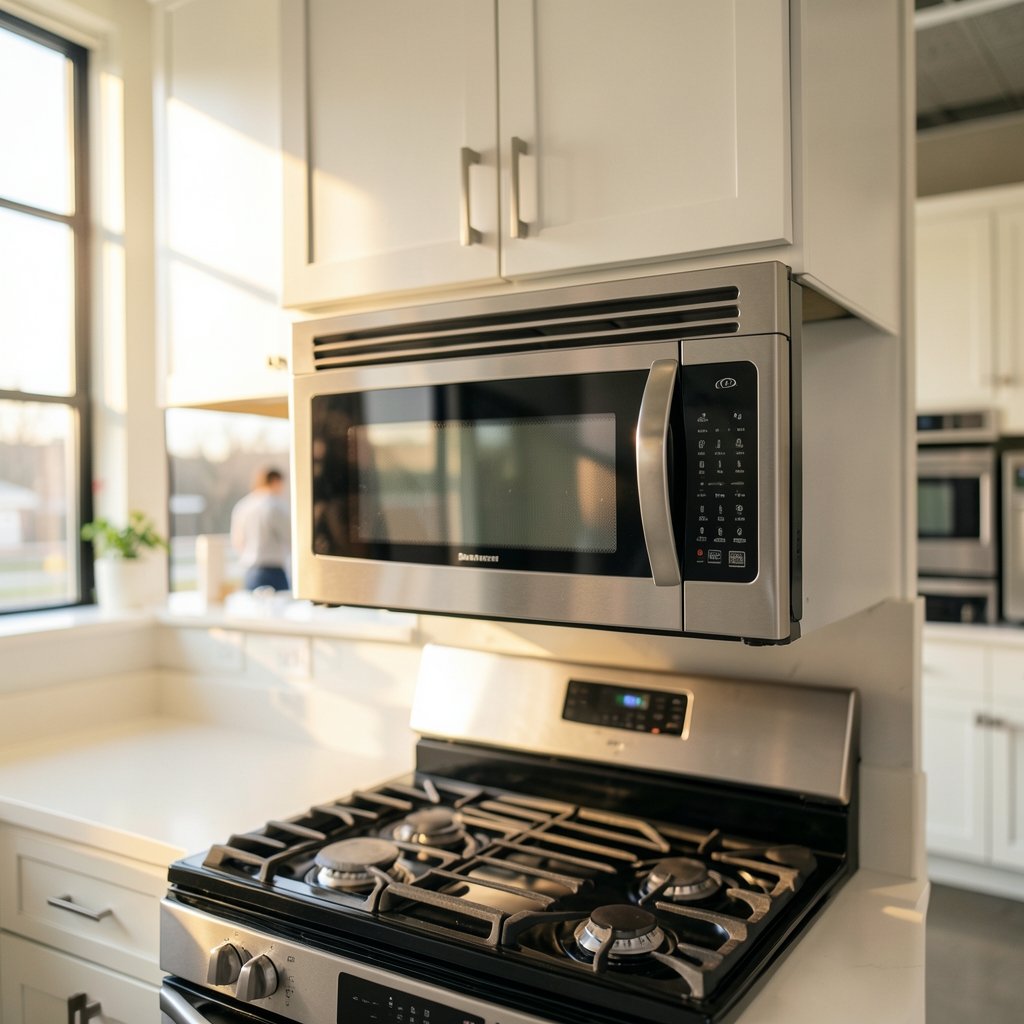
What good is a microwave that saves counter space if the fan above your stove barely moves air? That is the trap many shoppers fall into. A 30 inch over the range microwave with exhaust fan looks like a simple appliance swap on paper. In practice, it is a ventilation decision, an electrical decision, and a cabinetry decision all rolled into one box. Get the airflow and ducting right and it quietly does two jobs well for a decade. Get them wrong and you end up with a noisy hood that smears grease across the ceiling. (Pc fan airflow direction get intake exhaust right)
This guide walks through what actually matters: how these units vent, what the CFM numbers mean, how ducting and clearances work, and the mistakes that show up again and again in real kitchens.
Why the 30-inch size dominates, and what it replaces
Thirty inches is the default width for a reason. Most freestanding ranges and cooktops sold for residential kitchens are 30 inches wide, and an over the range microwave is designed to sit directly above the cooking surface, sharing the same footprint. A 36-inch model exists for wider ranges, but the 30-inch version is the one that fits the typical American kitchen without rebuilding cabinets.
The appeal is obvious. You reclaim counter space, gain a built-in light over the cooktop, and get a ventilation fan without installing a separate range hood. The catch is that the microwave is now doing ventilation duty, and ventilation is the part people underestimate.
There is a useful parallel in other hardware decisions: the spec sheet tells you one thing, and the installation reality tells you another. The same gap shows up with storage, where picking the best external SSD in 2026 means looking past marketing numbers to real sustained speed, and with networking gear, where Z-Wave long range versus Z-Wave Plus range and mesh compatibility depends on how the pieces actually talk to each other in your home. Over the range microwaves reward the same skeptical reading of the fine print. (2027 range rover buyers can realistically expect)
Ducted versus recirculating: the choice that defines everything
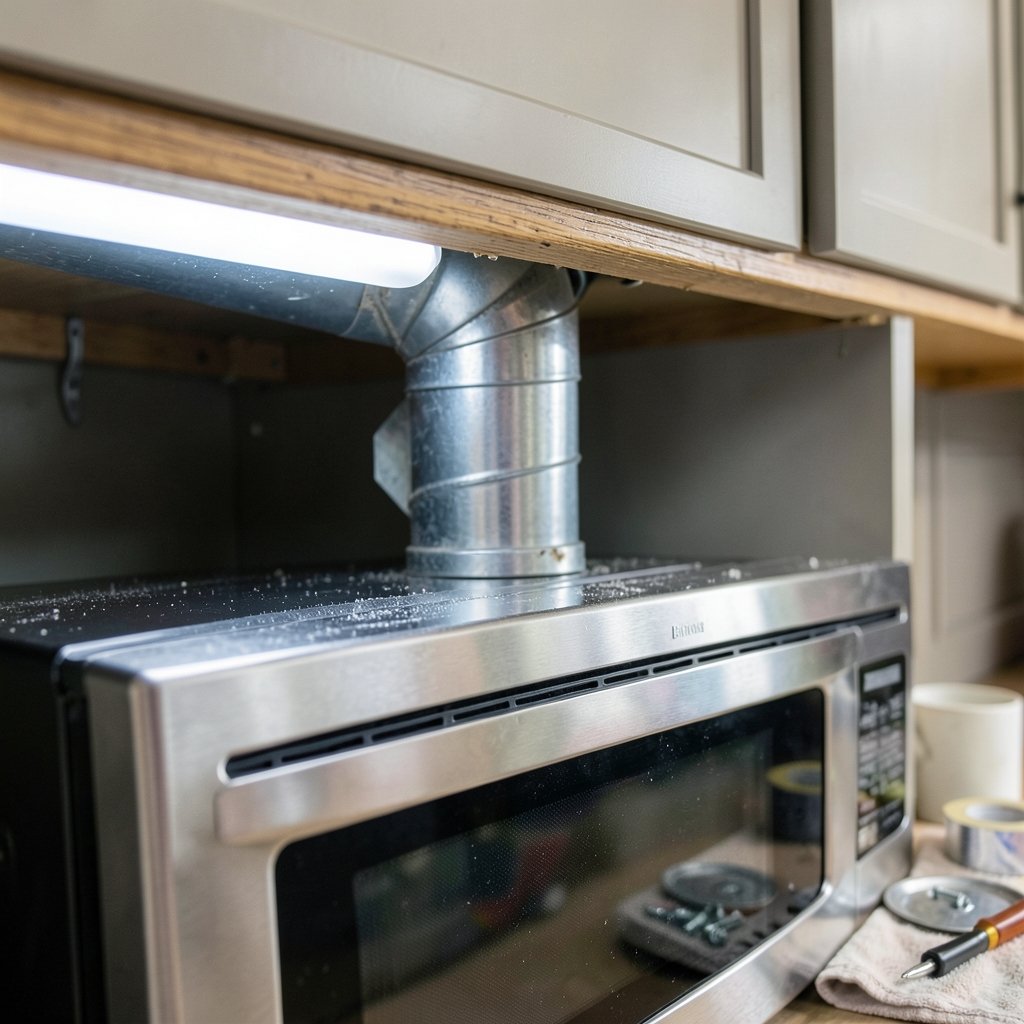
Every over the range microwave is built to vent in one of two ways.
Ducted (outside venting) pushes air, smoke, steam, and odors through ductwork to the outdoors. This is the configuration that genuinely removes moisture and cooking byproducts from the kitchen.
Recirculating (ductless) pulls air through a filter and blows it back into the room. It captures some grease and odors, but it does not exhaust moisture or combustion byproducts outside. Many units ship set up for recirculation and must be converted to ducted mode during installation, sometimes by rotating a blower motor and removing a metal plate.
That conversion step is where things go wrong. Installers in a hurry leave the unit in recirculating mode even when ductwork exists, and the homeowner never realizes the fan is blowing air straight back into the kitchen. If you are paying for installation, ask directly which mode the unit was set to and confirm it in writing.
A practical check: hold a tissue near the top front grille while the fan runs on high. Strong downward or outward flow at the front often means recirculation. Real exhaust should pull air up and away through the duct collar.
What CFM actually tells you, and where it stops mattering
CFM, or cubic feet per minute, measures how much air the fan moves. Most 30-inch over the range models are rated somewhere around 300 to 400 CFM, with higher-end units reaching 400 to 500 CFM or more.
Here is the part that surprises people: a bigger CFM number does not automatically mean better ventilation. A 500 CFM fan choked by a long, narrow, twisting duct can move less real air than a 300 CFM fan with a short straight run. Duct design is the bottleneck.
| Factor | Helps performance | Hurts performance |
|---|---|---|
| Duct length | Short, direct run to outside | Long, winding run |
| Elbows | Zero to one | Multiple 90-degree turns |
| Duct size | 6 to 7 inch round or 3¼ by 10 inch rectangular | Undersized or crushed flex duct |
| Termination | Smooth wall or roof cap with a damper | Flimsy flap or blocked exit |
| Filter state | Clean metal mesh grease filter | Grease-clogged filter |
Manufacturer installation guides commonly specify 3¼ by 10 inch rectangular duct or 6 to 7 inch round duct, and they almost always call for the shortest, straightest run possible with limited elbows. Follow that guidance before you chase a higher CFM rating.
One more wrinkle: some jurisdictions require make-up air when a kitchen exhaust fan exceeds a certain threshold, often cited around 400 CFM in residential energy codes. The exact number and whether it applies to your home vary by code edition and location. If you are choosing between a 400 CFM and a 500 CFM model, it is worth a call to your local building department before you buy.
Clearances, cabinets, and the measurements people skip
The installation manual for your specific model is the authority here, not a blog post and not a salesperson. Still, a few patterns hold across most brands.
Mounting height is usually specified as a minimum clearance above the cooking surface, often around 30 inches measured from the range top. That figure varies by manufacturer and by range type, and gas ranges sometimes carry different requirements than electric. Confirm it in the manual for the exact model.
Cabinet depth matters too. The microwave hangs below the upper cabinets, and the unit’s depth plus the door swing determines whether it crowds the front of the counter. Check that the door opens fully without hitting the range hood light housing or a tall stockpot.
Electrical is the other common surprise. Most over the range microwaves need a dedicated 120 volt circuit, and whether the unit is hardwired or plugs in depends on the model. If your old hood was hardwired and the new microwave needs a receptacle, that is an electrician visit, not a five-minute swap.
Grease filters, charcoal filters, and the maintenance nobody does
Two different filters do two different jobs, and mixing them up causes most odor complaints.
Metal mesh grease filters trap grease and are removable and washable. They should be cleaned periodically, and in a heavy-cooking household that might mean monthly. A clogged mesh filter strangles airflow no matter how good the fan is.
Charcoal filters are used only in recirculating mode. They absorb odors and are replaced rather than washed. If your unit vents outdoors, you generally do not need one, and leaving a spent charcoal filter in place just adds resistance.
A simple habit: pull the mesh filter, run it under hot water with a little dish soap, and let it dry fully before reinstalling. It takes five minutes and it is the single highest-return maintenance task on the whole appliance.
Where the fan matters more than the cooking power
Buyers tend to compare wattage and preset buttons. In practice, the exhaust fan’s role in indoor air quality deserves more attention than the microwave’s cooking power. Cooking produces moisture, grease particles, and combustion byproducts from gas burners, and outdoor venting is what removes them.
That is the argument for prioritizing ducted installation, decent CFM paired with good ductwork, and a fan that is not so loud you avoid using it. Noise is a real usability factor. A fan rated at high CFM but unbearably loud at top speed will get run on low, which defeats the purpose.
If you are also weighing bigger purchases and want to see how spec-versus-reality thinking plays out elsewhere, the same logic applies to vehicles: reading what 2027 Range Rover buyers can realistically expect is more useful than fixating on a headline number, and sorting through Range Rover lease deals rewards the same careful reading of terms. The pattern holds across categories. The number on the box is the starting point, not the answer.
Common mistakes and what actually works
These are the errors that come up most often, along with the fix.
- Leaving the unit in recirculating mode when ductwork exists. Confirm the blower was rotated and the knockout plate removed for ducted operation.
- Using undersized or flexible corrugated duct. Smooth rigid duct in the specified size moves far more air.
- Adding elbows to route around a joist. Each turn costs airflow. Reroute or choose a different termination if possible.
- Skipping the manual’s clearance figure. Measure from the actual range top, not the counter, and check gas versus electric requirements.
- Ignoring the electrical requirement. Confirm the circuit and whether a receptacle is needed before the installer arrives.
- Never cleaning the grease filter. Set a reminder. Clogged mesh is the most common cause of weak suction.
- Choosing by CFM alone. A well-ducted 350 CFM unit beats a poorly ducted 500 CFM unit every time.
What works is boring and effective: short straight duct, correct size, sealed joints, a clean filter, and a unit installed in the mode you actually need. If you are also outfitting a workspace or home office alongside the kitchen project, the same principle of matching the tool to the real job shows up when teams choose the best customer success platform for SaaS companies over 500 customers. Fit beats features.
Conclusion
A 30 inch over the range microwave with exhaust fan is a smart use of kitchen space, but only when the ventilation side gets the attention it deserves. Decide up front whether you are venting outdoors or recirculating, then let duct design and the installation manual drive your model choice rather than a flashy CFM number. Measure clearances from the actual cooking surface, confirm the electrical setup, and commit to cleaning that grease filter. Do those things and the appliance earns its place above the stove for years. Skip them and you will spend a lot of evenings wondering why the kitchen still smells like last night’s dinner.
FAQ
Does a 30 inch over the range microwave really need to vent outside?
It does not have to, but outdoor venting is strongly preferable. Recirculating mode removes some grease and odors through a charcoal filter but does not exhaust moisture or combustion byproducts from the kitchen. Ducted installation is what genuinely clears the air, and local building codes may have a say in which option is permitted.
What CFM do I need for a 30 inch over the range microwave?
Most models in this size are rated around 300 to 400 CFM, with some reaching 400 to 500 CFM or more. Higher is not automatically better. A moderate CFM rating paired with short, straight, correctly sized duct will outperform a high-CFM unit with a cramped or winding run.
Can I convert a recirculating microwave to vent outdoors?
Usually yes, and many units are designed for both modes. The conversion typically involves rotating the blower motor and removing a metal knockout plate so air exits through the duct collar instead of the front grille. The specific steps vary by model, so follow that unit’s installation manual exactly.
How high above the range should the microwave be mounted?
Manufacturer guides commonly specify a minimum clearance above the cooking surface, often around 30 inches from the range top, but the exact figure varies by brand and by range type. Always use the clearance stated in your model’s installation manual, and check whether your local code adds its own requirement.
Do I need a charcoal filter if my microwave vents outside?
Generally no. Charcoal filters are intended for recirculating mode, where air returns to the room and odors need absorbing. In ducted mode the air leaves the house, so a charcoal filter mostly adds airflow resistance. The metal mesh grease filter, by contrast, is needed in both modes and should be washed regularly.
Will a 30 inch microwave fit above my existing range?
It should if your range is a standard 30-inch model, since the microwave is built to share that footprint. Verify the cabinet opening width, the mounting height above the cooking surface, and the depth so the door swings freely. If your range is 36 inches wide, look for a matching wider model instead.