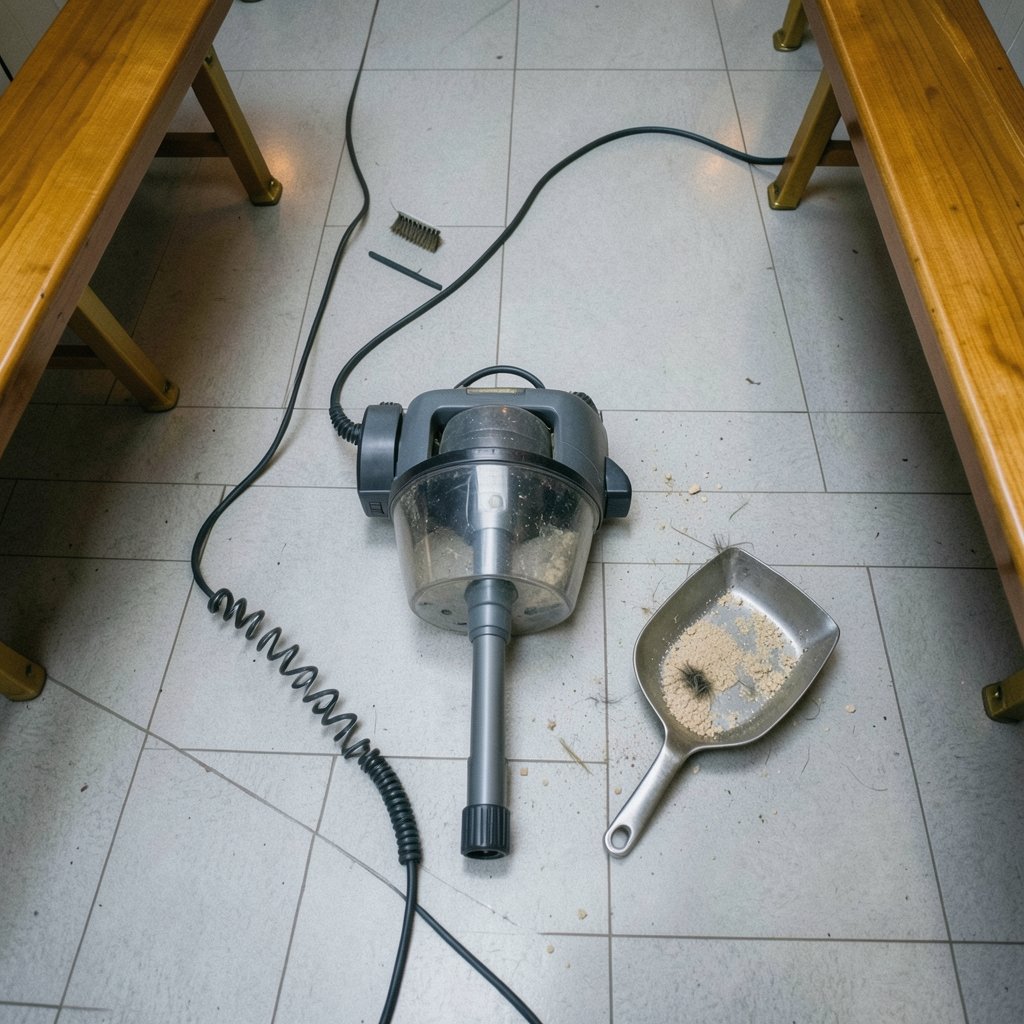
What happens when you run a carpet vacuum across a hardwood floor and watch a small tornado of dust, crumbs, and pet hair scatter in every direction? That single moment explains why “bare floor vacuum” is a real category and not a marketing label. Hard floors punish the wrong tool. They also reward the right one with results you can see in a dustpan within minutes.
This guide breaks down what separates a vacuum built for bare floors from one that just tolerates them, which types work best for which homes, and the mistakes that make even good vacuums underperform. No hype, no spec-sheet worship, just the factors that decide whether a floor comes out clean.
What Makes a Vacuum Good on Bare Floors
The core job on hard flooring is simple: lift loose debris without flinging it. Carpet hides sins. A hard floor shows every grain of rice that got pushed into a corner instead of picked up.
Three design choices do most of the work:
Brushroll control. A spinning brushroll is great on carpet and often counterproductive on tile or hardwood. It can bat debris forward, scuff delicate finishes, and tangle around long hair. The best bare floor vacuums either shut the brushroll off, retract it, or swap in a soft roller designed for hard surfaces.
Edge and corner reach. Baseboards, toe kicks, and the strip under kitchen cabinets are where hard-floor dirt accumulates. A vacuum with weak edge cleaning leaves a visible line of grit along every wall.
Sealed suction and filtration. Fine dust on hard floors goes airborne easily. A well-sealed system with good filtration keeps it in the bin rather than on your coffee table an hour later.
Suction alone is not the whole story. A vacuum with enormous airflow but a loose floor head will still leave a trail of debris. The head-to-floor relationship matters as much as raw power.
The Main Types, Compared Honestly

Shoppers usually choose between canisters, uprights, cordless sticks, and robot vacuums. Each has a genuine strength on bare floors.
| Type | Strengths on bare floors | Weaknesses | Best for |
|---|---|---|---|
| Canister | Strong sustained suction, switchable brushroll, long cord, big bin | Heavier to drag, storage footprint | Whole-home cleaning, mixed flooring |
| Upright | Fast setup, good edge tools, often affordable | Bulkier, brushroll management varies | Apartments with mostly hard floors |
| Cordless stick | Light, quick, easy to grab daily | Shorter runtime, smaller bin, fading suction as battery drains | Kitchens, entryways, quick touch-ups |
| Robot vacuum mop combo | Hands-off daily maintenance, reaches under furniture | Limited deep cleaning, needs floor prep | Routine upkeep between manual cleans |
For most homes with wall-to-wall hard flooring, a corded canister remains the most reliable deep cleaner. Cordless sticks win on frequency of use, which often matters more than suction alone. A vacuum you actually pull out every day beats one with stronger suction that stays in the closet.
Robots deserve a specific mention. The best robot vacuum mop combos actually clean floors well enough to replace daily sweeping, but they are maintenance tools, not deep-cleaning tools. They handle surface dust and light debris; they do not replace a periodic thorough pass along baseboards and in corners.
If the home mixes carpet and hard floors, the calculation shifts. A vacuum that excels on carpet may need a dedicated hard-floor head to avoid scattering debris, and it is worth reading up on what makes the best vacuum for carpet before assuming one machine covers both surfaces equally well.
Features That Actually Matter (and Ones That Don’t)
Marketing pages love feature lists. On bare floors, only a handful of specs change the outcome.
Worth prioritizing
A brushroll shutoff or hard-floor mode. This is the single most useful feature. It stops scatter and protects finishes.
Soft roller or dedicated hard-floor head. Soft rollers pull in debris without the bristle flick that sends cereal across the kitchen.
Genuine HEPA filtration. HEPA efficiency is defined by recognized filter classification standards, and consumer vacuum claims vary in how rigorously they are tested. Look for a sealed system, rather than only a filter labeled HEPA.
A long, flexible hose and a good crevice tool. Hard-floor dirt lives in edges. Reach matters more than horsepower.
Manageable weight and a swivel steering head. Canisters commonly land in the roughly 5 to 8 kg range. On hard floors you steer constantly, so balance and wheel quality affect daily usability more than a spec sheet suggests.
Reasonable noise output. Noise is usually quoted in dB(A), but ratings are not always comparable across brands. If the vacuum is unbearable, it gets used less.
Usually overrated
Peak suction numbers. They rarely reflect real-world performance at the floor head.
Huge bins. A big bin helps, but most hard-floor debris loads are light. Emptying frequency is not the bottleneck.
App connectivity. Nice for robots, mostly noise for a corded canister.
Matching the Vacuum to the Floor
Hard floors are not one material. The same vacuum can be ideal on tile and risky on oiled oak.
Tile and vinyl. The most forgiving surfaces. Almost any vacuum with brushroll off works. Grout lines benefit from a crevice tool and steady, slow passes.
Laminate. Durable but prone to edge damage. Keep the brushroll off and avoid hard plastic wheels grinding against baseboards.
Solid hardwood and engineered wood. The most delicate category. Fine grit acts like sandpaper under a rotating brush, and a spinning bristle roll can dull a finish over time. Suction-only cleaning is the safer default. Soft rollers are gentler than stiff bristles.
Polished concrete and stone. Dust shows instantly. Filtration and a good floor head matter more than power. Watch for vacuums that blow exhaust downward and kick up dust behind the machine.
One practical test: sprinkle a teaspoon of flour or fine cornmeal on the floor and make one slow pass. If residue remains or the vacuum pushes it forward, the head is wrong for that surface. It is a crude test, but it mirrors real conditions better than any showroom demo.
Common Mistakes That Undermine Even a Good Vacuum
Plenty of people buy a capable machine and still get mediocre results. The pattern is predictable.
Leaving the brushroll on. The most common error. It scatters debris, scuffs floors, and tangles hair. Switch it off on every hard surface.
Vacuuming too fast. Hard floors reward slow, overlapping passes. Speed is the enemy of edge cleaning.
Skipping the edges until last. Do baseboards and corners first, then the open floor. Otherwise you track debris back into cleaned zones.
Ignoring the filter. A clogged filter cuts airflow and lets fine dust recirculate. Hard floors generate more visible fine dust than carpet, so filters load differently and need regular attention.
Never checking the brushroll for hair. Long hair wraps around rollers and cuts performance on every surface. If hair is a recurring problem, it is worth learning how to handle robot vacuum long human hair actually works so the roller stays effective instead of becoming a fuzzy drum.
Storing a cordless on the charger in a hot space. Battery heat degrades runtime over time. A stick that ran 40 minutes when new may run 20 a year later, which quietly turns a convenient vacuum into an annoying one.
Forgetting the wheels and floor head housing. Grit packed into the head scratches floors on the next pass. A quick wipe after each use prevents it.
Where Robots Fit In, and Where They Don’t
Robot vacuums have become genuinely useful on bare floors, especially in kitchens and open-plan living areas. They run daily, reach under sofas, and keep grit from accumulating. The catch is preparation. Cables, socks, and small toys stop them cold, and mapping quirks can leave whole zones untouched.
Two practical notes for hard-floor robot owners. First, navigation quality separates a robot that finishes a floor from one that wanders. The differences between robot vacuum lidar vs camera navigation key differences pick matter more on cluttered hard floors than on open carpet, because a robot that maps accurately cleans edges and corners properly. Second, dark flooring can confuse some sensors. If a robot behaves oddly on a dark rug or mat, the cause is often sensor behavior rather than a defect, which is why understanding robot vacuum cliff sensors fail black carpet works saves a lot of frustrated troubleshooting.
Robots also raise a maintenance question: what goes in the water tank. Many owners default to whatever is under the sink, which is a mistake. Plain water or a manufacturer-approved solution is the safe choice, and it helps to know which robot vacuum cleaning solution alternatives that actually work without leaving residue or damaging internal parts.
The realistic setup for most hard-floor homes is a two-tool system: a robot or cordless stick for daily upkeep and a corded canister for weekly deep cleaning along edges and in corners.
Practical Buying Steps
A short, ordered process beats browsing spec sheets for hours.
- Measure the hard-floor area and note the surfaces. Tile, laminate, and hardwood call for different levels of caution.
- Decide whether the vacuum must handle carpet too. If yes, prioritize a model with a switchable brushroll and a dedicated hard-floor head.
- Confirm the brushroll can be turned off or retracted. If it cannot, keep looking.
- Check filtration claims and look for a sealed system rather than a filter label alone.
- Weigh the machine in person if possible. A canister that feels heavy in the store will feel heavier after twenty minutes of steering.
- Test edge reach. Bring a handful of rice or crumbs to the store and ask to run the vacuum along a wall.
- Budget for consumables: filters, belts, and batteries. A cheap vacuum with expensive filters is not cheap.
Conclusion
The best bare floor vacuum is not the one with the most suction or the highest price. It is the one whose floor head stops scattering debris, whose brushroll can be switched off, whose filtration keeps fine dust out of the air, and whose weight and controls make it easy to pull out every day. Corded canisters remain the most dependable deep cleaners for hard flooring, cordless sticks win on daily convenience, and robots handle routine upkeep as long as owners accept their limits and prepare the floor.
Get those fundamentals right and hard floors stop being a chore that never quite gets finished. Get them wrong and no amount of suction will save the dustpan.
Frequently Asked Questions
Do I need a special vacuum for bare floors?
Not necessarily, but you need one with the right setup. The key requirement is a brushroll that can be switched off or retracted, plus a floor head that does not scatter debris. Many standard vacuums include a hard-floor mode; models without one tend to push grit around rather than lift it.
Is a canister or upright better for hard floors?
Canisters usually win for whole-home cleaning because they offer sustained suction, larger bins, and flexible reach along baseboards. Uprights are faster to grab and often cheaper. For apartments with mostly hard flooring, a good upright with a brushroll shutoff is a perfectly reasonable choice.
Can a robot vacuum replace a regular vacuum on hard floors?
No. Robots are excellent for daily surface maintenance and reaching under furniture, but they do not handle deep cleaning along edges, in corners, or against baseboards. Most hard-floor homes do best with a robot for upkeep plus a full-size vacuum for weekly detail work.
Does brushroll type really matter on hardwood?
Yes, and it is one of the most overlooked details. Stiff bristles rotating against a finished wood floor can dull the surface over time, and fine grit trapped under a brush acts like sandpaper. Soft rollers or suction-only cleaning are gentler and usually just as effective on hard surfaces.
How often should I clean the filter on a hard-floor vacuum?
Check it monthly and clean or replace it according to the manufacturer’s guidance, more often in homes with pets or heavy dust. A clogged filter reduces airflow and lets fine dust recirculate into the room, which is exactly the problem a hard-floor vacuum should solve.
Why does my vacuum leave a line of dirt along the baseboards?
That is an edge-cleaning problem, not a suction problem. The floor head is not reaching close enough to the wall, or the vacuum is being pushed too fast. Use a crevice tool along baseboards first, then vacuum the open floor with slow, overlapping passes.