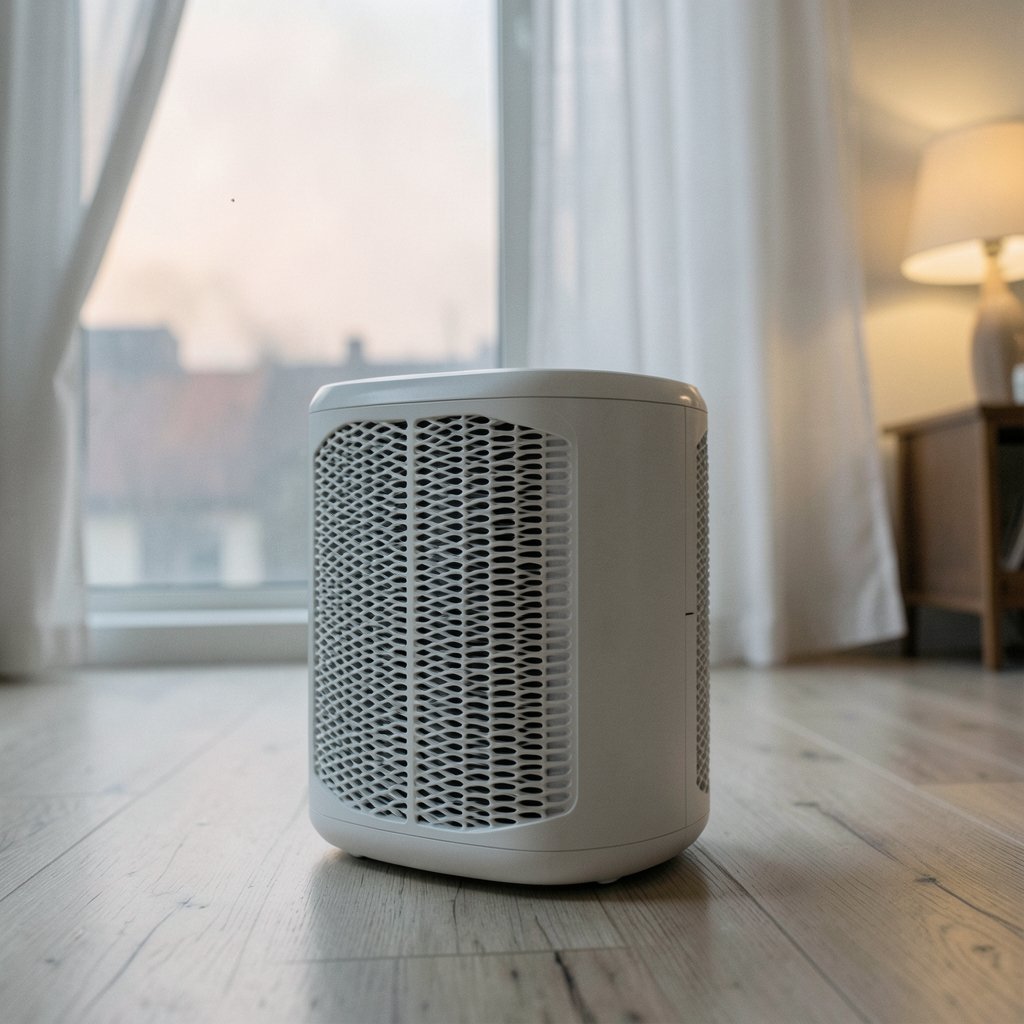
Can a box with a fan and a filter really make smoke season bearable for someone whose lungs rebel at the first whiff of char? The short answer is yes, but with caveats big enough to fill a room. Smoke is not one tidy pollutant. It is a shifting cloud of fine particles, gases, and irritants, and the device you buy, how you size it, and where you put it decide whether it does anything at all.
This guide cuts through the marketing fog. It covers what “smoke allergy” really means, why particle removal matters more than fragrance, how to match a purifier to your space, and the mistakes that quietly undo a good machine’s work.
First, a Reality Check on “Smoke Allergy”
Here is something most product pages skip: “smoke allergy” is not a standard medical diagnosis. It is a useful phrase people use to describe real suffering, but clinicians generally frame smoke reactions as irritation or as a worsening of existing conditions like asthma, allergic rhinitis, and COPD.
That distinction matters. True allergy involves an immune response to a specific trigger, like pollen or pet dander. Smoke largely irritates airways directly and can inflame them, producing symptoms that feel allergic: sneezing, itchy eyes, coughing, a scratchy throat, and congestion. Two people can breathe the same smoky air and have completely different reactions, and someone with underlying asthma may struggle while a neighbor barely notices.
Why bring this up in a purifier article? Because it sets honest expectations. A purifier removes particles from the air in a room. It cannot desensitize an immune system, treat inflammation, or replace medical advice. If symptoms are severe, a clinician should be the one sorting irritation from allergy. A purifier is a tool for lowering exposure, not a treatment.
What Smoke Is Made Of, and What a Filter Can Catch
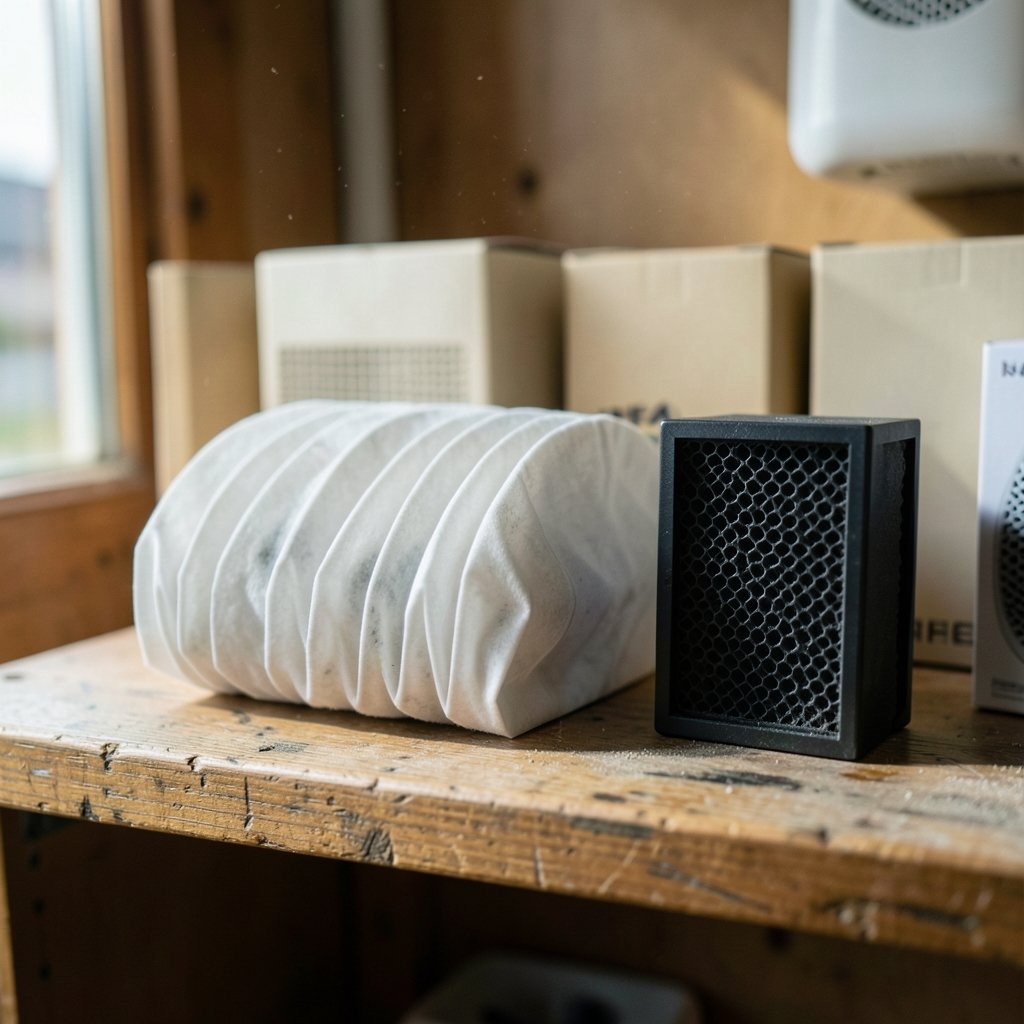
Smoke from wildfires, wood stoves, and tobacco is a mixture. Two broad categories matter here:
- Particles: fine and ultrafine solid bits and droplets, including the particulate matter small enough to travel deep into the lungs.
- Gases: compounds such as volatile organic compounds and carbon monoxide, plus the odorous molecules that make smoke smell like smoke.
A HEPA filter is built for the first category. HEPA is a filtration efficiency standard, not a brand, commonly described as capturing at least 99.97% of particles around 0.3 micrometers. That size is used as a worst-case benchmark; both larger and many smaller particles are captured too.
The second category is where purifier marketing gets slippery. Particle removal does not remove gases. A carbon filter may help with odors and some gaseous compounds, but its capacity varies enormously with how much carbon is in the filter and which pollutant you are asking about. Carbon is a helpful add-on, not a magic eraser, and it is never a substitute for ventilation or for getting away from the source.
One more warning worth stating plainly: avoid air cleaners that intentionally produce ozone. Public health agencies have long advised against them because ozone can irritate lungs and worsen breathing problems, even though such devices are still sold with confident claims. If a product advertises “activated oxygen” or “ionization” as its main feature, treat that as a reason to walk away.
The Spec That Actually Predicts Performance
If you remember one number from this article, make it CADR, short for clean air delivery rate. It combines how much air a unit moves with how well it filters that air, and it is measured per pollutant.
Sizing rule of thumb that holds up in practice: match the CADR to the room. For a typical room, aim for a CADR roughly in line with the floor area in square feet when you assume standard ceiling heights, and go higher if the space is open to a hallway or the ceiling is tall. A big purifier in a tiny bedroom is fine. A small purifier in a large living room is mostly decoration.
| Situation | What to prioritize | What to skip |
|---|---|---|
| Small bedroom during smoke events | HEPA unit sized to the room, sealed windows, closed door | Oversized whole-home claims from a single small unit |
| Open-plan living area | Higher CADR, or two units placed at opposite ends | One undersized unit trying to cover everything |
| Home with pets or birds | HEPA plus careful placement away from animals | Anything that stirs up dander or frightens birds |
| Cooking-heavy kitchen | Range hood plus a nearby HEPA unit | Relying on a purifier alone to handle grease and smoke |
| Basement or damp space | HEPA plus attention to moisture and odor sources | Ozone generators marketed as “fresh air” |
Two practical details people miss. First, placement beats prestige: a purifier tucked behind a sofa or in a corner with blocked intake moves far less air than one sitting in open space with clearance on all sides. Second, run it before the smoke arrives, not after your eyes start watering. Air cleaners take time to cycle the volume of a room, often several air changes per hour at high settings, so starting early keeps particle levels lower from the outset.
If you are specifically prepping for fire season, this breakdown of how to pick an air purifier for wildfire smoke that actually cleans goes deeper on sizing for episodic events.
Matching the Machine to the Room and the Source
Not all smoke is wildfire smoke, and the source changes the strategy.
Wildfire smoke arrives from outside, so the job is keeping it out and scrubbing what seeps in. Seal windows, close doors, and run the purifier in the room where you spend the most time. Public health guidance during smoke episodes consistently emphasizes staying indoors and using filtration as a supplement, not a replacement for official alerts or, in extreme cases, leaving the area.
Cooking smoke is generated inside, which means ventilation comes first. A range hood that vents outdoors does more than any purifier for the plume at the stove, with a purifier handling the lingering haze. This guide on how an air purifier for cooking smells that actually clears the air covers the layering approach.
Workshop and hobby dust behaves differently again, because the particles are coarser and the volumes higher. A purifier helps with the fine fraction that hangs in the air, but source capture at the tool is the real fix. There is a useful walkthrough on choosing an air purifier for workshop dust that actually clears the air.
Small bedrooms deserve special mention because they are where people spend eight uninterrupted hours breathing. A modest, quiet HEPA unit sized correctly often outperforms a large noisy one that gets switched off at midnight. The specifics of choosing an air purifier for small bedrooms that actually works are worth reading before buying.
Households with birds need extra caution. Birds have sensitive respiratory systems, and some purifier technologies, particularly those that generate ozone or ionize air, can harm them. Even airflow from a strong fan can stress a nervous bird. If feathered family members share the room, read up on how an air purifier for pet birds actually works and can harm them before plugging anything in.
Basements bring odor and moisture into the mix, and a purifier cannot fix a damp problem. It can reduce airborne particles and some odors while you address the source. A practical look at how an air purifier for basement odors actually clears the smell explains the limits.
How Long Should It Run, and When?
During smoke events, the honest answer is: as much as practical, especially in the room you occupy. Filtration is a rate, not an event. Every hour the unit is off, particle levels creep back toward whatever the outdoor air and indoor sources are pushing in.
Overnight is where people get this wrong. They run the purifier all day, then switch it off because of noise, and sleep in the smokiest air of the day. A better pattern is to run it on high in the evening to clean the room, then drop to a lower, quieter speed overnight while keeping the door closed.
There is a longer discussion of scheduling and runtime in this piece on long-run air purifier hours and timing that really works. The takeaway: consistency matters more than peak power.
Maintenance: The Quiet Reason Purifiers Fail
A purifier with a clogged filter is a fan with extra steps. Filter loading reduces airflow, and reduced airflow means lower CADR, which means the machine no longer delivers what the box promised.
Practical habits that separate working setups from disappointing ones:
- Check the pre-filter monthly during smoke season and vacuum or rinse it as the manufacturer allows. Pre-filters are cheap and they protect the expensive HEPA stage.
- Replace HEPA filters on the maker’s schedule, and sooner if you run the unit constantly through a bad fire season.
- Confirm the filter is seated correctly after every change. A gap around the edges lets unfiltered air bypass the media entirely.
- Keep the intake and exhaust clear. Curtains, bedding, and furniture pressed against the unit are common culprits.
- Watch for a plastic or chemical smell from a new unit. It usually fades within days, but if it persists, this guide on what to do when your new air purifier smells like plastic walks through the causes.
Common Mistakes That Undo Good Hardware
Even a well-chosen purifier underperforms when these mistakes creep in:
- Buying by brand instead of CADR. A famous logo on a small unit still moves little air.
- Ignoring the room volume. Open floor plans and vaulted ceilings need far more filtration than the square footage suggests.
- Trusting “HEPA-type” or “HEPA-like” language. These are marketing phrases, not verified standards.
- Skipping the source. A purifier running next to an open window during a smoke event is fighting a losing battle.
- Expecting gas removal from a particle filter. Odors and gases need carbon, and carbon has limits.
- Forgetting the rest of the household. Filtration in one room helps that room; it does not clean the whole house through a closed door.
What the Evidence Supports, and What It Doesn’t
Portable HEPA units reliably lower indoor particle concentrations in a closed room. That part is well established and is the strongest reason to own one.
Evidence that this translates into fewer allergy or asthma symptoms is weaker and more mixed. Some studies suggest modest symptom improvement; others are inconclusive. That gap between “fewer particles” and “fewer symptoms” is not a reason to skip filtration, but it is a reason to keep expectations grounded. Filtration is one layer of a sensible smoke plan, alongside sealing windows, watching air quality alerts, following medical advice, and leaving the area when conditions demand it.
Conclusion
Air purifiers for smoke allergies work best when you treat them as exposure reducers, not cures. Choose a unit by CADR and room size, insist on genuine HEPA filtration, avoid ozone generators entirely, place the machine where air can actually move, and run it consistently, especially overnight. Layer in carbon for odors, ventilation for indoor smoke sources, and medical guidance for symptoms that do not settle. Do those things and a good purifier becomes one of the most useful appliances in the house during smoke season. Skip them and you have bought an expensive fan.
Frequently Asked Questions
Do air purifiers actually help with smoke allergies?
They help by removing fine particles from the air in a room, which lowers the amount you breathe in. That can reduce irritation for many people. They do not treat an allergy or immune response, and they do not remove gases like carbon monoxide, so they work as one layer of protection rather than a standalone solution.
What CADR do I need for a bedroom during wildfire season?
Match the CADR to the room’s floor area, and go higher if the ceiling is tall or the room opens into a hallway. A unit with a CADR close to the room’s square footage in feet is a reasonable starting point for standard ceilings. When in doubt, size up: a larger unit running on medium is quieter and more effective than a small one straining at maximum.
Can an air purifier remove the smell of smoke?
Partially, and only if it has a carbon filter with meaningful media. HEPA captures particles but not odorous gases. Carbon adsorbs some of those compounds, though its capacity depletes over time and varies by filter. If smell is the main complaint, ventilation and source control still matter more than filtration alone.
Are ozone generators safe for people with smoke sensitivity?
No. Ozone is a lung irritant, and public health agencies have long advised against air cleaners that intentionally produce it, especially for anyone with asthma or other respiratory conditions. Devices marketed with terms like “activated oxygen” should be avoided. Stick with plain HEPA filtration.
How often should I replace the filter during smoke season?
Follow the manufacturer’s interval as a baseline, but expect to replace it sooner if the unit runs continuously through heavy smoke. Check the pre-filter monthly and clean it as allowed. A filter that looks gray and clogged is restricting airflow, which means the purifier is delivering less clean air than its rating suggests.
Is it worth running a purifier in just one room?
Yes, if that room is where you sleep or spend most of your time. Filtration is local; a closed bedroom with a correctly sized unit can be meaningfully cleaner than the rest of the house. Running one unit well beats scattering undersized units around and hoping the whole home clears.